
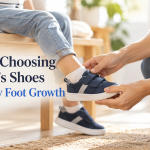

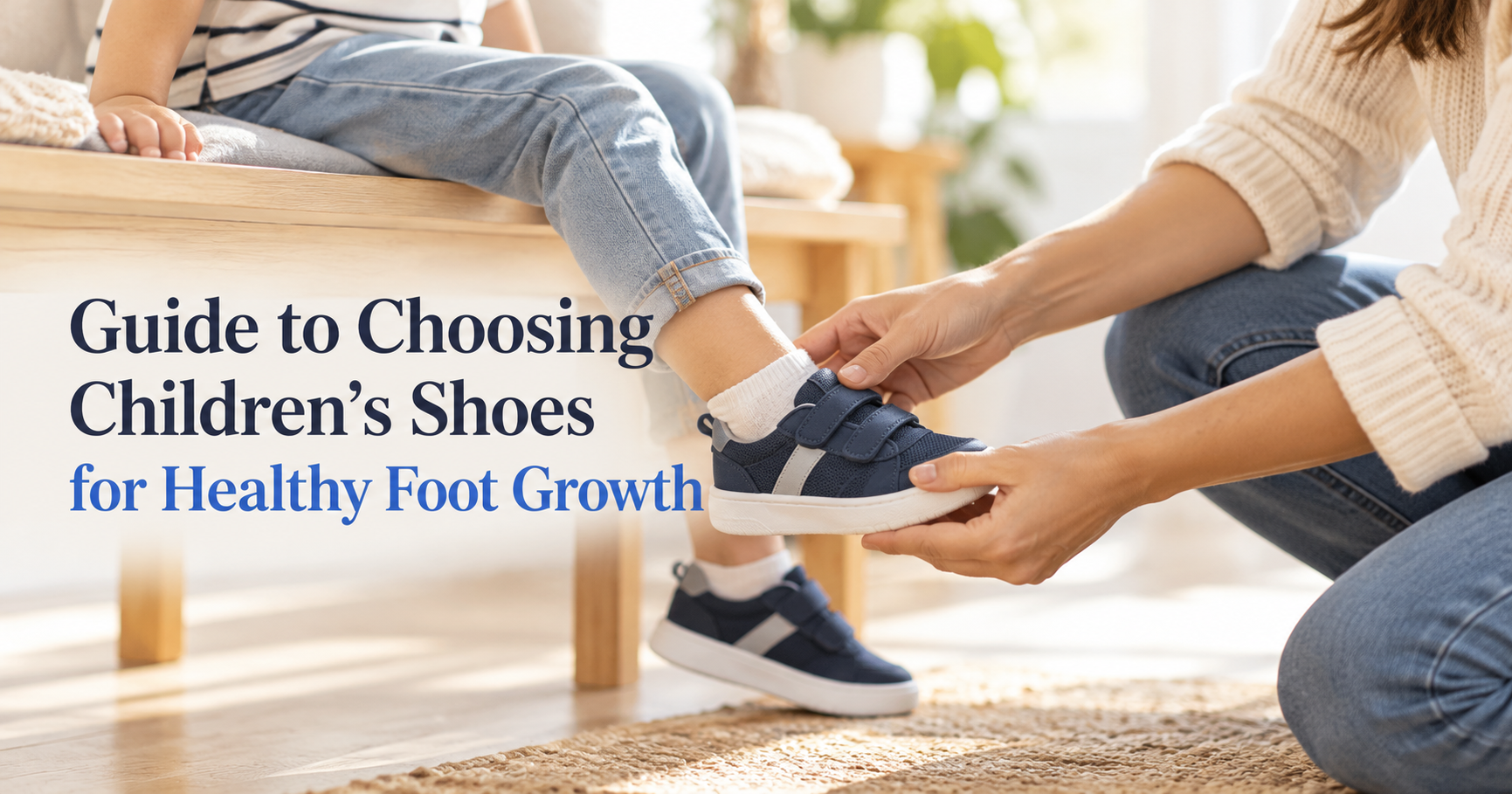
Guide to Choosing Children’s Shoes for Healthy Foot Growth
A child’s feet are changing constantly. From the first wobbly steps to the school playground, those small feet carry a growing body through thousands of steps every day. The shoes you choose can either support that development or quietly work against it.
The good news is that you don’t need to be a podiatrist to get it right. In this guide you’ll learn how children’s feet grow, which shoe features really matter, how to check the fit at home, and which common mistakes to avoid.
Why the Right Shoes Matter for Growing Feet
A baby’s foot contains a lot of soft cartilage that hardens into bone gradually through childhood and into the teenage years. Because the foot is still soft and flexible, it can be shaped by pressure. Shoes that are too tight, too stiff or poorly designed can lead to discomfort, blisters, ingrown toenails and altered walking patterns.
Well-chosen shoes, on the other hand, protect the foot from the ground and weather while allowing it to move naturally. The goal is not to “correct” a healthy foot, but to stay out of its way while keeping it safe.
How Children’s Feet Grow
Children’s feet grow fastest in the first three years of life, then keep growing steadily until the teenage years. Growth often comes in spurts, so a pair that fitted well in spring may be tight by autumn.
- Flat-looking feet are normal in toddlers. A baby fat pad and developing arch make many young children look flat-footed. The arch usually develops over the early childhood years.
- Kids rarely complain. Children often don’t tell you when shoes are too small, so regular checks matter.
- Two feet, two sizes. It’s common for one foot to be slightly larger than the other. Always fit to the bigger foot.
Key Features of a Good Children’s Shoe
Whatever the brand or style, healthy children’s shoes share a handful of features. Use the diagram below as a quick checklist when you shop.
1. A Firm Heel Counter
The heel counter is the stiff cup around the back of the shoe. It should hold the heel steadily without squeezing it. Press the sides of the heel together; it should resist.
2. Secure Fastening
Laces, hook-and-loop straps or buckles keep the foot from sliding forward and cramping the toes. Slip-on shoes without any fastening force the toes to grip to stay on, which is not ideal for everyday wear.
3. A Breathable Upper
Children’s feet sweat a lot. Leather, canvas and breathable mesh help moisture escape, keeping feet drier and reducing odour and blisters. Avoid fully plastic uppers for daily use.
4. A Flexible, Grippy Sole
The sole should bend easily at the ball of the foot, where the foot naturally flexes, but resist twisting in the middle. A quick test: try to bend the shoe in half. It should fold where the toes bend, not in the middle. A non-slip tread gives safe traction on wet floors and playgrounds.
5. A Roomy, Rounded Toe Box
Toes need space to spread as your child walks and runs. Narrow, pointed toe boxes squeeze the toes together. Look for a shape that follows the natural outline of a child’s foot.
How to Check the Fit at Home: Step by Step
- Measure late in the day. Feet swell slightly through the day, so afternoon or evening gives the most accurate size.
- Measure both feet while standing. The foot spreads under body weight. Measure the longer foot, from heel to longest toe.
- Bring the right socks. Try shoes on with the socks your child will actually wear.
- Use the thumb-width rule. There should be roughly half an inch (about 1–1.5 cm) between the longest toe and the front of the shoe.
- Check the width. The shoe shouldn’t bulge at the sides, and the fastening shouldn’t be pulled to its very last hole.
- Check the heel. A little heel lift while walking is normal in new shoes, but the whole foot shouldn’t slide.
- Let them walk and run. Watch for limping, tugging at the shoe or a reluctance to wear it.
Choosing Shoes by Age and Stage
Needs change as children grow. Here is a simple overview.
| Stage | What to Prioritise | Shoes Are For |
|---|---|---|
| Babies and pre-walkers | Very soft, lightweight, flexible, no pressure on the toes | Warmth and protection; barefoot or socks indoors where it is safe |
| New walkers (12–24 months) | Flat, flexible sole with good grip; lightweight; secure fastening | Protection outdoors |
| Toddlers and preschoolers | Roomy toe box, breathable materials, easy for the child to put on | Daily play, nursery and outings |
| School-age children | Durable, supportive, suitable for long days of walking and sport | School, sports and active play |
| Pre-teens and teens | Adult-style support in a correctly measured size | Long days on their feet; fashion choices that still fit |
How Often Should You Check Shoe Size?
Children outgrow shoes faster than most parents expect. As a general guide, re-check size every few months, and sooner if your child suddenly starts complaining about their shoes.
Signs it’s time for a bigger pair include toes touching the front, red marks on the feet, curled toes, heels slipping out, or your child suddenly refusing to wear a favourite pair.
Materials, Weight and Closures
- Leather and canvas breathe well and mould gently to the foot.
- Breathable mesh is lightweight and ideal for active kids and warm weather.
- Lightweight soles reduce fatigue. Heavy, clunky shoes make small legs work harder.
- Hook-and-loop straps are great for young children learning independence, while laces give older children a more adjustable fit.
Shoes for Different Activities
Everyday and school shoes: choose durable, comfortable pairs with room to grow in width, not just length.
Sports shoes: use shoes designed for the activity, such as running shoes for running and cleats for field sports. Good cushioning and grip lower the risk of slips and strains.
Sandals: pick styles with a back strap and a secure fit, not flimsy flip-flops for long walks or play.
Rain boots and winter boots: allow space for thicker socks and make sure they are easy to take on and off.
Barefoot time: when it’s safe, going barefoot at home helps strengthen the muscles of the feet and builds balance.
Common Mistakes to Avoid
- Buying shoes to “grow into.” Too much extra room causes tripping and rubbing. Allow about half an inch, not more.
- Handing down shoes. Shoes mould to the wear pattern of the first child. Hand-me-down shoes may not suit another foot.
- Relying on size alone. Sizes differ between brands. Always check the fit by trying them on.
- Choosing style over comfort. Trendy shoes are fine if they also fit well and flex properly.
- Assuming a “break-in” period. Children’s shoes should feel comfortable immediately.
- Ignoring worn-out shoes. Check soles and heels for uneven wear and replace shoes that have lost their support or grip.
When to See a Professional
Most children’s feet develop normally. Speak with a doctor or paediatric foot specialist if your child has ongoing foot pain, limping, a noticeably uneven walk, frequent tripping, persistent toe-walking past early toddlerhood, or feet that look unusually turned in or out. A professional can advise whether any shoe changes or inserts are needed.
Quick Checklist Before You Buy
- Measured both feet, standing, late in the day
- About half an inch of space at the toe
- Firm heel counter and secure fastening
- Flexible sole that bends at the ball of the foot
- Roomy, rounded toe box
- Breathable, lightweight materials
- Comfortable straight away, with no break-in needed
Frequently Asked Questions
Do children need shoes indoors?
Not necessarily. On safe, clean floors, barefoot time or soft socks with grip are fine and help foot muscles develop. Shoes are mainly for protection outdoors.
Are expensive shoes better for foot growth?
Not always. Fit, flexibility and support matter more than price. A well-fitting mid-priced pair is better than a poorly fitting premium one.
Should toddlers wear high-top shoes for ankle support?
Healthy toddlers do not generally need extra ankle support. A well-fitting, flexible shoe is usually all that is needed unless a professional advises otherwise.
Can my child wear the same shoes all week?
Rotating two pairs lets shoes dry out between wears, which helps with hygiene and shoe lifespan.
Do flat feet need special shoes?
Flat-looking feet are normal in young children and usually do not need special footwear. If your child has pain or the flatness continues with discomfort, ask a professional for advice.
Final Thoughts
Choosing the right shoes for your child doesn’t have to be complicated. Focus on proper fit, a flexible sole, a roomy toe box and breathable materials, and re-check the size regularly. Small checks at home go a long way toward comfortable, healthy foot growth that lasts well into adulthood.