








A sudden “pop” at the back of the ankle, a feeling of being kicked in the heel, and then trouble pushing off the ground: these are classic signs of an Achilles tendon rupture. One of the quickest bedside checks for this injury is the Thompson test. It takes less than a minute, needs no equipment, and is used by doctors, physical therapists, and sports medicine teams worldwide.
This guide explains exactly how to perform the Thompson test for an Achilles injury, how to interpret what you see, how reliable it is, and what to do next. It is for education only, and it never replaces an in-person medical exam.
Quick answer
- The Thompson test checks whether the Achilles tendon still connects the calf muscle to the heel.
- You lie face down with your feet hanging off the edge, and someone squeezes your calf.
- Normal: the foot flexes downward. Positive: the foot barely moves, which suggests a complete rupture.
- A positive or unclear result means you should get urgent medical care, not keep testing at home.
What Is the Thompson Test?
The Thompson test is a physical exam maneuver used to detect a complete tear of the Achilles tendon. It is also called the Simmonds test or the calf squeeze test. It was described in the 1950s and has stayed popular because it is fast, painless in most cases, and easy to repeat on both legs for comparison.
The idea is simple. Squeezing a healthy calf pulls on an intact Achilles tendon, which tugs the heel upward and makes the foot point downward (plantar flexion). If the tendon is fully torn, the pull never reaches the heel, so the foot stays still.
A Quick Look at Achilles Tendon Anatomy
The Achilles is the thickest and strongest tendon in the body. It joins the two main calf muscles, the gastrocnemius and the soleus, to the heel bone. Every time you walk, climb stairs, jump, or rise onto your toes, this tendon carries a load several times your body weight.
Blood supply is weakest in the stretch of tendon roughly 2 to 6 cm above the heel. That is why most ruptures happen there.
Signs and Symptoms of an Achilles Rupture
The Thompson test makes the most sense when the story fits. Common signs include:
- A sudden snap or pop, often during sprinting, jumping, or a sudden stop
- Sharp pain at the back of the ankle or calf, which may ease quickly
- Swelling and bruising around the heel and lower calf
- A dent or gap you can feel along the tendon
- Weak push-off, and difficulty standing on tiptoe on the injured leg
- Being able to walk flat-footed, which can falsely reassure people
Many people still walk after a rupture. Do not assume the tendon is fine just because you can put weight on the foot.
What You Need Before You Start
- A firm table, bed, or couch where you can lie face down
- A second person (the Thompson test is very hard to do on yourself)
- Both legs exposed to the knee so the calves are visible
- A calm, warm room so the muscles can relax
How to Perform the Thompson Test: Step by Step
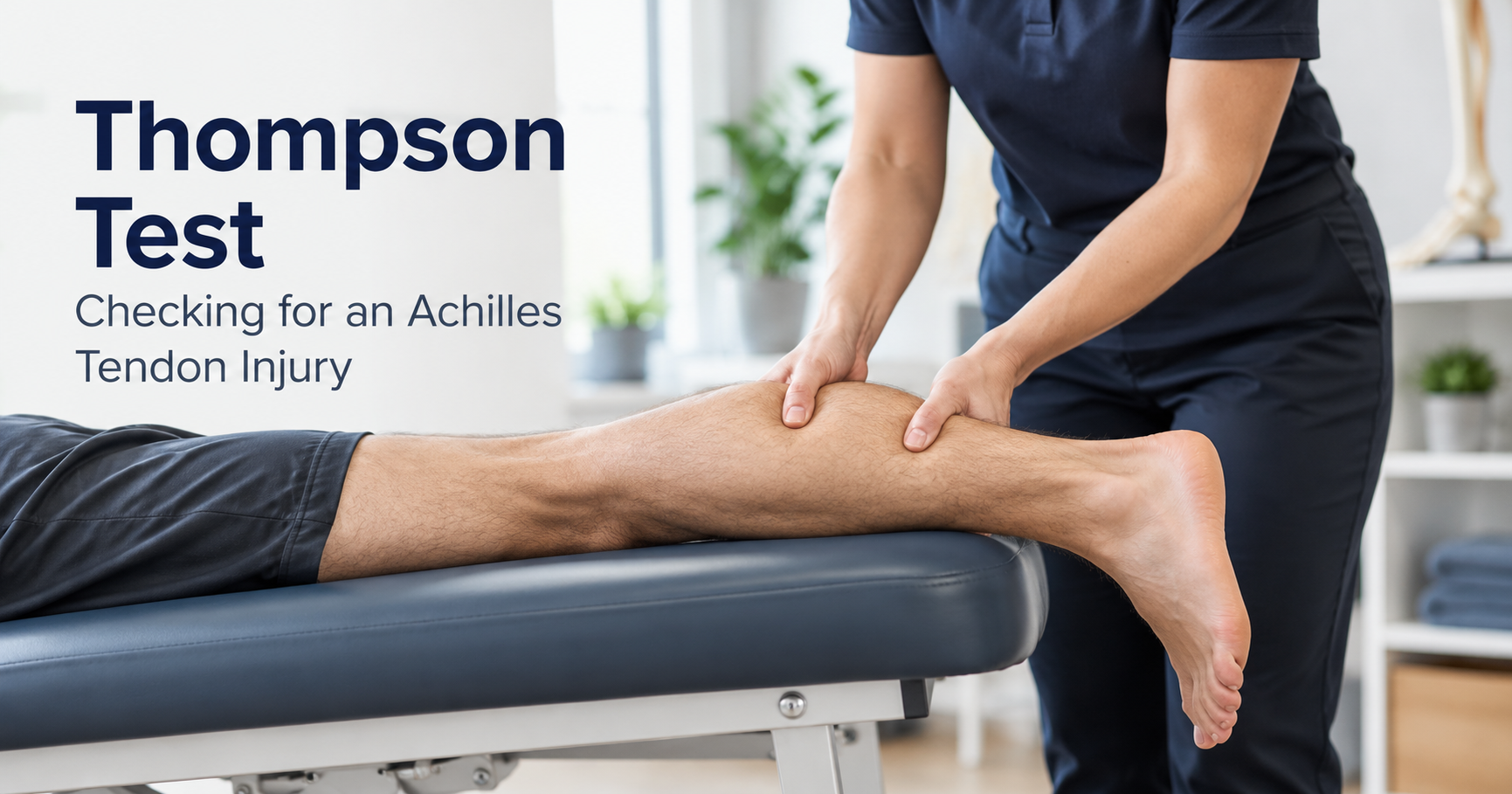
- Position the patient. Lie face down (prone) with both feet hanging freely off the end of the table. Alternatively, kneel on a chair with the feet hanging off the seat edge.
- Relax the legs. The ankle should rest in a natural, slightly pointed position. Tense muscles can hide the result, so ask the person to breathe out and let go.
- Squeeze the calf. Place your hand around the widest part of the calf and squeeze firmly but gently. Do not pinch or press into the tendon itself.
- Watch the foot. Look for the ankle to move into plantar flexion (toes pointing down).
- Repeat on the other leg. Comparing both sides is the key. Everybody’s baseline movement is slightly different.
How to Read the Result
| Result | What you see | What it suggests |
|---|---|---|
| Negative (normal) | Foot points downward when the calf is squeezed | Tendon is probably intact |
| Positive | No movement, or clearly less than the other leg | Likely complete Achilles rupture |
| Equivocal | Small or uncertain movement | Possible partial tear or other cause. Needs a proper exam |
How Accurate Is the Thompson Test?
Clinical studies report that the Thompson test detects acute complete ruptures with high accuracy, with sensitivity often quoted in the mid-90s percent range and similar specificity. That makes it one of the best bedside tests for this injury.
It is not perfect, though. Results can be misleading when:
- The tear is partial, so some fibers still transmit force
- The rupture is old (chronic) and scar tissue has bridged the gap
- Other small tendons around the ankle move the foot slightly, even with a complete tear
- The person is tense, in severe pain, or the squeeze is poorly done
Because of this, doctors combine the Thompson test with other findings, and often confirm with imaging.
Other Tests Doctors Use for Achilles Injuries
| Test | How it works |
|---|---|
| Matles test | Lie face down and bend the knees to 90 degrees. A foot that drops to a flatter or upward position than the healthy side suggests a rupture. |
| Palpation for a gap | The examiner feels along the tendon for a dent, usually soon after the injury before swelling hides it. |
| Single-leg heel raise | Difficulty rising onto the toes of one leg suggests a weak or torn tendon. |
| Ultrasound or MRI | Imaging shows the tear, its size, and the gap between tendon ends. |
Who Is at Risk of an Achilles Rupture?
- Adults roughly 30 to 50 who play sports only occasionally (“weekend warriors”)
- Men, who are affected more often than women
- People who play stop-and-go sports such as basketball, tennis, football, or badminton
- Those who have had Achilles tendon pain or tendinopathy before
- People taking or recently taking certain antibiotics (fluoroquinolones) or who have had corticosteroid injections near the tendon
- Sudden increases in training load or poor warm-up
What to Do If You Suspect an Achilles Rupture
- Stop activity and avoid walking on the leg as much as possible.
- Use the RICE basics: rest, ice wrapped in a cloth, gentle compression, and elevation.
- See a doctor quickly, ideally within a day or two. Early diagnosis improves treatment options.
- Expect confirmation: a clinician may repeat the Thompson test, check the tendon by hand, and order an ultrasound or MRI.
- Follow the treatment plan. Depending on age, activity level, and the tear, care may be surgical or non-surgical. Both approaches usually involve a protective boot, gradual weight bearing, and months of guided rehabilitation.
Go to urgent care or an emergency department if you also have severe swelling, numbness, a cold or pale foot, or signs of a blood clot such as calf pain with redness and warmth.
Recovery Support Items Worth Knowing About
Your medical team decides what you actually need. These are common categories people discuss during recovery:
- Medical walking boot with heel wedges: prescribed and adjusted by your clinician, never self-selected
- Crutches or a knee scooter: to keep weight off the leg early on
- Cold packs and elevation cushions: to manage swelling during the first days
- Compression sleeves or socks: for comfort once your doctor allows
- Resistance bands and balance tools: used later in physical therapy
- Supportive footwear with cushioned heels: helpful during the return to normal walking
How to Reduce Your Risk of Achilles Injury
- Warm up before sports, especially stop-and-start activities
- Increase training intensity gradually, by no more than about 10 percent a week
- Strengthen and stretch the calf muscles regularly
- Wear shoes that suit your activity and replace them when worn out
- Do not ignore heel or calf pain that keeps coming back
- Talk to your doctor if you are prescribed medicines that can affect tendons
Frequently Asked Questions
Can I do the Thompson test on myself?
It is difficult because you cannot relax the calf while squeezing it yourself. Ask a helper, or get examined by a clinician.
Does the Thompson test hurt?
It should only feel like a firm calf squeeze. If it causes strong pain, stop and seek medical care.
Can I still walk with a ruptured Achilles?
Some people can, usually with a weak push-off and a limp. Walking does not rule out a rupture.
What if the Thompson test is normal but I still have pain?
A normal result does not exclude a partial tear, tendinopathy, or other injuries. Persistent pain, swelling, or weakness deserves a medical assessment.
Is the Thompson test the same as the Simmonds test?
Yes. Simmonds test, Simmonds-Thompson test, and calf squeeze test all refer to the same maneuver.
Do I need an MRI after a positive test?
Not always. Many ruptures are diagnosed from the history and exam. Ultrasound or MRI is used when the diagnosis is unclear or to plan treatment.
Final Thoughts
The Thompson test is a simple and reliable first check for a torn Achilles tendon. Lie face down, relax, squeeze the widest part of the calf, and watch whether the foot moves. A foot that stays still is a red flag. Treat it as a reason to get checked quickly, because early care leads to better recovery.
Medical disclaimer: This article is for general education only and is not medical advice, diagnosis, or treatment. Always consult a qualified healthcare professional about an injury.
Affiliate disclosure: This site may earn a commission from qualifying purchases at no extra cost to you. Product categories mentioned are for general awareness; follow your clinician’s advice on what to use.