


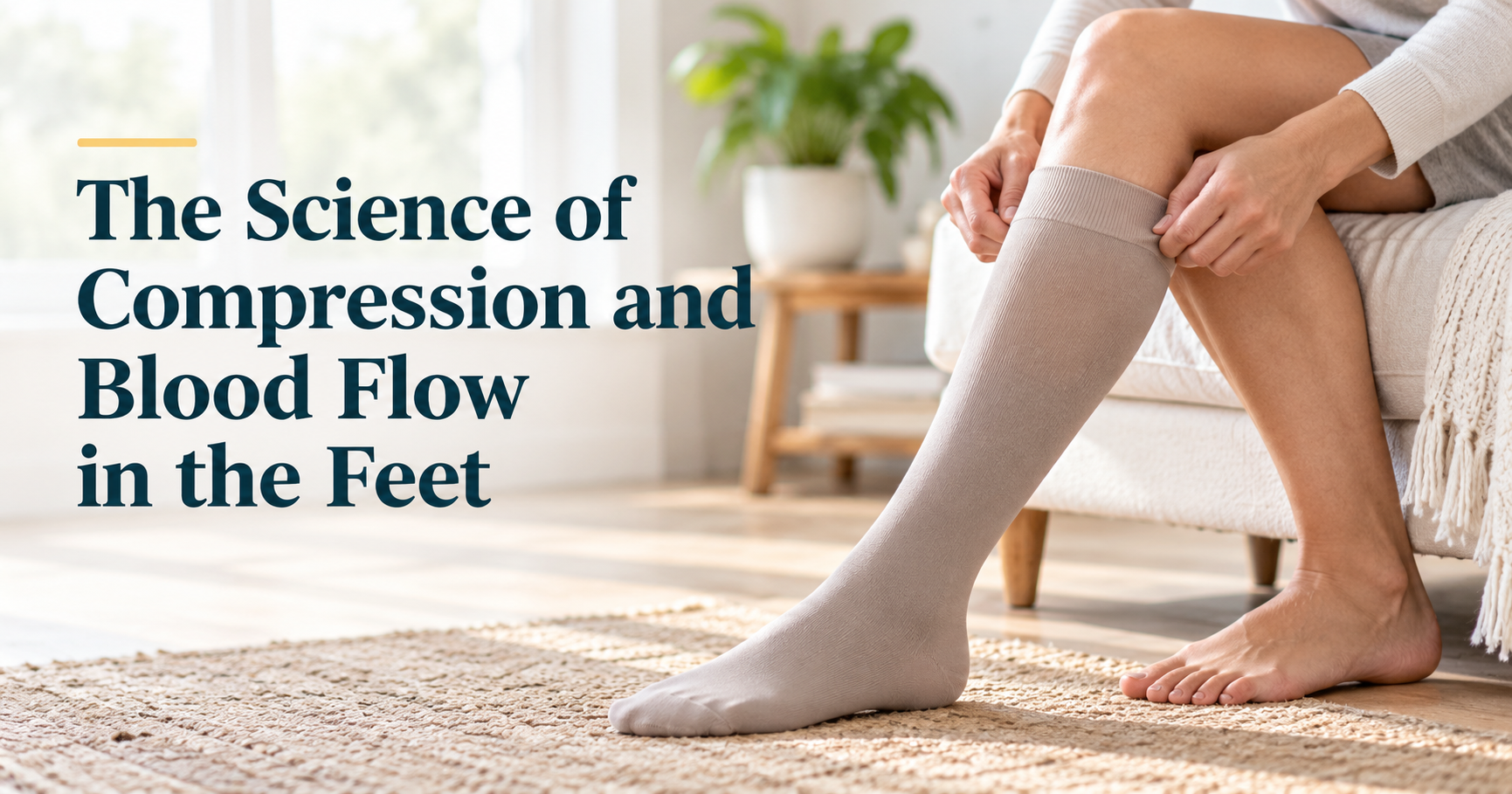
Your feet sit at the very bottom of the circulatory system. Every heartbeat sends fresh blood down to them with ease, but getting that blood back up to the heart means pushing it against gravity, sometimes for hours while you stand, walk or sit on a long flight. When that return trip slows down, many people notice the same things: heavy, tired feet, swollen ankles by evening, and a tight feeling in the calves.
Compression socks and stockings were designed to help with exactly this problem. They are not a gimmick, but they are also not magic. This guide explains the science in plain language: how blood leaves the feet, what goes wrong, what compression physically does, how much pressure is useful, who should be careful, and how to choose a pair that works.
Key takeaways
- Veins carry blood up from the feet using one-way valves and the squeeze of your calf muscles.
- Standing or sitting still lets blood pool and fluid leak into the tissues, which causes swelling and heaviness.
- Graduated compression is tightest at the ankle and looser higher up, which nudges blood toward the heart.
- Pressure is measured in mmHg. Higher is not always better, and some people should not use compression without medical advice.
- Fit, length and material matter as much as the pressure number on the package.
How blood travels from your feet back to your heart
Blood travels to your feet through arteries, which have thick, muscular walls and are driven by the pressure of the heart. The return trip uses veins, which are thinner and softer and have almost no pressure behind them by the time blood reaches the foot. To make up for that, the body relies on three clever mechanisms.
1. One-way valves
Leg veins contain small flaps called valves. They open to let blood move upward and close to stop it from falling back down. Think of a staircase where blood can climb a step at a time but can never slip back a step.
2. The calf muscle pump
The calf is often called the body’s second heart. Deep veins run through the calf muscles. Each time you walk, flex your ankle or rise onto your toes, the muscles contract and squeeze those veins, pushing blood upward past the valves. When the muscle relaxes, the veins refill from below and the cycle repeats.
3. The foot pump and breathing
The sole of the foot contains a network of veins that are compressed every time you put weight on your foot, giving blood a first push upward. Deep breathing also changes pressure inside the chest and abdomen, which helps draw blood toward the heart.
Why the feet and ankles are the hardest place for circulation
When you stand upright, the column of blood between your heart and your ankle creates hydrostatic pressure, the same effect that makes pressure increase as you dive deeper into water. In a person standing still, the pressure inside the veins at the ankle is often in the range of roughly 80 to 100 mmHg. That is far more than the veins are built to handle without help from the muscle pump.
As long as you are walking, the muscle pump keeps pressure under control. The trouble starts when you are standing still, sitting for long periods, or when the calf muscles are weak, the valves are damaged, or the veins have become stretched.
What happens when venous return slows down
If blood is not returned efficiently, several things can happen in the lower leg:
- Blood pooling. Blood collects in the veins of the lower leg and foot instead of moving on.
- Raised capillary pressure. The tiny vessels that connect arteries to veins experience higher pressure, which pushes fluid out into the surrounding tissue.
- Swelling (edema). The extra fluid makes ankles and feet puffy, and shoes feel tighter at the end of the day.
- Discomfort. Aching, heaviness, tingling, cramps at night and restless legs are common complaints linked with sluggish venous return.
- Longer-term vein changes. In chronic venous insufficiency, damaged valves allow blood to flow backward. Over time this can lead to visible varicose veins, skin discoloration and, in advanced cases, skin breakdown.
Age, pregnancy, extra body weight, long periods of standing or sitting, a family history of vein problems and a previous leg injury or clot can all raise the risk.
What compression actually does to your veins and tissues
A compression sock applies controlled, external pressure to the skin and the tissues underneath. That pressure influences circulation in several ways.
It narrows the veins and speeds up flow
When pressure from outside makes a vein slightly narrower, the same volume of blood has to pass through a smaller opening, so it moves faster. Faster flow means less pooling, and it reduces the time blood spends sitting stagnant in the lower leg.
It helps the valves do their job
In a stretched vein, the valve flaps may no longer meet in the middle, so blood leaks backward. By drawing the vein walls closer together, compression helps the flaps meet more effectively, which supports one-way flow.
It reduces fluid leaking into the tissues
External pressure counteracts the raised pressure inside the small vessels, so less fluid escapes into the surrounding tissue. It also supports the lymphatic system, which drains excess fluid. The result is less swelling and often less of that heavy, tight feeling.
It makes the calf muscle pump work better
A firm sleeve around the calf gives the muscles something to push against. When you walk, the contraction is directed more inward toward the veins rather than outward into soft tissue, making each step more effective at moving blood upward.
Graduated compression: why the ankle gets the most pressure
Most medical-style compression socks are graduated. The pressure is highest at the ankle, where gravity and venous pressure are greatest, and it decreases gradually as the sock moves up the calf. This pressure gradient encourages blood to travel in one direction, from the foot toward the heart.
A simple everyday sock or tube sock that is merely tight is not the same thing. Without a controlled gradient, a tight band at the top can act like a constriction and may even make things worse. This is one reason it is better to choose products that clearly state their pressure rating and describe themselves as graduated.
Understanding compression levels (mmHg)
Compression strength is measured in millimeters of mercury, written as mmHg, the same unit used for blood pressure. The number usually refers to the pressure at the ankle. Product names differ between brands, but the general ranges look like this:
| Level | Pressure | Typically used for |
|---|---|---|
| Light | 8 to 15 mmHg | Everyday comfort, mildly tired or achy feet |
| Moderate | 15 to 20 mmHg | Long days on your feet, travel, mild swelling |
| Firm | 20 to 30 mmHg | Noticeable swelling, vein symptoms, often recommended by a clinician |
| Extra firm | 30 to 40 mmHg | Specific medical conditions under professional guidance |
| Prescription | 40 mmHg and above | Specialist fitting and prescription use |
For most healthy adults who simply want more comfortable feet, the lighter ranges are the usual starting point. Stronger compression is not automatically better. If it is hard to put on, painful, or leaves deep marks, it is probably too strong or the wrong size.
What the evidence supports, and what it does not
Compression therapy is among the most widely studied non-drug approaches for leg circulation, and the picture is fairly consistent in some areas and less certain in others.
- Swelling and symptoms. Research and clinical practice support compression for reducing leg swelling and easing heaviness and aching in people with venous problems or long periods of standing.
- Long-distance travel. Reviews of studies on air travel have found that graduated stockings reduce the chance of small, symptomless clots forming in the leg veins on long flights. Moving around, staying hydrated and flexing the ankles remain important too.
- Chronic venous disease. Compression is a standard part of managing venous insufficiency and venous leg ulcers, but this is done under professional supervision with the correct strength and fit.
- Sports and recovery. Evidence is mixed. Some people feel less muscle soreness, while performance benefits are small or inconsistent in studies.
- Varicose veins. Compression can relieve symptoms, but it does not remove or cure existing varicose veins.
Who may benefit from compression
- People who stand for most of the day, such as nurses, teachers, retail staff and hairdressers
- People who sit for long periods, including office workers and frequent travelers
- Older adults with mild ankle swelling at the end of the day
- People with diagnosed chronic venous insufficiency or varicose vein symptoms
- Pregnant women with swollen or aching legs (check with a midwife or doctor first)
- People recovering from certain vein conditions, when advised by their doctor
When to speak to a doctor before using compression
- Peripheral artery disease or poor arterial circulation. Compression can reduce blood supply in the leg when the arteries are already narrowed. A simple test of arm and ankle blood pressure can check this.
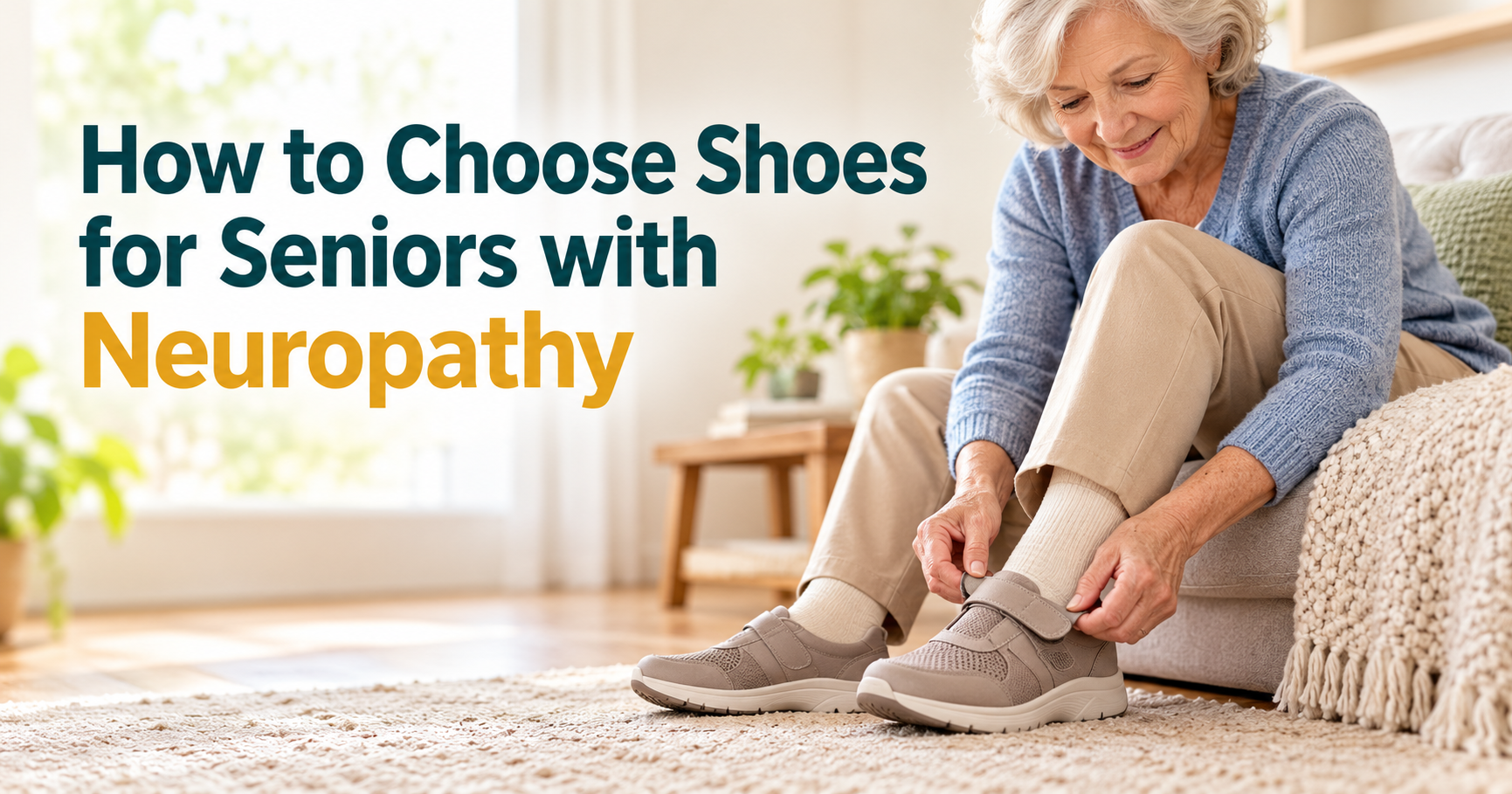
- Diabetes, especially with neuropathy. Reduced feeling means you may not notice a sock that is too tight or rubbing. Skin should be checked daily.
- Heart failure or severe leg swelling. Sudden fluid shifts can be harmful.
- Skin infection, open wounds, or very fragile skin.
- A hot, red, painful, swollen calf on one side. This can signal a blood clot and needs urgent medical attention rather than a sock.
How to choose compression socks that actually work
Pick the right pressure for your purpose
Start with the lowest level that addresses your symptoms. If you have a medical condition, ask your doctor which level is appropriate before buying.
Measure instead of guessing
Brands publish size charts based on ankle circumference and often calf circumference and foot length. Measure in the morning, before swelling builds up during the day, and use the chart for the specific product. An ill-fitting sock can bunch, slip or dig in.
Choose the right length
Knee-high socks are the most popular choice and are enough for most people with foot, ankle and lower calf symptoms. Thigh-high and pantyhose styles are generally used when a clinician recommends them.
Look at the toe and the fit around the foot
Closed-toe socks feel like normal socks. Open-toe designs can be easier to put on and are more comfortable for people with sensitive toes or bunions. Seamless toes help reduce rubbing.
Consider the material
- Nylon and elastane blends give reliable, durable pressure and a smooth feel.
- Merino wool blends manage moisture and temperature well, which suits cold weather and long wear.
- Cotton blends feel soft but may hold moisture and lose elasticity faster.
Think about getting them on
Good compression socks are snug, so older adults or people with limited hand strength may find them difficult to put on. Look for features such as a soft top band, a heel pocket for guidance, or an open toe, and consider a donning aid designed for stockings.
How to wear and care for compression socks
- Put them on in the morning, before swelling develops, and remove them at bedtime unless a doctor advises otherwise.
- Turn the sock inside out down to the heel, slide your foot in, then roll the fabric up smoothly.
- Smooth out wrinkles. Folds and bunches create pressure lines.
- Never roll or fold the top band down. That creates a tight ring that can restrict flow.
- Wash after each wear in cool or lukewarm water and let them air dry. Heat damages elastic fibers.
- Replace them regularly. Most last around three to six months with daily wear before the compression fades.
- Check your skin and toes when you take them off. Numbness, tingling, color changes or sore spots mean the fit needs attention.
Habits that work together with compression
Compression helps most when combined with movement and healthy habits:
- Walk regularly, since walking is the best activator of the calf muscle pump.
- Do ankle circles and calf raises when sitting for long periods.
- Raise your legs above heart level for 15 to 20 minutes a few times a day when swollen.
- Stay hydrated and keep a healthy body weight.
- Avoid crossing your legs for long periods.
Frequently asked questions
Can I wear compression socks all day?
Most people can wear them throughout the day, from morning until evening. Taking them off at night is generally recommended unless a clinician has said otherwise.
Do compression socks help with swollen feet?
For swelling related to standing, sitting or mild venous problems, they often help. Sudden, one-sided, or unexplained swelling should always be checked by a doctor.
Are compression socks safe for diabetics?
Some people with diabetes use them safely, but those with reduced foot sensation or circulation problems need medical advice first, plus daily skin checks.
How tight should they feel?
Snug and supportive, with the strongest squeeze at the ankle. They should never feel painful, cause numbness or tingling, or leave deep grooves.
Can I sleep in compression socks?
Usually this is not necessary, since lying flat reduces the pressure in your leg veins. Only do so if your doctor has told you to.
Will compression socks cure varicose veins?
No. They can ease symptoms and slow progression for some people, but they do not repair damaged veins.
Final thoughts
The science behind compression is straightforward. Your feet are at the bottom of a long column of blood, your veins rely on valves and muscle movement to push that blood upward, and graduated external pressure gives those veins extra support. For people on their feet all day, travelers and those with mild swelling or vein symptoms, that support can mean lighter, more comfortable legs.
The best results come from choosing the right pressure, measuring carefully, wearing the socks properly and staying active. If you have diabetes, arterial disease, heart problems or sudden swelling, speak to a healthcare professional before you start.
Medical disclaimer: This article is for general information only and is not medical advice. It does not replace diagnosis or treatment from a qualified healthcare professional.
Affiliate disclosure: This website may earn a commission from qualifying purchases at no extra cost to you. Our content is written to inform, and recommendations are based on research.