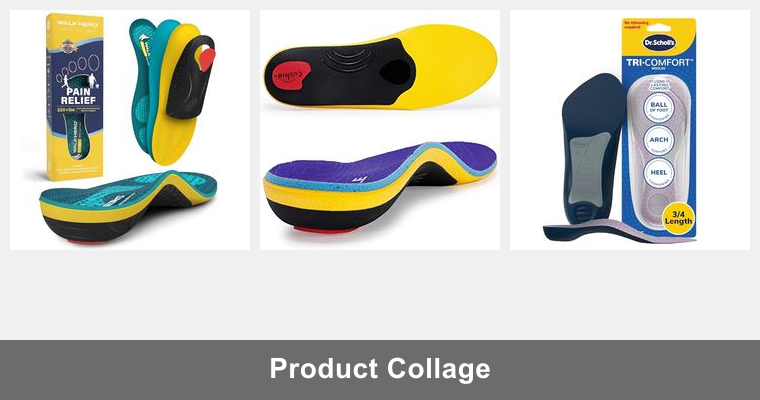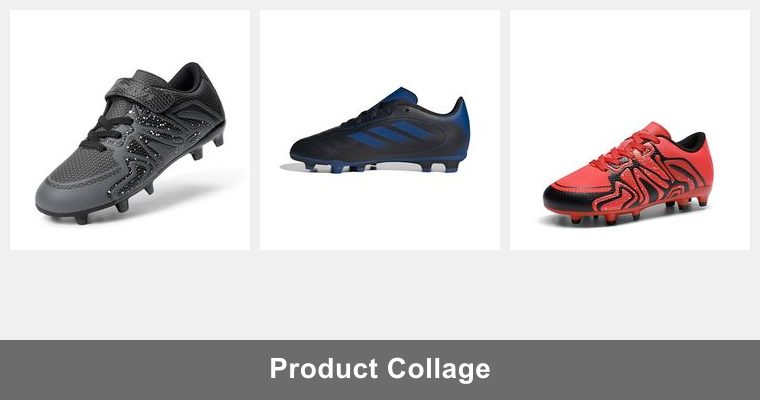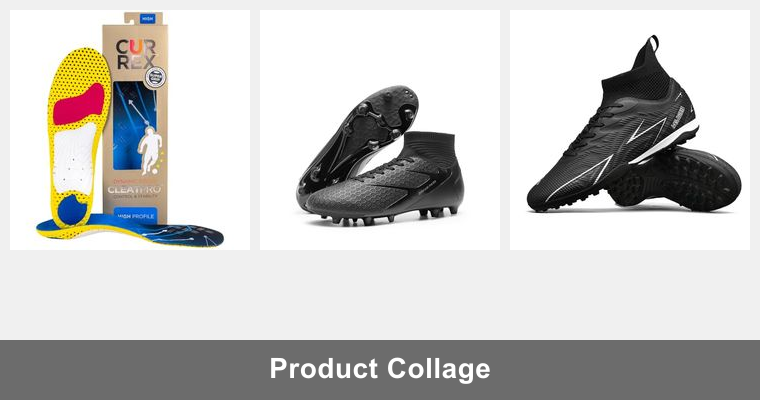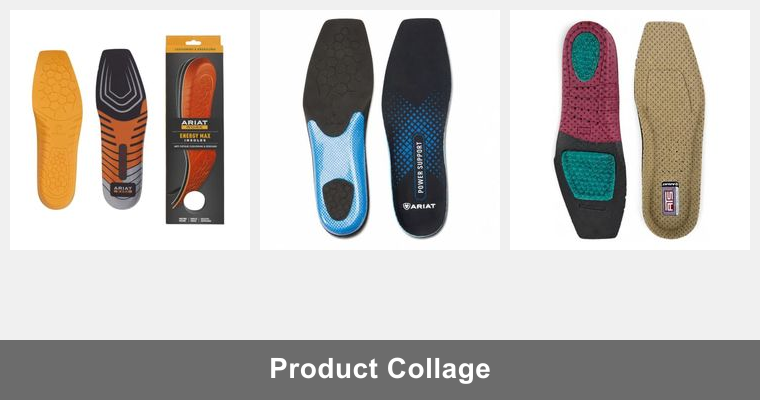
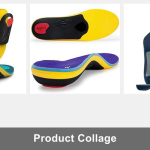

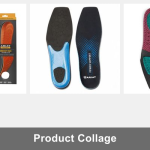
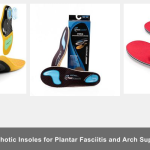
Every step you take exerts a force between two to three times your body weight onto the complex network of 26 bones, 33 joints, and over 100 muscles, tendons, and ligaments inside your foot. Yet, most off-the-rack footwear comes equipped with paper-thin factory liners designed primarily to cover interior stitching rather than support human biomechanics.
If you spend hours walking on unforgiving concrete, training for distance running, or waking up with stiffness along the bottom of your heel, replacing those flimsy factory liners with properly selected shoe insoles can transform your daily comfort. However, navigating the crowded footwear accessory market is notoriously confusing. Walk into any major pharmacy or search online, and you are confronted with hundreds of options ranging from soft gel pads to rigid carbon fiber orthotics.
This comprehensive guide cuts through marketing jargon and exaggerated manufacturer claims. Based on biomechanical principles, footwear testing, and trustworthy evidence from clinical organizations like the Mayo Clinic and the American Podiatric Medical Association (APMA), this guide explains everything smart shoppers need to know about shoe insoles—how they function, how to assess your arch height, how materials differ, and how to pick the ideal pair for your lifestyle and budget.
1. What Are Shoe Insoles and How Do They Work?
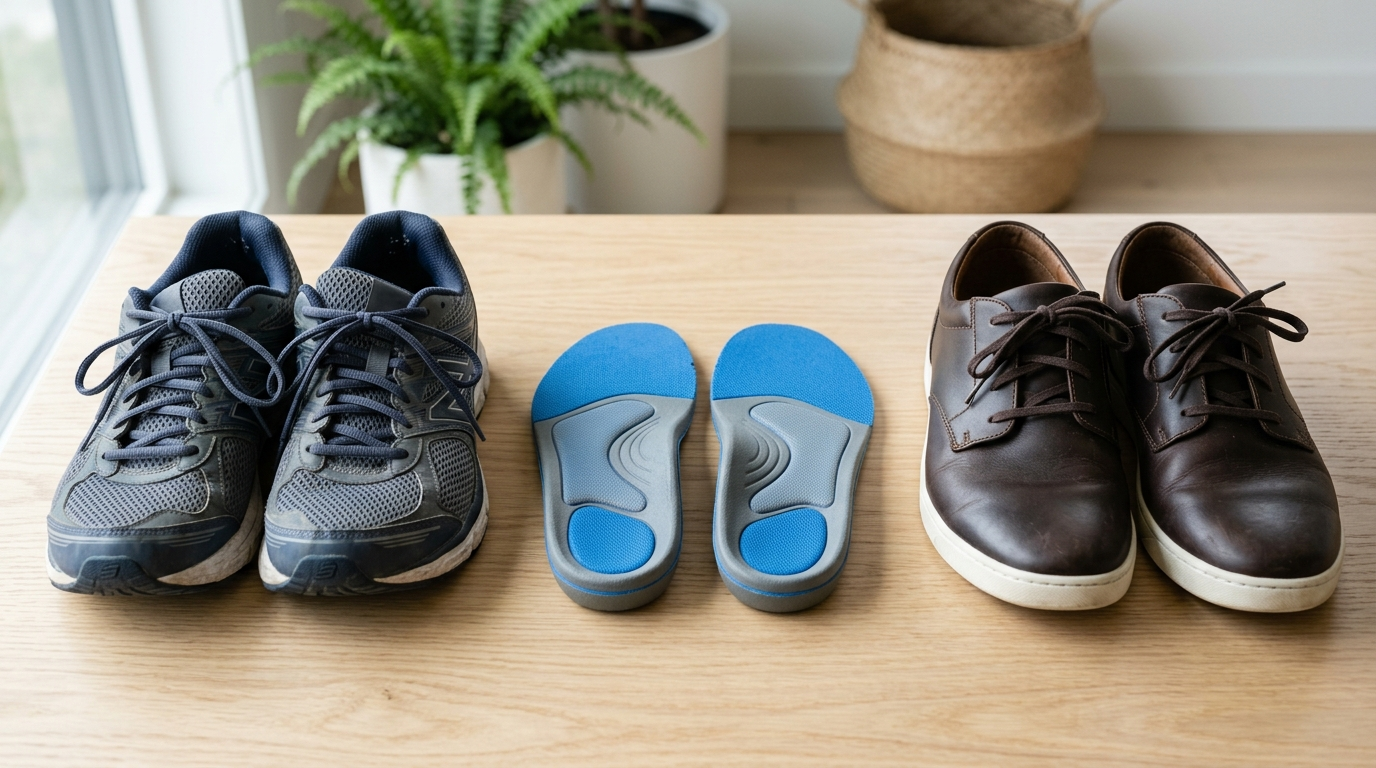
Shoe insoles—also commonly referred to as shoe inserts, footbeds, or non-prescription orthotics—are removable inserts that sit inside your footwear directly underneath your foot. While factory liners serve as minimal barrier pads, aftermarket insoles are engineered to modify how your foot interacts with the ground.
When engineered correctly, a quality insole accomplishes three core biomechanical objectives:
- Pressure Redistribution: By filling the vacant space beneath your arch, insoles increase the total surface area contacting your foot. This prevents body weight from concentrating exclusively on the heel and forefoot.
- Rearfoot Stabilization: A deep heel cup cradles the fatty pad underneath your calcaneus (heel bone), maintaining natural shock-absorbing padding directly beneath the bone rather than letting it spread outward upon impact.
- Motion Control & Overpronation Prevention: Structured arch shells gently limit excessive inward rolling of the foot (overpronation), helping align the ankles, knees, and hips during the gait cycle.

Cushioning vs. Structural Support: The Key Distinction
One of the most frequent mistakes consumers make is confusing soft cushioning with true structural support. Soft pillow-like insoles made of low-density memory foam feel delightful during a 30-second store test. However, soft materials compress completely flat under sustained body weight. Once compressed, they provide zero arch contouring or gait guidance.
Conversely, structural arch support relies on semi-rigid or rigid contoured shells (often TPU plastic or composite fiber) that retain their shape under full body weight. While firm arch support may feel noticeable initially, it delivers durable biomechanical relief throughout 8 to 12 hours of standing or walking.
2. Understanding Your Foot Arch Type
No single insole design fits every foot. The human foot generally falls into one of three distinct arch classifications. Selecting an insole that conflicts with your arch profile can lead to discomfort, instability, or hot spots.
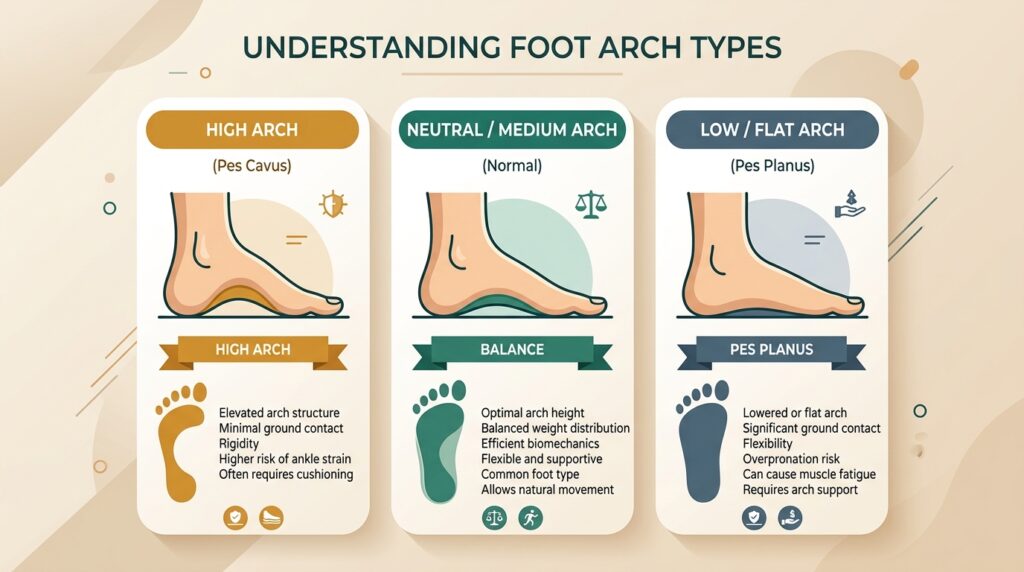
| Foot Arch Type | Biomechanical Profile | Common Discomforts | Recommended Insole Features |
|---|---|---|---|
| High Arch (Cavus Foot) | Underpronation (supination); rigid arch absorbs little shock; weight concentrated on heel and ball. | Metatarsalgia, heel strike tenderness, plantar fascia tension, ankle instability. | Deep heel cup, high flexible arch fill, generous shock-absorbing foam cushioning. |
| Neutral Medium Arch | Efficient natural pronation; weight evenly distributed across forefoot and rearfoot. | General fatigue from long standing on hard concrete; overuse strain during high mileage. | Semi-rigid structured arch support with moderate cushioning to preserve natural gait. |
| Low Arch / Flat Feet (Pes Planus) | Overpronation; foot rolls inward, flattening arch completely against ground under load. | Medial shin splints, Achilles tendon tightness, inward knee collapse, arch fatigue. | Low-to-medium rigid or semi-rigid arch shell with deep heel cradle to control overpronation. |
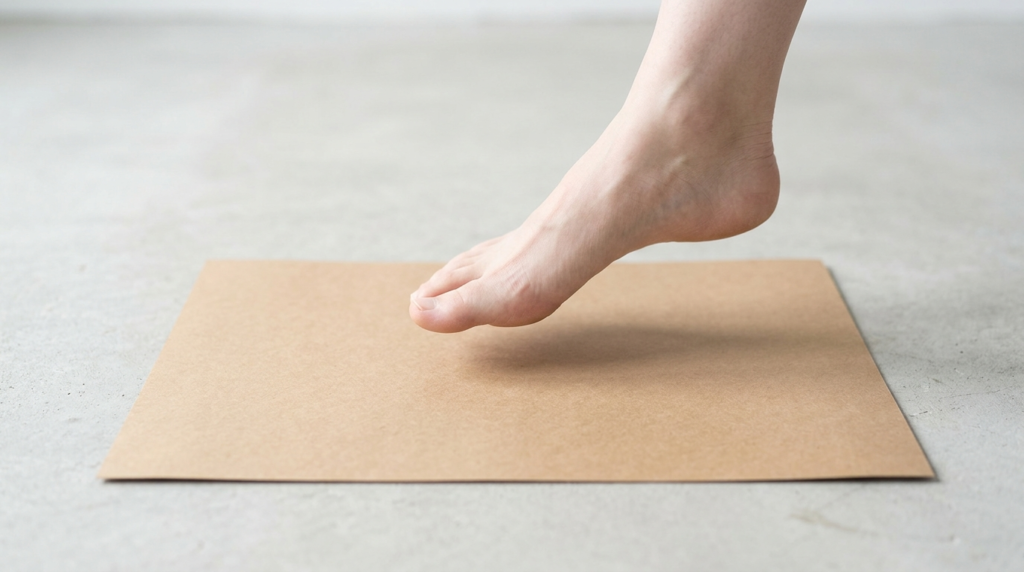
How to Perform the Wet Footstep Test at Home
If you are unsure of your arch height, you can perform a simple, reliable test at home in under two minutes:
- Pour a thin layer of water into a shallow baking tray or wide dish.
- Place a sheet of heavy brown paper towel or cardboard on a dry floor next to the tray.
- Barely wet the bottom of your bare foot in the water, shaking off excess drops.
- Step firmly onto the brown paper towel, standing naturally with full body weight for 3 seconds.
- Step off and inspect the wet footprint shape left on the paper towel.
High Arch Result:Only the front ball of the foot and the heel are visible, connected by a very thin outer line or no line at all.
Neutral Arch Result:The footprint shows a smooth, well-defined curve connecting the heel and forefoot, filling roughly half the arch space.
Flat Arch Result:The footprint looks solid and wide with almost no inward arch curve, filling the entire foot outline on paper.
3. The 5 Primary Types of Insoles Compared
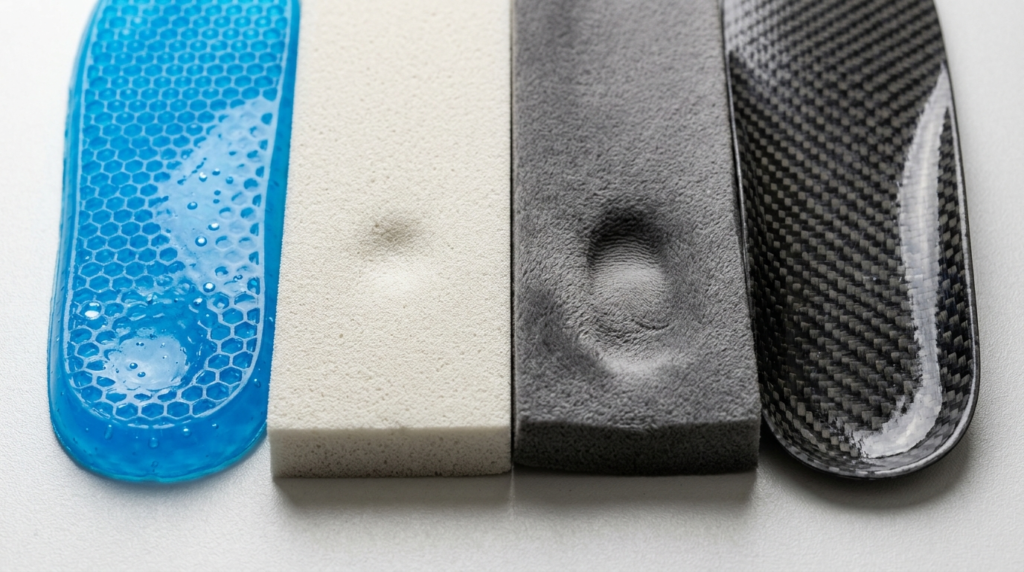
Insoles differ significantly by material composition and intended structural purpose. Understanding these five primary categories enables you to select the exact material density required for your activities.
| Insole Category | Primary Materials | Main Benefit | Potential Limitation | Best Suited For |
|---|---|---|---|---|
| Rigid Structural Orthotics | Polypropylene, carbon composite, molded TPU shell | Maximum motion control; locks heel in place; prevents overpronation | Stiff feel; requires 1–2 week gradual break-in period | Severe flat feet, heavy overpronation, work boots, heavy weight bearing |
| Semi-Rigid Hybrid Supports | Flexible TPU arch bridge with dense EVA foam top cover | Ideal balance of structural realignment and impact damping | Requires moderate shoe interior volume | Neutral & flat arch runners, walkers, workers standing on hard floors |
| Soft High-Density Foam | Closed-cell EVA, PU foam, PORON shock pads | Excellent shock absorption; reduces pressure on sensitive joints | Limited motion control for heavy pronators | High arch feet, sensitive soles, general foot fatigue, casual shoes |
| Viscoelastic Gel Inserts | Silicone gel, polymer liquid gel grids | High local shock absorption under heel strike and ball of foot | Heavier weight; minimal dynamic energy return or arch control | Dress shoes, casual sneakers, targeted heel impact relief |
| Contoured Memory Foam | Open-cell polyurethane memory foam | Immediate plush step-in sensation; molds to foot shape | Compresses permanently within 3–6 months; no structural arch support | Short casual walks, house slippers, low-impact comfort seeking |
4. Choosing Insoles for Specific Activities & Workplaces
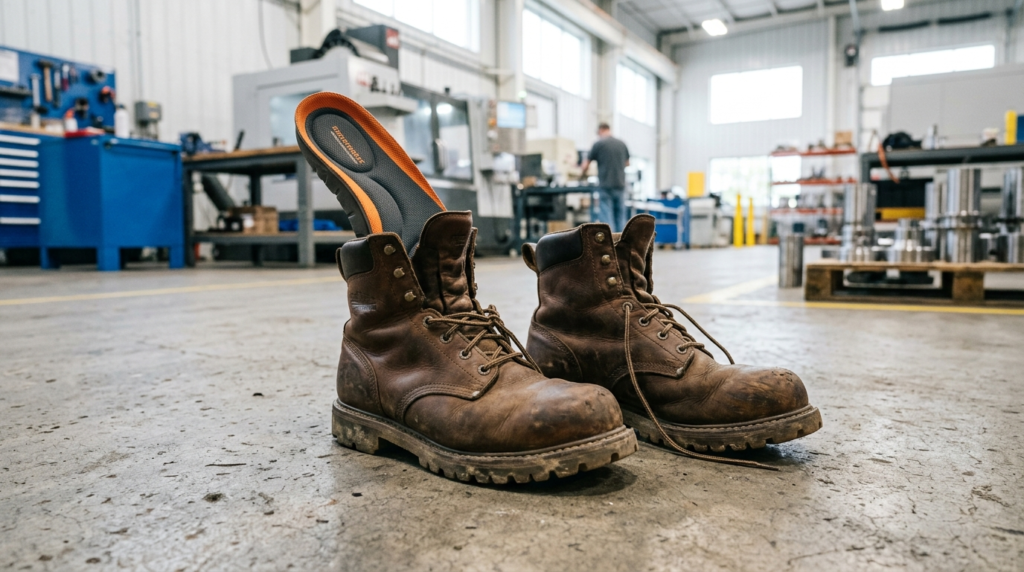
Your daily environment dictates the stress placed on your feet. An insole designed for high-impact sprinting in lightweight running shoes will perform quite differently than an insert built for standing on industrial concrete floors in heavy work boots.
Insoles for Standing 8+ Hours on Concrete
Healthcare professionals, factory workers, retail associates, and warehouse employees subject their feet to static gravity load on unyielding concrete surfaces. Static standing leads to blood pooling in lower extremities and continuous isometric strain on the plantar fascia.
For long standing, choose semi-rigid hybrid insoles with high-density polyurethane (PU) cushioning and deep heel cups. PU foam resists compression far better than soft gel or memory foam over an 8-hour shift, ensuring consistent arch elevation from clock-in to clock-out.
Insoles for High-Impact Running and Sports
Running subjects the musculoskeletal system to repetitive ground reaction forces. Athletic inserts require responsive energy return and moisture management.
Look for low-profile, lightweight athletic insoles featuring PORON or expanded TPU (eTPU) shock pads under the heel and forefoot, paired with anti-microbial, moisture-wicking top covers to prevent blisters during long training runs.
| Activity / Environment | Primary Strain Factors | Key Insole Characteristics | Recommended Profile |
|---|---|---|---|
| Industrial & Work Boots | Static body load on concrete, steel-toe friction, heavy footwear weight. | Thick high-density PU foam, deep heel cup, heavy-duty TPU arch support shell. | High-volume full-length insert |
| Road Running & Athletics | Repetitive high ground reaction forces, friction heat, excessive pronation. | Lightweight design, responsive eTPU or PORON foam, moisture-wicking top cloth. | Medium-volume athletic full-length insert |
| Hiking & Trail Walking | Uneven terrain, lateral ankle torsion, downhill toe impact pressure. | Rigid torsional midfoot shank, deep stabilizing heel cradle, friction reduction fabric. | Medium-to-high volume supportive insert |
| Dress Shoes & Tight Loafers | Very restricted interior shoe volume, thin leather outsoles. | Ultra-thin 3/4 length profile or adhesive heel cups that require no toe-box space. | Low-volume 3/4 length insert |
5. Over-the-Counter Insoles vs. Custom Medical Orthotics
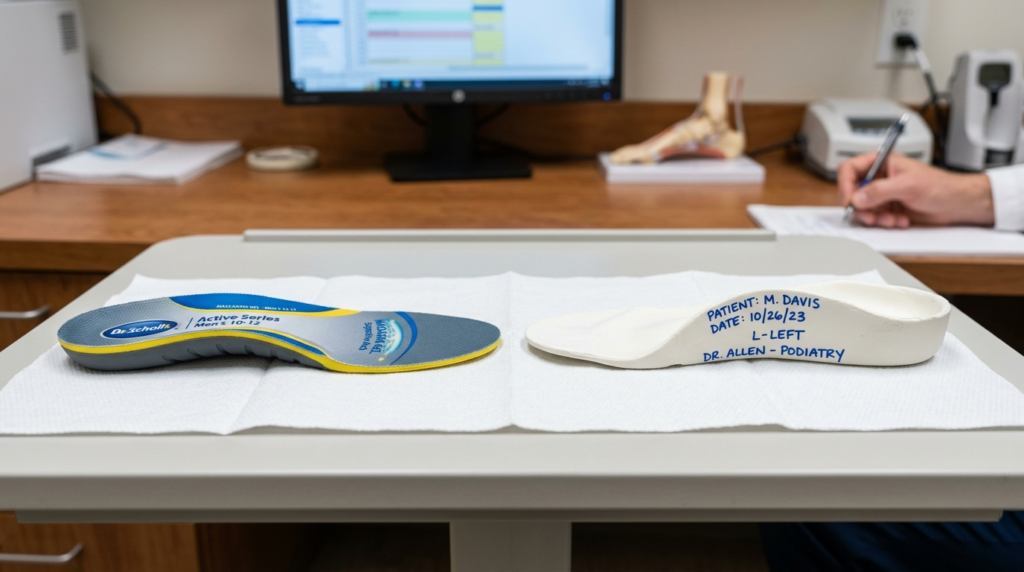
Consumers suffering from foot discomfort often wonder whether they need expensive custom-molded medical orthotics prescribed by a podiatrist or if over-the-counter (OTC) insoles will suffice.
| Feature / Metric | Over-the-Counter (OTC) Insoles | Custom Medical Prescription Orthotics |
|---|---|---|
| Average Cost | $25 to $60 per pair | $300 to $800+ (plus clinic consultation fees) |
| Manufacturing Process | Mass-manufactured using standardized arch heights and foot shapes. | Custom-molded from 3D laser scans or plaster casts of patient feet. |
| Insurance Coverage | FSA / HSA eligible; generally not covered by insurance. | Sometimes partially covered depending on medical diagnosis and plan benefits. |
| Adaptability & Convenience | Available immediately online or in retail stores; easy to replace. | Requires 2–4 weeks laboratory casting and fitting turnaround. |
| Best Medical Use Cases | Mild to moderate fatigue, arch strain, general walking, preventive alignment. | Severe structural deformities, diabetic ulcers, rigid cavus foot, post-surgical care. |
Multiple biomechanical studies published in sports medicine literature demonstrate that for mild to moderate foot strain and non-complicated arch fatigue, high-quality OTC structural insoles perform remarkably close to custom orthotics at a fraction of the cost. Unless you have severe structural asymmetry or a clinical diagnosis requiring prescription correction, starting with a well-fitted OTC insole is a prudent first step.
6. How to Choose the Right Insoles: A Smart Shopper’s Checklist
To ensure you get the perfect fit on your first purchase, evaluate insoles using these four essential criteria:
1. Shoe Interior Volume Profile
High Volume: Designed for roomy work boots, hiking boots, or running shoes with removable liners.
Low Volume: Thin designs intended for tight dress shoes, cycling shoes, or slim loafers.
2. Removable Liner Verification
Before buying full-length insoles, verify that your shoes have removable factory liners. If the existing liner is glued down permanently, opt for a 3/4-length insole instead.
3. Arch Apex Alignment
The highest point of the insole arch shell must line up directly under the peak of your anatomical arch—not too far forward toward the ball of your foot, and not too far back against your heel.
4. Sizing Range & Trimming
Most full-length insoles come in dual-size brackets (e.g., Men’s 9–10.5). Always size up if you fall between sizes so you can trim excess forefoot material precisely.
Step-by-Step Guide to Trimming Full-Length Insoles
- Remove the factory liner from your target shoe.
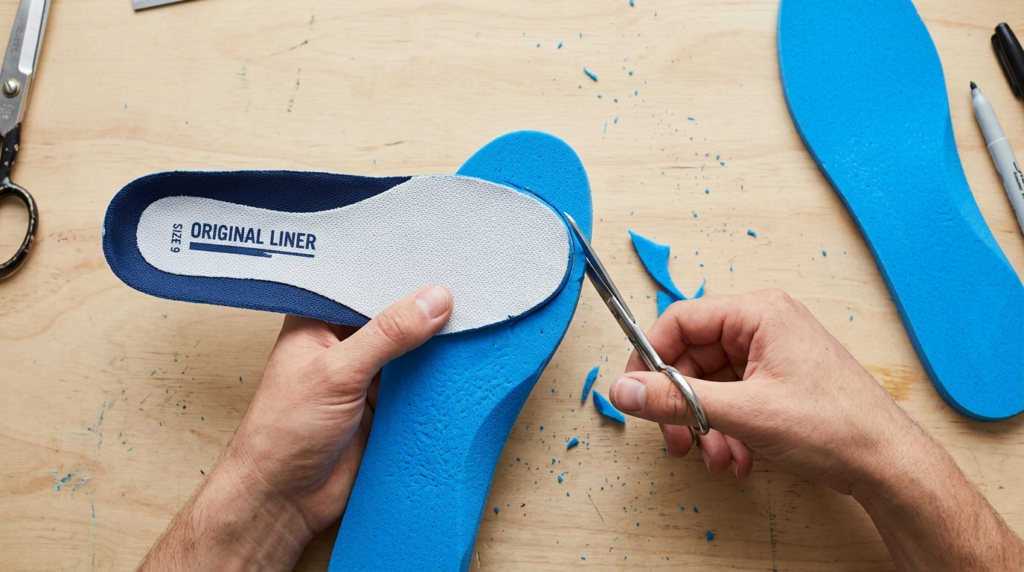
- Place the original factory liner directly over the bottom of your new insole, aligning the rear heel cup borders perfectly.
- Use a fine-tip marker to trace the toe contour of the original factory liner onto the bottom forefoot foam of the new insole.
- Using sharp household scissors, trim carefully slightly outside your traced line.
- Slide the trimmed insole into your shoe. It should lay completely flat without bubbling or bunching up at the toe box.
7. Common Mistakes Smart Shoppers Should Avoid
1. Stacking Full-Length Insoles Over Factory Liners:
Placing a new insole over the existing shoe liner severely reduces toe-box height, leading to painful toe cramp, instep pressure, and heel slippage.
2. Expecting Insoles to Fix Worn-Out Shoes:
An insole mimics the foundation underneath it. If your shoe’s outsole or midsole is unevenly worn down on one side, inserting a new insole will not restore stability; it will tilt along with the collapsed shoe structure.
3. Rushing the Adaptation Period:
Jumping straight into a 10-mile hike or 12-hour work shift on day one with rigid arch insoles can cause muscle soreness. Give your foot tendons 5 to 7 days to adjust gradually.
4. Choosing Inflexible Super-Rigid Shells for High Arches:
High arch feet are already naturally rigid and lack shock absorption. Inserting an inflexible carbon shell under a high arch exacerbates impact force. High arches require cushioning with flexible contouring.
8. Break-In Period, Care, and Replacement Timelines
Proper care prolongs the life of your insoles and ensures hygienic footwear conditions.
Break-In Schedule
Wear your new insoles for 1 to 2 hours on Day 1, increasing by 1 hour each consecutive day. By Day 5–7, your foot structures will be comfortably accustomed to the improved alignment.
Cleaning Instructions
Hand-wash insoles using a damp cloth with mild soap and lukewarm water. Never submerge in water or put insoles in a washing machine or hot dryer, as high heat degrades foam adhesives and warps TPU plastic shells.
When to Replace
Replace insoles every 6 to 12 months (or every 300–500 miles of running). Key signs of degradation include flattened forefoot foam, cracks in the arch shell, or returning foot fatigue.
9. Frequently Asked Questions
Answers to common consumer questions regarding shoe insoles, arch support, and foot comfort:
1. How do I know what type of insole I need?
Your choice depends on three key factors: your foot arch height (high, neutral, or flat), your daily activity (standing, running, or casual walking), and the fit volume of your shoes. Perform the wet footprint test at home to determine your arch height, then select an insole that offers matching arch contouring and appropriate cushioning density.
2. Are expensive insoles always better than budget options?
Not necessarily. While higher-priced insoles often feature durable materials like thermal-molded TPU or shock-absorbing PORON foam, the best insole is the one that matches your specific arch shape and foot mechanics. A $40 over-the-counter structural arch insole that fits your foot profile correctly will provide better support than a $120 gel insert with improper arch contouring.
3. How long do shoe insoles typically last?
Most quality over-the-counter insoles last between 6 to 12 months under regular daily use (approximately 300 to 500 miles of walking or running). High-density foam and rigid orthotic shells last longer than soft memory foam or gel inserts, which tend to compress permanently after 3 to 6 months.
4. Should arch support insoles feel uncomfortable at first?
A mild sense of firm pressure under your arch is normal during the first 3 to 7 days as your foot adjusts to improved alignment. However, insoles should never cause sharp pain, numbness, or blisters. If you experience acute discomfort, remove them and gradually increase wear time by 1 to 2 hours per day.
5. Can I use the same insoles in different pairs of shoes?
Yes, provided both pairs of shoes have similar interior volume and removable factory liners. However, swapping insoles daily between tight dress shoes and roomy work boots can alter performance. For maximum convenience and longevity, keeping dedicated insoles in your most frequently worn shoes is recommended.
6. Do people with flat feet really need rigid arch support?
People with flexible flat feet benefit from firm, structured arch support that prevents excessive inward rolling (overpronation). However, rigid insoles that are too high can cause painful pressure points. Look for low-to-medium arch insoles with deep heel cups that stabilize the rearfoot rather than aggressively pushing against the midfoot.
7. Are gel or high-density foam insoles better for standing all day?
High-density EVA or polyurethane foam is generally superior to pure gel for standing on hard concrete floors. While gel feels soft initially, it compresses quickly under static weight and lacks structural rearfoot stabilization. High-density foam combined with a semi-rigid arch shell redistributes body weight across the entire foot surface.
8. Should I remove the original factory insoles before inserting new ones?
Yes, in almost all cases. Placing a replacement full-length insole on top of an existing factory liner reduces toe-box volume, causing cramped toes and tight fitting across the instep. Always remove the original factory liner first unless using a thin 3/4-length insert.
9. How do I properly trim full-length insoles to fit my shoes?
Remove your shoe’s original factory liner and lay it directly over the top of the new insole, aligning the heels perfectly. Use a ballpoint pen to trace the outline of the original liner’s toe area onto the bottom of the new insole, then carefully trim along the line with sharp scissors.
10. When should I see a podiatrist instead of buying over-the-counter insoles?
You should consult a licensed podiatrist or healthcare professional if you experience severe persistent foot pain, numbness, unexplained swelling, visible structural deformities, or pain that does not improve after 2 to 3 weeks of wearing supportive footwear and over-the-counter insoles.
10. Final Takeaways & Smart Buying Advice
Investing in the right pair of shoe insoles is one of the most cost-effective decisions you can make for your foot health, daily posture, and overall energy levels. Rather than relying on guesswork or promotional hype, follow these key principles:
- Match Your Arch Height: Perform the wet footprint test to choose insoles designed specifically for high, neutral, or flat arches.
- Prioritize Structural Support over Soft Cushioning: Soft memory foam compresses flat under body weight; firm TPU arch shells provide durable realigning support.
- Respect Interior Shoe Volume: Use full-length high-volume inserts for roomy work boots and running shoes, and low-volume 3/4 insoles for tight dress shoes.
- Allow a 5-Day Break-In Period: Increase wear time gradually to allow tendons and fascia to adapt comfortably to proper biomechanical alignment.
- Consult a Professional When Needed: If you experience severe chronic pain, swelling, or numbness, consult a licensed podiatrist for clinical evaluation.