










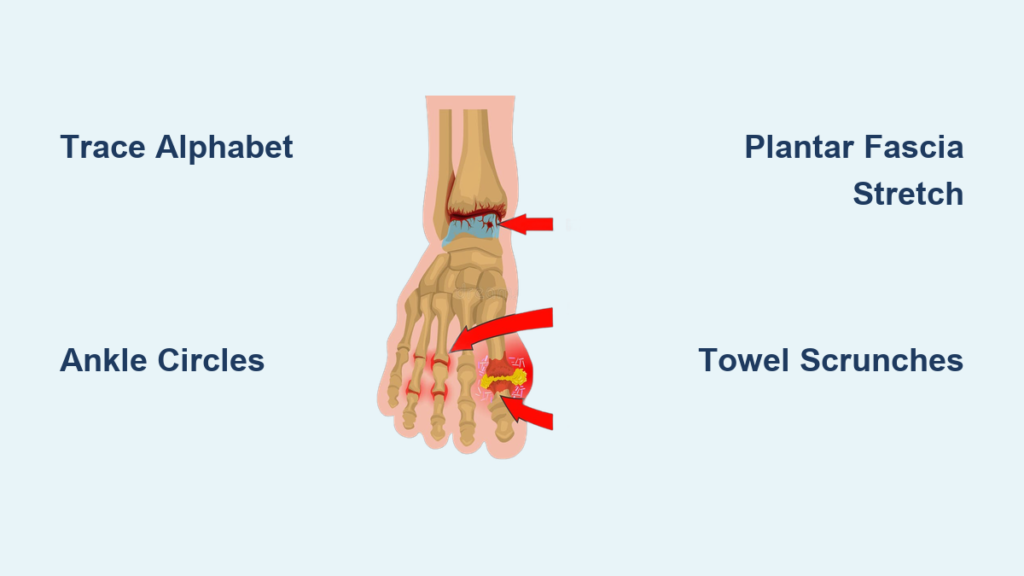
Waking up with stiff, creaky foot joints that make the first steps of the day painful is more than just a nuisance—it can disrupt your mobility and quality of life. Whether you’re on your feet all day, dealing with arthritis, or simply noticing age-related changes, foot joint stiffness is a common issue affecting millions. The good news? Most cases can be significantly improved with consistent, targeted care. This guide delivers science-backed strategies to restore flexibility, reduce discomfort, and keep your feet moving smoothly—no surgery or medication required in most cases. You’ll learn exactly which stretches, strengthening moves, and daily habits deliver real results, plus when it’s time to see a specialist.
Perform Daily Mobility Exercises
Improving joint movement starts with regular motion. Stiff joints thrive on inactivity—but fight back by incorporating simple range-of-motion drills into your morning and evening routines.
Trace the Alphabet with Your Toes
Sit comfortably with one leg elevated, then use your big toe to “write” each letter from A to Z in the air. This multi-directional movement combats stiffness caused by repetitive walking patterns or tight shoes. Do this barefoot once in the morning and once at night for each foot. For added benefit, exaggerate downward strokes to boost dorsiflexion—the motion often limited in stiff joints.
Rotate Ankles in Full Circles
Lift one foot off the ground and rotate your ankle in slow, controlled clockwise circles. Complete 10 rotations, then reverse direction. This stimulates synovial fluid production—the natural lubricant inside joints—reducing friction and improving flexibility. If you have arthritis or limited mobility, keep movements small and pain-free. Repeat three times daily per foot for best results.
Move Through Full Dorsiflexion and Plantarflexion
Sit with legs extended and gently point your toes away (plantarflexion), then pull them back toward your shin (dorsiflexion). Perform 10 slow reps, focusing on full range without forcing. This basic motion maintains joint glide in the ankle and forefoot, preventing contractures over time. Add this to your routine after sitting for long periods or before standing up in the morning.
Use Targeted Stretching Techniques
Tight muscles and connective tissues pull on joints, increasing stiffness. These stretches directly target the plantar fascia, Achilles tendon, and toe flexors to restore balance.
Stretch Plantar Fascia Before First Steps
Morning foot stiffness often stems from tightened plantar fascia overnight. Sit with one leg crossed over the opposite knee. Grasp the base of your toes and gently pull them back until you feel a stretch along the arch. Hold for 20–30 seconds, repeat 3 times per foot. Doing this before taking your first step reduces pain and eases joint mobility.
Apply Towel Stretch for Calf and Achilles
Sit with legs straight. Loop a towel around the ball of your foot and gently pull your toes toward you while keeping your knee straight. Feel the stretch in your calf and heel cord. Hold 30 seconds, repeat 3 times. For deeper soleus engagement, slightly bend the knee during the stretch. This improves ankle dorsiflexion, reducing strain on foot joints during walking.
Counteract Shoe Pressure with Top-of-Foot Stretch
Tight shoes compress the top of the foot, shortening extensor tendons. To counteract this, sit and cross one foot over the opposite knee. Gently press the toes downward to stretch the dorsal (top) side of the foot. Hold 20 seconds. This restores balance between front and back muscle groups, easing stiffness in midfoot and toe joints.
Improve Flexibility with Wall Push Stretch
Stand facing a wall, place one foot forward and the other back. Keep your back heel down and lean forward, bending the front knee. You’ll feel a stretch in the back calf. Hold 30 seconds, repeat 10 times. Then, slightly bend the back knee to target the deeper soleus muscle. Regular use increases joint mobility and reduces stiffness during daily activities.
Strengthen Intrinsic Foot Muscles

Flexibility alone isn’t enough. Weak intrinsic foot muscles lead to poor joint stability and increased stiffness. Strengthening builds dynamic support, improving function and preventing deformities like hammertoes.
Activate Arch Muscles with Toe Spreads
Stand barefoot, feet hip-width apart. Lift and spread your toes as wide as possible, holding for 5 seconds. Then press the ball of the big toe into the ground without lifting the rest of the foot. Repeat 10 times. This strengthens the arch and improves push-off mechanics, reducing joint strain during walking.
Build Toe Strength with Towel Scrunches
Place a small towel flat on the floor. Sit barefoot and use your toes to scrunch the towel toward your heel. Perform 10–20 reps per foot. As you progress, place a light weight (like a can of beans) on the towel to increase resistance. This targets the flexor digitorum muscles, enhancing grip and dexterity while reducing joint rigidity.
Enhance Dexterity with Marble Pickups
Scatter marbles on the floor and use your toes to pick them up one by one, placing them into a cup. Spend 5–10 minutes per foot. This fine motor exercise strengthens small foot muscles, improves coordination, and prevents stiffness in toe joints—especially helpful for early-stage hammertoes or arthritis.
Support Joints with Heel Raises
Stand with feet shoulder-width apart. Rise onto your toes, focusing on pushing through the big toe. Lower slowly. Perform 15–20 reps, build up to 4–5 sets. Do daily or before physical activity. This strengthens the gastrocnemius, soleus, and intrinsic foot muscles, supporting joint alignment and shock absorption.
Target Achilles Tendon with Bent-Knee Heel Raises
Stand on a step with heels hanging off. Slightly bend your knees and lower one heel below step level, then rise above. Perform 2 sets of 15 per leg, 3 times per week. This variation zeroes in on the Achilles tendon, stimulating collagen remodeling and improving tendon resilience in stiff or arthritic feet.
Train Functional Joint Mobility
Real-world movement demands go beyond isolated exercises. Dynamic drills train your foot and ankle to move efficiently under load, enhancing joint function and balance.
Improve Stability with the Asterisk Drill
Stand on one leg. With the other foot, tap the floor in multiple directions—front, side, diagonal, behind—forming an asterisk pattern. Move clockwise with the right leg, counter-clockwise with the left. This weight-bearing drill improves ankle stability and joint mobility, mimicking the demands of walking or running on uneven terrain.
Develop Coordination with Multi-Directional Hops
Balance on one leg and hop forward, side, diagonal, and backward, landing softly with a bent knee. Complete 5 hops per direction, 3 sets per side, 3 times per week. This trains coordination between foot, ankle, and hip stabilizers, reducing joint stiffness through neuromuscular re-education.
Add Resistance with Band Exercises
Loop a resistance band around your foot and hold the ends. Create tension and pivot your foot side to side, maintaining resistance. Do until fatigue, then switch feet. This builds ankle strength and range of motion, preventing stiffness and sprains. For eversion strength, anchor the band under the opposite foot and turn your toes outward against resistance—10 reps, 3 sets daily.
Apply Self-Massage and Soft Tissue Care
Muscle tension and fascial restrictions contribute to joint stiffness. Self-massage breaks up adhesions, improves circulation, and restores tissue glide.
Massage Entire Foot for Better Circulation
Sit comfortably, rest one foot on the opposite thigh. Apply lotion or oil and use your thumbs or knuckles to knead the arch, heel, and ball of the foot. Gently pull and stretch each toe. Spend 3–5 minutes per foot. This enhances blood flow, reduces tightness, and increases joint awareness—ideal after long days on your feet.
Roll Arch with Ball or Frozen Bottle
Place a firm ball (tennis, lacrosse) or frozen water bottle under your foot. Roll from heel to toes for 2–5 minutes. Apply moderate pressure—enough to feel release, not pain. The frozen version adds a cooling effect, reducing inflammation-related stiffness. Do daily, especially if you have plantar fasciitis or arthritis.
Use Heat, Cold, and Topical Relief Strategically

Thermal therapies and topical treatments provide quick symptom relief, especially when stiffness flares up.
Apply Heat for Morning Stiffness
Soak your feet in warm water or use a heating pad for 15–20 minutes. Heat increases blood flow, relaxes tight muscles, and improves joint mobility—perfect before stretching or walking. Avoid heat if the joint is red, swollen, or warm to touch.
Use Cold Therapy for Inflammation
Apply an ice pack or roll your foot over a frozen water bottle for 15–20 minutes. Always wrap cold items in a cloth to protect the skin. Cold reduces swelling and numbs pain signals, ideal after activity or during gout or arthritis flares.
Try Topical Pain Relievers for Symptom Relief
Apply creams with menthol, eucalyptus, or salicylates directly to stiff joints. These create a cooling or warming sensation that distracts from pain. Capsaicin cream depletes substance P (a pain neurotransmitter) but may cause initial burning. Topical NSAIDs (like diclofenac gel) reduce localized inflammation with minimal systemic absorption.
Choose Supportive Footwear and Insoles
Your shoes either help or hurt. Poor footwear is a leading cause of foot joint stiffness—correcting it can yield dramatic improvements.
Wear Shoes with Wide Toe Boxes
Choose footwear that allows natural toe splay. Narrow or pointed shoes compress joints, leading to bunions, hammertoes, and stiffness. Look for brands with anatomical designs or go barefoot indoors when safe. Avoid high heels and flip-flops for daily wear.
Use Supportive Insoles or Custom Orthotics
Over-the-counter insoles provide cushioning and arch support, reducing joint strain. For persistent stiffness, custom orthotics—prescribed by a podiatrist—correct biomechanical imbalances like flat feet or overpronation. They distribute pressure evenly, protecting joints from excessive wear.
Maintain a Healthy Weight and Stay Active
Lifestyle factors play a major role in foot joint health. Small changes can reduce load and inflammation significantly.
Manage Body Weight to Reduce Joint Load
Excess weight increases pressure on foot joints with every step. Even a 5–10% reduction can ease stiffness and pain. Combine balanced nutrition with low-impact exercise like swimming, cycling, or water aerobics to protect joints while staying active.
Stay Consistently Active to Prevent Stiffness
Sedentary behavior reduces circulation and joint lubrication. Move regularly—even short walks every few hours—keeps synovial fluid circulating and tissues supple. Avoid prolonged standing without breaks, and stretch after long periods of inactivity.
Know When to See a Professional
Home care works for most mild to moderate cases. But certain signs mean it’s time to seek expert help.
Watch for Warning Signs of Serious Conditions
See a podiatrist if you experience:
– Persistent stiffness despite daily stretching
– Swelling, redness, or warmth in the joint
– Visible deformity (bunions, hammertoes)
– Difficulty bearing weight
– Numbness, tingling, or burning (possible nerve involvement)
These may indicate arthritis, gout, or neuromuscular conditions needing diagnosis and treatment.
Expect These Professional Interventions
A foot specialist may recommend:
– Gait analysis to identify abnormal movement patterns
– Custom orthotics for structural correction
– Physical therapy with personalized exercises
– Imaging (X-ray or MRI) to assess joint damage
– Corticosteroid injections for severe inflammation
– Surgical options like joint fusion for advanced hallux rigidus
Early evaluation prevents progression and preserves mobility.
Final Note: Foot joint stiffness doesn’t have to be permanent. With daily stretching, targeted strengthening, proper footwear, and smart lifestyle choices, most people see meaningful improvement within weeks. Start with 5–10 minutes of exercises each morning and evening, stay consistent, and avoid aggravating factors like tight shoes or inactivity. If symptoms persist, don’t wait—early professional care ensures long-term foot health and freedom of movement.