When the temperature rises and the days get longer, most of us instinctively reach for the easiest, lightest footwear possible. For many, that means a pair of thin, flat flip-flops. They are easy to slip on, keep your feet cool, and are synonymous with summer relaxation. However, after a few hours of walking or standing, that initial convenience often turns into a nagging ache in the heels, the arches, or even the lower back.
If you have ever felt that sharp tug in the bottom of your foot after a day at the beach or a walk through the park, you are experiencing the direct result of a lack of structural support. The human foot is a mechanical marvel, but it isn’t designed to walk on flat, hard modern surfaces without help. This is where the benefits of arch support sandals come into play.
Choosing a sandal with built-in support is not just about comfort for the moment; it is about protecting the long-term health of your entire kinetic chain. From your toes to your hips, the foundation of your body starts at the ground. When that foundation is weak or unsupported, everything else suffers.
Understanding the Foundation: What Your Arches Actually Do
To understand why arch support sandals are so beneficial, we first have to look at the anatomy of the foot. Your foot contains 26 bones, 33 joints, and over 100 muscles, tendons, and ligaments. The most critical structural element among these is the arch.
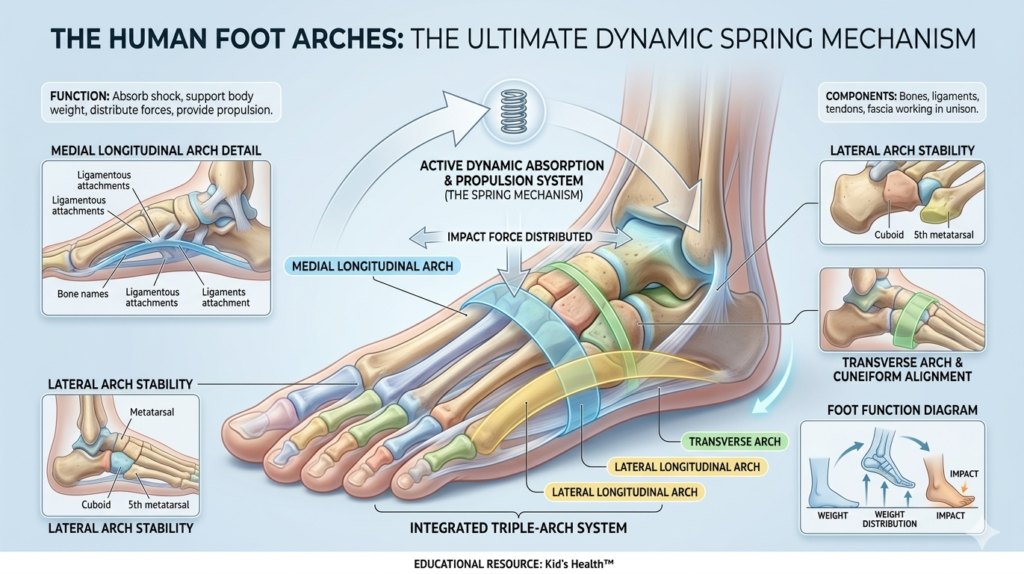
Most people think of “the arch” as one single curve, but the foot actually has three distinct arches: the medial longitudinal arch (the most famous one on the inside), the lateral longitudinal arch (on the outside), and the transverse arch (across the midfoot). Together, these arches function as a natural spring.
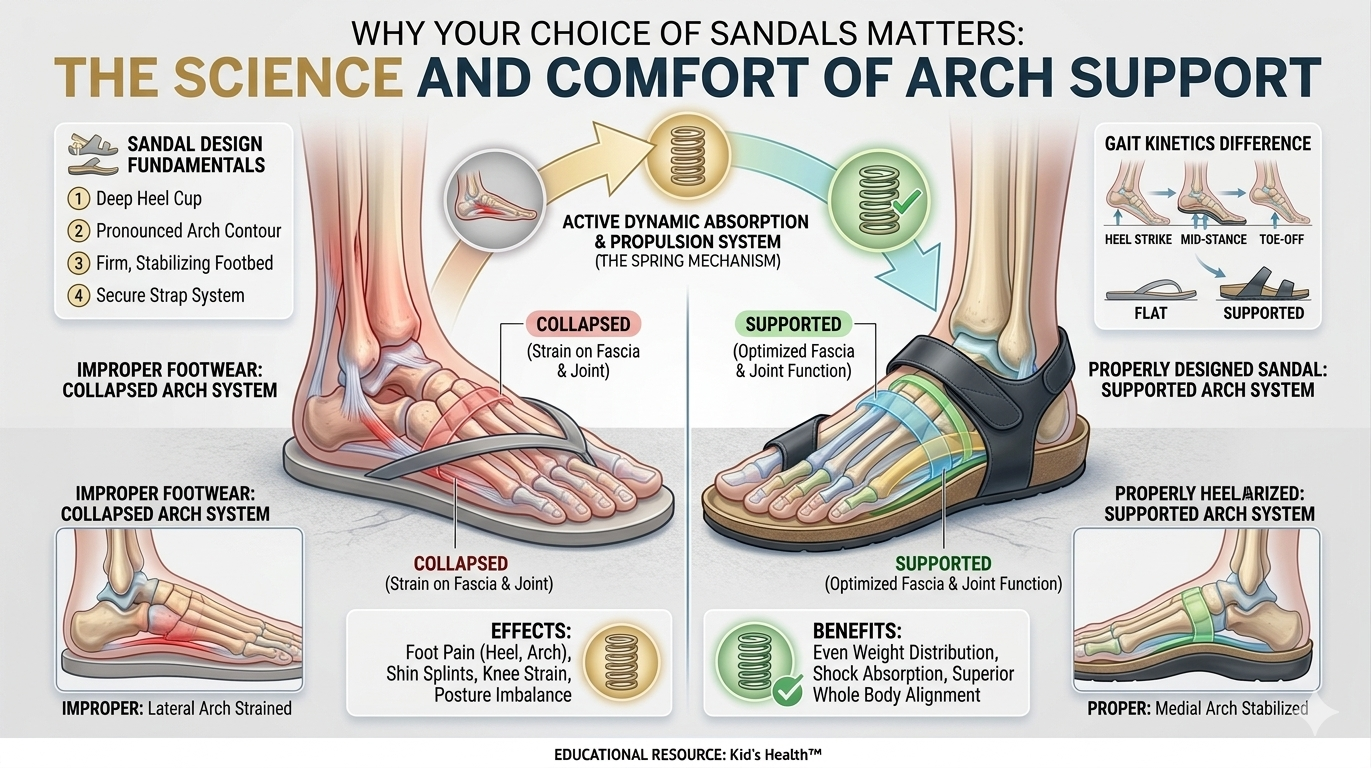
When you take a step, the arches flatten slightly to absorb the shock of your weight hitting the ground. As you push off, they recoil to help propel you forward. This mechanism protects your joints and spine from the repetitive impact of walking. However, when we wear flat sandals with no structural integrity, the arches are forced to flatten more than they should. Over time, this leads to strain, fatigue, and structural damage.
Arch support sandals are designed to mimic the natural contours of the foot. Instead of your foot straining to meet a flat footbed, the footbed rises to meet your foot. This simple shift in design changes how your body moves and how your weight is distributed.
The Different Variations of Arch Support in Sandals
Not all feet are created equal, and neither are all sandals. When looking for the benefits of arch support sandals, it is important to realize that the “best” pair depends heavily on your specific foot type. Generally, footwear manufacturers categorize support into a few different styles.
Neutral Support Sandals
These are designed for people with “normal” arches. They provide a moderate curve that helps maintain the foot’s natural position without being too aggressive. They focus on cushioning and basic stability, ensuring that the foot doesn’t fatigue during long walks.
High Arch Support
If you have high arches (pes cavus), your feet are often rigid. This means they don’t absorb shock very well because the arch doesn’t flatten enough. Sandals for high arches need deep heel cups and significant cushioning to take the pressure off the ball of the foot and the heel.
Motion Control and Pronation Support
For those with flat feet or those whose feet “roll inward” (overpronation), motion control sandals are essential. These often feature a firmer material on the inner side of the sole to prevent the arch from collapsing too far toward the ground. This keeps the ankle aligned and prevents the knee from twisting inward.
Orthotic-Grade Sandals
These are often podiatrist-recommended footwear. They feature a more aggressive, scientifically designed footbed that mimics a custom orthotic. These are ideal for individuals dealing with chronic conditions like plantar fasciitis or severe overpronation.
The Deep Explanation: How Arch Support Changes Your Mechanics
The primary benefit of arch support sandals is the correction of biomechanical alignment. You might notice that when your feet are tired, your knees and lower back also start to ache. This is because the body is a “closed kinetic chain.” If the bottom link (the foot) is out of place, every link above it must compensate.
When you wear a flat sandal, your foot often undergoes “overpronation.” This is the excessive inward rolling of the foot. As the foot rolls in, the lower leg bone (tibia) rotates internally. This rotation travels up to the knee, the femur (thigh bone), and eventually the pelvis. This misalignment is a leading cause of runner’s knee, hip bursitis, and even chronic lower back pain.
By wearing sandals with proper arch support, you are essentially “shimming” the foundation. The support keeps the foot in a neutral position. This prevents the chain reaction of internal rotation, allowing your joints to stay in their intended alignment.
Furthermore, weight distribution is a massive factor. On a flat surface, the majority of your body weight is concentrated on the heel and the ball of the foot. Proper arch support increases the “surface area” of contact. By supporting the midfoot, the sandal spreads the pressure across the entire sole of the foot, which significantly reduces the risk of developing painful pressure points or calluses.
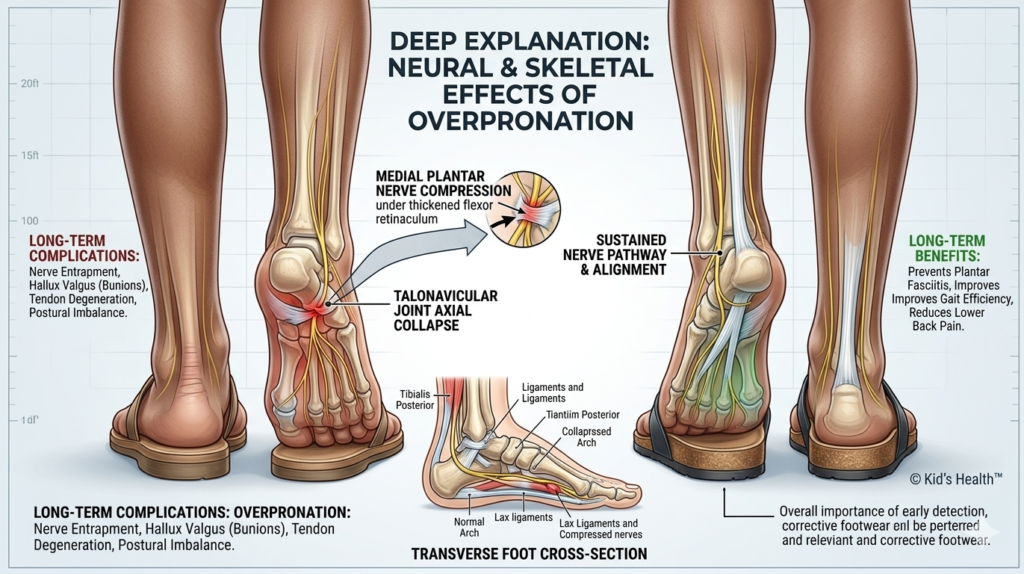
Effects of Poor Footwear: The Problems You Can Avoid
Many people wait until they are in pain to seek out supportive footwear. However, understanding the problems caused by flat, unsupportive sandals can help you make a proactive choice.
Plantar Fasciitis
This is perhaps the most common ailment associated with poor footwear. The plantar fascia is a thick band of tissue that connects your heel to your toes. When the arch collapses repeatedly without support, this tissue gets stretched and develops tiny tears. The result is a stabbing pain in the heel, especially with your first steps in the morning. Arch support sandals are often the first line of defense for plantar fasciitis relief.
Achilles Tendonitis
When your foot isn’t supported, your calf muscles and the Achilles tendon have to work much harder to stabilize your gait. Over time, this leads to inflammation and pain in the back of the heel.
Metatarsalgia
Without support in the midfoot, too much weight is placed on the “metatarsal heads” (the ball of the foot). This can cause a painful burning sensation or the feeling of having a pebble in your shoe.
Hammer Toes and Bunions
While genetics play a role, unsupportive shoes can exacerbate these conditions. When the foot is unstable, the toes often “claw” at the bottom of the sandal to try and find grip and stability. This repetitive motion can lead to permanent toe deformities over many years.
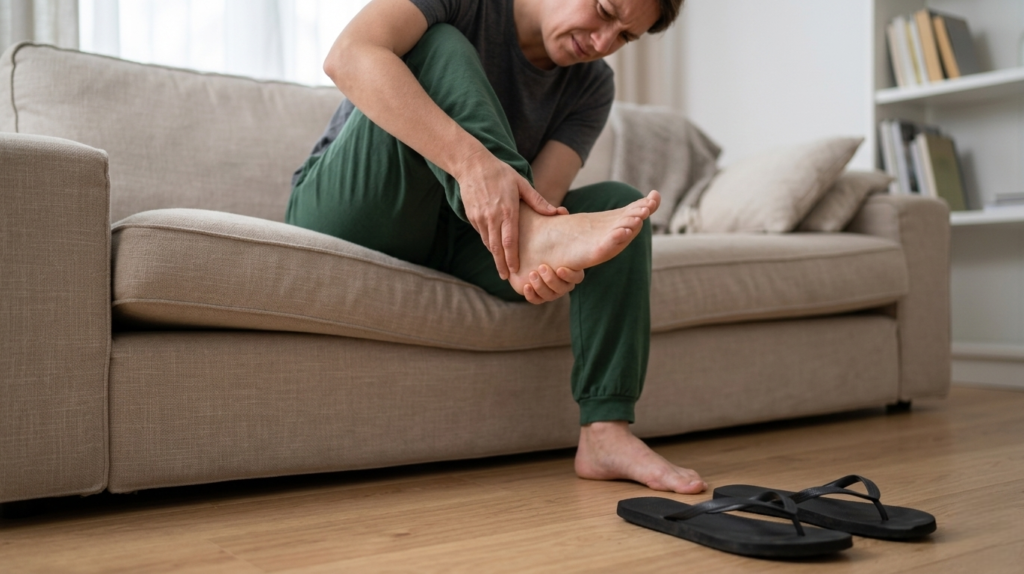
Practical Solutions: How to Choose the Right Arch Support Sandals
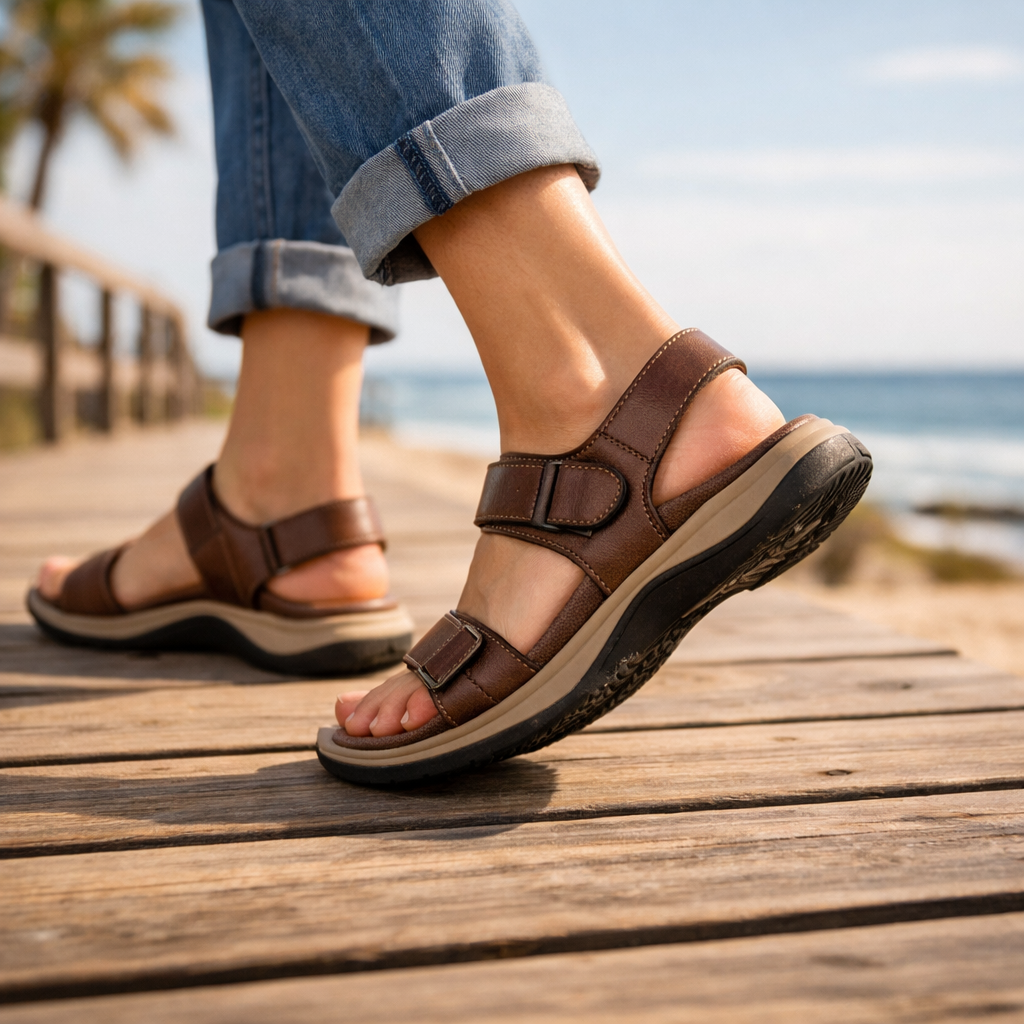
If you are ready to transition away from flat footwear, you don’t have to sacrifice style for function. The modern market for orthotic sandals has exploded, offering everything from rugged hiking sandals to elegant leather slides. Here is what you should look for:
1. A Deep Heel Cup:
The heel is the anchor of the foot. A deep cup cradles the fatty pad under your heel bone, providing natural cushioning and preventing the foot from sliding side-to-side.
2. Longitudinal Arch Support:
When you look at the side of the sandal, there should be a visible rise in the middle. Press down on it with your thumb; it should be firm. If it collapses easily under thumb pressure, it won’t support your body weight.
3. Forefoot Flexibility:
While the arch should be firm, the sandal should bend at the ball of the foot. This allows for a natural walking motion. A sandal that is stiff as a board can cause a “clunky” gait that strains the shins.
4. Adjustable Straps:
One of the hidden benefits of arch support sandals is the ability to customize the fit. Straps over the instep or around the heel help keep the foot securely in contact with the supportive footbed. If your foot is sliding around, the arch support won’t be under the correct part of your foot.
5. Quality Materials:
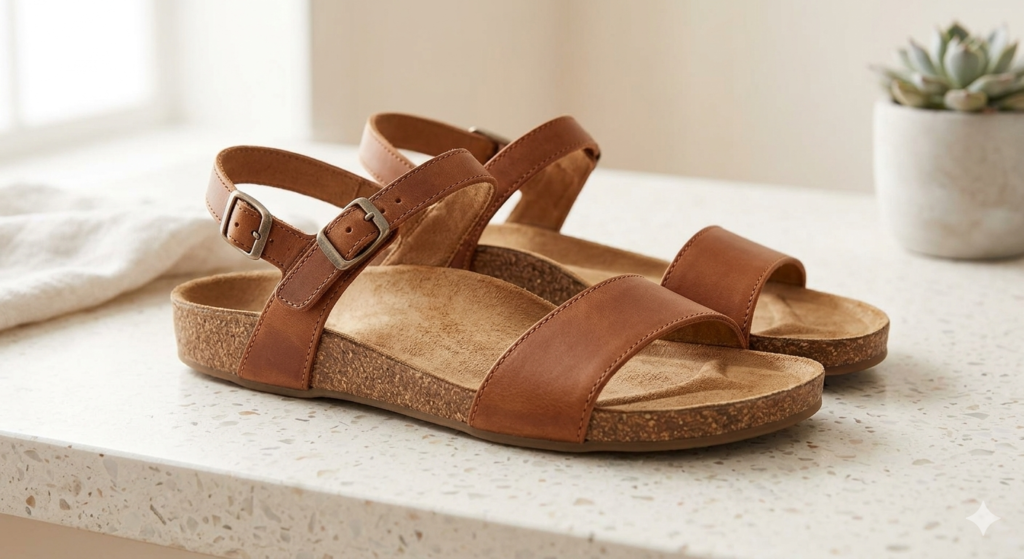
Look for materials like cork, EVA (Ethylene Vinyl Acetate), or specialized rubbers. Cork is particularly popular because it gradually molds to the shape of your foot while remaining firm enough to provide support.
Expert Insights: Why Podiatrists Advocate for Support
In many cases, people believe that “strengthening” the foot means going barefoot or wearing minimal shoes. While foot exercises are great, the reality of modern life involves walking on concrete, hardwood, and tile—surfaces that provide zero “give.”
Podiatrists often point out that the human foot evolved to walk on soft, uneven surfaces like sand, soil, and grass. These surfaces naturally fill the gaps under the arch and provide organic support. Modern flooring does the opposite; it forces the foot to flatten out.
Expert advice usually suggests a “transition period.” If you have spent years in flat shoes, jumping immediately into high-arch orthotic sandals for a 10-mile walk might cause new aches. Your muscles and tendons need time to adjust to their new, corrected position. Start by wearing them for a few hours a day around the house before taking them on a long excursion.
Real-Life Benefits: Beyond Just “Less Pain”
When you find the right pair of sandals, the benefits extend into your daily lifestyle in ways you might not expect.
Improved Posture:
When your feet are aligned, your pelvis sits more neutrally. This reduces the “anterior pelvic tilt” that often leads to a protruding stomach and a strained lower back. You may find yourself standing taller and with less effort.
Increased Activity Levels:
It’s a simple equation: if your feet don’t hurt, you move more. People who switch to supportive sandals often find they are willing to go for that extra walk or spend more time exploring on vacation. This has a secondary benefit for cardiovascular health and weight management.
Better Circulation:
By distributing pressure evenly, you avoid “choke points” where tight shoes or flat footbeds might restrict blood flow. This can help reduce the feeling of “heavy legs” at the end of a long day.
Longevity of Joints:
Think of arch support as an insurance policy for your knees and hips. By reducing the impact and preventing internal rotation, you are slowing down the “wear and tear” that leads to osteoarthritis in later life.
Final Thoughts on Foot Health
Taking care of your feet is one of the most overlooked aspects of general wellness. We often spend hundreds of dollars on gym memberships, ergonomic office chairs, and high-end mattresses, yet we spend our summers in five-dollar plastic flip-flops.
Investing in a high-quality pair of sandals with arch support is a decision your future self will thank you for. Whether you are dealing with a specific condition like plantar fasciitis or you simply want to prevent the aches and pains of aging, the structure under your feet makes all the difference.
You might notice a difference immediately, or it might take a few days for your body to realign. Either way, the science is clear: a supported foot is a healthy foot. As you move through the warmer months, give your feet the foundation they deserve. They carry you through the world; the least you can do is give them a little lift.
Frequently Asked Questions
Can arch support sandals help with lower back pain?
Yes. Back pain is frequently caused by poor foot alignment. When your arches collapse, it causes your legs to rotate inward, which tilts your pelvis and puts stress on the lower spine. Correcting the foot position can often alleviate this “up-chain” pain.
Are arch support sandals only for people with flat feet?
Not at all. While people with flat feet benefit immensely, those with high arches or even “normal” arches need support to prevent fatigue and distribute pressure evenly during long periods of standing or walking.
How long do arch support sandals last?
Generally, a high-quality pair will last between 1 to 2 years of regular seasonal use. If the arch feels like it is “bottoming out” or the heel is worn down on one side, it is time to replace them to ensure you are still getting the biomechanical benefits.
Do I need to wear them all the time?
While you don’t need them every second of the day, wearing them whenever you are on hard surfaces is highly recommended. Many people find that wearing supportive sandals as “house shoes” on tile or wood floors provides significant relief.
Will my feet become “lazy” if I always use support?
This is a common myth. For most people, the support isn’t doing the muscle’s work; it’s preventing the ligaments and tendons from being overstretched by the hard, flat surfaces of the modern world. You can still do foot strengthening exercises while using supportive footwear for your daily activities.
How do I know if the arch support is in the right place?
The “peak” of the arch support should sit directly under the highest part of your foot’s natural arch. If it feels like it is hitting your heel or the ball of your foot, the sandal is likely the wrong size or the wrong shape for your foot type.
Can I wear arch support sandals if I have bunions?
Yes, in fact, they are often recommended. Proper arch support helps prevent the foot from rolling inward, which reduces the pressure on the big toe joint where bunions form. Look for styles with adjustable straps that don’t rub against the sensitive area.