





If you’ve ever finished a long day on your feet only to feel a dull ache along the bottom of your foot, the culprit is often your arch support — or the lack of it. Your foot arch acts like a natural shock absorber, and when it isn’t properly supported, that stress travels up into your heels, knees, hips, and even your lower back.
In this guide, we’ll break down what arch support problems actually look like, why they happen, and how to choose the right solution so you can walk, stand, and exercise without pain.
What Is Arch Support and Why Does It Matter?
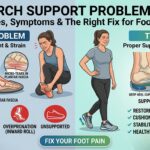
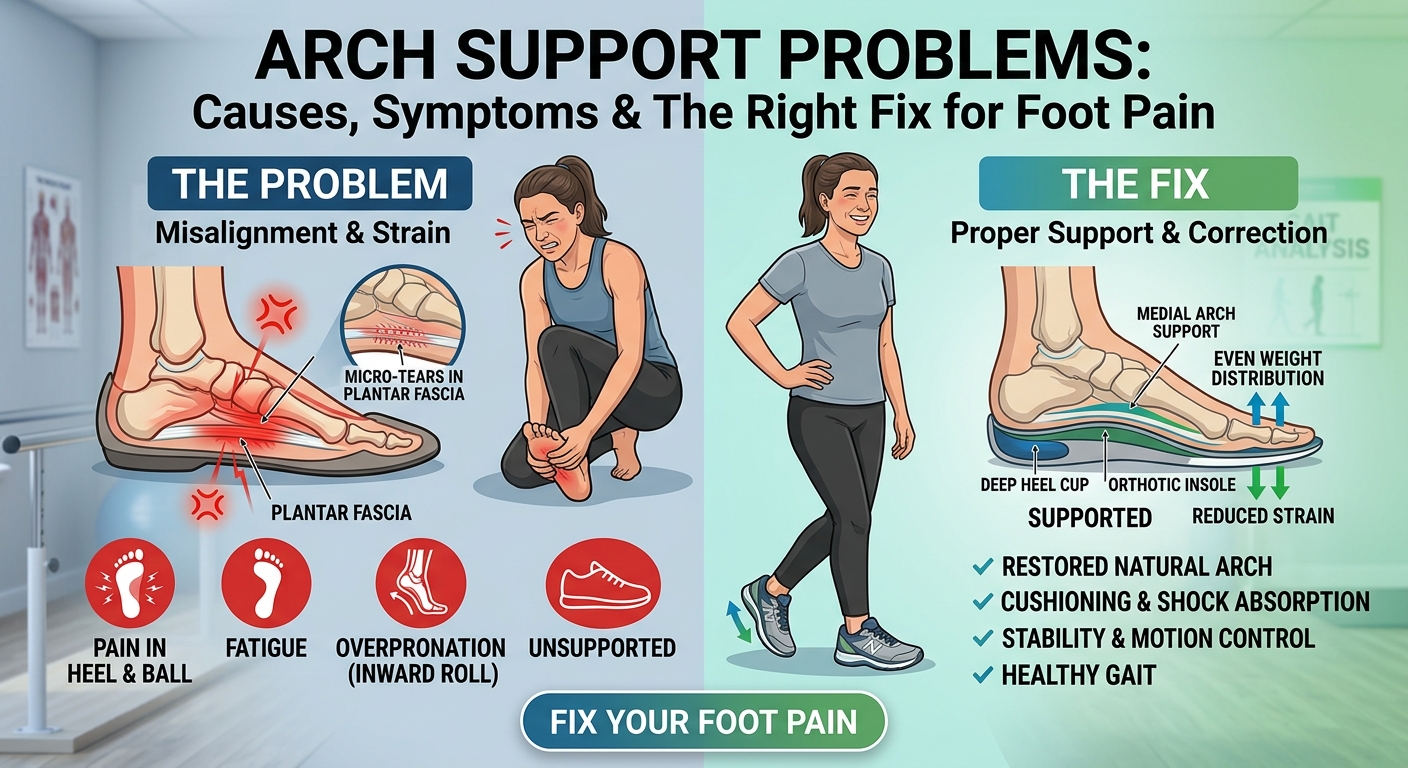
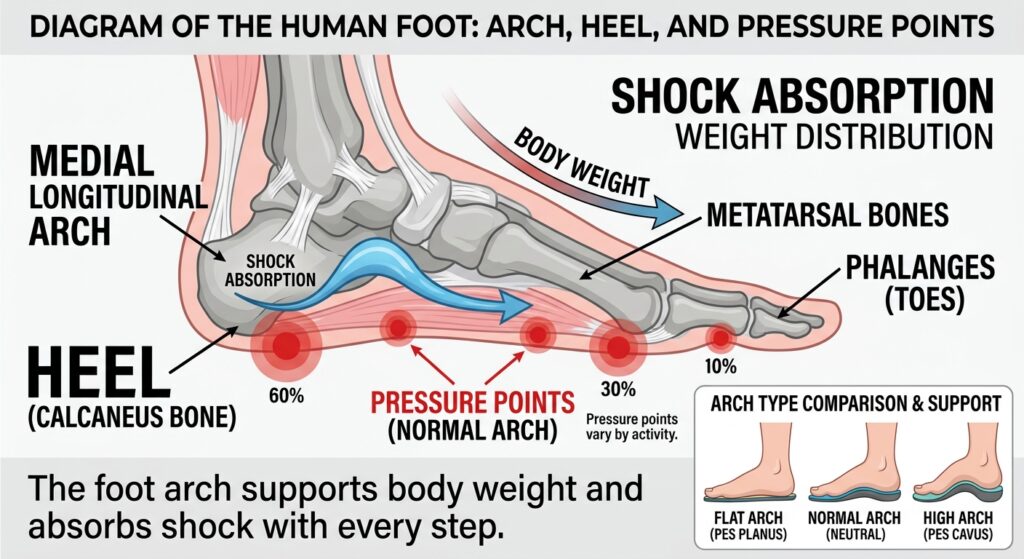
The arch of your foot is formed by bones, ligaments, and tendons that create a slight curve along the middle of the sole. This curve distributes your body weight evenly across the foot every time you take a step. When the arch is too flat (fallen arches / flat feet) or too high (high arches), weight distribution becomes uneven, and certain areas of the foot take on far more pressure than they’re built for.
Proper arch support corrects that imbalance by cushioning and stabilizing the foot, which reduces strain on the plantar fascia, Achilles tendon, and joints above the foot.
Common Signs of an Arch Support Problem
- Sharp or stabbing pain in the heel, especially with the first steps in the morning
- Aching or burning along the bottom of the foot after standing or walking
- Pain that radiates into the ankles, knees, or lower back
- Uneven wear pattern on the soles of your shoes
- Visible flattening of the foot when standing (flat feet)
- Frequent ankle rolling or instability
What Causes Arch Support Problems?
1. Flat Feet (Fallen Arches)
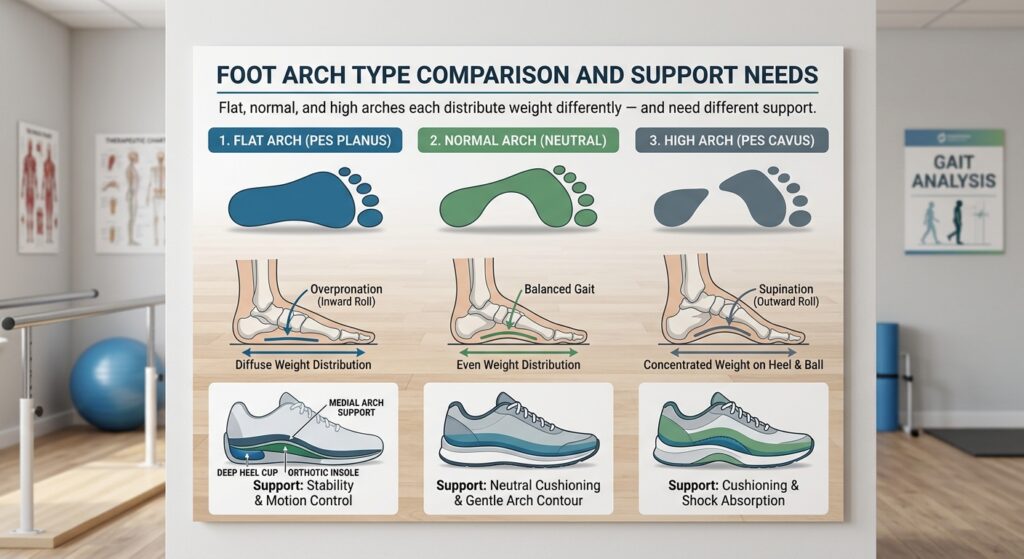
Flat feet happen when the arch collapses and the entire sole touches the ground while standing. This can be genetic or develop over time due to weight gain, aging, pregnancy, or repetitive strain from standing jobs.
2. High Arches
A high, rigid arch doesn’t absorb shock well, concentrating pressure on the heel and ball of the foot. This often leads to instability and a higher risk of ankle sprains.
3. Worn-Out or Unsupportive Footwear
Shoes without proper cushioning or structure fail to compensate for arch irregularities, especially during long hours of walking or standing.
4. Plantar Fasciitis
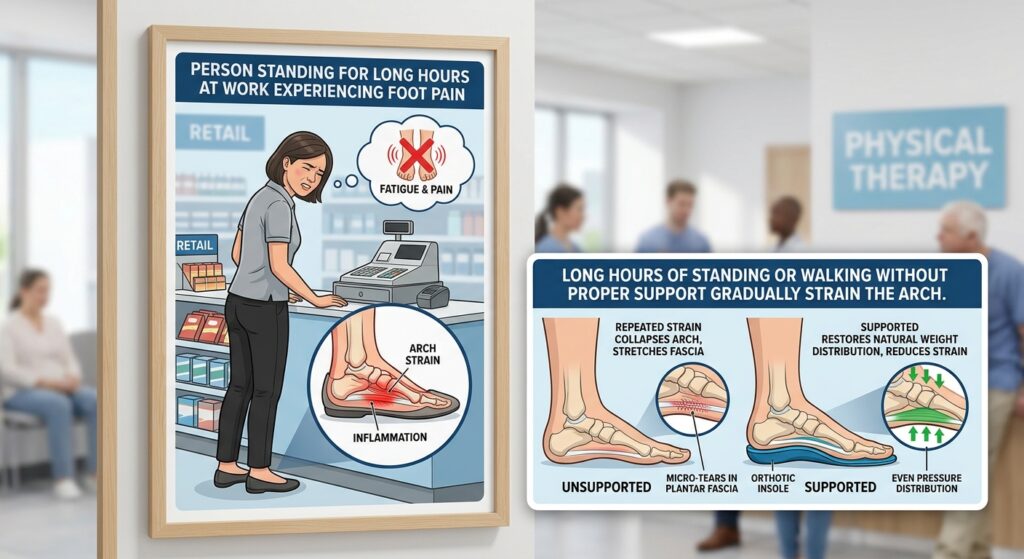
This is inflammation of the thick band of tissue connecting the heel to the toes, usually triggered — or worsened — by poor arch support.
5. Overuse and Repetitive Impact
Runners, retail and healthcare workers, and anyone on their feet for 8+ hours a day are especially prone to arch-related pain from repetitive impact without adequate support.
How to Fix Arch Support Problems
1. Use Orthotic Insoles
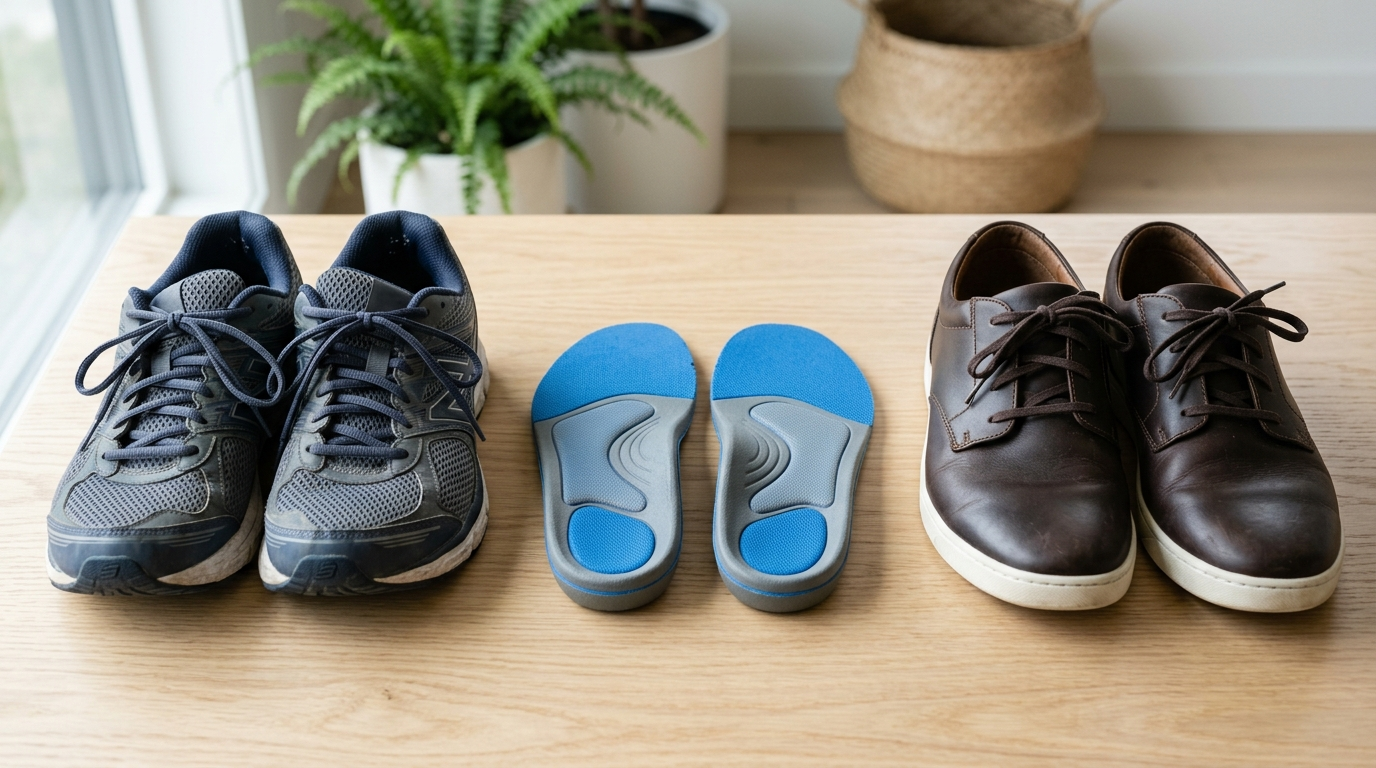
Over-the-counter or custom orthotic insoles are the fastest way to correct arch imbalance. Look for insoles with:
- A contoured arch that matches your foot type (low, medium, or high)
- Deep heel cups for stability
- Firm but cushioned material — memory foam alone isn’t enough for real support
2. Choose the Right Shoes
Pick shoes with built-in arch support and a firm heel counter. Avoid completely flat shoes (like flip-flops) or unsupportive sneakers for daily wear.
3. Stretch and Strengthen
Simple daily stretches — calf stretches, towel scrunches, and rolling the foot over a tennis ball — help strengthen the muscles that support the arch.
4. See a Podiatrist for Persistent Pain
If pain lasts more than a few weeks despite better footwear and insoles, a podiatrist can assess whether custom orthotics or physical therapy are needed.
Final Thoughts
Arch support problems are common, but they’re rarely something you just have to “live with.” Identifying your arch type, upgrading your footwear, and adding the right orthotic support can eliminate most day-to-day foot pain within a few weeks. If discomfort continues, don’t ignore it — persistent arch pain is your body’s way of asking for a real fix, not just a temporary one.