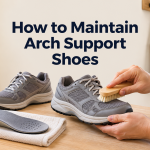

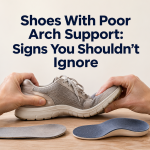


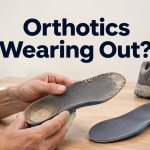


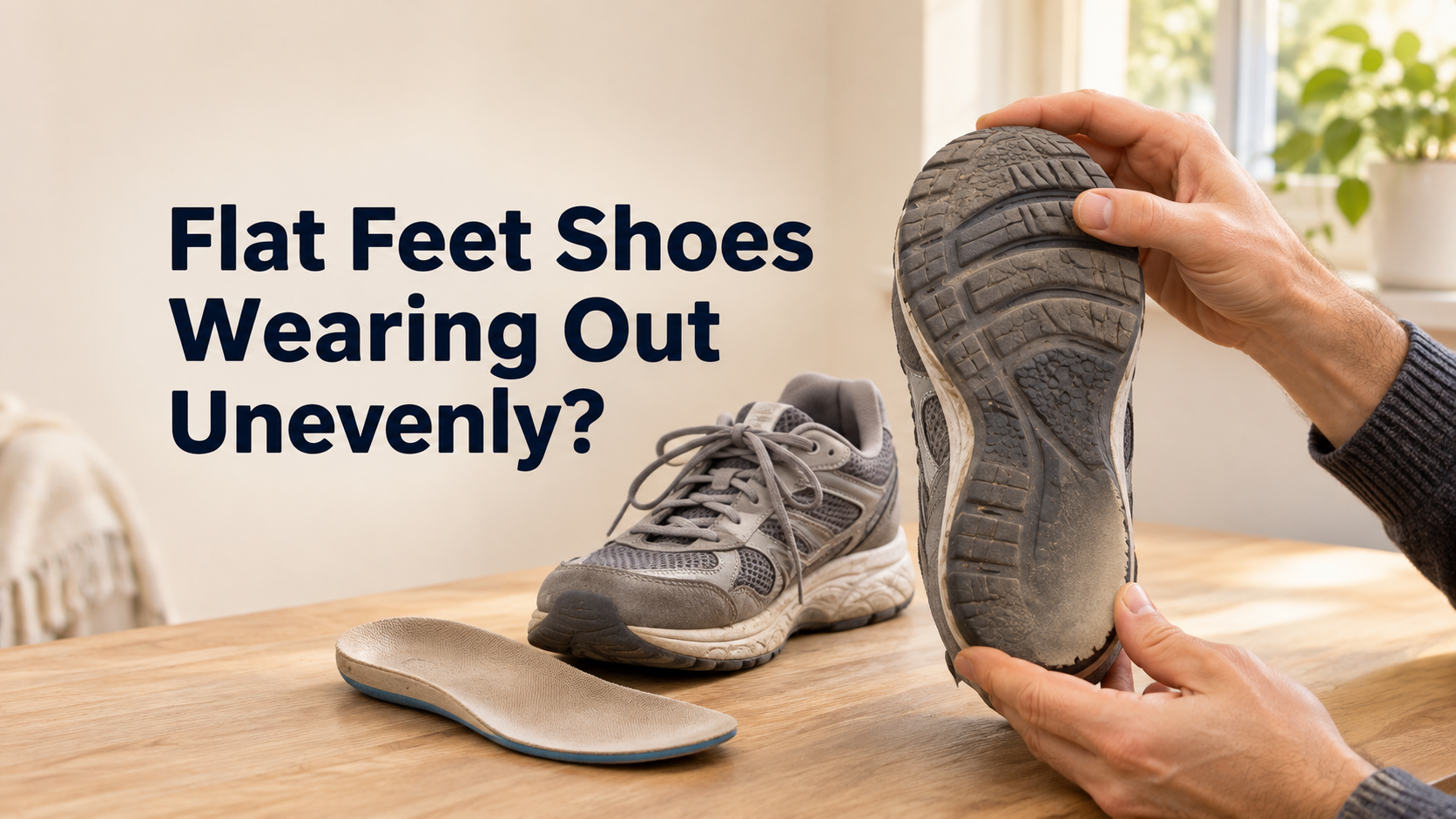
You pick up your favorite pair of shoes, turn them over, and notice something odd. The inside edge of the heel is ground down, the sole leans to one side, and the shoe no longer sits flat on the table. If you have flat feet, this is a very common story. Flat feet shoes wearing out unevenly is not just a cosmetic problem. It is a clear message about how your foot moves with every step.
In this complete guide, you will learn what uneven shoe wear means for flat feet, why it happens, how to read your own wear pattern, and what you can do to make your shoes last longer while keeping your feet, knees, and back more comfortable.
What Does Uneven Shoe Wear Mean?
Shoes wear out in a pattern that mirrors the way you walk. A person with a neutral foot usually wears down the outer edge of the heel first and then rolls smoothly across the ball of the foot. The wear looks fairly even and centered.
With flat feet, the arch is low or collapses when you stand. The ankle often tilts inward and the foot rolls toward the big toe side. Over thousands of steps, the inner edge of the shoe takes far more force than the rest of the sole. That is why the wear looks lopsided.
How Flat Feet Change the Way You Walk
Your arch works like a natural spring. It absorbs shock when your heel lands and helps push you forward at the end of each step. When the arch is flat, that spring is weaker, so the foot flattens further under load and the ankle drifts inward. This movement is known as overpronation.
Overpronation does three things to your shoes:
- It compresses the inner midsole. The foam on the inside of the shoe is squashed again and again until it loses its bounce.
- It grinds the inner heel. The inside back corner of the outsole wears down faster than the rest.
- It twists the upper. The heel counter and sides of the shoe lean inward, so the shoe looks tilted from behind.
Common Wear Patterns and What They Tell You
Not every uneven wear pattern points to the same cause. Use this table as a starting point.
| Wear pattern | What it often suggests |
|---|---|
| Inner edge of the heel is worn down | Heel strikes with the ankle rolling inward, common with flat feet |
| Wear under the big toe and inner forefoot | Foot rolls inward during push-off |
| Inner midsole feels soft or collapsed | Foam has broken down under repeated pressure |
| Shoe leans inward when placed on a table | Structural breakdown of the heel and midsole |
| Outer heel worn heavily | More typical of a neutral or high-arched foot, or a heavy heel strike |
| One shoe wears faster than the other | Differences between feet, leg length, or an old injury |
Why Uneven Wear Matters More Than You Think
A worn shoe stops doing its job. Once the inner side collapses, the shoe no longer supports the arch, and your foot sinks even further. This can create a cycle: the foot overpronates, the shoe breaks down, and the shoe then allows even more overpronation.
Many people with flat feet and worn-out shoes also report discomfort in other areas, such as:
- Arch or heel pain, including pain along the bottom of the foot
- Aching shins
- Knee pain on the inner side
- Hip or lower back tiredness after long walks
Flat feet are not the only cause of these problems, but worn, unsupportive shoes can make them harder to manage.
Main Causes of Uneven Shoe Wear in Flat Feet
1. Overpronation
This is the most common reason. The foot rolls inward more than it should, loading the inner edge of the shoe.
2. Shoes That Do Not Match Your Foot Type
Soft, flexible, minimal shoes often give little control for a flat foot. A shoe that bends easily in the middle and twists like a towel will not guide the foot well.
3. Worn-Out Midsole Foam
Foam breaks down with use, even if the outsole still looks fine. A tired midsole gives way on the inner side first when you have flat feet.
4. Body Weight and Daily Activity
More body weight or many hours on your feet, such as standing jobs, means more load on each step and faster wear.
5. Weak Foot and Ankle Muscles
The muscles that help hold the arch, including the ones around the inner ankle, may be weak or tired. This lets the foot collapse more.
6. Walking Habits and Surfaces
Long hours on hard floors, uneven ground, or heavy heel striking can speed up wear.
7. Leg Length or Alignment Differences
If one shoe wears much more than the other, a small difference in leg length, hip alignment, or an old injury may be involved.
First, Confirm You Have Flat Feet: The Wet Footprint Test
You can get a rough idea of your arch type at home. Wet your foot, step on a flat piece of dark paper or a dry towel, and look at the print. This is only a simple guide and does not replace an exam by a foot specialist.
How to Check Your Shoes at Home
- Turn the shoes over. Look for shiny, smooth, or thin spots on the sole, especially along the inner heel and the inside of the forefoot.
- Place them on a flat table. View them from behind at eye level. If they lean inward, the structure has started to collapse.
- Press the midsole. Use your thumb on the inner side. If it feels much softer than the outer side, the foam is tired.
- Look for creases. Deep wrinkles across the midsole usually mean the cushioning is spent.
- Compare the left and right shoe. Large differences are worth mentioning to a podiatrist.
- Twist the shoe. A supportive shoe resists twisting. If it wrings out like a rag, it will not guide your foot well.
How to Slow Down Uneven Wear
Choose Shoes Built for Flat Feet
The right shoe will not remove the cause, but it can control the movement and protect the sole. When shopping, look for these features:
- Firm heel counter: Squeeze the back of the shoe. It should not collapse easily.
- Stability or motion-control design: Many brands label shoes that add support on the inner side for overpronation.
- Midfoot support: The shoe should bend at the ball of the foot, not in the middle.
- A wide, stable base: A broader platform helps prevent rolling inward.
- Removable insole: This lets you add a supportive insole or custom orthotic.
- Proper fit: About a thumb’s width of space at the toes, and no heel slipping.
Add Arch Support or Custom Orthotics
Over-the-counter arch supports can help many people with mild to moderate flat feet. If your pain or wear is more severe, a podiatrist can assess you and may recommend custom orthotics made for your feet. Supportive insoles also help protect the shoe, because they share the load that would otherwise crush the inner midsole.
Rotate Your Shoes
Wearing the same pair every day does not give the foam time to recover. Alternating between two supportive pairs can extend the life of both.
Strengthen Your Feet and Ankles
Stronger muscles help control the arch. Gentle exercises that many people use include:
- Short foot exercise: Without curling your toes, try to draw the ball of the foot toward the heel to lift the arch slightly. Hold for a few seconds and repeat.
- Calf stretches: Tight calves can add to overpronation.
- Heel raises: Slow, controlled raises on both feet, then one foot as you get stronger.
- Towel scrunches: Use your toes to pull a towel toward you.
Start gently and stop if you feel sharp pain. A physical therapist can show you a safe program for your situation.
Manage Load and Activity
If you stand all day, choose cushioned, supportive footwear and take short breaks. Increase walking or running distance slowly, not suddenly. Gradual changes give your feet time to adapt.
When Should You Replace Your Shoes?
A common guideline for running and walking shoes is roughly 300 to 500 miles (about 480 to 800 km), though this varies by shoe, body weight, and surface. If you do not track distance, many people replace daily shoes every 6 to 12 months of regular use. With flat feet, pay attention to the signs instead of the calendar alone.
Replace your shoes sooner if:
- The shoe leans inward when you place it on a flat surface
- The inner midsole feels flat, soft, or creased
- The tread on the inner heel is smooth or gone
- Your usual aches in the arch, heel, shins, or knees return
- The shoe feels less supportive than when it was new
Smart Shoe Buying Tips for Flat Feet
- Shop in the afternoon. Feet swell slightly during the day, so you get a more realistic fit.
- Bring your own insoles or orthotics. Try the shoes with them in place.
- Walk and jog a little in the store. Notice if your ankles roll inward or the heel slips.
- Do not rely on a break-in period. A good shoe should feel supportive from the first wear.
- Check both feet. Many people have one slightly larger foot. Fit the larger one.
- Replace shoes before the support is gone. It is cheaper than dealing with ongoing foot pain.
When to See a Podiatrist
Uneven shoe wear on its own is not an emergency, but get professional advice if you notice:
- Pain in the arch, heel, ankle, or inner knee that does not settle with rest
- One foot that has recently become flatter, especially with pain or swelling on the inner ankle
- Large differences in wear between the left and right shoe
- Numbness, tingling, or foot changes if you have diabetes
- No improvement after switching to supportive shoes and insoles
A podiatrist can examine how you stand and walk, check for causes beyond flat arches, and suggest a plan such as custom orthotics, exercises, or footwear changes.
Frequently Asked Questions
Why do my shoes wear out on the inside edge?
Inner-edge wear usually happens when the foot rolls inward as you walk. Flat feet and overpronation are very common reasons for this pattern.
Do flat feet make shoes wear out faster?
They can. When pressure is concentrated in one area, that part of the sole and midsole breaks down sooner than it would on an evenly loaded shoe.
Can insoles stop uneven wear completely?
Insoles may reduce excess motion and share the load, which can slow wear. They do not guarantee that wear will stop, and shoes still need to be replaced on time.
Is it bad to keep wearing shoes that are worn unevenly?
Once the shoe has lost its support, it may allow more foot rolling and may contribute to discomfort. It is wise to replace badly worn shoes, especially if you have pain.
Which shoes are best for flat feet?
Look for stability-focused shoes with a firm heel counter, good midfoot support, a stable base, and enough room for an insole. The best choice depends on your foot shape, activity, and comfort, so try several pairs.
Should I wear the same shoes every day?
Rotating between pairs gives the foam time to rebound and helps both pairs last longer.
Final Thoughts
Your worn-out shoes are like a map of how your feet move. If the inner edge is wearing down fast, that is a strong sign of the inward roll common with flat feet. The good news is that you can act on it. Check your shoes regularly, choose supportive footwear, add arch support when needed, strengthen your feet, and replace shoes before the support collapses. If pain continues, a podiatrist can give you a plan made for your feet.
Disclaimer: This article is for general information only and is not medical advice. If you have foot pain or health concerns, please consult a qualified healthcare professional.