



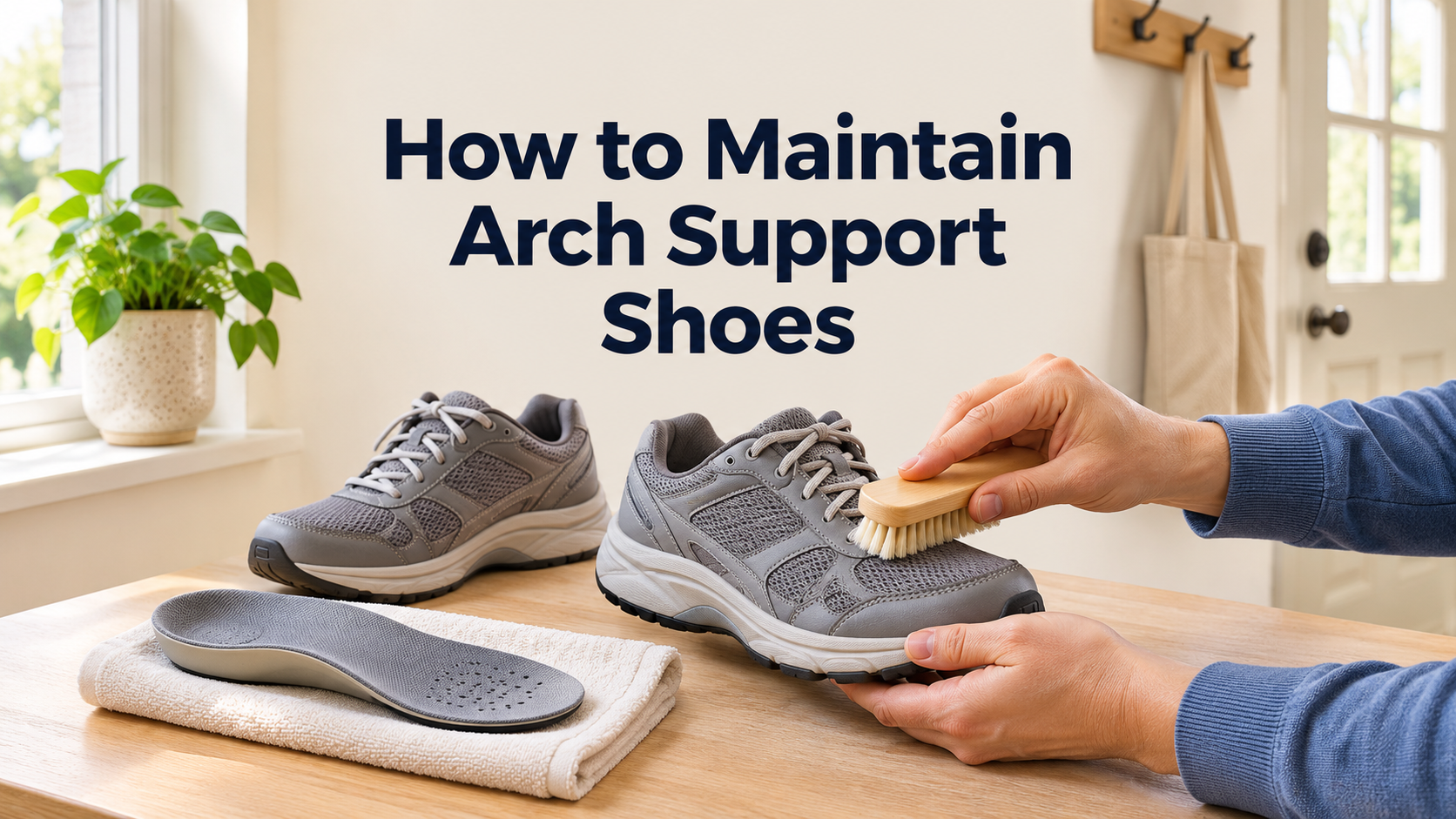

How to Maintain Arch Support Shoes
Arch support shoes are an investment in comfort. They are built to hold your foot in a good position, absorb shock and spread pressure evenly. But that support is not permanent. Sweat, heat, dirt, bad storage and plain daily use all wear it down, and a shoe that looks fine on the outside can quietly lose its structure on the inside.
The good news is that a few simple habits can keep supportive shoes working for much longer. This guide covers how to clean, dry and store arch support shoes, how to check whether the support is still doing its job, a ready-to-use care schedule, and when it is time to replace them.
Rotate your pairs, air them out after wearing, clean gently, dry at room temperature, store them in a cool dry place, and test the shoe’s structure every month. Replace shoes when the heel counter folds, the midsole is creased or the shoe twists easily.
What Gives a Shoe Its Arch Support?
Knowing which parts you are protecting makes maintenance much easier. Most supportive shoes rely on four things working together:
- The insole: The layer your foot rests on. It may be flat, or contoured to fill the arch. Many are removable.
- The midsole: The cushioned layer between the insole and the outer sole. It absorbs shock and often carries the main support structure.
- The heel counter: The stiff cup around the back of the heel that keeps the rear of your foot stable.
- The outsole: The bottom surface. If it wears unevenly, the shoe tilts and the support no longer lines up with your foot.

Daily Habits That Protect the Support
Rotate Between Two Pairs
Foam and gel materials need time to rebound after being compressed all day, and moisture needs time to evaporate. Wearing a different pair on alternate days gives each one around 24 hours to recover. This is one of the simplest ways to extend the life of supportive shoes.
Loosen the Laces Before Taking Shoes Off
Kicking shoes off or forcing your heel out without untying them crushes the heel counter over time. Loosen the laces, open the shoe fully, and slide your foot out. Use the same care when putting them on, and use a shoe horn if the heel is tight.
Air Them Out After Every Wear
Open the shoes wide, pull out the tongue, and take out removable insoles. This lets sweat evaporate instead of soaking into the foam and breaking it down. Do not put shoes straight into a closed bag or a gym locker while damp.
Wear Them for the Right Activities
Running shoes are designed for running, work shoes for standing, and hiking shoes for rough ground. Using a shoe for something it was not built for wears the structure out faster and reduces its support.

How to Clean Arch Support Shoes Safely
Dirt and sweat salts wear down materials, but harsh cleaning can damage the glue, foam and structure that provide support. Keep it gentle.
Cleaning the Uppers
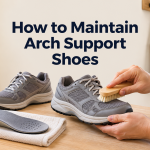
- Remove the laces and insoles.
- Brush off loose dirt with a soft brush.
- Mix a small amount of mild soap in lukewarm water.
- Wipe the uppers with a damp cloth or soft brush, then wipe again with a clean damp cloth to remove soap.
- Leave the shoes to dry naturally (see the drying section below).
Cleaning the Insoles
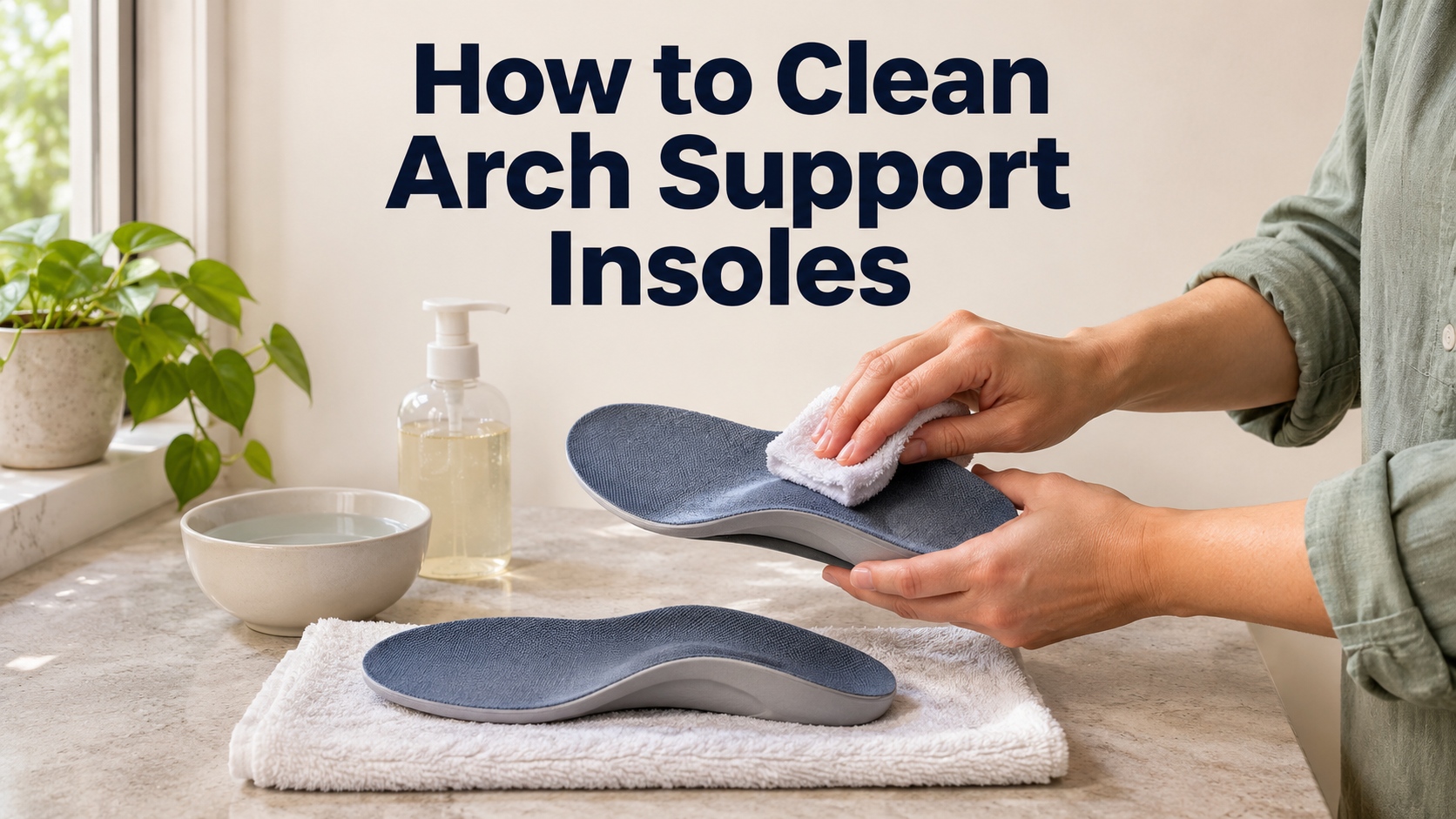
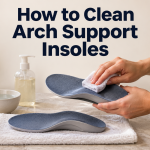
Wipe removable insoles with a cloth dampened with mild soapy water. Do not soak them, since too much water can break down foam and loosen the top cover. Rinse the cloth and wipe again, then let the insoles dry completely before putting them back.
Cleaning the Midsole and Outsole
Use a soft brush and a little soapy water to remove mud from the grooves. Clean tread helps the sole grip and wear evenly.
Care Guide by Material
| Upper material | Best cleaning method | Things to avoid |
|---|---|---|
| Leather | Damp cloth, then a leather conditioner now and then | Soaking, direct heat, harsh cleaners |
| Mesh or knit | Soft brush with mild soapy water | Scrubbing hard, hot water |
| Suede or nubuck | Suede brush and eraser for dry dirt | Soaking, regular soap and water |
| Synthetic or faux leather | Damp cloth with mild soap | Solvents and abrasive pads |
| Rubber or EVA clogs and sandals | Soap, water and a soft brush | Hot water and sunbathing them to dry |
How to Dry Shoes Without Damaging the Support
Heat is one of the biggest enemies of supportive shoes. It can shrink foam, harden glue and warp the midsole so that the arch no longer sits where it should.
- Stuff the shoes loosely with clean paper towels or plain paper to soak up moisture. Replace it when it gets damp.
- Place them in a well-ventilated spot at room temperature, away from radiators, heaters and direct sunlight.
- Never leave shoes in a hot car or put them on a heater or in the dryer.
- Allow at least a full day for them to dry before wearing again, longer if they were soaked.
How to Store Arch Support Shoes
- Keep them in a cool, dry place with some airflow, not in a damp basement or a hot attic.
- Do not pile heavy items on top or stack shoes in a way that squashes them.
- Maintain their shape with a shoe tree or loosely stuffed paper, especially for leather shoes.
- Leave the insoles in unless you are drying them, so they keep their form.
- Avoid sealed plastic boxes for long-term storage, as trapped moisture encourages odour and mould.
How to Check Whether the Support Is Still Working
Do these quick checks once a month. They take only a few minutes.
The Twist Test
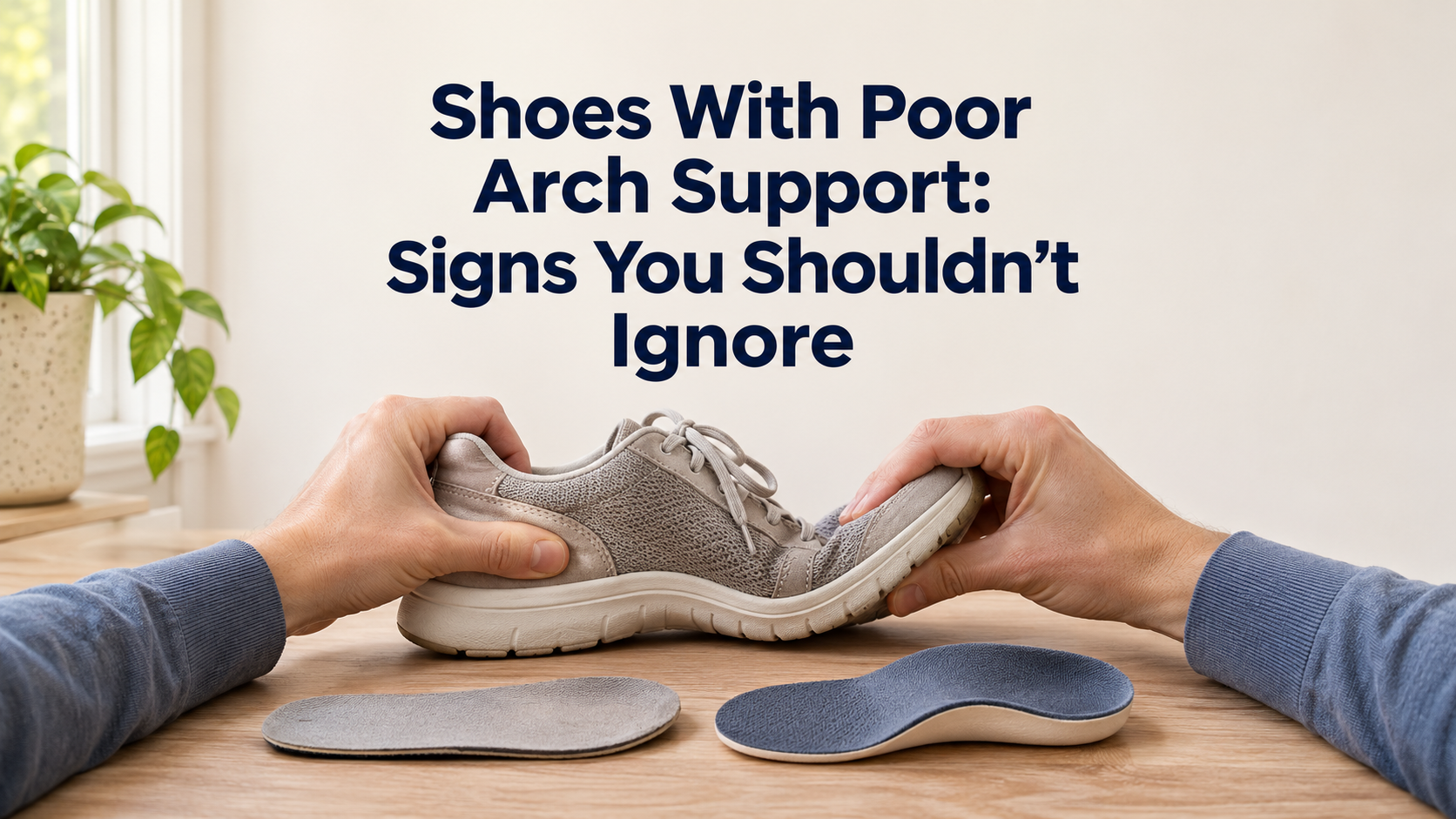
Hold the shoe by the heel and the toe and try to wring it like a towel. A supportive shoe resists twisting through the middle. If it twists easily, the structure has weakened.
The Bend Test
Push the toe toward the heel. The shoe should bend at the ball of the foot, where your foot naturally flexes. If it folds in the middle, the arch area has lost its stiffness.
The Heel Counter Squeeze
Press both sides of the heel. It should hold its shape. A heel counter that collapses will not keep your heel stable.
The Flat Surface Check
Place the shoes on a flat table and look from behind. They should sit level. A shoe that leans to one side, or has a heel worn down on one edge, is no longer lining up with your foot.
The Insole Press
Press the insole with your thumb. It should feel firm and spring back. If it is thin, cracked or permanently flattened, replace it.
The Sole Inspection
Turn the shoes over. Look for smooth patches, uneven wear and exposed midsole foam. Heavy wear on one side points to a change in how the shoe supports your foot.
A Simple Maintenance Schedule

Looking After Removable Insoles and Orthotics
If your shoes have removable insoles or you add your own arch support insoles, treat them as a separate part of the system.
- Take them out regularly so both the insole and the shoe can dry.
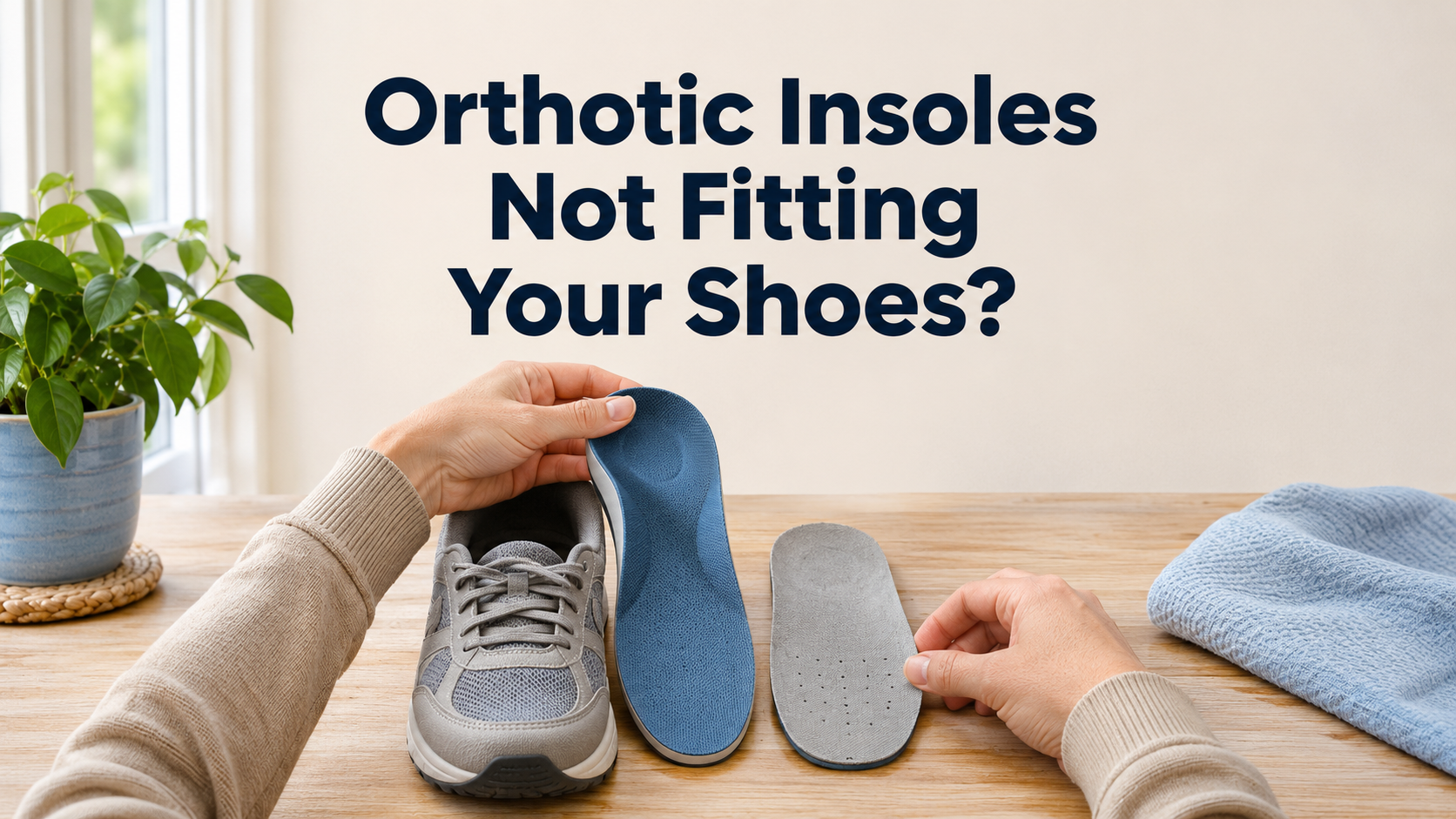
- Make sure they sit flat and fully in place. A bunched-up insole can cause blisters and reduce support.
- Do not swap insoles between different pairs of shoes without checking that they fit properly.
- Replace worn insoles even if the shoes still look good. Many basic insoles wear out in a few months, while firmer arch support insoles often last longer. Custom orthotics should follow your clinician’s advice.
Repairs and Upkeep That Extend Shoe Life
- Replace worn laces so the shoe fastens securely and holds your foot in place.
- Fix a worn heel early. Many leather and work shoes can have heel tips or heels replaced by a cobbler.
- Re-glue small peeling sections before they spread, using a suitable shoe adhesive.
- Waterproof suitable shoes with a spray designed for the material, so water does not soak into the cushioning.
- Consider resoling for quality leather shoes. Athletic shoes with worn midsoles are usually better replaced.
Mistakes That Wear Out Arch Support Faster
- Wearing the same pair every single day.
- Drying shoes on a heater, in the sun or in a hot car.
- Using a washing machine or dryer.
- Crushing the heel when putting shoes on or taking them off.
- Continuing to wear shoes with a clearly collapsed midsole or heel.
- Putting new insoles on top of old ones, which can cause a poor fit.
- Storing shoes damp and in a sealed container.
When to Replace Arch Support Shoes
Even with excellent care, the materials eventually give out. Plan to replace your shoes when you notice:
- The shoe twists easily or folds in the middle.
- The heel counter has collapsed or the heel leans to one side.
- The midsole shows deep creases or feels flat and hard.
- The outsole is worn smooth or very uneven.
- The foot pain you had before has returned.
- Running or walking shoes have reached about 300 to 500 miles, or six to twelve months of regular use.
Frequently Asked Questions
How often should I replace arch support shoes?
It depends on how you use them. Many people replace everyday supportive shoes every six to twelve months, and athletic shoes after roughly 300 to 500 miles. Use the twist, bend and sole checks to decide, not just the calendar.
Can I wash arch support shoes in the washing machine?
It is best not to. Machine washing and drying can damage the glue and foam. Hand cleaning with mild soap and water is safer. Follow the manufacturer’s label if it says otherwise.
Can worn arch support be restored?
Not really. Compressed foam and collapsed structure do not bounce back. You can replace the insole, but if the midsole or heel counter has failed, the shoe needs to be replaced.
Is it okay to wear my arch support shoes every day?
You can, but they will wear out sooner. Alternating between two pairs allows the cushioning to recover and the shoes to dry, which helps them last longer.
How should I dry wet arch support shoes quickly?
Stuff them with paper, change the paper as it gets wet, and leave them in a ventilated room. Avoid heat. It takes longer, but it protects the support.
Final Thoughts
Good arch support only helps if it stays intact. A little attention goes a long way: rotate your pairs, take shoes off properly, clean gently, dry them slowly, store them well and test them regularly. These small habits protect the insole, midsole and heel counter that keep your arches comfortable.
Pick up your most-worn pair today and run through the twist, bend and heel squeeze tests. If they pass, keep up the routine. If they fail, you will know it is time for a fresh pair.
Disclaimer: This article is for general information only and is not medical advice. If you have ongoing foot pain or a medical condition, consult a qualified healthcare professional.