

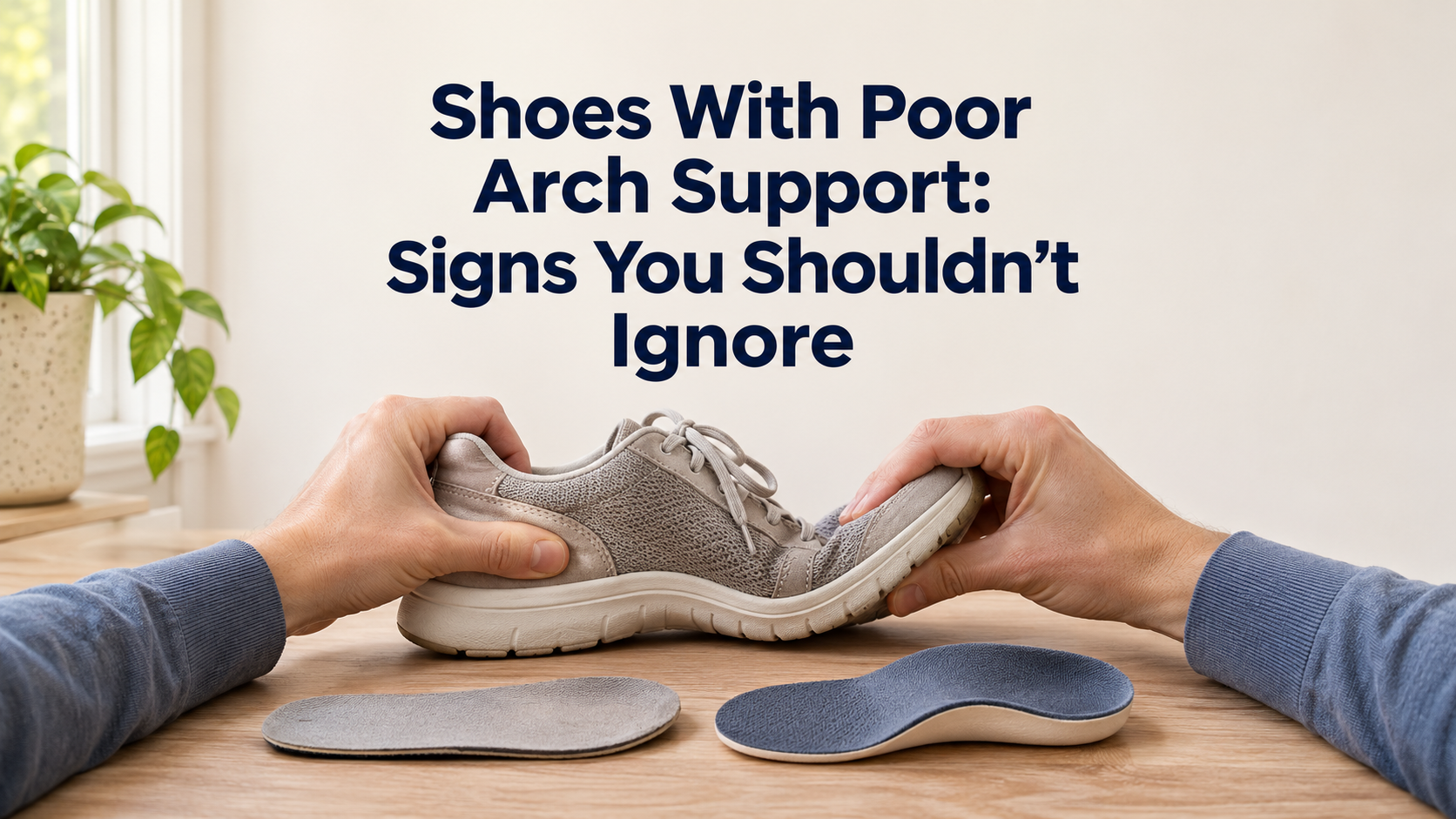

Shoes With Poor Arch Support: Signs You Shouldn’t Ignore
Your shoes do far more than cover your feet. Every step you take sends force through your heel, along the arch, and out through the ball of your foot. When a shoe has poor arch support, the arch is left to handle that load alone. Over weeks and months, the strain can show up as sore feet, tired legs and even pain in your knees or lower back.
The tricky part is that the warning signs often look unrelated to footwear. People blame age, a long day at work or a bad night’s sleep, and keep wearing the same pair. This guide walks you through the clearest signs that your shoes are not supporting your arches, simple tests you can do at home, and practical steps to fix the problem.
Poor arch support commonly shows up as arch or heel pain, foot fatigue, uneven sole wear, shoes that twist too easily, ankles that roll inward, and aches in the knees or back. If you notice two or more of these, it is worth checking your shoes and, if the pain continues, speaking with a podiatrist.
What Is Arch Support and Why Does It Matter?
The arch is the curved structure on the inside of your foot between the heel and the ball. It works like a natural spring: it flexes slightly to absorb shock when your foot lands, then stiffens to push you forward. Muscles, tendons and ligaments all share this job.
Good arch support in a shoe gives the midfoot a firm, shaped platform to rest on. It helps spread pressure evenly across the whole foot instead of letting it pile up at the heel and forefoot. A shoe with poor arch support has a flat, soft or overly flexible midsection, so the arch sinks with every step and the soft tissues underneath stretch and strain.

8 Signs Your Shoes Have Poor Arch Support
1. Pain Along the Arch After Standing or Walking
An aching, burning or tight feeling along the inside of the foot is the most direct warning. If the discomfort builds as the day goes on and eases when you take your shoes off, the footwear is a prime suspect. This is especially common for people who stand or walk on hard floors for hours.
2. Heel Pain, Especially With the First Steps in the Morning
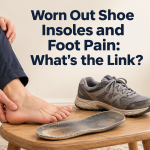
When the arch is not supported, the thick band of tissue running under the foot (the plantar fascia) is pulled harder than it should be. Many people feel this as a sharp pain in the heel when they first get out of bed or stand up after sitting. Heel pain has several causes, but unsupportive shoes are one of the most common and most fixable.
3. Tired Feet and Heavy, Aching Legs
Foot muscles that work overtime to hold up a collapsing arch tire quickly. You may notice that your feet feel worn out by mid-afternoon, or that your calves and shins ache after ordinary walking. Feet should not feel exhausted from a normal day.
4. Uneven Wear on the Soles
Turn your shoes over and look at the soles and heels. Healthy wear is fairly even, concentrated under the heel and ball of the foot. Heavy wear along the inner edge often goes with a flat or collapsing arch, while heavy wear along the outer edge is more common with high arches and rigid feet. Either pattern can mean your shoes are not guiding your foot properly.

5. Shoes That Lean, Twist or Collapse Easily
Place your shoes on a flat surface and look at them from behind. If the heel leans inward or outward, or the upper tilts to one side, the structure has broken down. A shoe that is flat and soft through the middle, with a squashed midsole or a heel counter that folds in, has lost much of its ability to support the arch.
6. Ankles That Roll Inward
Excess inward rolling of the ankle, known as overpronation, is often linked to a low or flexible arch. When shoes do not control this motion, the lower leg rotates inward with each step. If you or others notice your ankles tilting in when you stand or walk, check whether your shoes are doing enough to stabilise your feet.
7. Knee, Hip or Lower Back Discomfort
The body is a chain. When the foot collapses, the shin, knee, hip and lower back may have to compensate. Persistent pain in these areas that has no clear cause can sometimes trace back to the way the feet are loaded. Footwear is not always the answer, but it is a simple thing to rule out early.
8. Calluses, Blisters or Pressure Spots in the Same Places
Thick skin or repeated blisters under the ball of the foot, along the inner heel or beside the big toe suggest that pressure is landing in the same small areas every time. A well-supported shoe distributes force more evenly, so recurring hot spots are a hint that something in the fit or support is off.
Simple Tests You Can Do at Home
The Wet Footprint Test
Wet the bottom of your foot, step onto a piece of dark paper or a dry paper bag, and look at the print. A print that shows almost your whole foot suggests a flat or low arch. A print with a clear curve on the inside is typical of a normal arch. A print where the heel and ball barely connect points to a high arch. Each type needs a slightly different kind of support.

The Twist Test
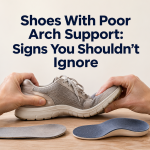
Hold the shoe by the heel and the toe and try to wring it like a towel. A supportive shoe resists twisting through the middle. If it twists easily, the midfoot has little structure.
The Bend Test
Push the toe up toward the heel. A good shoe bends at the ball of the foot, where your foot naturally flexes. If it folds in the middle of the shoe, it is not supporting the arch.
The Heel Counter Squeeze
Press on both sides of the back of the shoe. A firm heel counter should hold its shape. A collapsing heel cup will not keep the rear of your foot stable.
The Insole Press
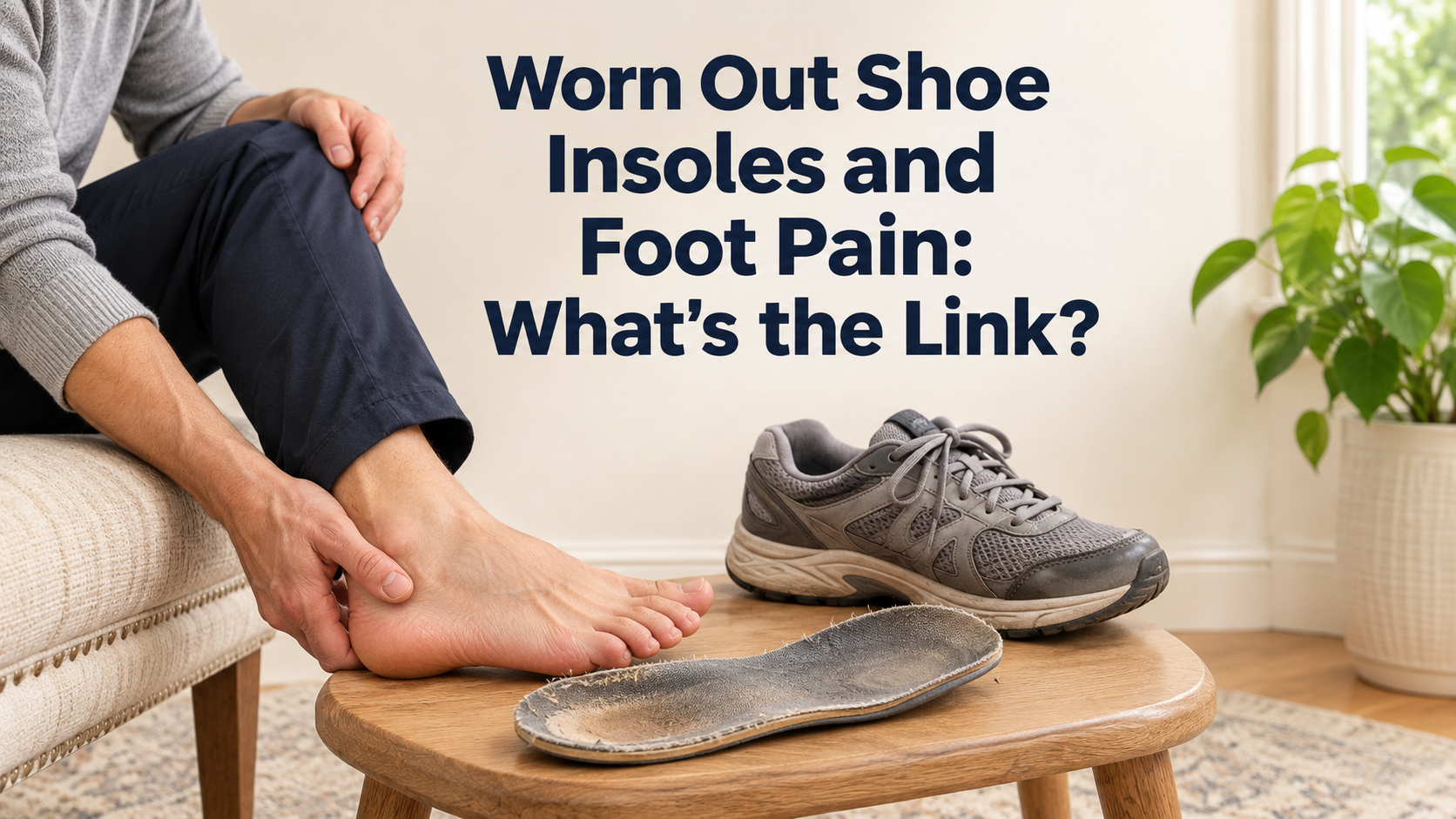
Remove the insole if you can and press into it with your thumb. If it feels thin, flat, or is permanently compressed where your foot sits, the cushioning and shape have worn out.
Signs at a Glance
| What you notice | What it may mean | What to try first |
|---|---|---|
| Arch ache after standing | Arch is not held up during long loading | Shoes with a contoured midsole or supportive insoles |
| Heel pain in the morning | Strain on the tissue under the foot | Supportive footwear, calf and foot stretches |
| Inner sole wears down fast | Foot collapsing inward | Stability shoes with firm midfoot support |
| Outer sole wears down fast | Rigid foot, little shock absorption | Cushioned shoes with a contoured insole |
| Shoe twists easily | Weak midfoot structure | Replace with a firmer shoe |
| Knee or back soreness | Poor foot alignment passing upward | Check footwear, then see a professional if it continues |
Who Is More Likely to Be Affected?
- People on their feet all day such as teachers, nurses, retail and factory workers.
- Runners and walkers who add distance quickly or keep worn-out shoes in rotation.
- Those with flat feet or very high arches, because each arch type needs the right kind of support.
- People who carry extra weight, since the arch handles more load with each step.
- Anyone who wears flat sandals, slip-ons or thin-soled fashion shoes daily.
- Pregnant women, as hormonal changes and weight gain can alter foot shape.
How to Fix the Problem
Choose Shoes With the Right Features
Look for a firm heel counter, a midsole that resists twisting, a shape that fits the contour of your arch, and a roomy toe box. Try shoes on at the end of the day when feet are slightly swollen, and wear the socks you normally use. A shoe should feel supportive straight away, not something you wait for it to “break in”.
Add Supportive Insoles if Needed
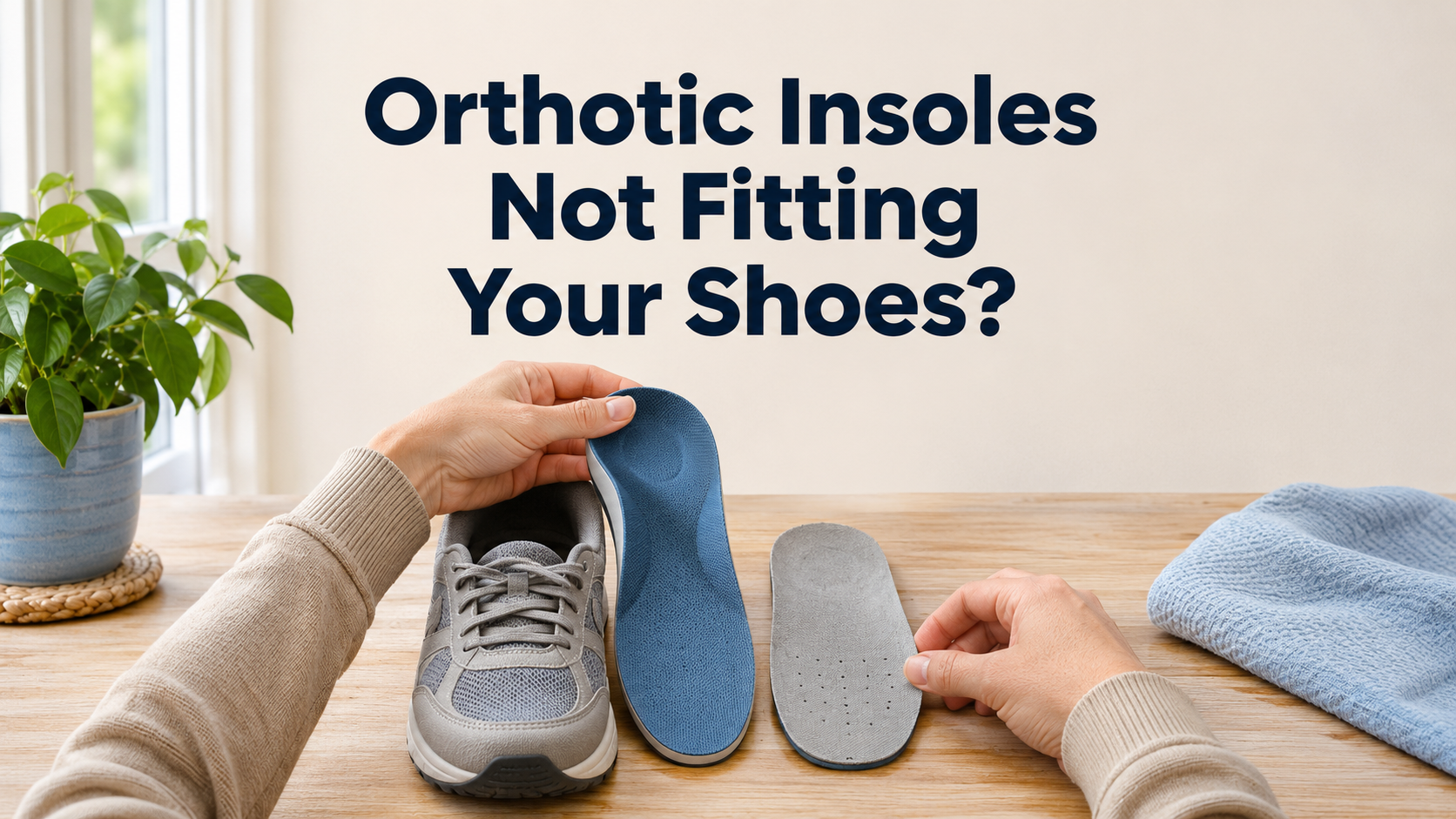
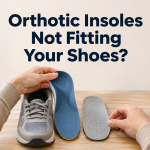
Many shoes have flat factory insoles. A well-chosen arch support insole can improve comfort and distribute pressure better. Pick the type that matches your arch: firmer support for flat feet, and cushioned contoured support for high arches. Ease into new insoles by wearing them for a few hours at first and increasing over a week or two.
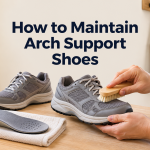
Replace Worn Shoes on Time
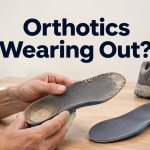
Cushioning and structure break down even when the shoe still looks fine. As a rough guide, running and walking shoes often last around 300 to 500 miles, or six to twelve months of regular use. Work shoes worn every day may need replacing even sooner. Rotating between two pairs helps each pair recover and last longer.
Strengthen and Stretch
- Roll the arch gently over a ball or bottle for a minute or two.
- Stretch the calf against a wall, holding for 30 seconds on each side.
- Practise picking up a towel with your toes to work the small foot muscles.
- Do calf raises slowly, lowering the heel under control.
Limit Barefoot Walking on Hard Floors
If your feet hurt, avoid walking barefoot on tile or hardwood for long periods at home. A supportive pair of indoor shoes or recovery sandals can make a real difference.
Frequently Asked Questions
Can poor arch support cause knee and back pain?
It can contribute. Changes in how the foot lands may affect the alignment of the knee, hip and lower back. Pain in these areas has many possible causes, so if it does not improve after you change your shoes, get it checked.
Do expensive shoes always have better arch support?
No. Price does not guarantee support. A shoe that suits your arch type, fits properly and passes the twist and bend tests matters more than the brand or cost.
How long does it take to feel better after switching to supportive shoes?
Some people feel relief within days, but many need two to six weeks as tired tissues recover and the body adjusts. If there is no improvement, talk to a professional.
Is arch support only for people with flat feet?
No. People with high arches also benefit, because support and cushioning help absorb shock and spread pressure across the foot. People with normal arches can also benefit when they spend long hours on their feet.
Can I fix poor arch support with insoles alone?
Often insoles help, but only if the shoe itself is structurally sound. A badly worn shoe with a collapsed midsole will not be fully corrected by an insole, so replace the shoe when needed.
Final Thoughts
Your feet carry you through thousands of steps every day, so it pays to listen when they complain. Arch or heel pain, uneven sole wear, shoes that twist or lean, and aches in the knees or back can all be signs that your footwear is no longer supporting you. The good news is that the fix is often straightforward: test your current shoes, choose a pair that matches your foot type, add the right insoles if needed, and replace worn pairs before they cause trouble.
Take a few minutes today to flip over your most-worn pair of shoes and run through the tests above. Your feet will thank you.
Disclaimer: This article is for general information only and is not medical advice. If you have ongoing foot pain or a medical condition, consult a qualified healthcare professional.