


Arch Support Too High? 11 Symptoms, Causes, and How to Fix It
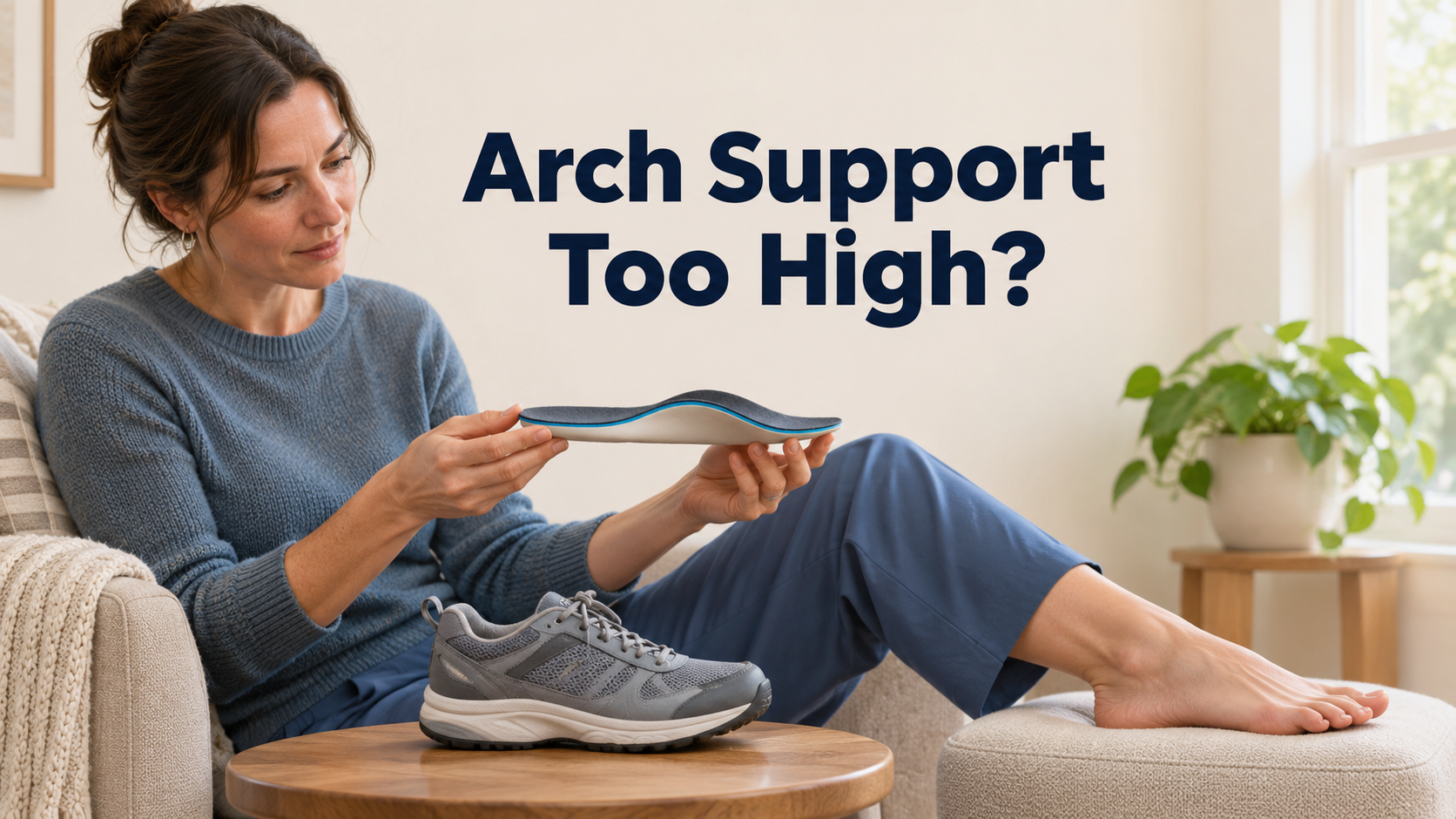
Arch supports are supposed to make walking and standing easier. When the arch is too high for your foot, they do the opposite. Instead of gently filling the space under your arch, the insert pushes up into it, and your foot, ankle, and even your knees can start to complain.
Many people do not realise the insert is the problem. They assume the pain is “part of getting used to it” or that their feet are simply getting worse. This guide explains the most common symptoms of an arch support that is too high, how to tell them apart from normal break-in soreness, what causes the problem, and what you can do about it today.
The most common signs of an arch support that is too high are a bruised or cramping feeling under the arch, pain along the outer edge of the foot, a sensation of rolling outward, heel or ball-of-foot pain, and aches in the calves, knees, hips, or lower back. If these continue or get worse after one to two weeks, the support is probably too high or too firm for you.
What Does “Too High” Actually Mean?
Every foot has its own natural arch. A good arch support follows that shape and fills the gap between your arch and the floor, so weight is shared across the whole foot. It should feel like gentle contact.
An arch support is too high when its peak sits above the natural height of your arch. Instead of sharing the load, the peak becomes a pressure point. The insert may also be too high if the highest part is in the wrong position, even if the height itself is fine, because the peak ends up under a part of the foot that was never meant to carry that pressure.
11 Symptoms of an Arch Support That Is Too High
1. A Bruised or Pressed Feeling Under the Arch
This is the classic sign. It feels as if you are standing on a hard lump or a small ball. Some people describe it as a deep bruise in the middle of the foot. It tends to build up the longer you stand or walk.
2. Arch Cramping or Aching
Muscles under the arch may tighten or cramp as they try to cope with an unfamiliar shape. A little tiredness is normal at the start. Cramping that comes on quickly, or aching that lingers after you take your shoes off, suggests too much correction.
3. Pain Along the Outer Edge of the Foot
An arch that is too high can tilt the foot outward, so more weight lands on the outside edge. This can cause soreness along the outer border of the foot and the bone at the base of the little toe.
4. Feeling That Your Feet Roll Outward
If your ankles feel wobbly, or you notice your weight sitting on the outer part of your feet, the insert may be pushing your foot into an exaggerated outward position. Some people feel less stable on uneven ground.
5. Heel Pain or a Heel That Lifts
A very high arch can tip the heel or make it sit on a slope. This may cause sore heels, rubbing at the back of the shoe, or a heel that slips as you walk.
6. Pain in the Ball of the Foot
When the arch is pushed up, weight can shift forward onto the front of the foot. The ball of the foot then takes more load than usual, which can cause burning, soreness, or a feeling of walking on a pebble.
7. Toe Gripping, Clawing, or Numbness
Some people curl their toes to grip the shoe when the foot feels unstable. Others notice numbness or tingling, which can be a sign of pressure on nerves and should not be ignored.
8. Tight Calves or Shin Discomfort
Changes in foot position travel up the leg. The calf and shin muscles may work harder, leaving them tight or sore, especially after walking.
9. Knee, Hip, or Lower Back Pain
Because the feet are the base of the body, a big change in foot alignment can affect joints higher up. New knee, hip, or back discomfort after starting an insert is worth taking seriously.
10. Blisters, Calluses, or Red Pressure Marks
Check your feet after wearing the inserts. Redness or irritation under the arch or along the edges of the foot shows where the pressure is concentrated.
11. Pain That Is Worse With the Insert Than Without
This is the simplest test of all. If your feet clearly feel better in the shoe without the insert, the support is likely wrong for you.
How Symptoms Travel Up the Body
Foot position affects the joints above it. When the arch is pushed too high, discomfort can show up in several places, which is why some people end up treating knee or back pain without realising the insert is involved.
Normal Break-In Soreness vs. a Warning Sign
A short adjustment period is expected. The difference is in how the discomfort behaves.
| Feature | Normal break-in | Arch too high |
|---|---|---|
| Type of feeling | Mild pressure, awareness of the insert | Sharp, stabbing, burning, or bruised |
| Trend | Eases over days | Stays the same or worsens |
| After removing shoes | Feet feel fine within minutes | Soreness lingers for hours |
| Location | Broad, in the arch area | Focused spot, outer edge, heel, or ball of foot |
| Other signs | None | Numbness, tingling, redness, joint pain |
| Timeline | Settles within 1 to 2 weeks | Continues beyond 2 weeks |
Why Arch Supports End Up Too High
- One-size-fits-all design. Many ready-made inserts use a standard arch height that suits only some feet.
- Buying by label, not by foot. “Maximum support” sounds better but is not better for everyone.
- Flat feet that are not painful. A flexible flat foot often does best with mild support, yet is frequently sold the highest arch.
- Wrong shoe size or style. A narrow or low-volume shoe pushes the foot onto the arch peak.
- Incorrect position. If the insert slides forward or backward, the peak moves away from your arch.
- Stacking inserts. Placing a new insert on top of the old insole raises the whole foot.
- Misjudged arch type. A quick glance at the foot can be misleading. Foot shape standing is different from foot shape sitting.
Quick At-Home Checks
- The floor test. Place the insert on a flat floor, then stand on it barefoot. You should feel firm, even contact, not a hard ridge.
- The sit-and-stand test. Slip the insert into your shoe, sit and then stand. A well-chosen arch feels supportive within a few seconds, not like a lump.
- The ten-minute walk. Walk around the house for ten minutes. Notice where the pressure builds.
- The skin check. After wearing them, look for red marks under the arch or along the outer edge.
- The comparison test. Walk a short distance with and without the insert. If your feet feel better without, it is not right for you.
What to Do If Your Arch Support Is Too High
If you think your arch support is too high, work through these steps:
- Stop wearing them for long periods. Go back to short sessions, or stop completely if there is sharp pain or numbness.
- Check position. Make sure the heel sits flat against the back of the shoe and the arch peak lines up with your arch.
- Remove the shoe’s factory insole if the shoe allows it, so you are not stacking two layers.
- Switch to a lower arch height. Moving from high to medium, or medium to low, often solves the problem.
- Choose a softer material. Dense foam or gel-assisted designs are more forgiving than hard plastic.
- Try a flexible or adjustable insert. Some designs have removable arch pieces so you can change the height.
- Check the shoe. A roomy toe box, firm heel, and removable footbed make a big difference.
- Use a gradual schedule. Add one to two hours of wear every couple of days.
How to Choose the Right Arch Height
| Foot type | Usually best | Watch out for |
|---|---|---|
| Flat or low arch | Low to medium height, firm but not harsh | Very high peaks that push into the foot |
| Normal arch | Medium height with cushioning | “Maximum support” labels |
| High arch | Medium to high height, soft, cushioned and contoured | Hard inserts that leave pressure points |
When in doubt, start lower. It is easier to move up to more support later than to recover from an insert that was too aggressive. A professional foot assessment can confirm your arch type and the right level of support.
Foot-Friendly Habits While You Adjust
- Calf stretches twice a day, holding for 30 seconds each.
- Rolling a ball under the arch for a minute or two to ease tension.
- Toe spreading and short-foot exercises to help the foot muscles do their job.
- Rotating your shoes so no pair is worn every day.
- Resting your feet with a short sit-down break during long standing days.
When to See a Podiatrist
Book an appointment if you experience any of these:
- Pain that lasts more than two weeks or keeps getting worse
- Numbness, tingling, or burning
- Swelling, redness, or warmth in the foot
- New joint pain in the knees, hips, or back
- Diabetes, poor circulation, or reduced foot sensation
- Pain that appears after you have already tried several different inserts
Frequently Asked Questions
How do I know if my arch support is too high?
Typical signs are a bruised feeling under the arch, pain on the outer edge of the foot, a sense of rolling outward, and discomfort that does not improve after one to two weeks.
Can an arch support that is too high cause knee pain?
It can. Changes in foot position affect the ankles, knees, and hips, so a poorly matched insert may contribute to pain higher up the leg.
Is it normal for arch supports to feel high at first?
Yes, a new insert usually feels noticeable. The feeling should be gentle and fade as you adapt, not sharp or painful.
Can I make an arch support lower?
Some inserts have removable pieces. Otherwise, it is usually better to replace it with a lower design than to cut or flatten it yourself, which can leave an uneven surface.
How long should I try a new insert before giving up?
Give it one to two weeks of gradual use. If symptoms are getting worse instead of better, stop sooner.
Should people with flat feet use high arch supports?
Not usually. Flexible flat feet often feel best with mild to moderate support. Very high supports can cause pressure and pain.
Do I need custom orthotics?
Not always. Many people do well with a well-chosen ready-made insert. If you have ongoing pain or complex foot problems, a podiatrist can advise whether custom orthotics make sense.
Final Thoughts
An arch support that is too high is one of the most common reasons insoles fail. The symptoms are easy to mistake for normal soreness, but they follow a pattern: focused pressure under the arch, outer-edge pain, a rolling-out feeling, and aches that spread up the leg.
The fix is usually simple. Pick a lower or softer support, make sure it sits correctly in a roomy shoe, and break it in slowly. If problems continue, a professional foot assessment is the fastest route to something that really works. Remember that the best arch support is the one you barely notice.