




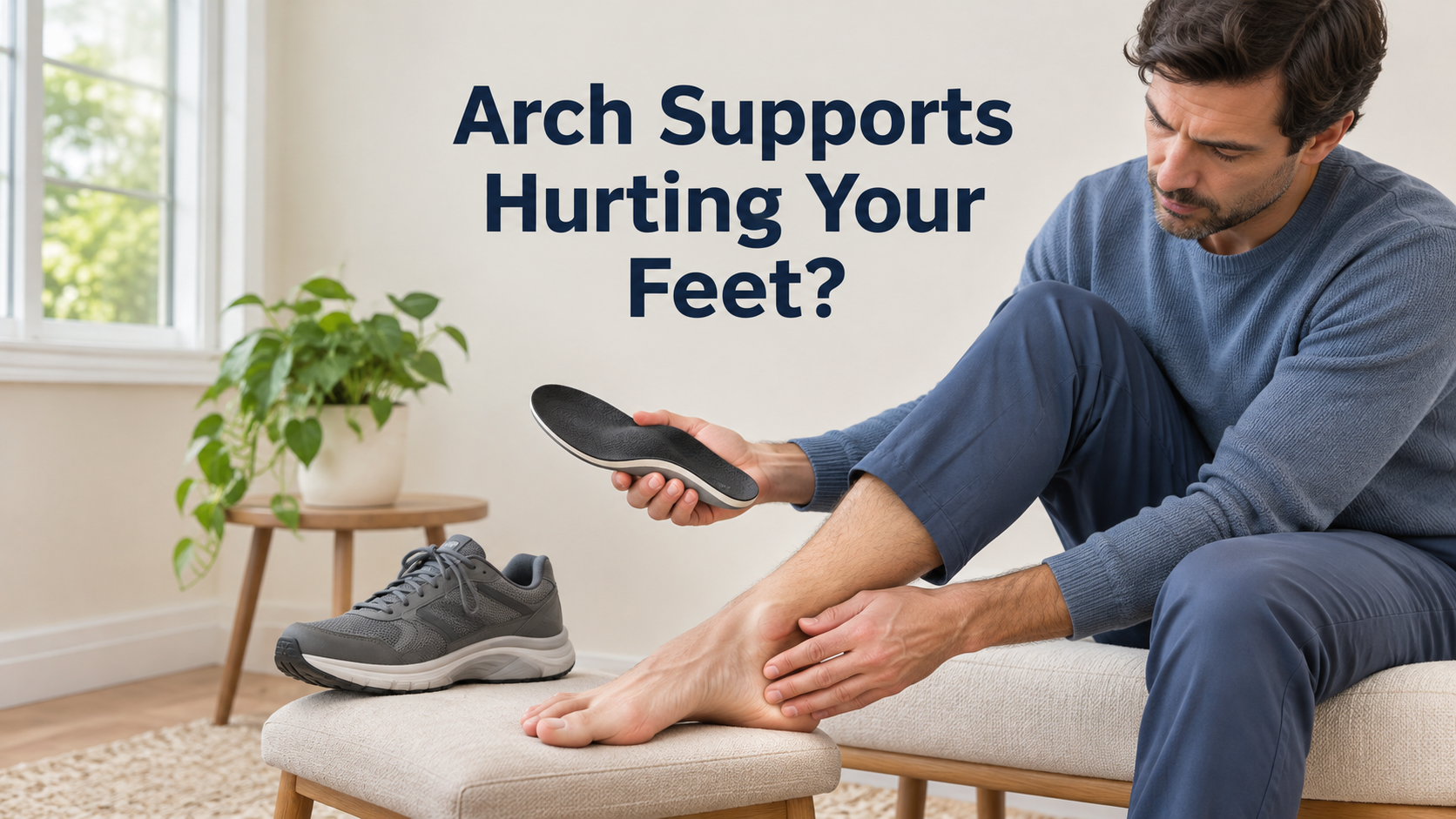
Arch Supports Hurting Your Feet? Why It Happens and How to Fix It
You bought arch supports to feel better. Maybe you had heel pain in the morning, aching arches after a long shift, or a podiatrist suggested them. Instead, your feet now burn, throb, or cramp after an hour in your shoes. It is frustrating, and it makes many people give up on insoles completely.
The good news is that discomfort from arch supports is very common, and in most cases it can be fixed. The cause is usually the wrong type, the wrong height, or too much too fast, not a sign that your feet cannot use support. This guide explains why arch supports hurt, what the pain location tells you, how to break them in safely, and how to choose a pair that actually works for your feet.
Arch supports usually hurt because they are too high, too firm, the wrong shape for your foot, badly fitted inside your shoe, or worn for too long on day one. A short, gradual break-in period is normal. Sharp pain, numbness, or discomfort that gets worse after two weeks is not.
Is It Normal for Arch Supports to Hurt at First?
Mild awareness of the insert is normal. Your foot has spent years in a certain position, and the muscles, tendons, and ligaments need time to adapt to a new shape underneath them. During the first several days you may notice a feeling of pressure under the arch, light soreness in the arch or calf, or a sense that the insole is “pushing up” into your foot.
This kind of mild tightness should ease as you build up wearing time. What is not normal is sharp, stabbing, burning, or numb sensations, blisters, or pain that keeps getting worse. Those are signs the support is not right for you.
8 Common Reasons Arch Supports Cause Foot Pain
1. The Arch Is Too High for Your Foot
This is the most common cause. If the arch of the insert sits higher than your natural arch, it presses into the soft tissue instead of gently supporting it. People with flat or low arches are often sold high, aggressive supports, and the result is a bruised or cramping feeling in the middle of the foot.
2. You Started Wearing Them All Day
Putting new inserts in and wearing them for ten hours straight is a recipe for soreness. Even a perfectly good support needs a gradual introduction, which is covered in the break-in schedule below.
3. The Insert Is Too Hard or Too Rigid
Rigid plastic or hard carbon supports can be useful for some medical conditions, but they are unforgiving for everyday wear. If your feet are sensitive or you stand on hard floors, a rigid insert can create pressure points. Semi-rigid or dense foam options are often more comfortable to start with.
4. The Arch Sits in the Wrong Place
Feet differ in length. If the highest point of the arch support does not line up with the highest point of your arch, it will push on the wrong structures. A heel that slides back and forth inside the shoe makes this worse.
5. There Is Not Enough Room in the Shoe
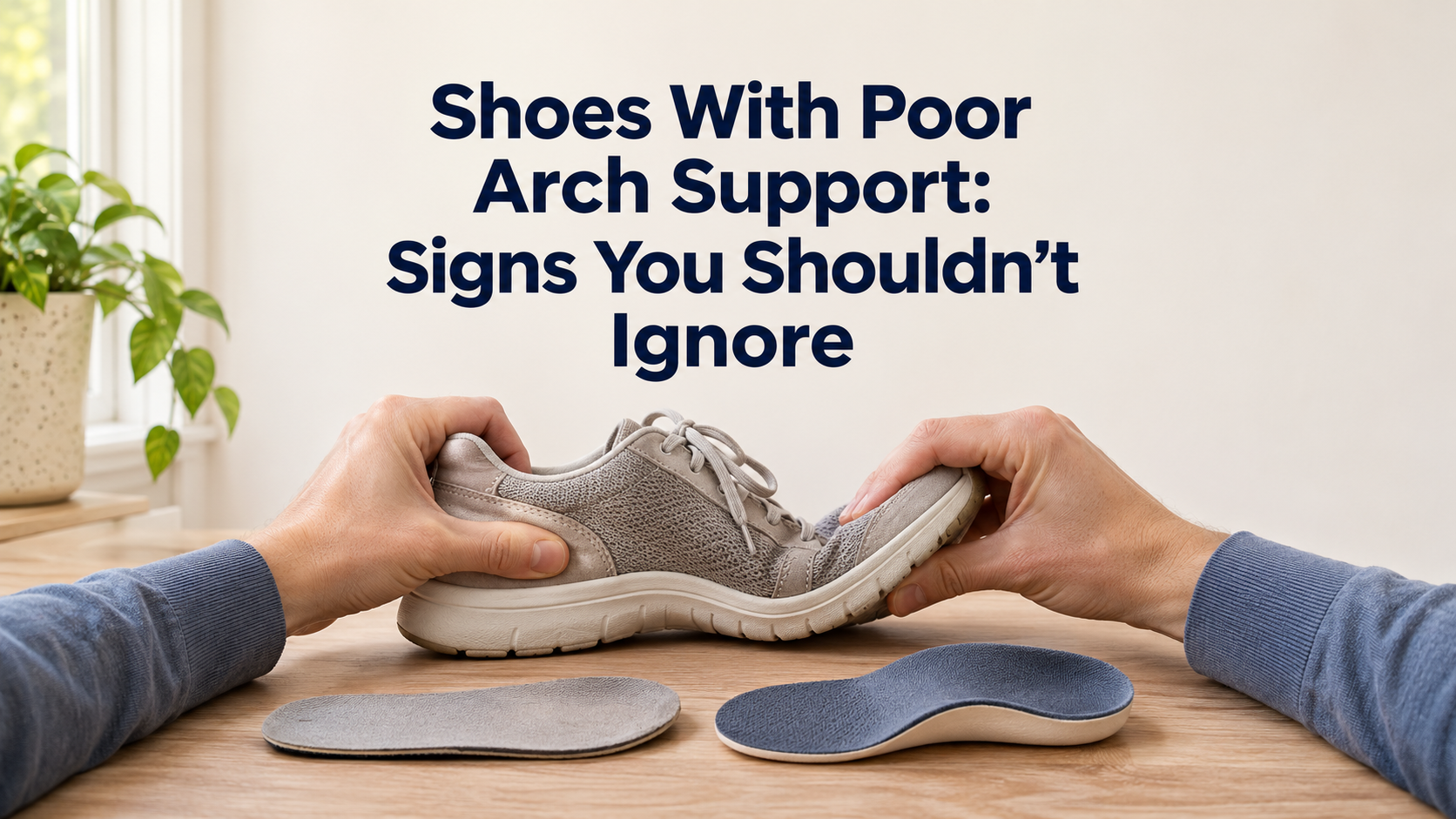
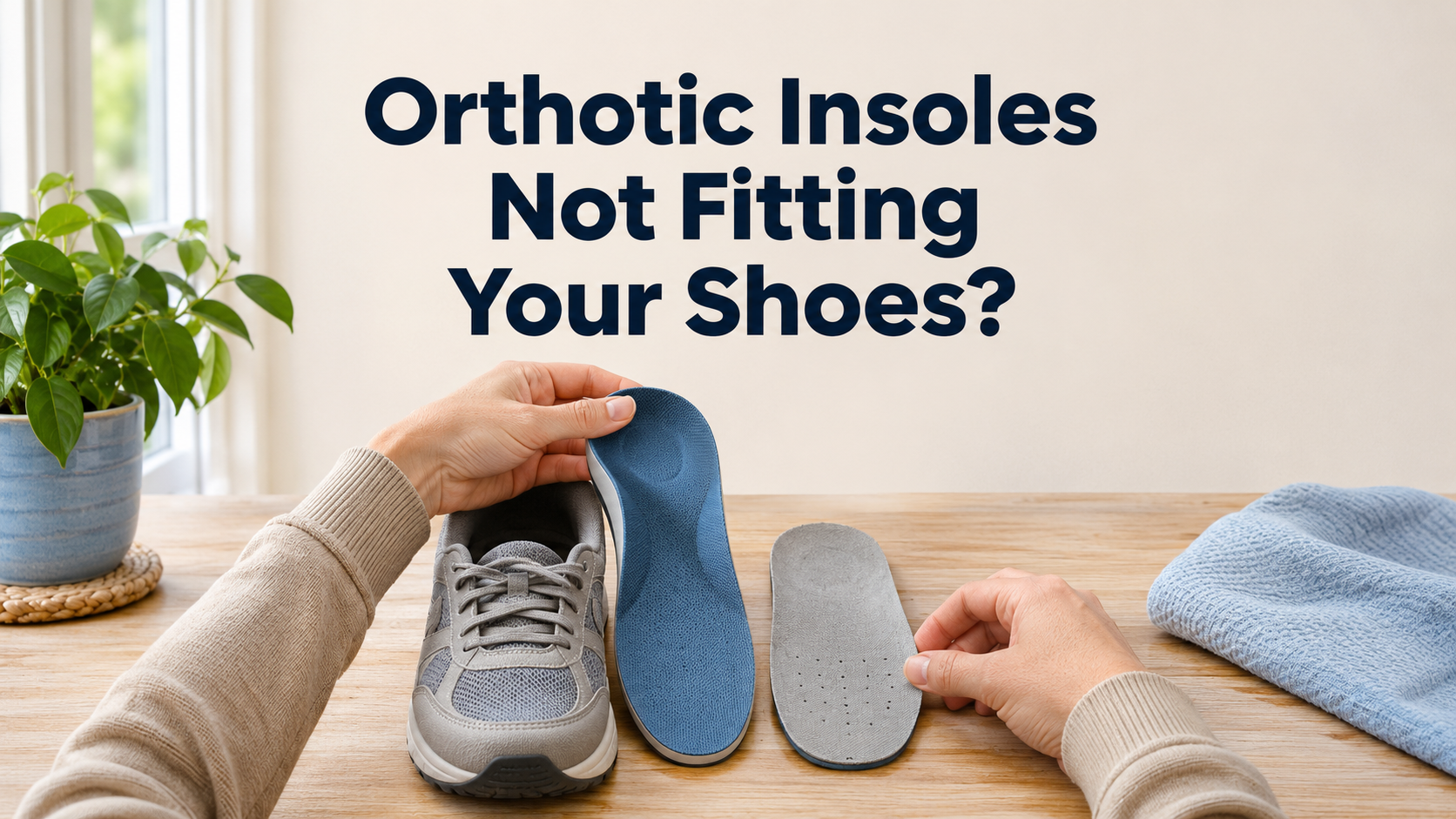
An insole takes up volume. If you simply drop it on top of the existing footbed, your foot sits higher in the shoe. That can squeeze your toes, rub the top of your foot, and lift your heel out of the shoe. Removing the factory insole first, when the shoe allows it, often solves this.
6. The Wrong Type for Your Foot Shape or Activity
A running insert, a dress shoe insert, a work boot insert, and a medical orthotic are built differently. A thin, firm insert made for a narrow dress shoe will not feel right in a cushioned sneaker, and vice versa.
7. Your Feet Did Not Need That Much Correction
Not every foot with a low arch is a problem foot. Many people with flat feet have no pain at all. Forcing a strongly corrected position onto a foot that was working fine can create pain where there was none.
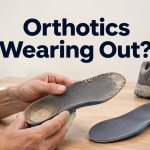
8. The Insert Is Worn Out or Poor Quality
Very cheap inserts can have uneven foam, sharp edges, or arches that collapse unevenly. Equally, an old pair that has flattened in one spot will support unevenly and cause new aches. Most over-the-counter inserts last roughly six months to a year depending on use.
Where It Hurts Tells You What Is Wrong
The location of your pain is a useful clue. Use the diagram and the table below to match the symptom to the likely cause.
| Where it hurts | Likely cause | What to try |
|---|---|---|
| Under the arch | Arch too high or too hard | Switch to a lower, softer arch and break in slowly |
| Heel | Heel cup too shallow or too hard; insole sliding | Choose a deeper heel cup with some cushioning |
| Ball of the foot | Insole pushing foot forward or shoe too snug | Remove factory insole; try a 3/4 length insert |
| Outer edge of the foot | Foot being tilted outward by strong correction | Use a less aggressive support; get a professional gait check |
| Toes cramping or numb | Not enough room in the shoe | Trim to size, remove factory insole, or go up half a shoe size |
| Knee, hip, or lower back | Change in body alignment from new support | Reduce wearing time; see a podiatrist if it continues |
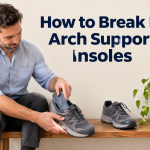
How to Break In Arch Supports Safely
A gradual schedule is the single most effective way to avoid early pain. A commonly recommended approach is to increase wearing time a little each day, and to slow down if your feet feel sore rather than just “aware” of the insert.
Some extra tips for the break-in period:
- Start in your most comfortable, well-fitting shoes.
- Wear them around the house first, then for short walks.
- Avoid starting on a day of heavy standing, hiking, or a workout.
- Take them out if you feel sharp pain, numbness, or tingling.
- Wear the same insert in both shoes consistently once you are used to them, so your feet do not keep switching between supported and unsupported.
How to Fix Arch Supports That Still Hurt
- Cut back the wearing time. Return to the previous step of your break-in schedule and move up more slowly.
- Remove the shoe’s original insole. This gives the new insert room and keeps your heel seated properly.
- Check the position. The heel of the insert should sit flat against the back of the shoe with no gap and no curling.
- Trim to size if needed. Many inserts are made to be trimmed. Use the original factory insole as a template and cut a little at a time.
- Wear thicker or moisture-wicking socks. The right socks reduce friction and pressure.
- Try a different arch height. Moving from high to medium, or from medium to low, is often all it takes.
- Try a softer material. Dense foam or gel-assisted models can feel far kinder than hard plastic.
- Switch to a 3/4 length insert. These stop just behind the ball of the foot and leave the toe area free in tighter shoes.
How to Choose the Right Arch Support
Step 1: Know Your Arch Type
A simple wet test gives a good idea. Wet the sole of your foot, step onto a piece of dark paper or a dry paving stone, and look at the footprint.
- Flat arch: look for firm but low-profile support with good stability. Avoid very high arches.
- Normal arch: medium support with a moderate arch and good cushioning is usually enough.
- High arch: cushioning matters most. Look for support that fills the gap under the arch and absorbs shock.
Step 2: Match the Material to Your Needs
- Soft foam: comfortable and forgiving, a good first choice if you are new to inserts.
- Gel: useful for shock absorption in the heel and forefoot.
- Semi-rigid: a balance of support and comfort, popular for all-day wear.
- Rigid: typically used for specific biomechanical needs and best guided by a professional.
- Cork or similar natural blends: mold gradually to your foot over time.
Step 3: Pick the Right Length and Shape
Full-length inserts replace the footbed and suit athletic and casual shoes with removable insoles. Three-quarter length inserts suit dress shoes, closed flats, and any shoe that is already snug. Heel-only options are for very specific problems.
Step 4: Check the Shoe
The best insert in the wrong shoe will still hurt. A good shoe for arch support has a firm heel counter, a sole that only bends at the ball of the foot, and a removable footbed. Shoes that are very flexible in the middle, or that squeeze your toes, work against the insert.
Helpful Exercises and Habits
Support from the outside works best when your feet are strong on the inside. A few simple habits can help while you adjust:
- Calf stretches: tight calves pull on the heel and arch. Hold each stretch for 30 seconds, a few times a day.
- Short foot exercise: sitting, gently draw the ball of the foot toward the heel without curling your toes, hold a few seconds, release.
- Towel scrunches: use your toes to pull a small towel toward you.
- Rolling the arch: roll a ball under your foot for a minute or two to ease tension.
- Barefoot time: brief periods at home on a safe surface help foot muscles stay active.
- Rotate shoes: do not wear the same pair every day.
When to Stop and See a Professional
Stop using the insert and book an appointment with a podiatrist or physical therapist if you notice any of the following:
- Pain that gets worse over two weeks instead of better
- Numbness, tingling, or burning in the foot
- Swelling, redness, or warmth in the foot
- Pain that wakes you at night
- Foot problems alongside diabetes or circulation issues
- New knee, hip, or back pain after starting inserts
A professional can examine your foot, watch you walk, and recommend either a better over-the-counter option or custom orthotics made for your exact shape.
Frequently Asked Questions
How long does it take to get used to arch supports?
Most people adapt within one to two weeks, though some need a little longer. Mild soreness that steadily improves is normal.
Can the wrong arch support make foot pain worse?
Yes. An insert that is too high, too firm, or badly fitted can create new pressure points and worsen existing pain.
Should arch supports feel uncomfortable?
You may notice them at first, but they should not cause sharp pain. Good arch supports feel supportive and become less noticeable with time.
Why do my arches hurt more with insoles?
This usually means the arch height does not match your foot, or the insert is too rigid. Try a lower, softer option and a slower break-in.
Do flat feet always need arch support?
No. Many people with flat feet have no symptoms. Support is mainly useful when flat feet cause pain, fatigue, or related problems.
Can I wear arch supports in every shoe?
Yes, if they fit properly. Many people buy a couple of pairs in different styles or use trimmed 3/4 length inserts in dress shoes.
How often should I replace arch supports?
Typically every six to twelve months for over-the-counter models, sooner if the arch flattens, the foam cracks, or the pain returns.
Final Thoughts
Arch supports that hurt are frustrating, but the fix is usually simple. In most cases, the problem is arch height that is too high, material that is too hard, a poor fit inside the shoe, or too much wear too soon. Slow down, match the support to your arch type, make sure there is room in the shoe, and give your feet time to adjust.
If discomfort remains after careful adjustment, a professional assessment can save you time and money, and may point to a different solution entirely. The right support should feel like a quiet, steady help under your foot, not a constant reminder that it is there.