






Understanding Flat Feet (Pes Planus)
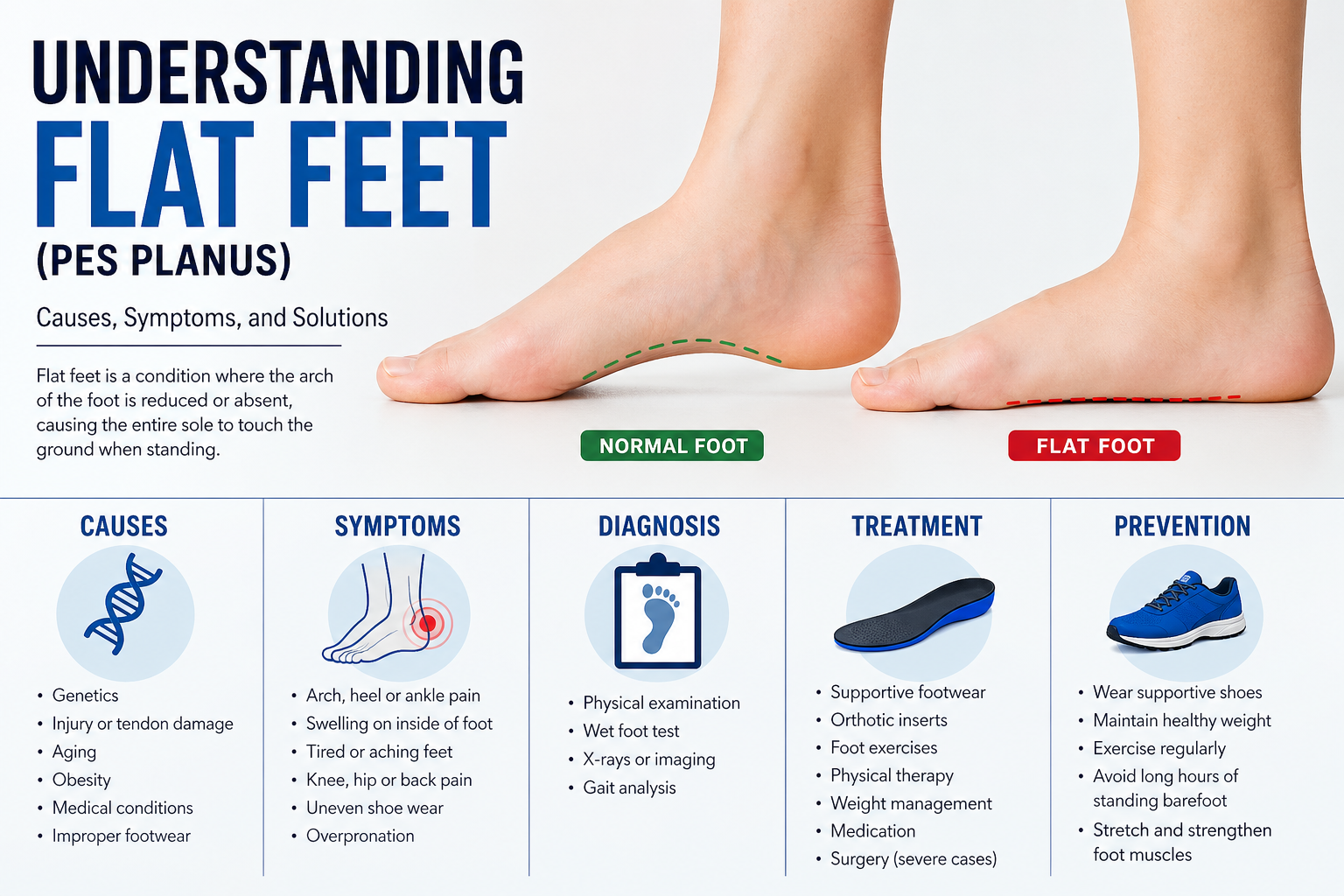
Flat feet (pes planus) is a common musculoskeletal condition where the normal arch of the foot is reduced or completely absent. While it is often harmless, in some people it can lead to pain, imbalance, and long-term posture problems if not managed properly.
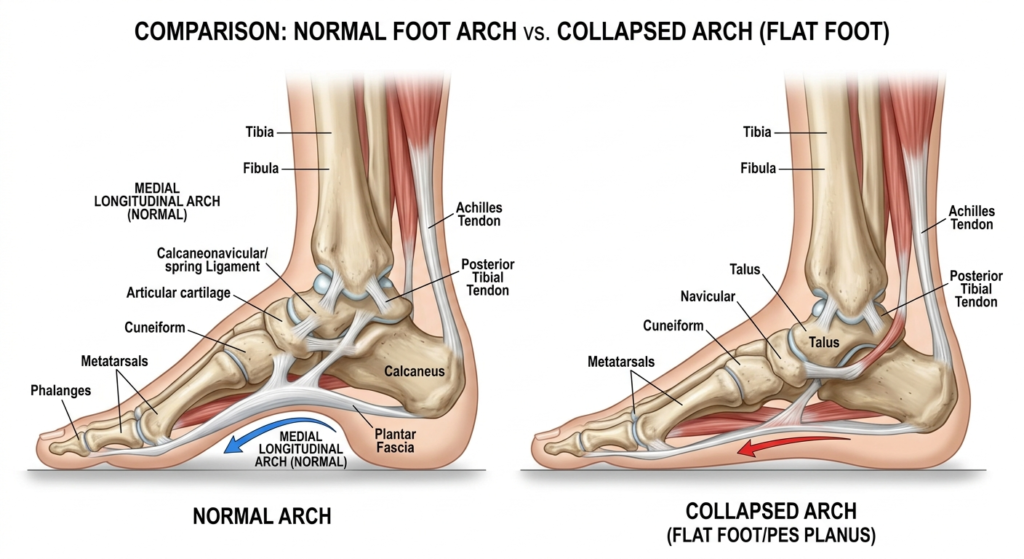
This guide explains flat feet in detail, including how it develops, how it affects the body, and what you can do to treat or manage it effectively.
What Are Flat Feet?
In a normal foot, there is a natural arch on the inside of the foot that:
- Absorbs shock while walking or running
- Helps maintain balance
- Distributes body weight evenly
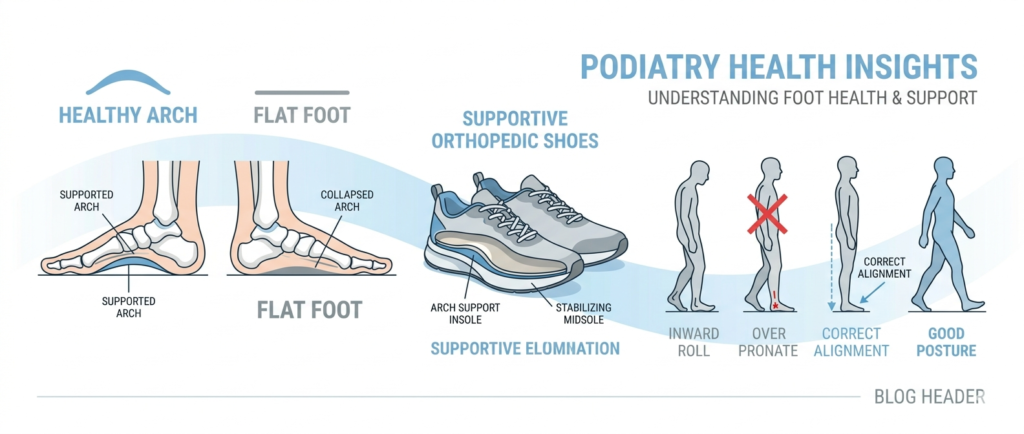
In flat feet, this arch collapses, causing the entire sole of the foot to touch the ground when standing.
Types of Flat Feet
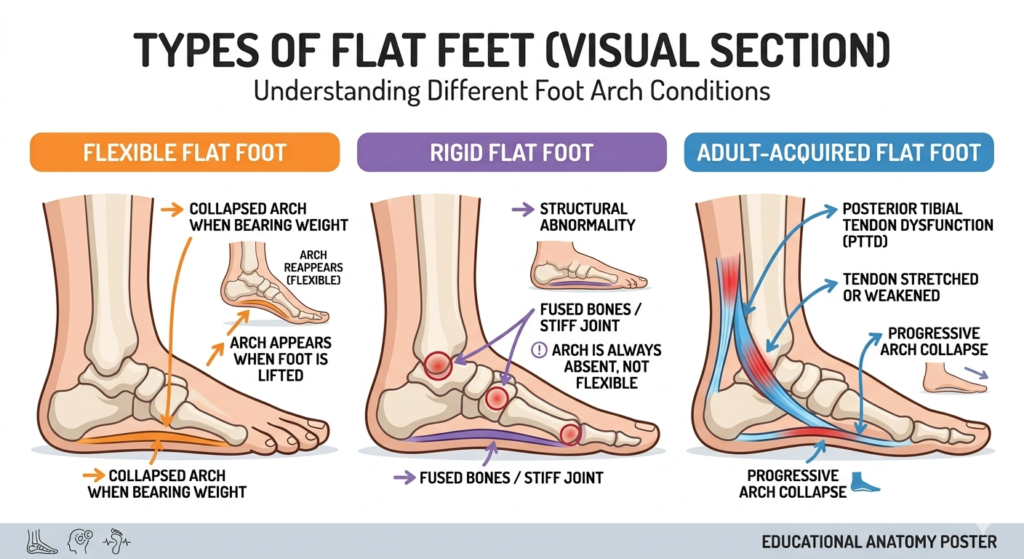
Flexible Flat Feet
- Arch is visible when sitting or not bearing weight
- Arch disappears when standing
- Most common type
- Usually painless in children and young adults
Rigid Flat Feet
- Arch is absent even when not standing
- Often associated with structural bone or tendon issues
- More likely to cause pain and stiffness
Adult-Acquired Flatfoot
- Develops over time in adulthood
- Often due to tendon damage (especially posterior tibial tendon)
Causes of Flat Feet
Flat feet can be present from birth or develop later in life.
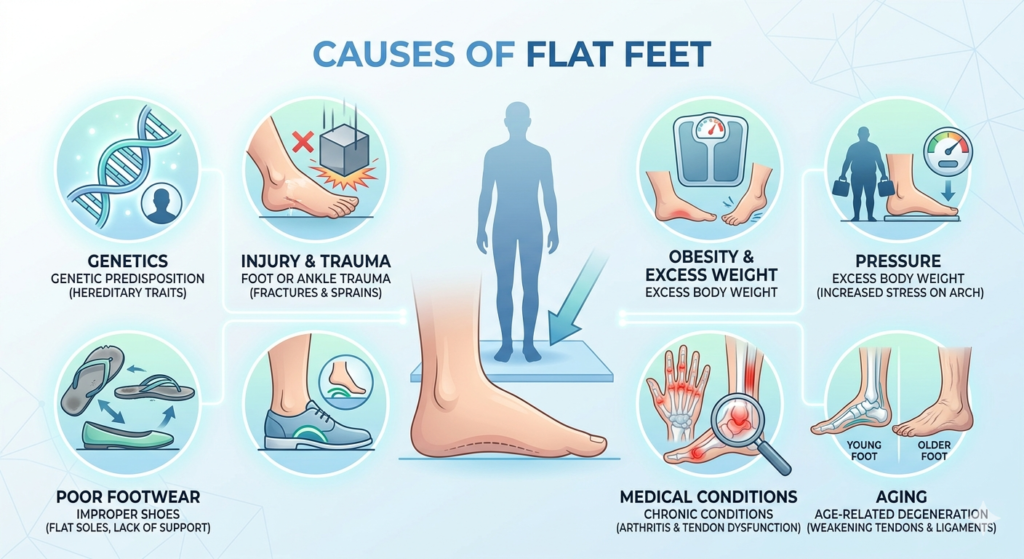
Genetic Factors
- Often inherited from parents
- Ligaments and foot structure may naturally be weak
Developmental Causes
- Children are born with flat feet naturally
- Arch usually develops by age 5–10
- In some cases, arch fails to form properly
Injury or Tendon Damage
- Injury to the posterior tibial tendon is a major cause
- This tendon supports the arch of the foot
- When damaged, the arch gradually collapses
Aging
- Tendons weaken over time
- Muscle strength decreases
- Arch support becomes unstable
Obesity or Excess Weight
- Extra body weight increases pressure on the feet
- Over time, this can flatten the arch permanently
Medical Conditions
Certain diseases increase risk:
- Rheumatoid arthritis
- Diabetes (nerve damage)
- Neuromuscular disorders
- Bone abnormalities
Improper Footwear
- Constant use of unsupportive shoes (flat sandals, slippers)
- Lack of arch support during long standing hours
Symptoms of Flat Feet
Not everyone experiences symptoms, but when present, they may include:
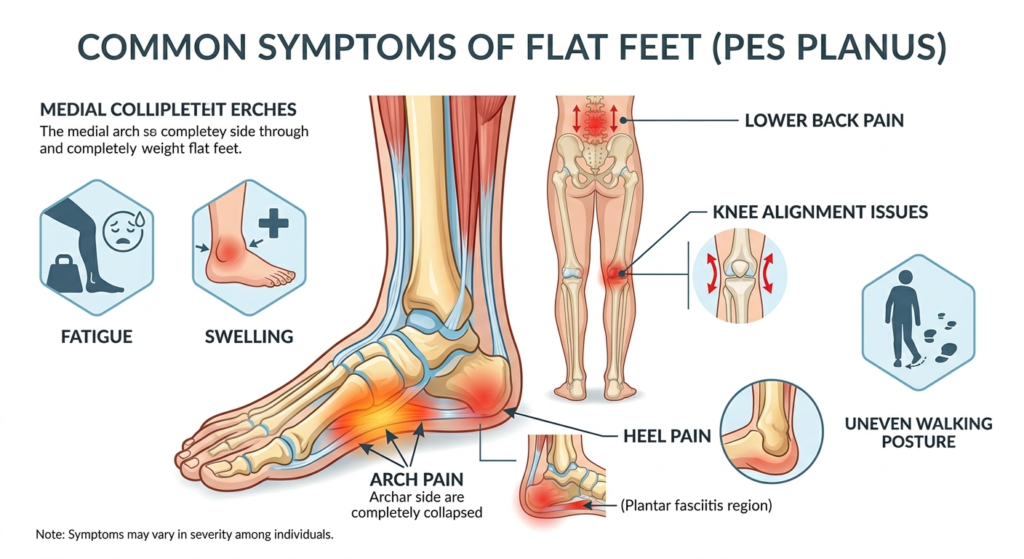
Foot Symptoms
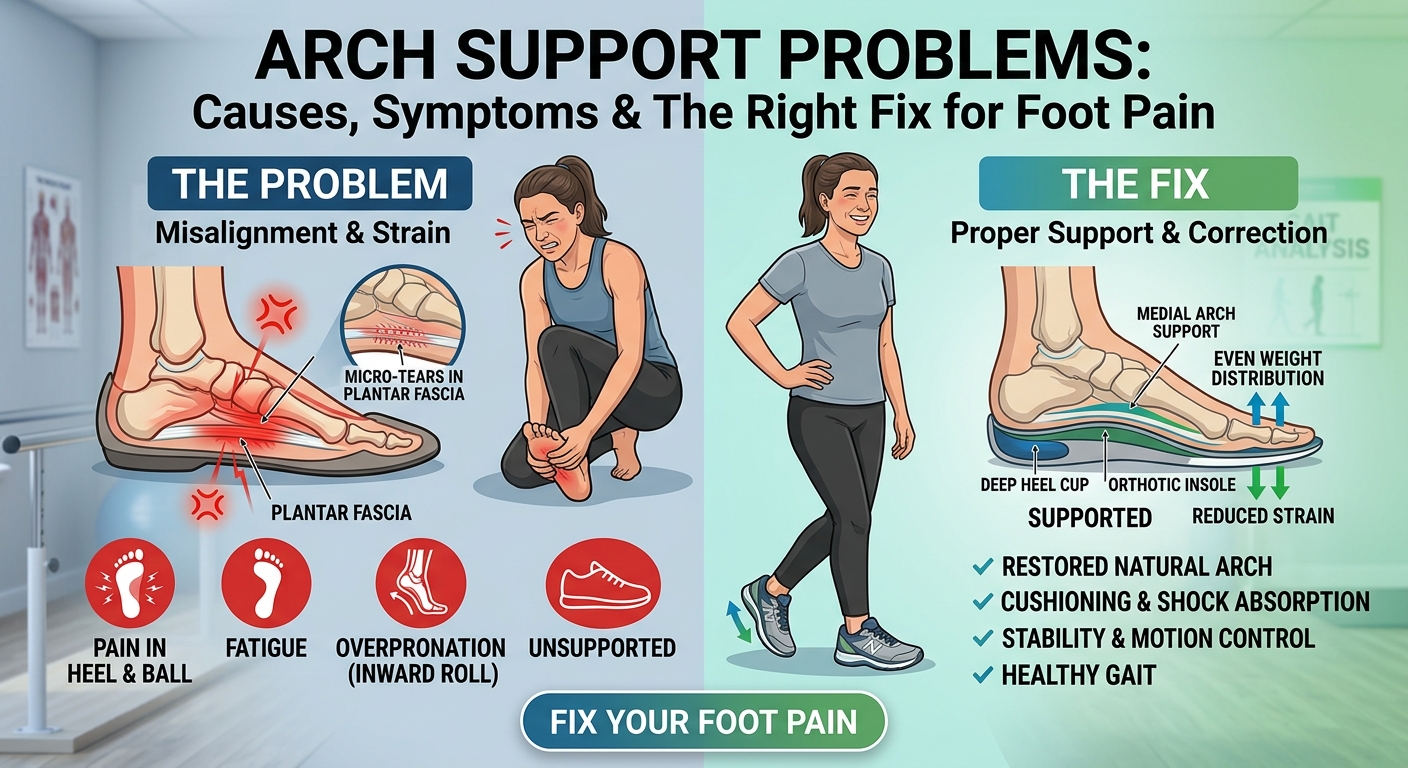
- Pain in arch or heel
- Swelling along inside of foot
- Tired or heavy feet after walking
- Cramping in feet or calves
- Difficulty standing for long periods
Leg and Body Symptoms
- Knee pain due to misalignment
- Hip discomfort
- Lower back pain
- Uneven walking pattern
Shoe Wear Signs
- Shoes wear out faster on the inside edge
- Foot rolls inward while walking (overpronation)
How Flat Feet Are Diagnosed
Doctors use several methods to confirm the condition:
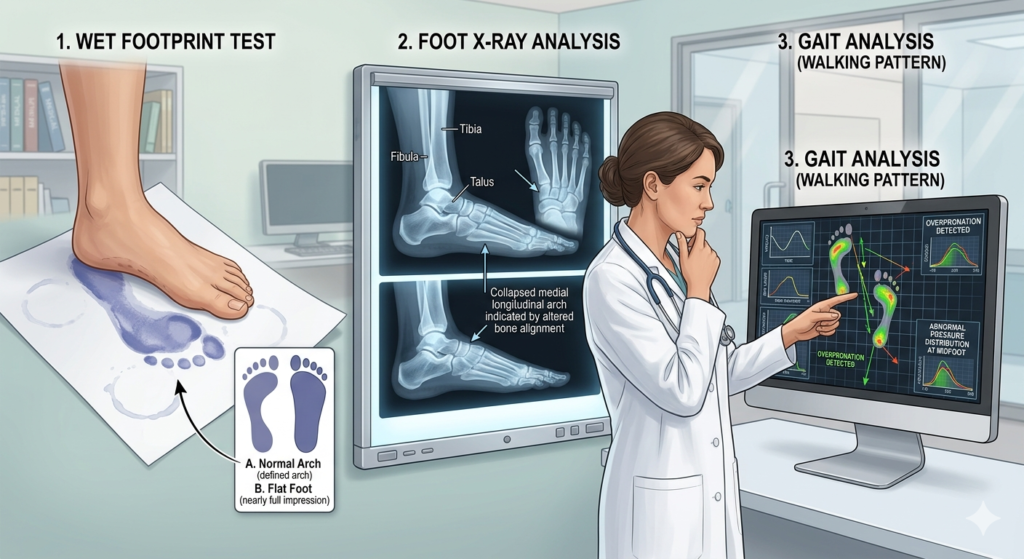
Physical Examination
- Observation while standing and walking
- Checking foot flexibility and arch presence
Wet Foot Test (Simple Home Test)
- Wet your feet
- Step on paper or flat surface
- Full footprint indicates possible flat feet
Imaging Tests
- X-rays to check bone alignment
- MRI or ultrasound if tendon damage is suspected
Gait Analysis
- Evaluates how you walk
- Detects overpronation or imbalance
Treatment Options for Flat Feet
Treatment depends on severity, symptoms, and cause.
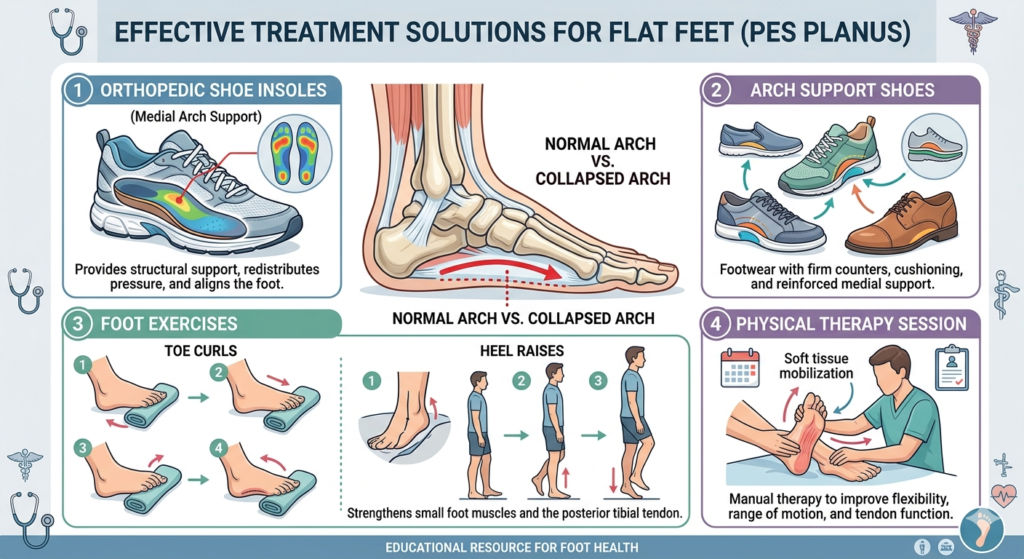
Proper Footwear
- Shoes with strong arch support
- Cushioned soles for shock absorption
- Avoid completely flat slippers or sandals
- Motion-control shoes for overpronation
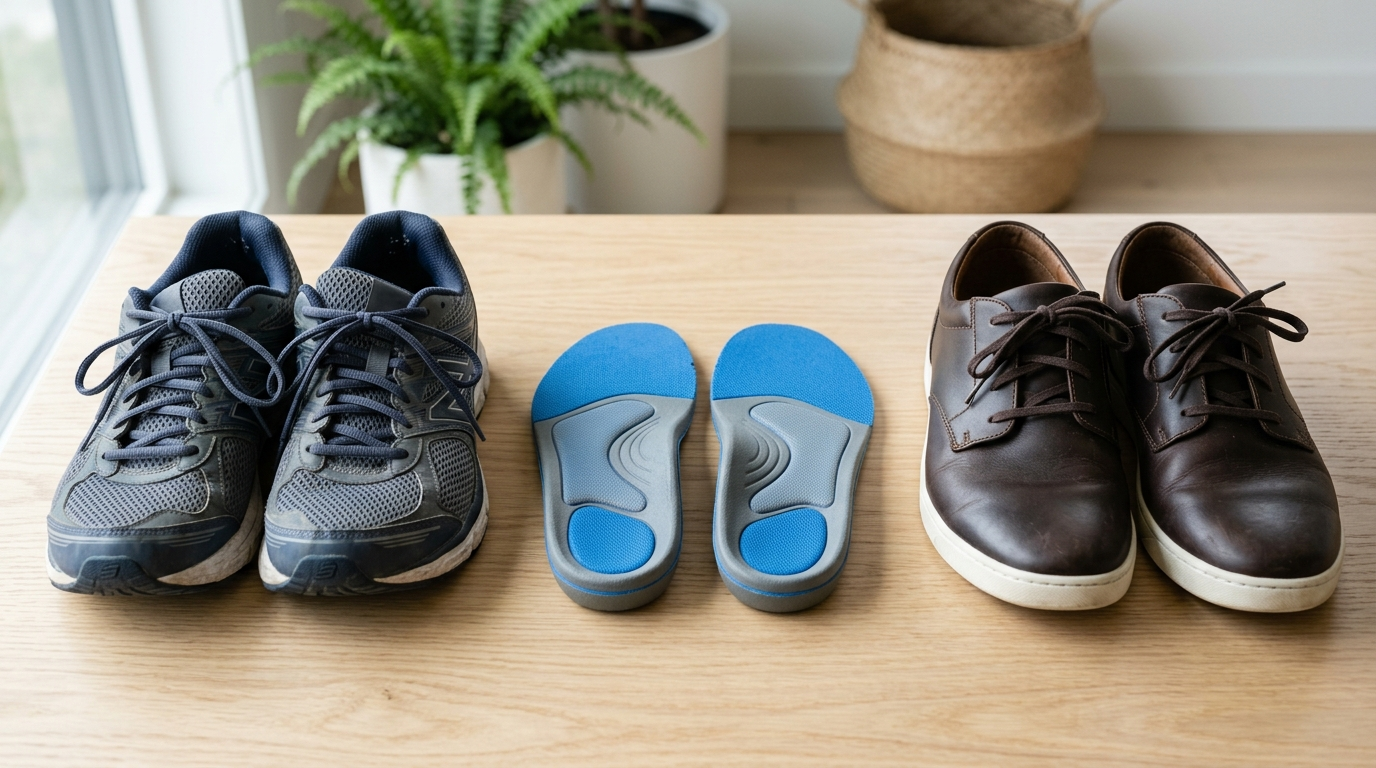
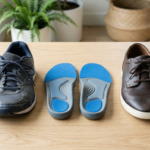
Orthotic Inserts
Orthotics are specially designed shoe inserts that:
- Support the arch
- Improve foot alignment
- Reduce pain in feet, knees, and back
Types:
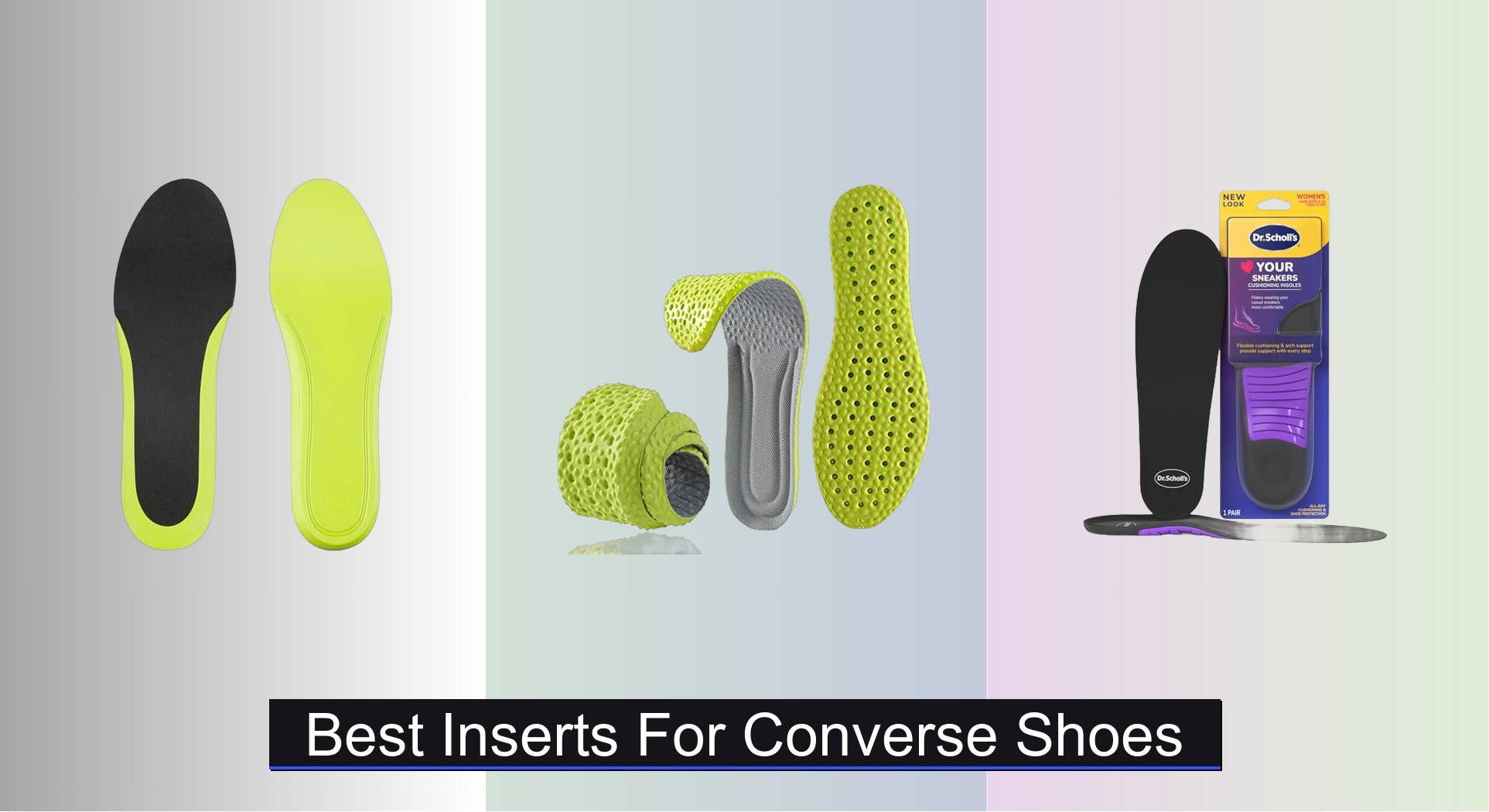
- Over-the-counter insoles for mild cases
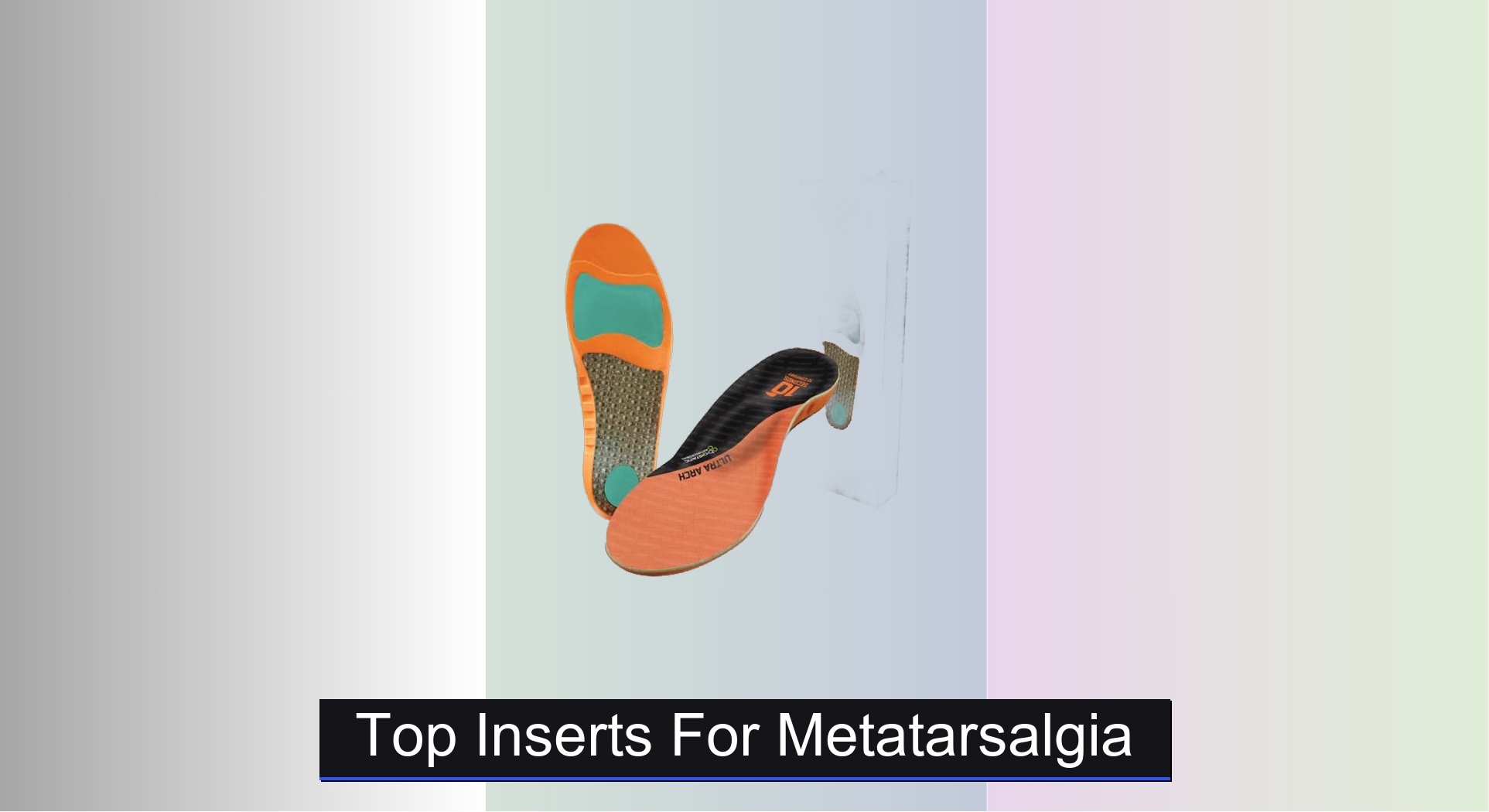
- Custom orthotics for severe cases
Foot Exercises
Regular exercise strengthens foot muscles:
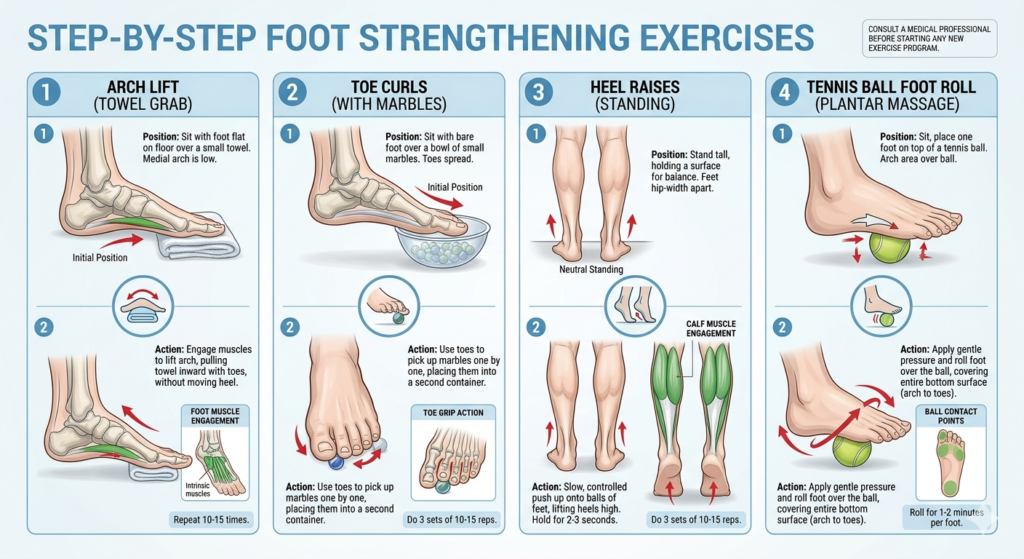
Arch Lifts
- Lift arch while keeping toes and heel on ground
- Hold for 5–10 seconds
Toe Curls
- Pick up small objects using toes
- Strengthens intrinsic foot muscles
Heel Raises
- Stand on toes slowly
- Helps strengthen calf and arch support
Tennis Ball Roll
- Roll a ball under foot for massage and flexibility
Physical Therapy
- Improves posture and walking mechanics
- Strengthens supporting muscles
- Reduces long-term pain
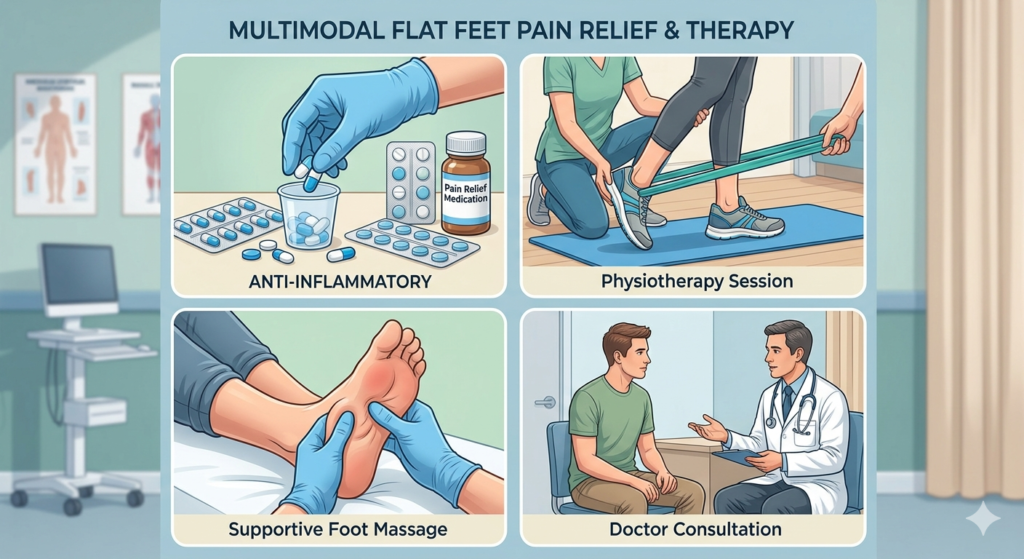
Medication
- Anti-inflammatory drugs for pain
- Pain relief gels or creams
- Only for symptom management, not cure
Weight Management
- Reduces pressure on foot arch
- Helps slow progression of flat feet
Surgery (Rare Cases Only)
Recommended only when:
- Severe pain persists
- Tendon is severely damaged
- Structural deformity affects walking
Surgery may involve:
- Tendon repair
- Bone realignment
- Arch reconstruction
Possible Complications if Untreated
If ignored in severe cases, flat feet may lead to:
- Chronic foot pain
- Knee and hip misalignment
- Lower back pain
- Arthritis in foot joints
- Reduced mobility over time
Prevention Tips
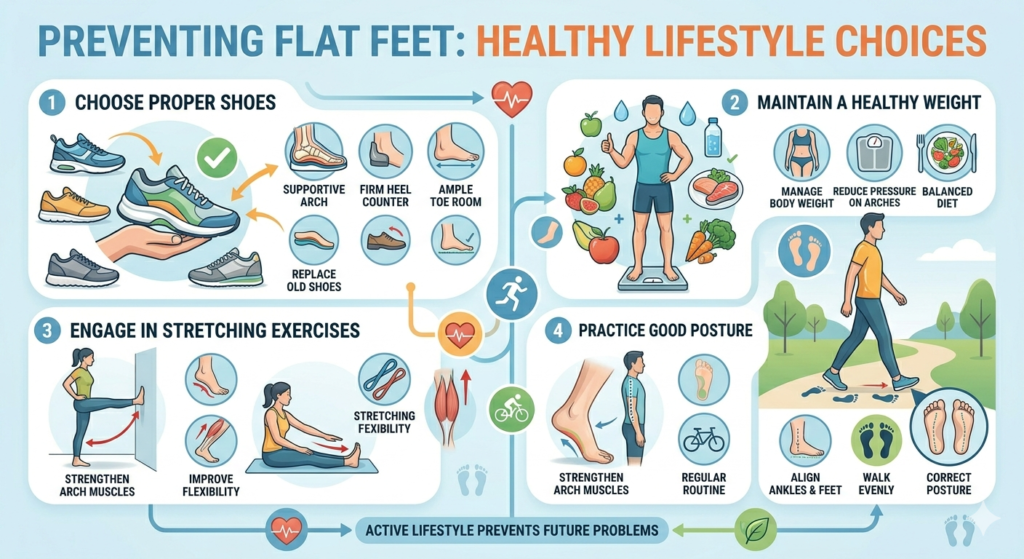
While genetic flat feet cannot be fully prevented, symptoms can be controlled:
- Wear supportive shoes daily
- Avoid long hours barefoot on hard surfaces
- Maintain healthy body weight
- Do regular foot strengthening exercises
- Stretch calves and ankles
When You Should See a Doctor
Seek medical help if:
- Pain continues for weeks
- Walking becomes difficult
- Swelling does not reduce
- Pain spreads to knees or back
- Orthotics do not help
Final Summary
Flat feet is a common condition that ranges from harmless to painful depending on severity. Most people can manage it successfully with:
- Proper footwear
- Orthotics
- Exercise
- Lifestyle changes
Surgery is rarely needed.
With correct care, flat feet does not have to limit daily life, movement, or comfort.