





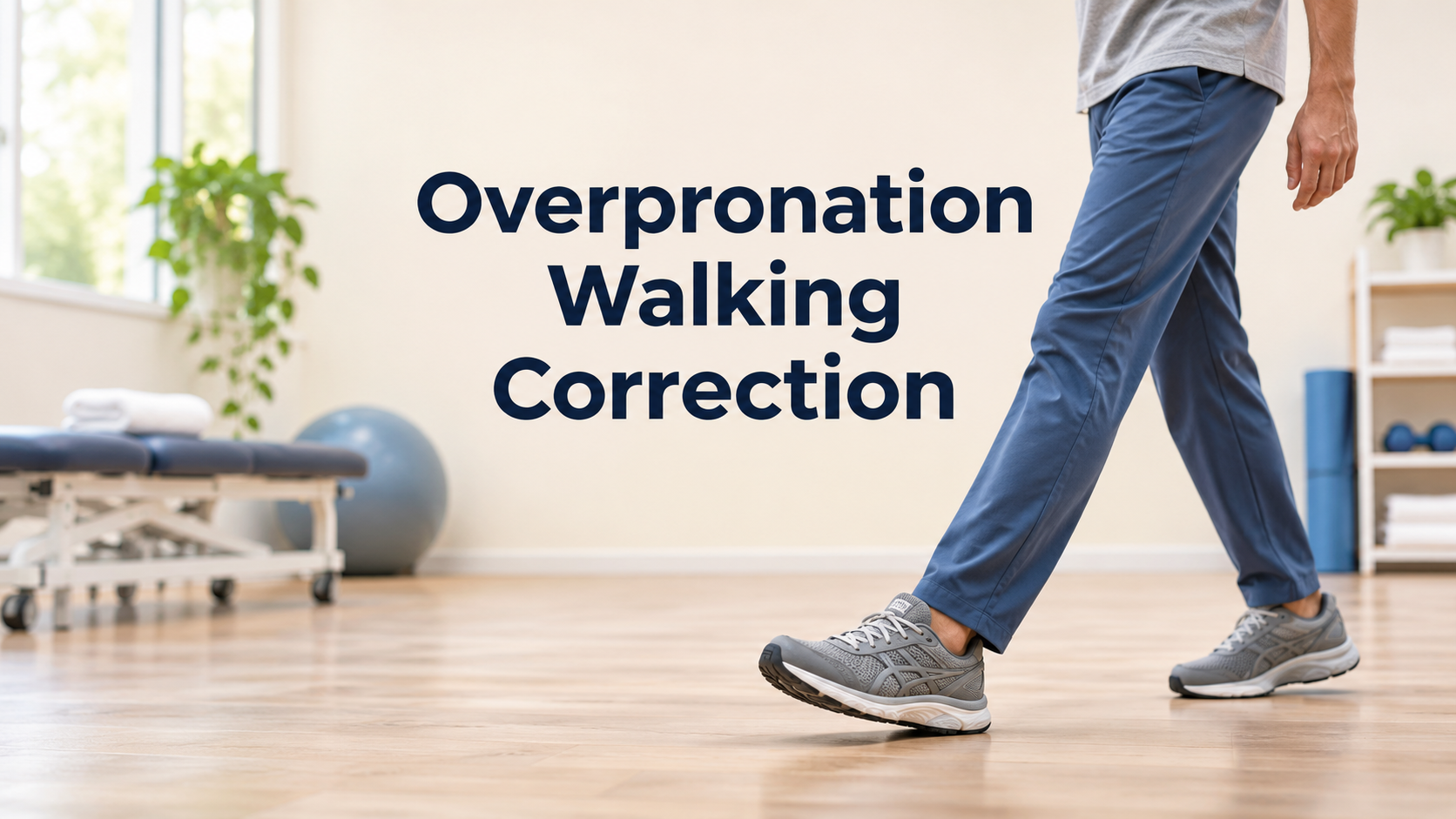
If your feet roll inward every time you take a step, you are not alone. Millions of people overpronate, and many of them look for ways to walk more comfortably. The good news is that overpronation walking correction is possible in a practical sense. You may not change the shape of your foot, but you can improve how you move, strengthen the muscles that guide your arch, and choose footwear that supports a steadier step.
This guide walks you through exactly how to do that: what to change in your posture and stride, which exercises help, how to choose shoes and insoles, and how to build a simple routine you can follow every week.
What Is Overpronation When Walking?
Every step starts with your heel landing. Your foot then rolls inward slightly, which is called pronation. This is normal and helps absorb shock. In overpronation, the foot rolls inward too far or for too long, the arch flattens, and the ankle tilts inward. Instead of becoming a firm lever for push-off, the foot stays soft and flexible.
Over time this can contribute to tired feet, arch or heel pain, shin soreness, and knee or hip discomfort, particularly if you walk a lot or stand all day.
Can Overpronation Really Be Corrected?
It depends on what you mean by correction. Here is an honest picture:
- You cannot instantly change your bone structure. If your arches are naturally low, they will stay low.
- You can often reduce how far the foot rolls in. Strength, flexibility, better footwear, and supportive insoles all help.
- You can improve how you walk. Posture, step length, and knee alignment all affect how much load your arch takes.
- Results vary. Research on gait changes is still developing, so some people notice big improvements and others notice small ones.
The goal is not a perfect foot. The goal is a walking pattern that feels comfortable and puts less stress on your body.
Signs Your Walking Pattern Needs Attention
- Your shoes wear down on the inner edge of the heel or forefoot
- Your ankles tilt inward when someone looks at you from behind
- Your knees drift toward each other as you walk or climb stairs
- Your feet or lower legs ache after short walks
- You get heel, arch, or inner shin pain that returns
- Your feet slap or feel heavy when they land
Step-by-Step Overpronation Walking Correction
Step 1: Fix Your Posture First
Your feet respond to what happens above them. Slouching or leaning forward changes where your weight lands. Imagine a string gently lifting the top of your head. Keep your chin level, shoulders relaxed, chest open, and core lightly engaged so your hips stay under your shoulders.
Step 2: Shorten Your Step and Avoid Overstriding
When your foot lands far in front of your body, the heel hits hard and the foot often snaps inward to absorb the impact. Aim to land with your foot closer beneath your body. Take slightly shorter steps and let your pace quicken a little, which many gait coaches suggest as a simple way to reduce overstriding.
Step 3: Land Softly and Roll Through the Foot
Land on the heel or the outer part of the heel, then let the weight travel smoothly along the outer edge and across the ball of the foot. Finish by pushing off through the big toe and the second toe, not from the inner edge only. Think of your foot as a tripod with three contact points: heel, base of the big toe, and base of the little toe. Try to keep all three in contact as you roll through.
Step 4: Keep Your Knees Aligned
When the foot over-rolls, the knee often drifts inward too. Aim for your knee to point in the same direction as your second toe. A quick check is to walk toward a mirror or record yourself from the front. If your knees collapse inward, slow down, focus on hip control, and strengthen the hip muscles described below.
Step 5: Build a Comfortable Rhythm
A steady cadence helps you stay light on your feet. Count your steps for one minute at your normal pace, then try to raise it slightly, perhaps by 5 to 10 percent. Use a metronome app or a music playlist with a steady beat. Do not force a pace that makes you tense.
Step 6: Use Your Arms and Core
Let your arms swing naturally, bent at about 90 degrees, with relaxed shoulders. A steady arm swing helps keep the body balanced so the feet do not have to compensate. Light core engagement keeps the pelvis level.
Step 7: Choose Surfaces Wisely
When you begin working on your form, practice on flat, predictable surfaces such as smooth paths or a treadmill. Uneven ground makes it harder to feel your foot position.
Exercises That Support Better Walking
Strong muscles hold the arch and the leg in better alignment. Start with 2 to 3 sets of 8 to 12 repetitions, a few days per week.
| Exercise | How to do it | Why it helps |
|---|---|---|
| Short foot | Draw the ball of the foot toward the heel without curling the toes. Hold 5 seconds. | Activates the small muscles that support the arch |
| Heel raises with a ball squeeze | Rise onto your toes with a small ball between your heels. Lower slowly. | Strengthens the calf and inner ankle muscles |
| Single-leg balance | Stand on one foot for 30 seconds, keeping the arch lifted. | Trains ankle and foot control |
| Clamshells | Lie on your side, knees bent, and lift the top knee with feet together. | Strengthens the hip muscles that guide the knee |
| Side steps with a band | Place a light band above the knees and step sideways with bent knees. | Improves hip control during walking |
| Calf stretch | Hold a wall stretch for 30 seconds on each side. | Frees up ankle movement so the foot rolls less |
Stop any exercise that causes sharp pain. If you are unsure about your form, a physiotherapist can show you the safest way.
Shoes and Insoles That Help
Footwear will not fix your walking by itself, but it can make it easier to walk well. Choose shoes that have:
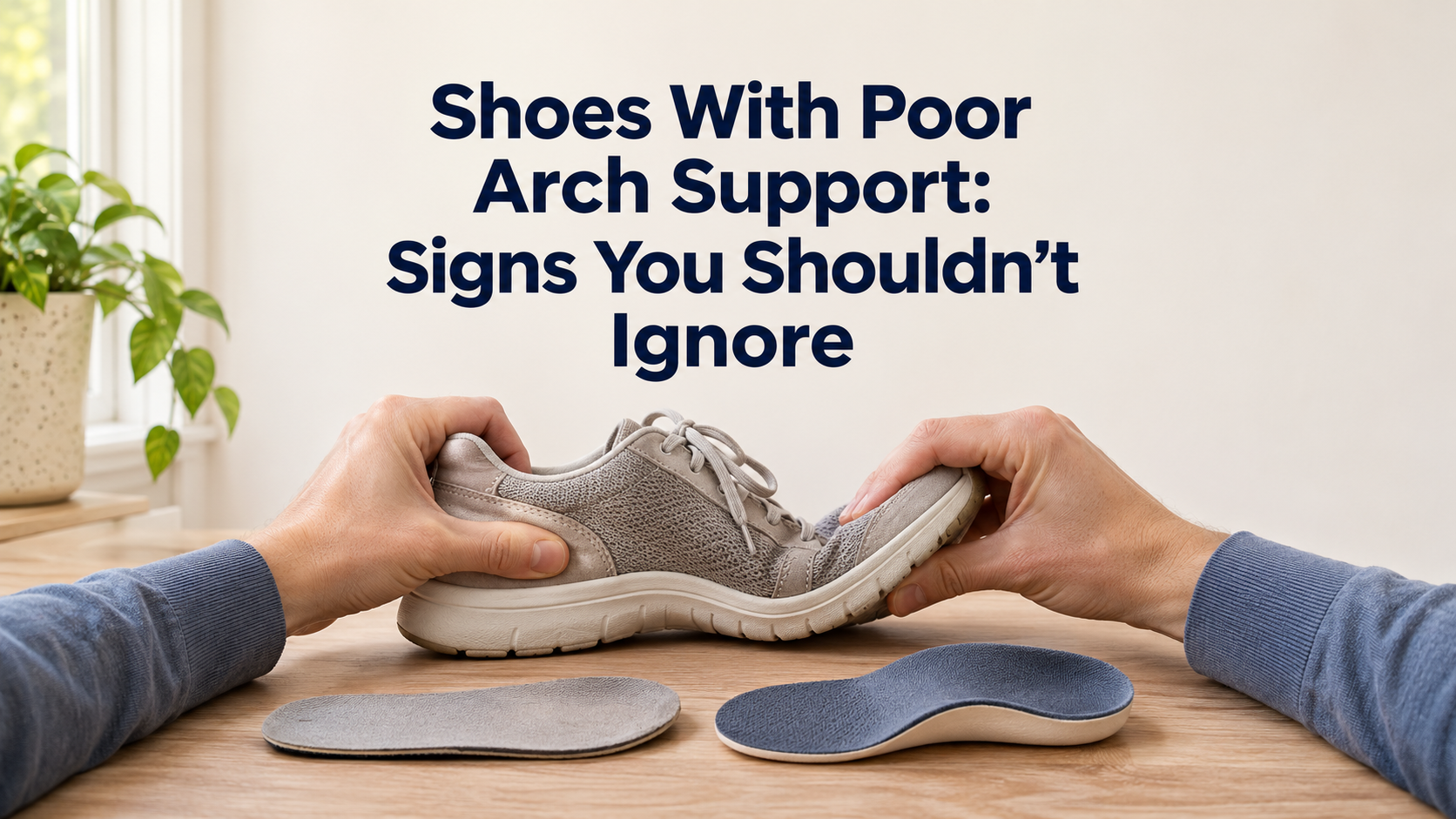
- A firm, well-shaped heel counter that does not squash when you squeeze it
- Good midfoot support and a sole that resists twisting
- A stable, reasonably wide base
- Enough room in the toes, about a thumb’s width
- A removable insole so you can add arch support
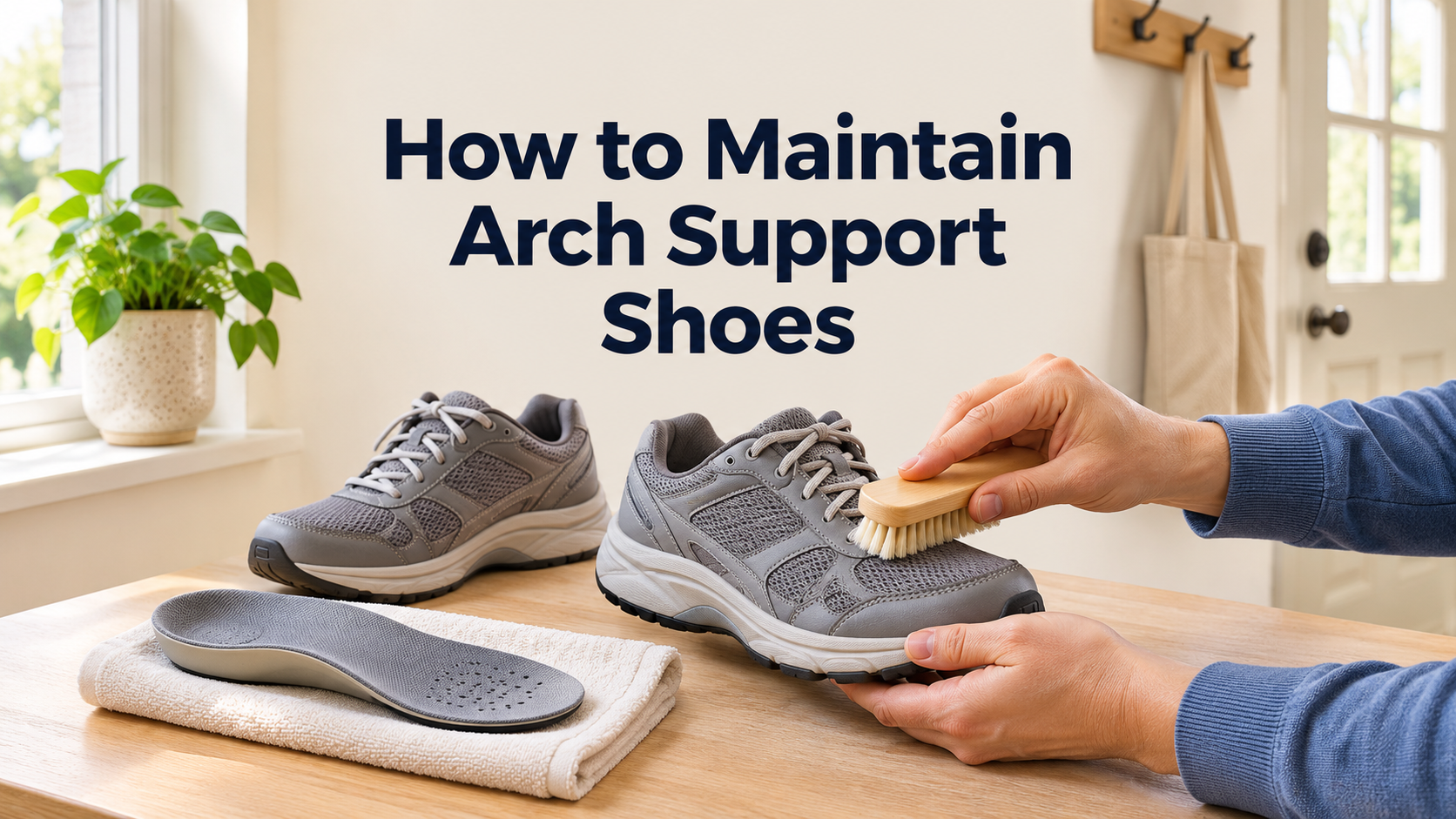
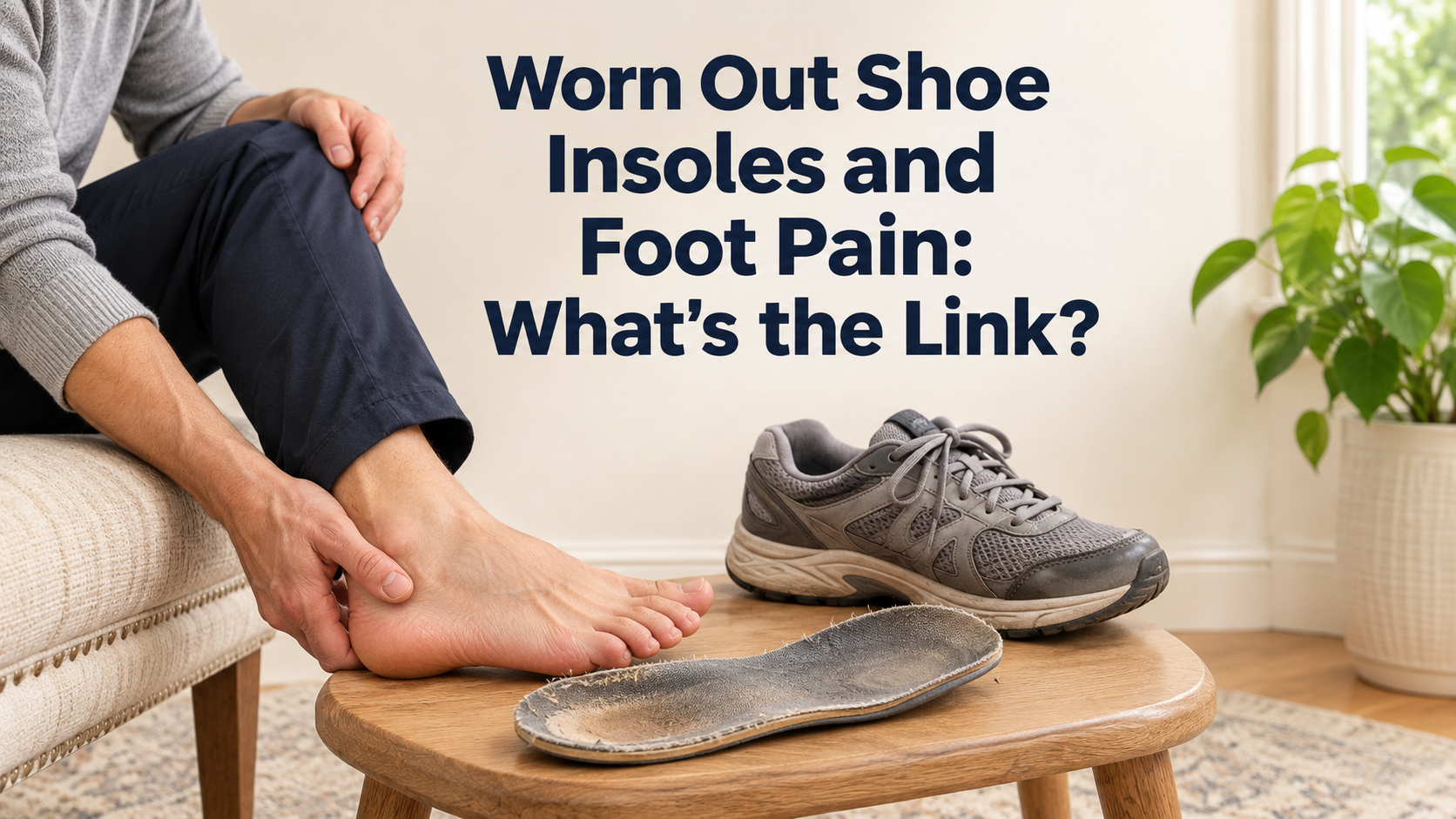
Over-the-counter arch supports help many people, and a podiatrist can prescribe custom orthotics if your needs are more complex. Introduce new insoles gradually, wearing them for an hour or two at first. Replace worn-out shoes, since collapsed midsoles allow more inward roll.
A Simple Weekly Practice Plan
- Posture walk (10 minutes): Focus only on walking tall and relaxed.
- Strength session (15 minutes): Use the exercises in the table above.
- Cadence walk (15 minutes): Use a steady beat and shorter steps.
- Longer walk: Add time slowly, checking your form every few minutes.
- Rest and stretch: Recovery is when your body adapts.
Give it at least 4 to 6 weeks before judging results. Habits change slowly, so patience and consistency matter more than intensity.
Common Mistakes to Avoid
- Over-correcting: Walking on the outer edges of your feet creates new strain. Aim for a balanced, natural step.
- Changing too much too fast: Sudden changes to stride or shoes can cause soreness.
- Ignoring pain: Mild muscle tiredness is normal. Sharp or lasting pain is not.
- Skipping strength work: Cues help, but muscles do the real job.
- Wearing worn shoes: Old shoes can undo your hard work.
- Relying only on insoles: Insoles help, but they work best together with exercises and good form.
When to Get a Professional Gait Assessment
A podiatrist or physiotherapist can watch you walk, check your foot structure and strength, and give you tailored advice. Seek help if you have:
- Pain that lasts more than a few weeks
- Swelling or warmth in the foot or ankle
- A foot that has recently become flatter on one side
- Numbness, tingling, or weakness
- Diabetes or circulation problems with any foot pain
- No improvement after several weeks of consistent practice
Frequently Asked Questions
How do I stop overpronating when I walk?
Combine good posture, shorter steps, a smooth heel-to-toe roll, strong feet and hips, and supportive shoes or insoles. Small, consistent changes work better than one big change.
Can walking barefoot fix overpronation?
Short periods of barefoot activity on safe, soft surfaces may help build foot strength for some people. It is not a guaranteed fix, and it can hurt if your feet are already sore, so start slowly and talk to a professional if you are unsure.
How long does it take to correct overpronation?
Many people notice better comfort in a few weeks, but changes to walking habits and strength usually take 6 to 12 weeks or longer.
Are insoles enough to correct overpronation?
They can reduce excess motion and share the load, but they work best alongside strengthening and good walking habits.
Should I change how I walk if I have no pain?
If you have no pain or problems, there is usually no need to change anything. Mild overpronation is common and often causes no trouble.
What are the best shoes for overpronation when walking?
Stability shoes with a firm heel, supportive midsole, and a comfortable fit suit many people. Try several pairs and walk in them before buying.
Final Thoughts
Overpronation walking correction is not about forcing your feet into a new shape. It is about building a stronger, smoother, more efficient way to move. Stand tall, shorten your steps, roll through your foot, keep your knees in line, train the muscles that support you, and use shoes and insoles that make the job easier. Be patient, make one change at a time, and ask a professional for help if pain continues. Your feet carry you through thousands of steps every day, and a little attention can go a long way.
Disclaimer: This article is for general information only and is not medical advice. If you have foot pain or health concerns, please consult a qualified healthcare professional.