



Arch Support Shoes Too Tight? Why It Happens and How to Fix It
You finally bought shoes with proper arch support, expecting your feet to feel better. Instead, the shoes feel tight across the top, squeeze your toes, or press uncomfortably on the sides of your feet. It is a frustrating situation, and it is far more common than most people realize. If your arch support shoes feel too tight, the problem is usually fixable, and in many cases you do not need to throw the shoes away.
This guide explains why supportive shoes can feel tight, how to tell a normal adjustment period from a real fit problem, what you can do at home to make them comfortable, and how to choose the right pair next time.
Why Arch Support Shoes Can Feel Tight
Arch support is not just a design feature. It takes up physical space inside the shoe. When a firm support raises the middle of your foot, that extra height reduces the room available above it, so the shoe can feel snug even when the size is technically correct. Here are the most common reasons it happens.
1. The Support Is Lifting Your Foot
A raised arch pushes your foot upward and slightly forward. The top of the foot then presses against the tongue, laces, or upper material. This is especially noticeable if you have a high instep.
2. You Are Wearing an Aftermarket Insole in a Shoe That Is Already Snug
Adding a thick supportive insole on top of the original one can use up the volume of the shoe quickly. Even a quarter of an inch of extra height can make a well-fitted shoe feel too small.
3. The Shoe Is the Wrong Width
Many people buy supportive shoes by length only. If the shoe is too narrow, the sides of your foot press against the upper, which feels like tightness around the ball of the foot.
4. Your Feet Have Swollen During the Day
Feet naturally expand by the afternoon or evening, especially after long periods of standing, walking, or hot weather. A shoe that felt perfect in the morning can feel tight later in the day.
5. The Shoe Is Simply New and Stiff
Supportive shoes often use firmer materials and structured midsoles. These can feel rigid until the upper softens and the footbed molds to your foot.
6. The Arch Support Is Too High for Your Foot
If the support does not match your natural arch height, it can press into the arch rather than fit under it, which makes the whole shoe feel cramped and uncomfortable.
Normal Break-In or Real Fit Problem?
Some firmness is normal at first. A real fit problem, however, will not go away with time. Use this table to tell the difference.
| Normal Break-In | Real Fit Problem |
|---|---|
| Mild firmness under the arch that eases within one to two weeks | Sharp or growing pressure that stays the same after two weeks |
| The upper feels stiff but nothing hurts | Toes feel crushed, numb, or tingly |
| Comfortable for short wear, tired after long wear | Painful within minutes of putting them on |
| No marks on the skin | Red marks, blisters, or pressure spots on the top or sides of the foot |
How to Fix Arch Support Shoes That Feel Too Tight
Loosen and Re-Lace the Shoes
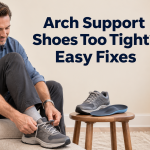
Start with the easiest fix. Loosen the laces over the instep, where the arch support pushes your foot upward. You can also try skipping one eyelet over the tightest area, or using a lacing pattern that leaves a gap in the middle of the shoe. This often relieves top-of-foot pressure right away.
Remove Any Extra Insole You Added
If you placed an aftermarket support on top of the shoe’s original insole, take the original one out first. Stacking two insoles is one of the biggest causes of tightness. If the shoe still feels cramped with only the new insole, the shoe may not have enough volume for it.
Try a Lower-Profile Support
If your insole is thick or very high, switch to a slimmer, lower-profile version. Many people do well with a moderate arch height rather than the tallest option. The support should fit gently under your arch, not force it upward.
Break Shoes In Gradually
Wear the shoes for one to two hours a day at first, then extend the time over the next week or two. This gives the upper material time to soften and the footbed time to adapt to your foot. Thick socks worn at home for short periods can help the material relax slightly, but avoid forcing shoes to stretch aggressively.
Check the Socks
Thick cushioned socks can use up valuable room. Try a thinner, moisture-wicking pair, or match your socks to what you will actually wear with the shoes every day.
Use the Right Time of Day to Test
Try your shoes in the afternoon when your feet are at their largest. If they only feel tight in the evening, you may need slightly more width or volume rather than a different arch height.
Ask a Shoe Repair Shop About Stretching
For leather or suede uppers, a professional shoe repair shop can often stretch the tight area gently. This works best for spot pressure points, such as the side of the little toe or the bunion area. Synthetic and mesh shoes usually do not stretch much.
How to Choose Arch Support Shoes That Do Not Feel Tight
- Look at the width, not just the length. If your foot is wide, choose a wide or extra-wide version. A larger size alone often fixes length but not width.
- Choose a roomy toe box. You should be able to wiggle your toes and have about a thumb width of space beyond the longest toe.
- Pick an adjustable closure. Laces, straps, or hook-and-loop fasteners let you control how snug the shoe feels over the instep.
- Look for a removable insole. It gives you the flexibility to swap in a different support level if needed.
- Match arch height to your foot. Stand with your weight evenly distributed. The support should touch your arch gently and evenly, not feel like a hard bump.
- Try both shoes on. Walk around, climb a few steps, and stand still for a few minutes before deciding.
- Shop later in the day. Your feet are at their largest then, so you get a more accurate fit.
Common Mistakes to Avoid
- Going up a size and ignoring width. This can make the heel slip while the sides still feel tight.
- Stacking multiple insoles. It almost always reduces space too much.
- Wearing shoes all day right away. Give them time to adapt.
- Ignoring pain. Discomfort that does not improve is a sign the shoe or support is wrong for your foot.
- Buying the highest arch support available. More support is not always better. The best support is the one that fits your foot.
When to Return the Shoes or Get Professional Advice
If your shoes still feel too tight after about two weeks of gradual wear, or if they cause numbness, burning, blisters, or pain that gets worse, it is time to take action. Many stores allow returns within a limited period, so try the shoes on indoors on a clean surface to keep them returnable.
See a podiatrist if you have ongoing foot pain, a high instep, wide feet, bunions, swelling, or you are not sure which level of arch support suits you. A professional can check your foot shape and recommend the right shoe type or insole.
Frequently Asked Questions
Why do my arch support shoes feel tight even in my correct size?
The arch support reduces the space above your foot, so a shoe in your normal size can feel snugger than a flat shoe. Width, instep height, and insole thickness also play a role.
Will arch support shoes stretch over time?
The upper material may soften slightly, especially in leather, but a shoe that is truly too small or too narrow will not become comfortable. Mild stiffness is normal, but real pain is not.
Should I buy a bigger size for arch support shoes?
Not automatically. Check both length and width first. A larger size can make your heel slip, which may cause blisters and reduce support. A wide fit is often the better solution.
Is it normal for arch support to feel uncomfortable at first?
Yes, a mild feeling of pressure under the arch is common for the first week or two as your foot adjusts. It should improve gradually and never become sharp or severe.
Can I use arch support insoles in tight shoes?
Only if the shoe has enough volume. Remove the original insole before adding a new one. If the shoe still feels tight, choose a thinner insole or a shoe with a deeper, roomier design.
Final Thoughts
Arch support shoes that feel too tight are usually a matter of fit, volume, or adjustment, not a sign that supportive shoes are wrong for you. Loosen the laces, avoid stacking insoles, break the shoes in slowly, and pay attention to width as well as length. If the discomfort does not fade, a different shoe shape or a lower-profile support will serve you far better than forcing a poor fit. The goal is simple: support that feels natural, with enough room for your foot to rest comfortably all day.
Note: This article is for general information only and does not replace advice from a qualified healthcare professional.