




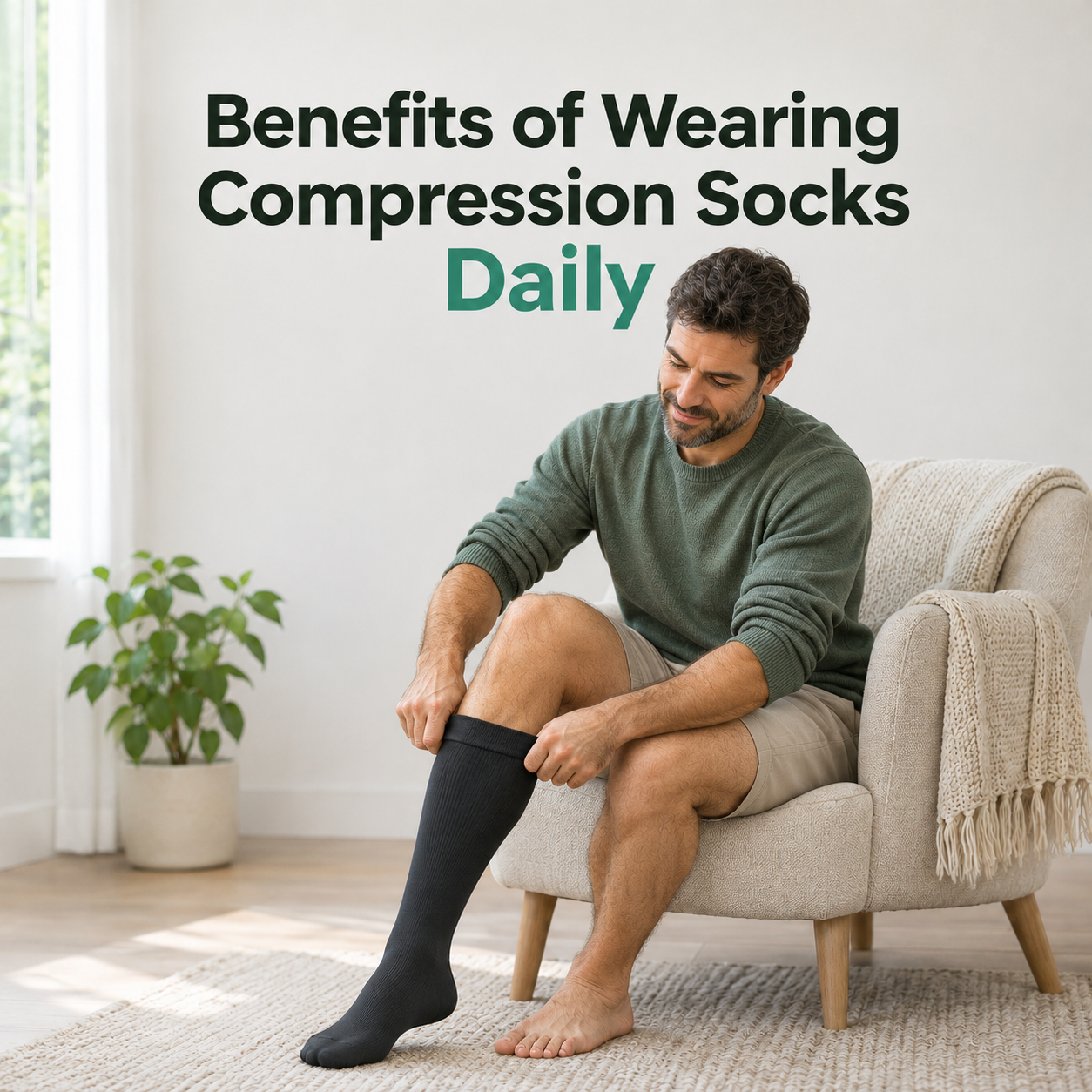

If you spend long hours on your feet, sit at a desk all day, or travel often, you have probably heard people praise compression socks. But are they really worth wearing every day? In this guide, we break down the benefits of wearing compression socks daily, who gets the most from them, how to choose the right pair, and the mistakes to avoid.
What Are Compression Socks?
Compression socks are snug, stretchy socks that apply gentle pressure to your feet, ankles and lower legs. Most quality pairs use graduated compression, meaning the squeeze is tightest at the ankle and gradually loosens toward the knee. This design helps push blood and fluid upward, working with your calf muscles to keep circulation moving.

Key Benefits of Wearing Compression Socks Daily
1. Improved Blood Circulation
Gravity makes it harder for blood to travel from your legs back to your heart, especially when you sit or stand for long periods. Graduated pressure supports the veins and helps blood flow in the right direction, which can leave your legs feeling lighter and more energized.
2. Reduced Leg Swelling
Fluid can build up around the ankles and feet during the day, a common issue called edema. Wearing compression socks regularly helps limit that fluid buildup, so shoes feel more comfortable by evening and ankles look less puffy.
3. Less Leg Fatigue, Aching and Heaviness
Tired, achy legs are one of the top reasons people try compression wear. By supporting the muscles and veins, the socks can ease that heavy feeling after a long shift, a busy day of errands or a full day at your desk.
4. Support for Varicose and Spider Veins
Compression does not erase existing varicose veins, but it can reduce the discomfort, throbbing and swelling that often come with them. Many people also use compression socks to help slow the progression of vein problems, especially when they run in the family.
5. Lower Risk of Blood Clots During Travel
Sitting still on a long flight, bus or car journey slows blood flow in the legs. Compression socks are commonly recommended for long trips because they help keep blood moving and may lower the risk of deep vein thrombosis (DVT). Pairing them with regular walking breaks works even better.
6. Faster Muscle Recovery for Active People
Runners, gym-goers and weekend athletes often wear compression socks after workouts. By helping clear metabolic waste and reducing swelling, they can lessen muscle soreness and help you feel ready for your next session sooner.
7. Comfort During Pregnancy
Pregnancy increases blood volume and pressure on leg veins, which often causes swollen feet and heavy legs. Many expectant mothers find daily compression socks make walking and standing noticeably more comfortable. It is wise to check with a doctor or midwife first.
8. Extra Support for Jobs That Keep You on Your Feet
Nurses, teachers, hairdressers, retail staff and factory workers spend hours standing. Compression socks add a layer of support that reduces end-of-day fatigue and discomfort in the lower legs and feet.

Who Should Wear Compression Socks Every Day?
Daily wear is most helpful for people who:
- Sit or stand for many hours at work
- Travel frequently by air, road or rail
- Deal with mild leg swelling or tired legs
- Are pregnant (with medical approval)
- Exercise regularly and want better recovery
- Have a family history of varicose veins
How to Choose the Right Compression Socks
Pick the Right Compression Level
Compression is measured in mmHg (millimeters of mercury). Higher numbers mean firmer pressure. For everyday use, most people are comfortable in the mild to moderate range.

Get the Size Right
A wrong size is the biggest reason people give up on compression socks. Measure your ankle and calf circumference in the morning, when swelling is lowest, and compare the numbers with the size chart of the brand you choose.
Check Material and Breathability
Look for blends of nylon, spandex and moisture-wicking fibers, or merino wool for cooler weather. Breathable fabric keeps feet dry and reduces the chance of irritation, which matters when you wear them all day.
Choose the Right Length
Knee-high socks are the most popular and effective choice for daily wear. Thigh-high and compression stockings are usually reserved for specific medical needs.
Tips for Wearing Compression Socks Daily
- Put them on in the morning before swelling builds up.
- Smooth out wrinkles so the fabric does not dig into the skin.
- Wash them regularly with gentle detergent and air dry to keep the elastic strong.
- Replace them every 3 to 6 months because the compression fades with wear.
- Take them off at night unless a doctor has told you otherwise.
- Keep your skin healthy by moisturizing at night and checking for redness or marks.
Possible Side Effects and Who Should Be Careful
Compression socks are safe for most healthy adults, but they are not right for everyone. Talk to a doctor before daily use if you have peripheral artery disease, severe neuropathy, diabetes with poor sensation in the feet, heart failure, skin infections or open wounds on the legs. Stop wearing them and seek advice if you notice numbness, tingling, color changes, strong pain or skin irritation.
Frequently Asked Questions
Is it OK to wear compression socks every day?
Yes, for most healthy people it is fine to wear them every day during waking hours, as long as they fit well and you have no medical condition that rules them out.
Can I sleep in compression socks?
Generally not recommended. Your legs are level when you lie down, so you rarely need compression at night. Only sleep in them if your doctor advises it.
How long should I wear compression socks each day?
Many people wear them for 8 to 12 hours, from morning until evening. If you are new to them, start with a few hours and build up as your legs adjust.
Do compression socks help with weight loss?
No. They support circulation and comfort, but they do not burn fat or cause weight loss.
How tight should compression socks feel?
They should feel snug and supportive, never painful. If they cause numbness, tingling or deep marks, the size or level is probably wrong.
Final Thoughts
The benefits of wearing compression socks daily include better circulation, less swelling, reduced leg fatigue, comfort during travel and pregnancy, and quicker recovery after exercise. The key is choosing the correct size, a suitable compression level and a breathable material. Start with a mild to moderate pair, listen to your body, and consult a healthcare professional if you have any medical concerns.
Disclaimer: This article is for general information only and is not medical advice. Please consult a qualified healthcare provider before starting compression therapy, especially if you have an existing health condition.