




Foot Arch Pain Prevention While Walking: Simple Habits That Protect Your Arches
Walking is one of the best forms of everyday exercise, but for many people it comes with a price: a dull, tight, or burning ache along the bottom of the foot. If your arches start hurting after a walk, or even during one, you are not alone. The good news is that most walking-related arch pain can be prevented with the right shoes, a smarter walking routine, and a few simple foot-care habits.
This guide covers foot arch pain prevention for walking from every angle: why it happens, which shoes and socks help, how to build up your distance safely, which stretches and exercises protect your arches, and when to get professional help.
Why Do Arches Hurt When You Walk?
Your arch is a flexible structure made of bones, ligaments, tendons, and muscles. A thick band of tissue called the plantar fascia runs along the bottom of the foot and helps hold the arch up. An average person takes thousands of steps a day, and every step loads this structure. When the load grows faster than your feet can adapt, the tissues become irritated and sore.
The most common triggers include:
- Unsupportive or worn-out shoes that let the arch collapse or offer no shock absorption.
- Doing too much too soon, such as a sudden jump in daily steps or walking distance.
- Hard surfaces like concrete and tile that return a lot of impact to the foot.
- Tight calf muscles that pull on the heel and add tension through the arch.
- Weak foot muscles that cannot share the load with the ligaments.
- Foot type, including flat feet and high arches, which handle forces differently.
- Extra body weight or pregnancy, which increase the load on each step.
- Poor walking form, such as overstriding or walking with feet rolling inward.
1. Start With the Right Walking Shoes
Shoes are your first line of defense. A good walking shoe protects the arch with every step, so spend your time and budget here first.
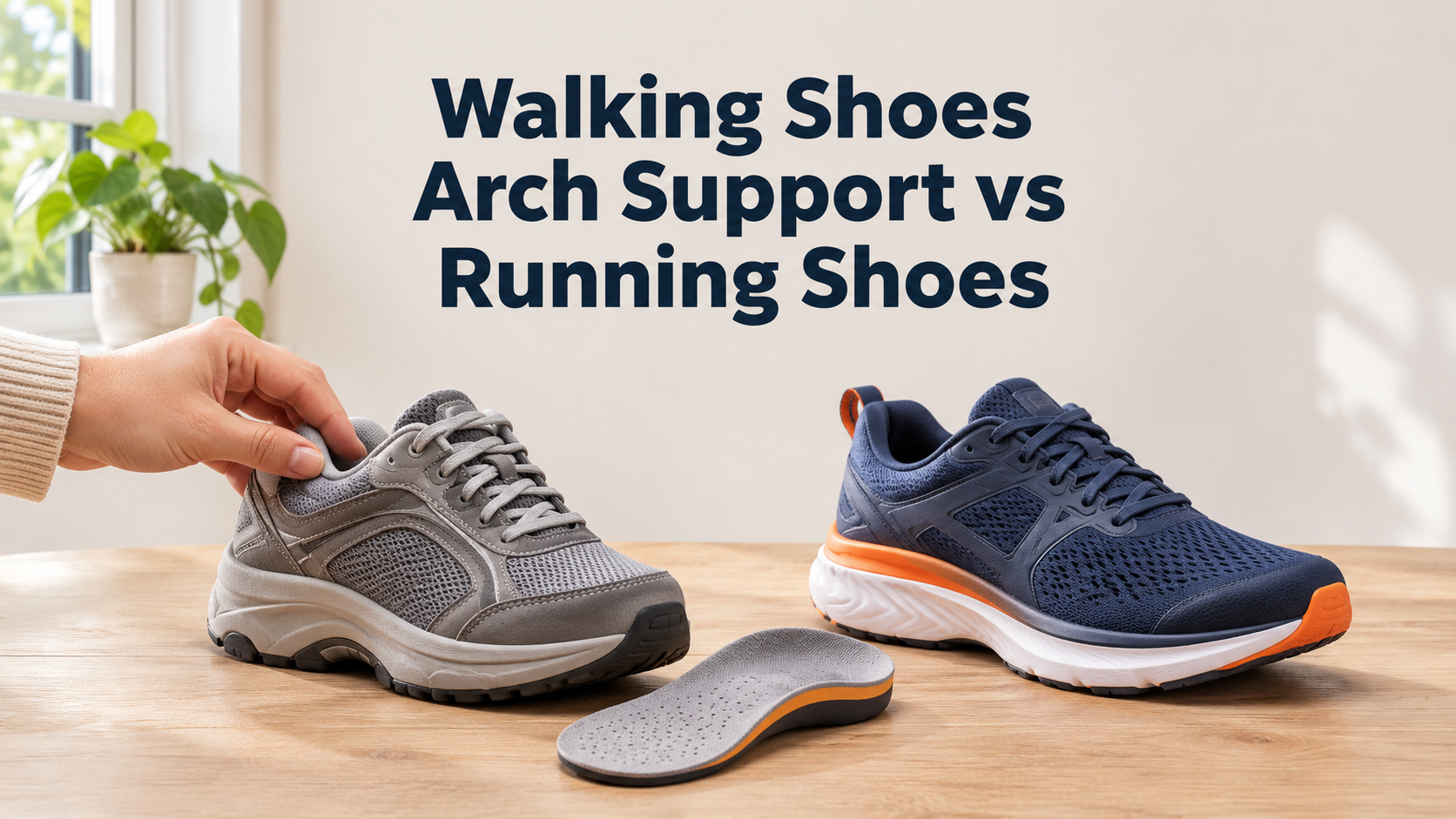
- Arch support that matches your foot. The support should touch your arch evenly, not feel like a hard bump.
- A firm, stable heel cup to keep the heel centered and reduce inward rolling.
- A midsole that resists twisting but bends at the ball of the foot, where your toes flex.
- Moderate, resilient cushioning that absorbs impact without collapsing.
- A roomy toe box so toes can spread, and enough width so the sides of the foot are not squeezed.
- A secure lacing system to hold the midfoot in place.
Shop in the afternoon when your feet are at their largest, wear the socks you plan to walk in, and leave about a thumb width of space beyond your longest toe. Replace walking shoes every six to twelve months of regular use, or sooner when the midsole feels flat, the sole wears unevenly, or your arches start aching earlier than usual.
2. Consider Supportive Insoles
If your shoes fit well but your arches still tire easily, a supportive insole can improve contact under the arch and spread pressure more evenly. Remove the factory insole first so your foot does not sit too high in the shoe, and choose a support height that feels gentle and natural. If you have ongoing pain, high arches, or flat feet, a podiatrist can recommend a suitable off-the-shelf or custom option.
3. Build Up Your Walking Gradually
One of the most common causes of arch pain is increasing activity too fast. Your foot tissues adapt slowly, much more slowly than your motivation. A sensible approach is to raise your walking time or distance by no more than about ten percent per week.
- Include rest or easy days between longer walks.
- If your arches ache the next morning, hold at the same level or cut back slightly.
- Avoid adding both distance and speed at the same time.
- When you return after a break, restart at a shorter distance rather than picking up where you left off.
4. Warm Up and Stretch
Stiff calves and tight arch tissue are major contributors to foot pain. A short warm-up and a few stretches can make a noticeable difference.
| Stretch | How to Do It | Hold |
|---|---|---|
| Calf wall stretch | Hands on a wall, one foot back with the heel down, gently lean forward | 30 seconds each side |
| Plantar fascia stretch | Sit, cross one foot over the other knee, gently pull the toes back toward the shin | 20 to 30 seconds, 2 to 3 times |
| Step calf stretch | Stand with the ball of one foot on a step and lower the heel slowly | 20 to 30 seconds each side |
| Ankle circles | Lift one foot and slowly rotate the ankle in both directions | 10 circles each way |
Stretch gently and stop if you feel sharp pain. Mild tension is normal, but pain is a signal to ease off.
5. Strengthen Your Feet
Strong foot muscles share the load with your ligaments, which helps your arch handle long walks. Two or three short sessions per week are enough to start.
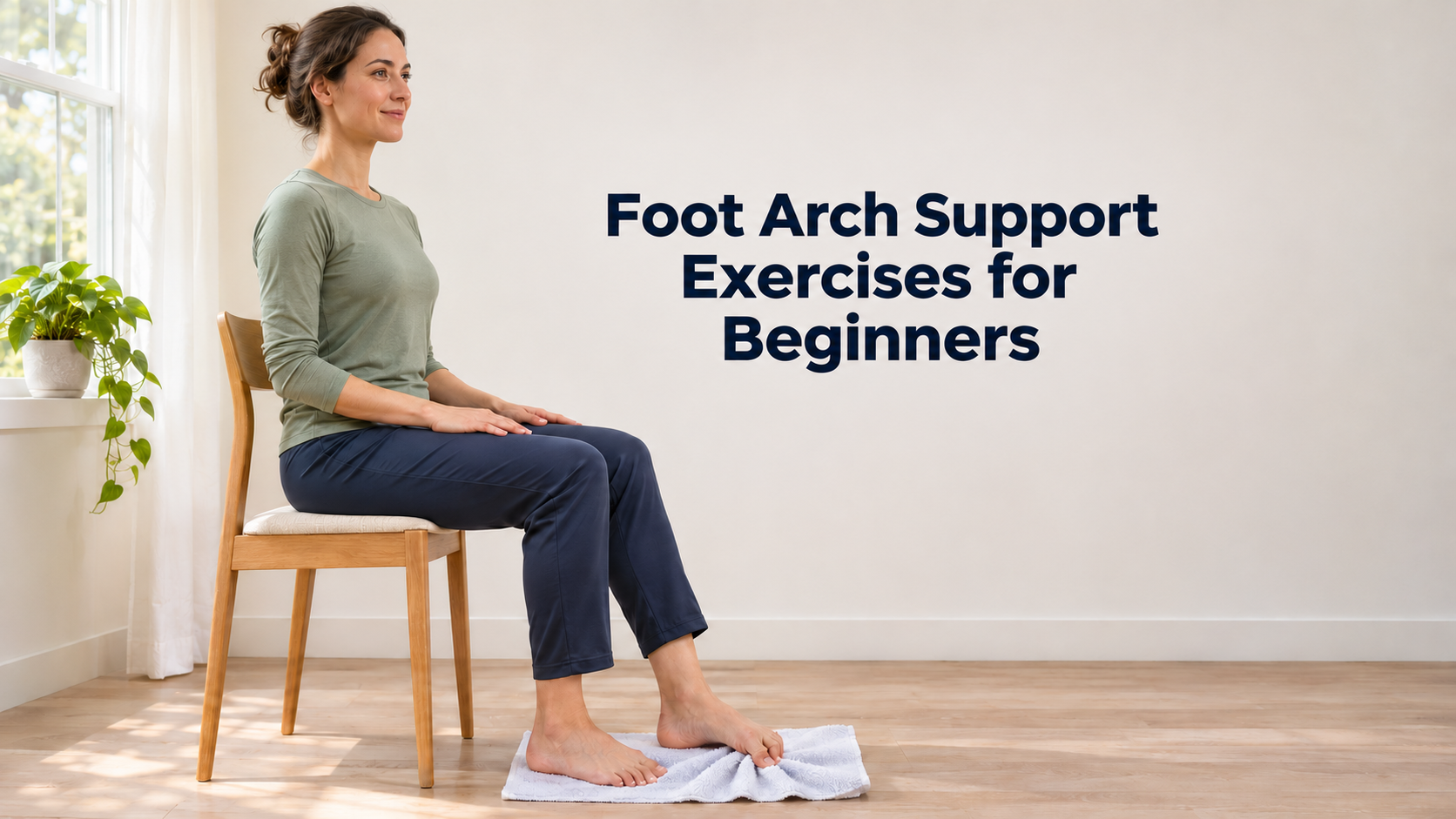
- Towel scrunches: place a small towel on the floor and pull it toward you using only your toes.
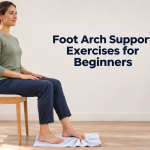
- Short foot exercise: while seated, gently draw the ball of the foot toward the heel without curling the toes, so the arch lifts slightly.
- Marble pickups: pick up small objects with your toes and place them in a cup.
- Calf raises: rise slowly onto your toes and lower back down, building the muscles that support the arch.
- Single-leg balance: stand on one foot for 30 seconds to train stability through the foot and ankle.
6. Improve Your Walking Technique
- Take shorter, quicker steps. Overstriding makes the heel land far in front of your body and increases impact.
- Keep your posture tall, with your eyes forward and your core lightly engaged.
- Roll smoothly from heel to toe, rather than slapping the foot down.
- Avoid walking with the feet rolling far inward, which flattens the arch. Supportive shoes can help with this.
- Swing your arms naturally to keep your rhythm relaxed and balanced.
7. Choose Better Surfaces and Socks
Where and how you walk matters. Whenever you can, choose softer surfaces such as paths, tracks, or grass instead of walking on concrete all the time. Avoid very uneven ground if your arches are already sensitive.
Your socks also play a role. Choose moisture-wicking socks that fit snugly without bunching, and consider socks with light arch compression for extra comfort on longer walks. Damp or ill-fitting socks can cause friction and make your feet work harder.
8. Recover After Walking
- Roll the arch over a tennis ball or a frozen water bottle for a few minutes.
- Elevate your feet to reduce swelling after longer walks.
- Rotate your shoes so the cushioning can recover between days.
- Stay hydrated and keep a healthy weight where possible, since both support overall joint and tissue health.
Warning Signs You Should Not Ignore
Mild fatigue after a long walk is normal. Pay attention to these signs, which suggest your arch needs attention:
- Pain that appears earlier in each walk or lasts longer afterward
- Sharp pain in the arch or heel with the first steps in the morning
- Pain that does not improve after a week or two of reduced activity
- Swelling, redness, or warmth in the foot
- Numbness, tingling, or burning
- Pain on one side only, or a change in the way you walk
If any of these apply, reduce your walking, rest, and consider seeing a podiatrist or doctor. Early assessment usually makes treatment simpler. Conditions such as plantar fasciitis, flat feet, or tendon problems respond best when addressed early.
Quick Prevention Checklist
- Wear supportive, well-fitted walking shoes and replace them on time
- Add arch support if needed, and make sure it fits comfortably
- Increase walking time and distance slowly
- Stretch calves and arches regularly
- Strengthen your foot muscles two or three times a week
- Choose softer surfaces when possible
- Rest and recover after longer walks
Frequently Asked Questions
Why do my arches hurt after walking?
Arch pain after walking is usually caused by overload: unsupportive shoes, too much distance too soon, tight calves, weak foot muscles, or hard surfaces. Improving shoes and building up gradually often helps.
Is it okay to walk with arch pain?
Mild discomfort that eases quickly is usually fine, but pain that is sharp or getting worse is a sign to rest and reduce your activity. Persistent pain should be checked by a professional.
How can I prevent arch pain when walking long distances?
Wear supportive shoes, progress your distance slowly, stretch before and after, strengthen your feet, and take breaks. Choosing softer surfaces and moisture-wicking socks also helps.
Do arch support insoles really help?
For many people, yes. A well-fitted insole can spread pressure and reduce strain on the arch, especially with flat feet or when shoes lack built-in support. It should feel comfortable and never like a hard bump.
How long does it take for arch pain to go away?
Mild strain often improves within a few days to a couple of weeks with rest and better habits. Longer-lasting pain may need a professional assessment.
Final Thoughts
Foot arch pain does not have to stop you from enjoying your walks. By choosing supportive shoes, building up your distance gradually, stretching and strengthening your feet, and recovering well, you can protect your arches and keep walking comfortably for years. Listen to your feet, make small changes early, and get help if the pain persists. A few simple habits today can save you a lot of discomfort tomorrow.
Note: This article is for general information only and does not replace advice from a qualified healthcare professional.