
Foot Arch Pain After Work: Causes, Relief, and How to Stop It Coming Back
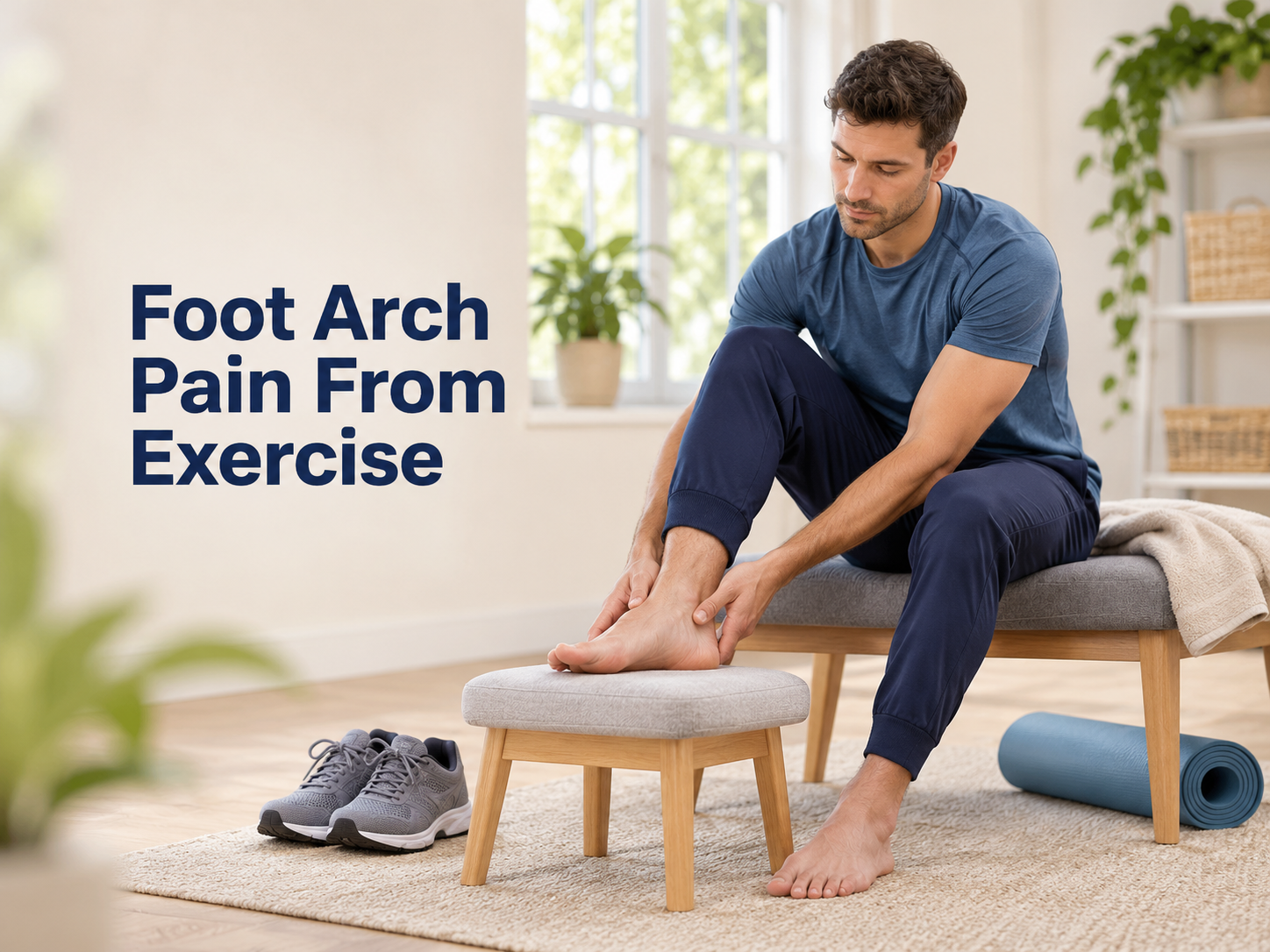
You get home after a long shift, take off your shoes, and there it is: a deep ache, tightness, or burning feeling along the bottom of your foot. For many people, foot arch pain after work has become part of the daily routine, something to tolerate until the weekend. But recurring arch pain is your feet telling you that something in your day is asking too much of them.
The good news is that in most cases the pain can be eased and prevented. This guide explains why your arches hurt after work, how to get relief tonight, what to change in your shoes and habits, and when it is time to see a professional.
Why Do My Arches Hurt After Work?
Your arch works like a spring. With every step it flexes to absorb shock and then rebounds to push you forward. The plantar fascia, a strong band of tissue running from the heel to the toes, helps hold that spring in shape. When you spend hours standing, walking, or carrying loads, those tissues stay under constant tension. By the end of the day, they are tired and irritated.
Common Causes
- Long hours on your feet. Standing in one place is surprisingly hard on the arch because the muscles never get a pumping rest.
- Hard floors. Concrete, tile, and warehouse floors return impact straight into your feet.
- Unsupportive or worn-out shoes. Flat soles, thin midsoles, or collapsed cushioning let the arch sag.
- Dress shoes, flats, or heels. Fashion shoes often lack arch contour and shift pressure to the ball and arch of the foot.
- Tight calf muscles. Stiff calves pull on the heel and add tension through the arch.
- Foot structure. Flat feet may overstretch the arch tissue, while high arches absorb shock poorly.
- Extra body weight or pregnancy. More load means more stress on every step.
- Sudden changes. A new job, longer shifts, or extra overtime can overload feet that are not used to it.
- Carrying or lifting at work. Heavy loads increase the force through your feet.
Is It Plantar Fasciitis or Just Tired Feet?
Many people wonder whether their pain is simple fatigue or something more. The table below shows common differences, though only a healthcare professional can diagnose the cause.
| Feature | Tired Arches | Possible Plantar Fasciitis |
|---|---|---|
| Type of pain | Dull ache or tightness | Stabbing or sharp pain near the heel and arch |
| When it hurts | End of the day, eases with rest | First steps in the morning or after sitting |
| Duration | Improves overnight | Persists for weeks |
| Response to better shoes | Usually improves quickly | May improve slowly and need extra care |
Quick Relief Tonight: A Simple After-Work Routine
When you get home, a few minutes of care can calm sore arches and help them recover for tomorrow.
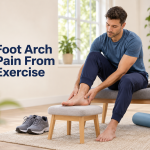
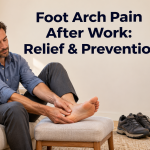
- Take off your work shoes and let your feet rest. Walk in comfortable, supportive slippers or sandals rather than going barefoot on hard floors.
- Roll your arch over a tennis ball, massage ball, or a frozen water bottle for two to three minutes per foot, using gentle to moderate pressure.
- Stretch your calves and arches. Press your hands against a wall, step one foot back with the heel down, and hold for 30 seconds. Then, sitting down, pull your toes gently back toward your shin for 20 to 30 seconds.
- Elevate your feet above heart level for 10 to 15 minutes to reduce swelling.
- Use a cool compress if the arch feels hot or inflamed, or a warm foot soak if it feels stiff and tight. Use whichever is more comfortable for you.
- Massage your feet gently with your thumbs, moving from the heel toward the toes.
Fix the Real Problem: Your Work Shoes
Relief at home helps, but the long-term solution starts with what you wear for eight or more hours a day. If your shoes are not supporting your arches, the pain will keep returning.
- Firm arch support that touches your arch evenly, not a hard bump.
- A stable heel cup to keep your heel centered and limit inward rolling.
- A midsole that resists twisting and bends only at the ball of the foot.
- Cushioning that bounces back, not mushy foam that collapses within weeks.
- A roomy toe box and the right width so toes can spread as your feet swell during the day.
- Secure laces or straps so your foot does not slide inside the shoe.
- A slip-resistant, shock-absorbing sole suited to your workplace floor.
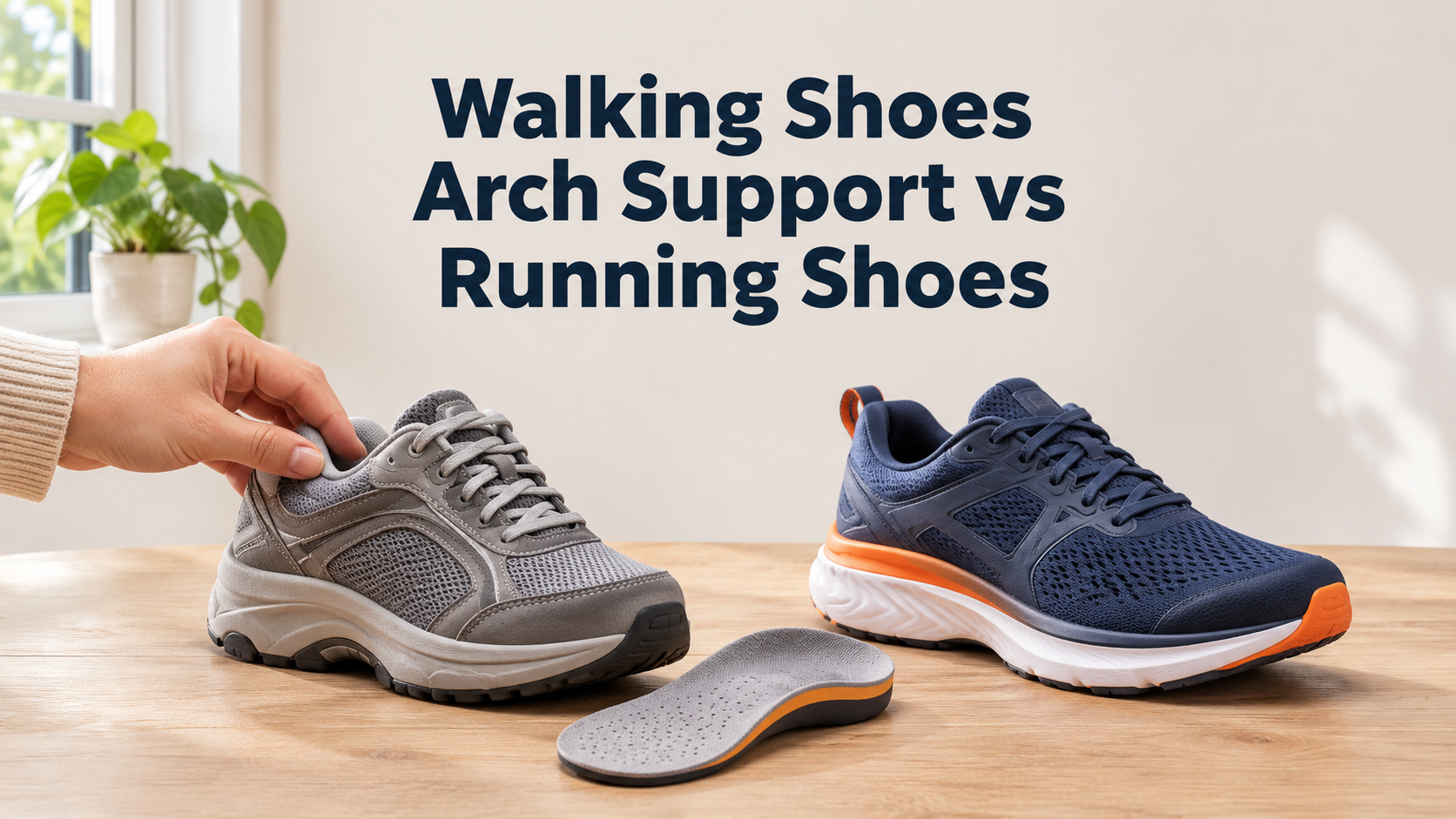
Rotate between two pairs when possible so the cushioning has time to recover, and replace work shoes every six to twelve months of daily wear, or sooner if the midsole feels flat or the soles wear unevenly. If your arches still ache in good shoes, a supportive insole can add contact under the arch. Remove the factory insole first so your foot does not sit too high.
Shoe Choices by Type of Work
| Type of Work | Suggested Shoe Style | Key Feature |
|---|---|---|
| Healthcare, kitchens | Occupational clogs or supportive trainers | Contoured footbed, slip-resistant sole |
| Retail, teaching | Supportive walking shoes | Firm midsole, moderate cushioning |
| Warehouse, construction | Lightweight safety shoes or boots | Replaceable supportive insole, shock absorption |
| Office, formal dress code | Supportive dress shoes with low, wide heels | Room to add an insole |
| Driving, delivery | Cushioned walking or casual shoes | Flexible sole, good grip for pedals and steps |
Small Changes at Work That Make a Big Difference
- Use an anti-fatigue mat if you stand in one spot, such as at a counter or workstation.
- Change your position often. Shift your weight, rest one foot on a low footrest, and avoid locking your knees.
- Take short sitting breaks whenever your job allows, and use them to loosen your laces slightly.
- Wear moisture-wicking socks, ideally with light arch compression, and carry a spare pair for long shifts.
- Walk and move between tasks rather than standing completely still for long periods.
- Stay hydrated to help your tissues stay healthy and reduce cramping.
Strengthen and Stretch Your Feet Regularly
Stronger, more flexible feet handle long workdays better. A few minutes, several times a week, is enough.
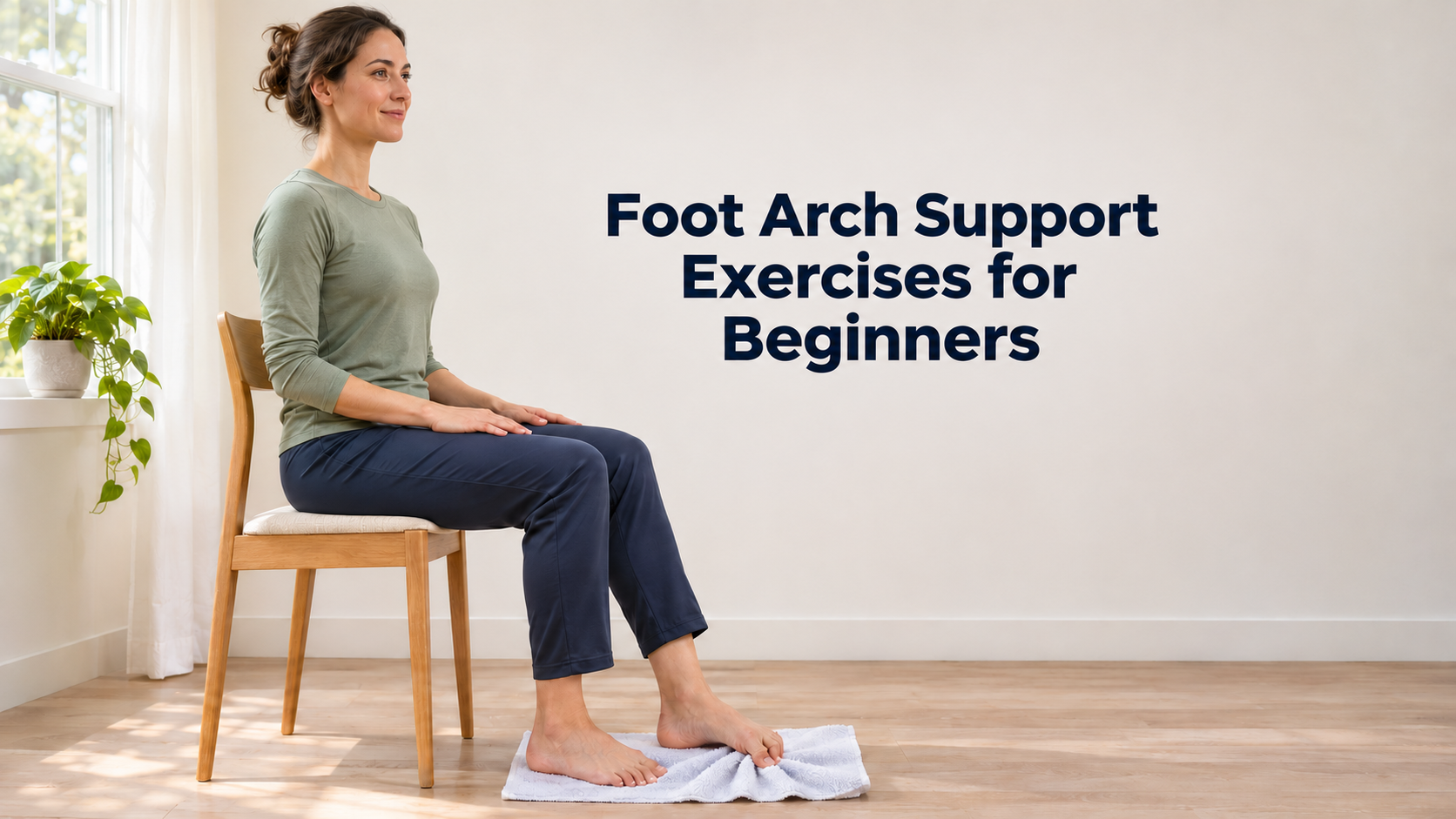
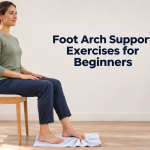
- Towel scrunches: pull a small towel toward you using only your toes.
- Short foot exercise: while seated, draw the ball of the foot toward the heel without curling the toes.
- Calf raises: rise slowly onto your toes and lower back down.
- Calf stretches: hold each stretch for about 30 seconds on both sides.
- Toe spreading: spread your toes wide and hold for five seconds to wake up the small muscles.
Common Mistakes to Avoid
- Wearing the same worn-out shoes every day. Cushioning fades long before the shoe looks old.
- Going barefoot on hard floors at home straight after work, which keeps strain on the arches.
- Ignoring pain for months. Early care is far easier than treating long-standing problems.
- Buying the highest arch support available. The right support fits your foot, not the tallest one on the shelf.
- Choosing shoes by looks alone. Comfort and structure matter more than style for long shifts.
When to See a Doctor or Podiatrist
Occasional tired arches are common, but see a healthcare professional if you notice:
- Pain that lasts for several weeks despite better shoes and rest
- Sharp heel or arch pain with the first steps of the morning
- Swelling, redness, or warmth in the foot
- Numbness, tingling, or burning
- Pain that wakes you at night or changes the way you walk
- Pain after an injury, or a sudden flattening of the arch
A podiatrist can examine your foot shape, check your walking pattern, and recommend suitable footwear, insoles, or treatment. Early assessment usually leads to simpler solutions.
Frequently Asked Questions
Why does my foot arch hurt after work but not on weekends?
This pattern often points to workplace factors such as long hours of standing, hard floors, or work shoes that lack support. On weekends your feet get rest and often more comfortable footwear.
How can I relieve foot arch pain quickly after work?
Take off your shoes, roll the arch over a ball or bottle, stretch your calves and arches, and elevate your feet. A cool compress or warm soak can add comfort.
Are arch support insoles worth it for work?
For many people, yes. A well-fitted insole can spread pressure more evenly and reduce strain, especially if your shoes have little built-in support. Make sure it feels comfortable and does not make the shoe too tight.
Can the wrong shoes cause arch pain?
Yes. Shoes with flat soles, thin cushioning, poor heel support, or a worn-out midsole are among the most common reasons for arch pain after long days.
How long does it take for arch pain to improve?
Mild fatigue often improves within days of better shoes and rest. Pain that lasts for several weeks should be checked by a professional.
Final Thoughts
Foot arch pain after work is a sign that your feet are doing more than they can comfortably handle. The fix usually comes from several small changes working together: supportive shoes that fit well, short recovery routines at the end of the day, regular stretching and strengthening, and smarter habits at work. Do not ignore pain that keeps coming back. With the right care, you can finish your workday comfortably and enjoy your evenings on your own two feet.
Note: This article is for general information only and does not replace advice from a qualified healthcare professional.