
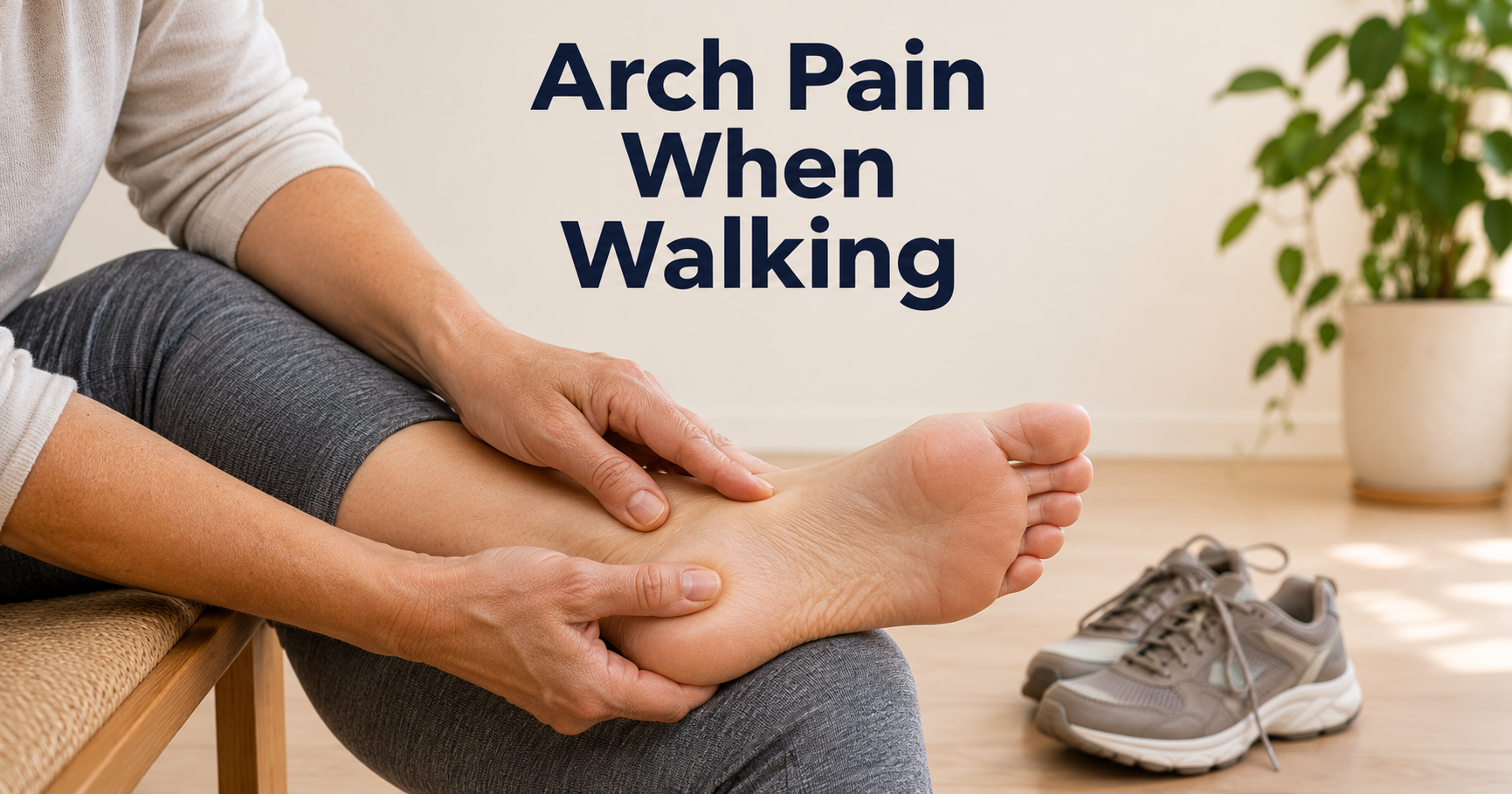

That sharp, burning or aching feeling in the middle of your foot can turn a simple walk into a struggle. Arch pain when walking is very common, and it affects people who are on their feet all day, runners, people who are overweight, and even those who rarely exercise. The good news is that most cases improve with simple care and the right support.
In this guide you will learn what the arch of your foot does, the most common causes of arch pain, how to ease the discomfort at home, how to choose better footwear and insoles, and the warning signs that mean you should see a healthcare professional.
Please note: This article is for general information only and is not medical advice. If your pain is severe, getting worse, or does not improve, please see a doctor, podiatrist or physiotherapist for a proper diagnosis.
What Is the Arch of the Foot?
The arch is the curved structure on the inner side of your foot between the heel and the ball. It is formed by bones, ligaments, tendons and a thick band of tissue called the plantar fascia. Together they act like a spring, absorbing shock with every step and helping you push off when you walk.
When any part of this system is overloaded, stretched or inflamed, you feel pain in the arch. The pain may be sharp, dull, burning or throbbing, and it is often worse at certain times, such as the first steps in the morning or after a long day on your feet.

Common Symptoms of Arch Pain
- Aching or sharp pain along the inside or middle of the foot
- Pain that gets worse after standing, walking or running for long periods
- Stiffness or pain with the first steps after resting
- Mild swelling or tenderness on the arch
- Pain that eases with rest but returns when you are active again
- A feeling of tiredness or cramping in the foot
Common Causes of Arch Pain When Walking

1. Plantar Fasciitis
This is one of the most frequent causes. The plantar fascia runs from the heel to the toes, and repeated strain can cause small tears and irritation. Pain is often felt in the heel and arch, especially with the first steps of the day.
2. Flat Feet (Fallen Arches)
When the arch is low or collapses under body weight, the muscles and ligaments in the foot work harder to stabilise it. Over time this can cause fatigue and pain, not only in the arch but also in the ankles, knees and lower back.
3. High Arches
A very high arch makes the foot stiff and does not spread pressure evenly. More force goes through the heel and the ball of the foot, which can strain the arch area.
4. Overuse and Sudden Activity Increases
Starting a new walking routine, adding long distances too quickly, or standing on hard floors for hours can overload the foot. Runners and people with standing jobs are especially at risk.
5. Unsupportive or Worn Footwear
Thin soles, flat sandals, high heels and shoes that have lost their cushioning do not support the arch well. Old athletic shoes that are worn on the inside are a common hidden cause.
6. Tendon Problems
The posterior tibial tendon helps hold up the arch. If it becomes inflamed or weak, the arch may slowly flatten and cause pain on the inner side of the foot and ankle.
Other Possible Contributors
- Excess body weight, which increases the load on the arch
- Tight calf muscles or a tight Achilles tendon
- Pregnancy, due to weight gain and ligament changes
- Age-related changes in foot structure
- Stress injuries or small fractures in foot bones
- Nerve irritation or other medical conditions
Home Remedies and Self-Care for Arch Pain
For mild pain, a few simple steps often make a big difference.

Rest and Reduce Impact
Take a break from activities that trigger the pain, such as running or jumping. Switch to low-impact options such as swimming or cycling while your foot recovers.
Use Ice
Apply a cold pack wrapped in a thin cloth to the arch for about 15 minutes, a few times a day. Some people also roll the foot over a cold water bottle for a gentle massage.
Stretch Gently
- Calf stretch: Stand facing a wall, step one foot back, keep the heel down and lean forward. Hold for 30 seconds.
- Plantar fascia stretch: Sit down, cross the painful foot over the other knee, pull the toes back gently towards the shin and hold for 30 seconds.
- Towel stretch: Sit with the leg straight, loop a towel around the ball of the foot and pull gently towards you.
Stretch slowly and stop if the pain becomes sharp.
Strengthen the Foot Muscles
Simple exercises such as picking up a small towel with your toes or marbles with your toes can build strength in the small muscles that support the arch. Do them in short sessions, without forcing through pain.
Massage the Arch
Rolling a small ball or a foot roller under the arch for a few minutes can ease tension and improve comfort. Use light pressure at first.
Wear Supportive Footwear at Home
Walking barefoot on hard floors can make arch pain worse. Supportive slippers or house shoes give your arch support throughout the day.
Manage Your Weight
If you carry extra weight, even a modest reduction can lower the load on your feet and reduce pain over time.
Choosing the Right Shoes for Arch Pain
Good shoes are one of the most effective ways to prevent and ease arch pain. Look for these features:
- Firm midsole: The shoe should not fold in half or twist easily.
- Good arch support: The inside of the shoe should have a gentle curve that matches your arch.
- Cushioned heel: Helps absorb the impact on each step.
- Roomy toe box: Allows toes to spread naturally.
- Secure heel counter: Keeps the heel stable and the foot properly aligned.
- Proper fit: Try shoes on in the afternoon, when feet are slightly larger, and walk around in them before buying.
Replace athletic and walking shoes regularly, because the cushioning and support wear out long before the shoe looks old. Many people replace walking shoes every 500 to 800 kilometres, or about every 6 to 12 months of regular use.
Arch Support Insoles and Orthotics
Insoles can add the support your shoes do not provide. There are two main types:
- Over-the-counter arch support insoles: Affordable, easy to find and suitable for mild to moderate arch pain. Choose a type that matches your arch height, and give your feet time to adjust.
- Custom orthotics: Made from a mould or scan of your foot by a professional. They are more expensive, but they can help with more complex foot problems.
Tips for Using Insoles
- Start by wearing them for one or two hours a day and slowly increase the time.
- Remove the shoe’s original insole if the new one makes the shoe too tight.
- Make sure the insole fits flat and does not slide or fold.
- Replace worn insoles, since they lose support over time.
Lifestyle Habits That Help
- Avoid walking barefoot on hard surfaces for long periods.
- Vary your footwear and avoid wearing high heels or flat sandals every day.
- Increase walking or running distance slowly, by around 10% a week.
- Warm up and stretch before exercise.
- Use a cushioned mat if you stand for long hours at work.
- Take short breaks from standing to rest your feet.
When to See a Doctor
Most mild arch pain gets better within a few weeks of rest and good care. However, you should seek medical advice if:
- The pain is severe or began suddenly after an injury
- You cannot put weight on the foot
- There is significant swelling, bruising, redness or warmth
- You notice numbness, tingling or burning
- The pain continues for more than two weeks despite home care
- The arch seems to be changing shape or collapsing
- You have diabetes or circulation problems and develop new foot pain
A doctor, podiatrist or physiotherapist can examine your foot, find the cause and recommend treatment such as exercises, taping, custom orthotics or other options.
Frequently Asked Questions
Why does my arch hurt when I walk?
The most common reasons are plantar fasciitis, flat feet, high arches, overuse and unsupportive shoes. A professional can help find the exact cause.
Why does my arch hurt more in the morning?
The tissues in the foot tighten overnight, so the first steps can be painful until they loosen up. This is typical of plantar fasciitis.
Can flat feet cause arch pain?
Yes. When the arch is low, the foot muscles and ligaments work harder, which can cause tiredness and pain.
Are arch support insoles good for arch pain?
They help many people by spreading pressure more evenly and supporting the arch, especially when combined with proper shoes and stretching.
How long does arch pain last?
Mild cases often improve in a few weeks, while more stubborn problems can take a few months. Early care speeds recovery.
Is walking good or bad for arch pain?
Gentle walking in supportive shoes is often fine, but long or fast walking on hard surfaces can make it worse. Listen to your body and build up slowly.
Should I stop exercising completely?
Usually not. Switch to low-impact exercise and avoid activities that cause sharp pain.
Final Thoughts
Arch pain when walking is annoying, but it is often manageable. Rest the foot, stretch gently, wear supportive shoes and insoles, and build activity up slowly. Pay attention to your body, and do not ignore pain that is severe or lasts for weeks. With early care and good habits, most people get back to walking comfortably.