
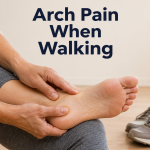
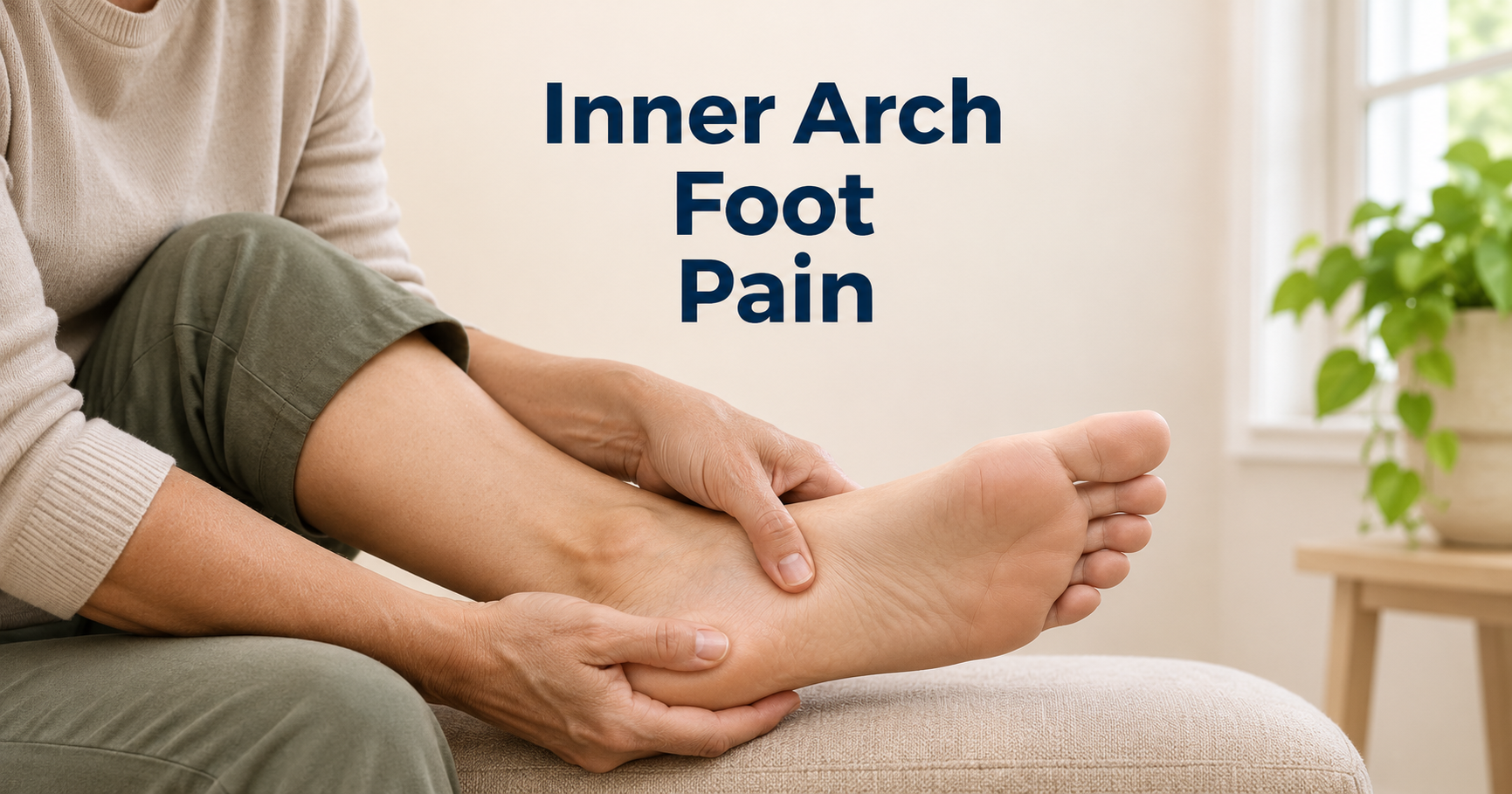

Pain on the inside of the foot, along the curve between the heel and the ball, can make even a short walk uncomfortable. Inner arch foot pain is also called medial arch pain, and it affects people of every age, from runners and gym-goers to office workers, parents carrying kids, and people who stand all day.
This guide explains what the inner arch is, why it hurts, the most common causes, how to check your foot at home, which treatments help, how to choose the right shoes and insoles, and when to see a professional.
Please note: This article is for general information only and is not medical advice. If your pain is severe, keeps getting worse, or does not improve, please see a doctor, podiatrist or physiotherapist for a proper diagnosis.
What Is the Inner Arch of the Foot?
The inner arch, also called the medial longitudinal arch, is the high curve on the inside of your foot. It is the most visible part of your arch and the part that carries most of your weight when you walk or run. Several structures hold it up, working together like a bridge:
- Posterior tibial tendon: Runs behind the inner ankle bone and into the arch, helping lift and stabilise it.
- Navicular bone: A small bone at the top of the inner arch that acts like a keystone.
- Spring ligament: A strong ligament supporting the top of the arch.
- Plantar fascia: A thick band under the foot that acts like a bowstring.
- Small foot muscles: Provide extra support and control.

When any of these structures is overloaded, weak or irritated, you may feel pain along the inside of the foot.
Symptoms of Inner Arch Pain
- Aching, sharp or burning pain on the inside of the foot
- Pain that gets worse with walking, running, standing or climbing stairs
- Tenderness or mild swelling along the inner arch or ankle
- A visible flattening of the arch over time
- Pain that spreads to the heel, inner ankle or even the calf
- Feet that roll inward when you walk
- Pain that eases with rest but returns when you are active
Common Causes of Inner Arch Foot Pain

1. Posterior Tibial Tendon Problems
This tendon is the main support for the inner arch. Overuse, a sudden increase in activity or an injury can cause it to become inflamed or weak. Pain and swelling along the inside of the ankle and arch are typical signs. If it is ignored, the arch can slowly flatten over time, so early attention matters.
2. Flat Feet (Fallen Arches)
If the arch is low or collapses, the tissues on the inner side are stretched and work harder with every step. Some people are born with flat feet, while others develop them with age, weight gain, pregnancy or tendon problems.
3. Plantar Fasciitis
Although it is best known for heel pain, plantar fasciitis can also cause pain along the inner arch. It is often worst with the first steps in the morning or after sitting for a long time.
4. Overpronation
Pronation is the natural inward roll of the foot when you step. When the foot rolls in too much, the inner arch and the tendons supporting it take extra strain. Worn shoes on the inner edge of the heel are a common clue.
5. Accessory Navicular
Some people have an extra bone or a prominent bump on the inner side of the foot. It can rub against shoes or irritate the tendon, causing pain and tenderness, especially during activity.
6. Overuse and Poor Footwear
Increasing running distance too quickly, standing for long hours, and wearing flat, worn or unsupportive shoes can all overload the inner arch.
Other Possible Causes
- Tight calf muscles or Achilles tendon
- Stress injuries in the navicular or other foot bones
- Arthritis in the midfoot joints
- Nerve irritation, such as tarsal tunnel problems, which may cause tingling or burning
- Excess body weight
- Pregnancy and hormonal changes that loosen ligaments
Simple Self-Checks at Home
These simple checks can give you a better idea of your foot type. They do not replace a professional exam.
The Wet Footprint Test
Wet the sole of your foot and step on a dark piece of paper or a dry towel. A full footprint with little or no curve on the inner side suggests a flat arch. A very narrow band connecting the heel and the ball suggests a high arch.
The Shoe Wear Check
Look at the soles of your old shoes. Heavy wear along the inner edge may suggest your foot rolls inward, while wear mainly along the outer edge suggests the opposite.
The Heel Raise Check
Stand on one foot, holding a wall for balance, and rise onto your toes. Healthy feet can usually do this smoothly, and the heel tilts slightly inward at the top. If you cannot do it, or it causes pain on the inner foot or ankle, have it checked by a professional.
How to Treat Inner Arch Foot Pain at Home
For mild pain, many people improve with simple self-care.

Rest and Modify Activity
Reduce running, jumping and long walks while the pain is strong. Swimming and cycling are gentler options.
Ice the Sore Area
Place a cold pack, wrapped in a thin cloth, on the inner arch for about 15 minutes, a few times a day.
Wear Supportive Shoes
Choose shoes with a firm midsole, good arch support and a stable heel. Avoid flat sandals and very flexible shoes while you recover.
Use Arch Support Insoles
Insoles can help hold the inner arch in a better position and reduce the load on the tendon and ligaments. Ready-made insoles help many people with mild to moderate pain, while custom orthotics may suit more complex or long-lasting problems. Introduce them gradually over several days.
Stretch the Calves and Foot
- Calf stretch: Face a wall, step one foot back with the heel down, and lean forward. Hold for 30 seconds.
- Plantar fascia stretch: Sit, cross the foot over the opposite knee, and gently pull the toes back. Hold for 30 seconds.
Strengthen the Supporting Muscles
- Short-foot exercise: Sitting or standing, gently draw the ball of the foot towards the heel without curling the toes, and hold for 5 seconds.
- Heel raises: Rise slowly onto the toes, then lower slowly. Start with a few repetitions and build up as comfort allows.
- Towel scrunches: Use your toes to pull a small towel towards you.
Stop any exercise that causes sharp pain.
Consider Taping or Supports
Some people find that arch taping or a supportive brace gives short-term relief. A professional can show you the right technique.
Manage Body Weight
Maintaining a healthy weight reduces the load on the inner arch and its supporting tendons.
Choosing Shoes for Inner Arch Pain
- Stable or motion-control design: Helps limit excessive inward rolling for people who overpronate.
- Firm midsole: The shoe should not twist or fold easily in the middle.
- Supportive heel counter: Keeps the heel steady.
- Cushioning: Absorbs shock, especially on hard surfaces.
- Good fit: Try on shoes in the afternoon, and make sure there is room for the toes to spread.
Replace running and walking shoes regularly. The cushioning and support wear out long before the shoes look old.
How to Prevent Inner Arch Pain
- Increase activity gradually, by around 10% per week.
- Warm up and stretch before exercise.
- Wear supportive footwear and avoid going barefoot on hard floors.
- Strengthen the foot and calf muscles regularly.
- Vary your surfaces and avoid running only on hard roads.
- Replace worn shoes and insoles on time.
- Take rest days to let your tendons recover.
When to See a Doctor
Mild inner arch pain often improves within a few weeks. See a healthcare professional if:
- The pain is severe or began suddenly after an injury
- You cannot put weight on the foot
- There is noticeable swelling, redness, bruising or warmth along the inner foot or ankle
- Your arch seems to be flattening or your foot is changing shape
- You cannot rise onto your toes on one foot, or it causes pain
- You feel numbness, tingling or burning
- Pain lasts more than two weeks despite home care
- You have diabetes or circulation problems and develop new foot pain
A podiatrist or physiotherapist can find the exact cause and recommend treatments such as exercise programs, taping, footwear changes, custom orthotics or other options.
Frequently Asked Questions
Why does the inside of my foot hurt?
Common causes include posterior tibial tendon strain, flat feet, plantar fasciitis, overpronation, and overuse or poor footwear. A professional can help find the exact cause.
Can flat feet cause inner arch pain?
Yes. A low or collapsed arch increases the stress on the tendons and ligaments along the inner side of the foot.
Is inner arch pain serious?
Often it is mild and settles with rest and support, but some causes, such as tendon problems, can get worse if ignored. See a professional if it persists.
Do arch support insoles help?
Many people find they reduce strain on the inner arch, especially when combined with good shoes and exercises.
Can I keep exercising with inner arch pain?
Low-impact activity is often fine, but avoid anything that causes sharp pain, and build back slowly.
How long does it take to recover?
Mild cases may improve within a few weeks, while tendon-related problems can take a few months. Early care speeds up recovery.
Should I walk barefoot?
While your foot is painful, supportive footwear is usually more comfortable than going barefoot, especially on hard floors.
Final Thoughts
Inner arch foot pain is a signal that the structures supporting your arch are under stress. Listen to it early. Rest the foot, wear supportive shoes and insoles, stretch and strengthen gradually, and return to activity slowly. If the pain is severe, lasts for weeks or your arch seems to be changing shape, get a professional assessment. With the right care, most people get back to walking, running and standing comfortably.