
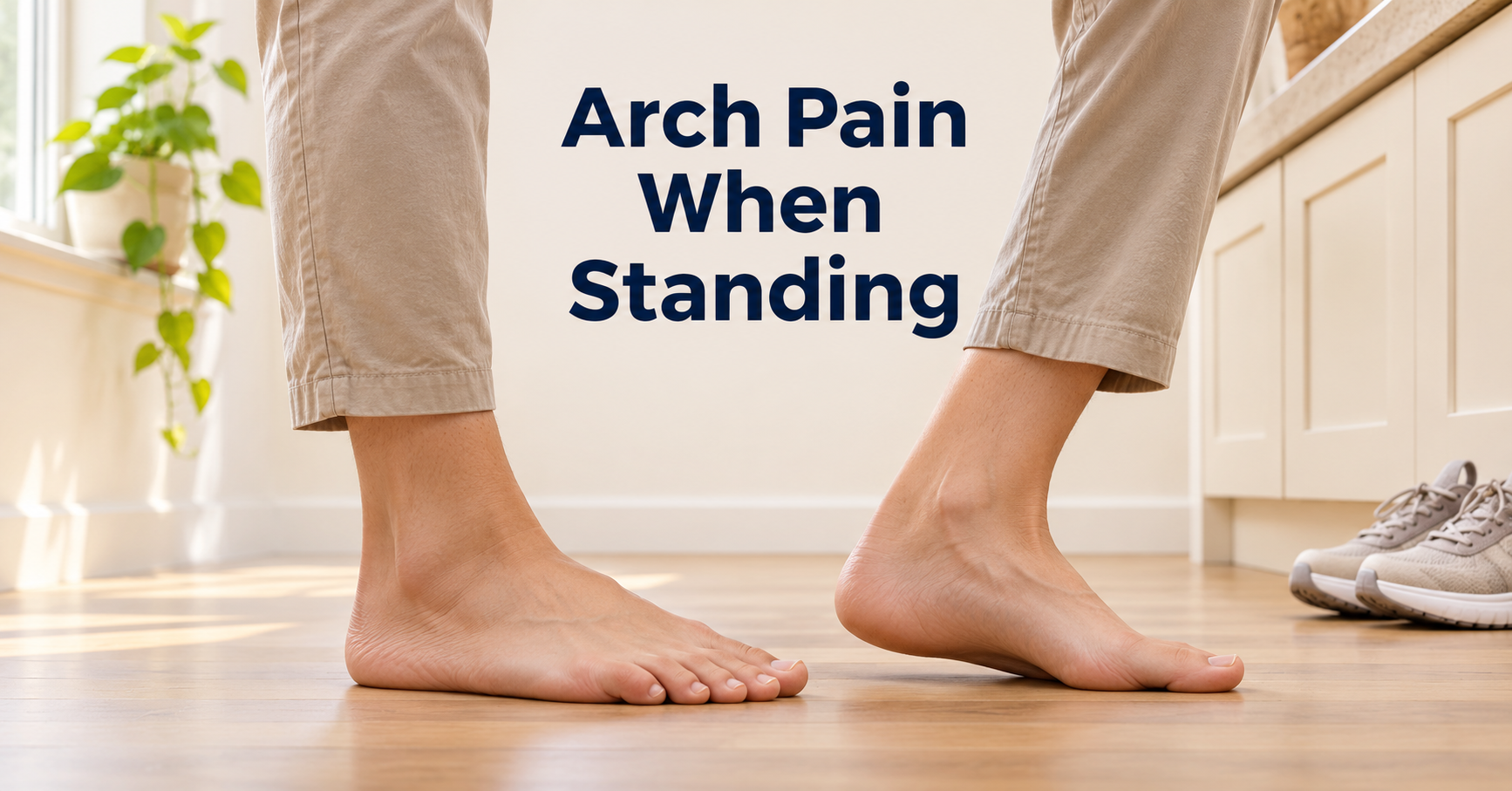

You finish a long shift, a busy day in the kitchen, or hours at a counter, and suddenly the middle of your foot starts to ache. For many people, arch pain when standing is a daily problem. It can start as mild tiredness and grow into a sharp, burning or throbbing pain that makes every minute on your feet feel longer.
This guide explains why standing for long periods strains the arch, what usually causes the pain, what you can do at home, how shoes, insoles and floor mats can help, and when to get professional advice.
Please note: This article is for general information only and is not medical advice. If your pain is severe, keeps getting worse, or does not improve, please see a doctor, podiatrist or physiotherapist for a proper diagnosis.
Why Does Standing Cause Arch Pain?
The arch of your foot works like a spring. When you walk, the arch flexes and relaxes, so the load keeps changing. When you stand still, the same muscles, ligaments and tissues stay under tension for a long time, and they do not get the chance to rest. Over hours, the muscles tire, circulation slows and the arch gradually loses its ability to support your weight.
Standing on hard floors such as concrete or tile makes it worse, since there is almost no cushioning to absorb the shock.

Common Symptoms
- Aching, burning or throbbing pain in the arch after standing for a while
- Pain that grows slowly through the day and is worst in the evening
- Tightness or tiredness in the foot, sometimes with calf discomfort
- Pain in the heel together with the arch
- Relief when you sit, remove your shoes or elevate your feet
- Stiffness or sharp pain with the first steps after sitting
Common Causes of Arch Pain When Standing

1. Standing for Long Hours
People in jobs such as retail, nursing, teaching, hairdressing, factory work, cooking and security often stand for most of the day. Without enough rest and movement, the arch is under constant strain.
2. Hard Floors
Concrete, stone and tile floors do not absorb impact, so your feet take it instead. Working barefoot or in thin-soled shoes on these surfaces is especially tiring.
3. Plantar Fasciitis
The plantar fascia is a thick band of tissue that runs under the foot. If it becomes irritated from overload, you can feel pain in the arch and heel, especially after standing or at the first steps of the day.
4. Flat Feet or High Arches
A flat or collapsed arch makes the foot muscles work harder to stabilise the foot. A very high arch is stiff and concentrates pressure on the heel and ball of the foot. Both foot types can lead to arch pain during long standing.
5. Worn or Unsupportive Footwear
Flat sandals, thin-soled shoes, high heels and old shoes with flattened cushioning provide little support. Shoes that look fine on the outside may have lost their support on the inside.
6. Extra Body Weight
Every extra kilogram adds load to the arch with each hour of standing. Pregnancy can have a similar effect, along with ligament changes that loosen the foot.
Other Contributors
- Tight calf muscles or a tight Achilles tendon
- Weak foot and ankle muscles
- Posterior tibial tendon problems
- Poor standing posture, such as locking the knees or leaning on one leg
- Age-related changes in the foot
How to Relieve Arch Pain When Standing
Take Regular Breaks
Whenever you can, sit down for a few minutes and elevate your feet. Even short rests reduce strain and improve circulation.
Shift Your Weight and Change Position
Avoid standing in the same position for long. Move your weight from one foot to the other, take a few steps, rise up on your toes gently, or place one foot on a low footrest and swap sides now and then.
Use Ice After Work
Wrap a cold pack in a thin cloth and place it under the arch for about 15 minutes. Rolling the foot gently over a cold bottle of water is another option.
Stretch Your Foot and Calves
- Calf stretch: Face a wall, step one foot back, keep the heel down, and lean forward. Hold for 30 seconds.
- Plantar fascia stretch: Sit down, cross the sore foot over your knee, and gently pull the toes back towards your shin. Hold for 30 seconds.
- Towel stretch: Sit with the leg straight, loop a towel around the ball of the foot, and pull gently.
Strengthen the Arch Muscles
Try towel scrunches, in which you pull a small towel towards you with your toes, or the short-foot exercise, in which you gently draw the ball of the foot towards the heel without curling the toes. A few minutes a day can build support over time.
Massage the Arch
Roll a small ball or foot roller under the arch for a few minutes. Start with light pressure and avoid pressing on any sharp pain.
Best Footwear for Standing All Day
The right shoes can be the difference between a comfortable day and a painful one. Look for:
- Firm, cushioned midsole: Absorbs shock from hard floors.
- Good arch support: The inside of the shoe should follow the shape of your arch.
- Stable heel: A well-fitting heel counter keeps the foot aligned.
- Roomy toe box: Lets the toes spread naturally.
- Slip-resistant sole: Useful for kitchens, hospitals and wet floors.
- Correct size: Try shoes on in the afternoon, when your feet are slightly larger.
Work shoes wear out faster than people expect. If you stand all day, check them regularly and replace them when the cushioning feels flat or the soles are unevenly worn.
Arch Support Insoles
Insoles can add support that your shoes lack and help spread pressure more evenly under the foot.
- Ready-made arch support insoles: Affordable and suitable for many people with mild to moderate discomfort. Choose one that matches your arch height.
- Cushioned insoles: Add extra shock absorption for hard floors.
- Custom orthotics: Made for your feet by a professional and helpful for more complex or persistent problems.
Introduce a new insole gradually, wearing it for an hour or two at first and extending the time over a week or so. Make sure it sits flat in the shoe, and replace it when it loses its shape or support.
Anti-Fatigue Mats and Workplace Tips
If you stand at a workstation, simple changes can reduce the load on your feet.
- Anti-fatigue mat: A cushioned mat encourages small movements and reduces the impact of hard flooring.
- Footrest or low stool: Lets you rest one foot at a time.
- Sit-stand desk: For desk workers, alternating between sitting and standing is easier on the feet.
- Adjust your station: Keep frequently used items within easy reach so you do not twist or lean.
- Stand evenly: Keep your weight balanced, avoid locking your knees, and keep your feet roughly hip-width apart.

Lifestyle Habits That Help
- Keep a healthy body weight to reduce the load on your feet.
- Avoid walking barefoot on hard floors at home. Supportive slippers help.
- Wear compression socks if they feel comfortable, since some people find they reduce tiredness.
- Stay hydrated and move around when you can, to support circulation.
- Rotate between two pairs of shoes so the cushioning can recover.
- Increase new activity gradually.
When to See a Doctor
Mild arch pain often improves with rest and better support. See a healthcare professional if:
- The pain is severe, or began suddenly after an injury
- You cannot put weight on the foot
- There is marked swelling, bruising, redness or warmth
- You notice numbness, tingling or burning sensations
- Pain continues for more than two weeks despite home care
- The arch appears to be changing shape or collapsing
- You have diabetes or circulation problems and develop new foot pain
A podiatrist or physiotherapist can find the cause and suggest exercises, taping, footwear changes or custom orthotics.
Frequently Asked Questions
Why do my arches hurt after standing all day?
Standing keeps the same tissues under load for hours, especially on hard floors. Tired muscles and a strained plantar fascia are common causes.
Why does my arch hurt when I stand but not when I sit?
Sitting removes your body weight from the foot, so the arch gets a break. Pain that appears mainly under load usually points to overload or a support problem.
Can the wrong shoes cause arch pain when standing?
Yes. Thin, flat or worn shoes do not support the arch or absorb shock, which is a very common reason for pain.
Do insoles help with arch pain from standing?
Many people find that arch support and cushioned insoles reduce discomfort, especially when combined with good shoes and stretching.
Do anti-fatigue mats really help?
They can reduce the impact of hard floors and encourage tiny movements that keep the muscles active, which helps many people feel less tired.
How long does it take to feel better?
Mild cases often improve within a few weeks of better footwear, stretching and rest. Persistent pain can take longer and needs a professional assessment.
Is it okay to keep working while I have arch pain?
Often yes, if you reduce the load with breaks, supportive footwear and stretching. Do not push through severe or worsening pain.
Final Thoughts
Arch pain when standing is common, but you do not have to accept it as part of the job. Take regular breaks, vary your posture, stretch daily, wear supportive shoes with good cushioning, and consider arch support insoles and an anti-fatigue mat. If the pain does not settle, see a professional early rather than waiting. A few small changes can make a long day on your feet much more comfortable.