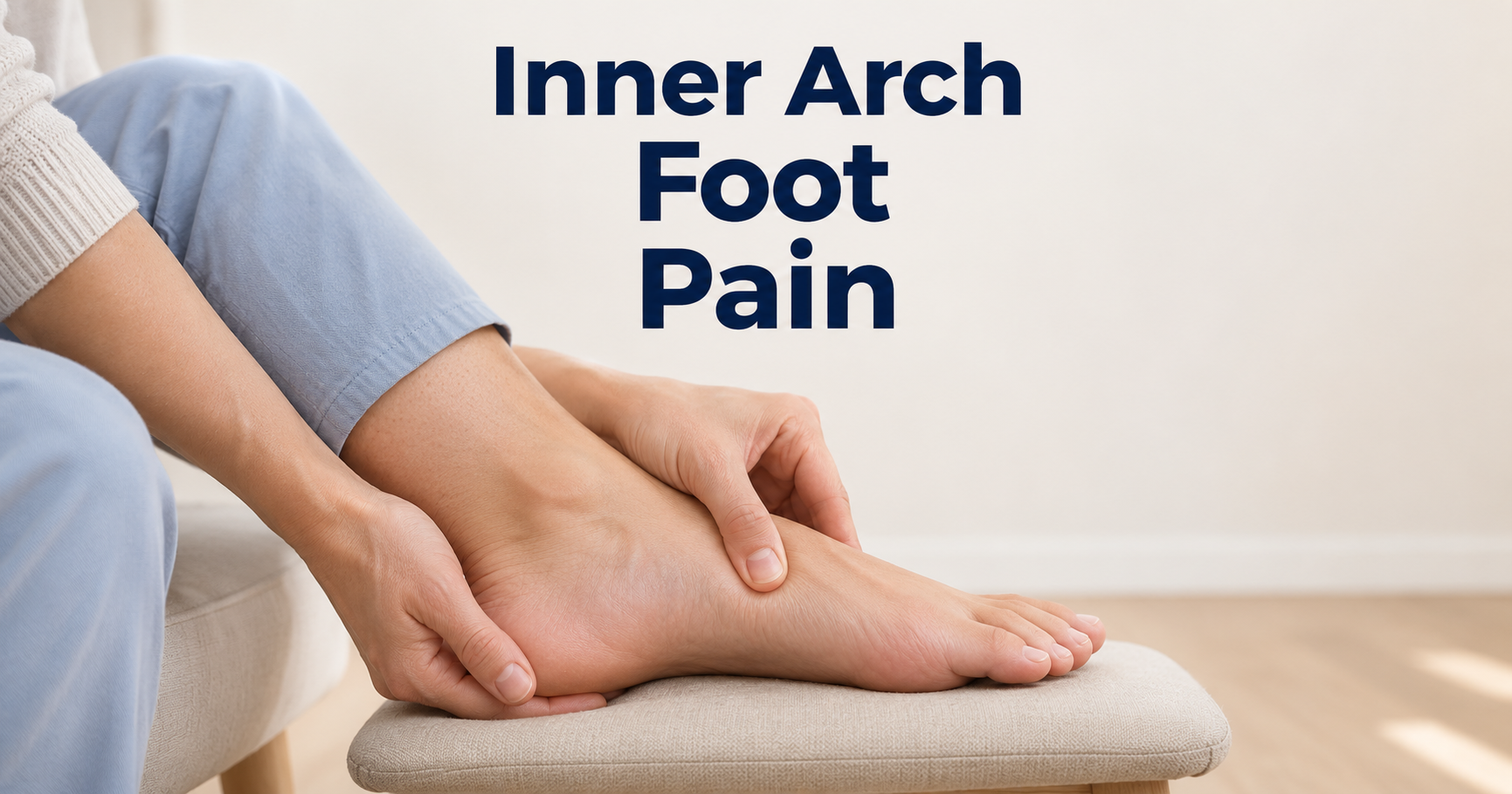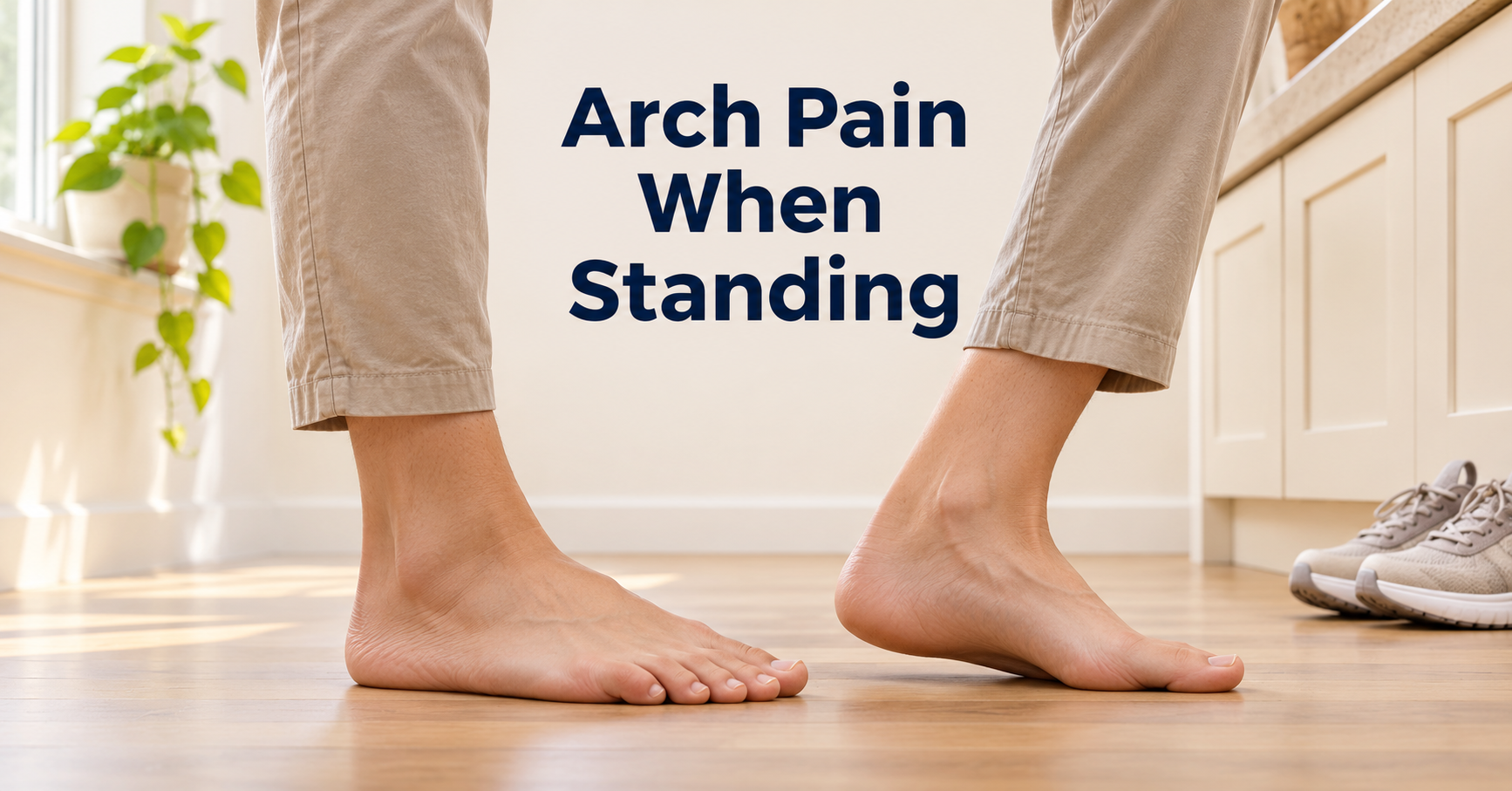








You wake up, swing your feet out of bed, take your first steps, and a sharp, stabbing or aching pain shoots through the middle of your foot. After a few minutes of walking it eases, and by midday you almost forget about it. If this sounds familiar, you are not alone. Arch pain in the morning is one of the most common foot complaints, and it often has a clear pattern that points to the cause.
In this guide you will learn why your arch hurts most in the morning, what conditions commonly cause it, which stretches and habits help, how shoes and insoles can make a difference, and when it is time to see a professional.
Please note: This article is for general information only and is not medical advice. If your pain is severe, keeps getting worse, or does not improve, please see a doctor, podiatrist or physiotherapist for a proper diagnosis.
Why Does Arch Pain Feel Worse in the Morning?
During sleep, your feet usually rest in a relaxed, pointed-toe position. In this position the plantar fascia, which is the thick band of tissue running under the foot, and the calf muscles stay in a shortened state for many hours. They also get less blood flow while you are still. When you stand up and put your full body weight on the foot, those tight tissues are suddenly stretched, and that is what causes the sharp pain.
As you keep moving, blood flow increases and the tissues warm up and loosen, so the pain often fades within minutes. It may return after you sit for a while and then stand again.

Common Symptoms of Morning Arch Pain
- Sharp or stabbing pain in the arch or heel with the first steps out of bed
- Pain that improves after a few minutes of walking
- Pain after sitting for a long time, such as at a desk or in a car
- Tightness or stiffness in the foot and calf
- Tenderness when pressing on the arch
- Pain that gets worse after long periods of standing or exercise
Common Causes of Arch Pain in the Morning

1. Plantar Fasciitis
This is the most common cause of pain with the first steps of the day. Repeated strain irritates the plantar fascia, leading to pain in the arch, the heel or both. The classic sign is pain that is worst on the first steps in the morning or after rest.
2. Tight Calf Muscles and Achilles Tendon
Tight calves limit how far the ankle can bend and increase the pull on the heel and arch. Many people with morning foot pain have tight calf muscles.
3. Flat Feet
When the arch is low, the foot muscles and ligaments work harder to support it. Over time this can cause strain and morning stiffness.
4. High Arches
A high arch is rigid and does not absorb shock well, so more pressure goes through the heel and arch. Tight tissues can then hurt more after a night of rest.
5. Overuse and Sudden Changes in Activity
Increasing running, walking or standing time too quickly can overload the arch. Pain often appears the next morning, when the tissues have stiffened overnight.
6. Unsupportive Footwear
Thin or worn shoes, flat sandals and walking barefoot on hard floors can all contribute. This is especially true if you step straight onto a hard floor first thing in the morning.
Other Possible Causes
- Posterior tibial tendon problems
- Excess body weight, which increases load on the arch
- Pregnancy, due to weight gain and ligament changes
- Stress injuries in foot bones
- Nerve irritation, such as tarsal tunnel problems, which may cause burning or tingling
- Age-related changes in the fat pad and tissues of the foot
Morning Routine to Ease Arch Pain
A few minutes of gentle preparation before you stand can make a big difference. Do these while sitting on the edge of the bed.

1. Flex the Ankles
While still lying or sitting, point your toes away from you and then pull them up towards your shin. Repeat about 20 times to wake up the muscles and improve circulation.
2. Stretch the Plantar Fascia
Sit and cross the sore foot over the opposite knee. Gently pull the toes back towards the shin until you feel a stretch along the arch, and hold for 30 seconds. Repeat three times.
3. Roll the Arch
Place a small ball or a foot roller under the arch and roll gently for a minute. Start with light pressure and avoid pressing on any sharp pain.
4. Stretch the Calves
Use a towel looped around the ball of the foot, keep the knee straight, and gently pull the toes towards you. You can also do a wall calf stretch once you are standing.
5. Put on Supportive Footwear
Do not step barefoot onto a hard floor. Keep supportive slippers, house shoes or sandals with arch support next to your bed, and put them on before you stand.
Other Home Treatments
- Ice: Apply a cold pack wrapped in a thin cloth to the arch for about 15 minutes after activity or at the end of the day.
- Rest: Reduce high-impact activity while the pain is strong, and switch to swimming or cycling.
- Evening stretching: Repeat gentle stretches in the evening, to reduce tightness before sleep.
- Night splint: Some people use a night splint, which keeps the foot gently flexed during sleep so the tissues do not shorten overnight. Ask a professional whether it suits you.
- Strengthening: Towel scrunches and short-foot exercises can build arch strength over time.
- Weight management: Even a modest reduction in body weight can reduce the load on your feet.
Shoes and Insoles for Morning Arch Pain
Supportive footwear matters throughout the day, not only in the morning. Look for shoes with:
- A firm midsole that does not twist or fold easily
- Good arch support and a cushioned heel
- A secure heel counter and a roomy toe box
- A snug fit that does not slide or rub
Arch support insoles can help spread pressure more evenly and reduce strain on the plantar fascia. Ready-made insoles work well for many people with mild to moderate discomfort. Custom orthotics may be more suitable for stubborn or complex cases. Introduce insoles gradually, wearing them for an hour or two at first, and replace them when they flatten or wear out.
Daily Habits That Help
- Avoid walking barefoot on hard floors, even at home.
- Replace worn athletic and work shoes regularly.
- Stretch the calves and feet daily, not only when you feel pain.
- Increase running and walking distance slowly, by around 10% per week.
- Take breaks from long sitting and do a few gentle stretches before standing up.
- Warm up before exercise.
- Maintain a healthy body weight.
When to See a Doctor
Morning arch pain often improves within a few weeks of consistent care. See a healthcare professional if:
- The pain is severe, or began suddenly after an injury
- You cannot put weight on your foot
- There is marked swelling, bruising, redness or warmth
- You notice numbness, tingling or burning
- The pain lasts more than two weeks despite home care, or keeps returning
- The pain is present at rest or wakes you at night
- You have diabetes or circulation problems and develop new foot pain
A podiatrist or physiotherapist can assess your foot, confirm the cause and recommend stretching programs, taping, footwear changes, orthotics or other treatments.
Frequently Asked Questions
Why does my arch hurt so much when I first get out of bed?
Your foot tissues tighten overnight, and the sudden load of your body weight stretches them. This is the typical pattern of plantar fasciitis.
Why does the pain get better after walking a few minutes?
Movement increases blood flow and loosens the tissues, so the pain often fades. It can return after long sitting or standing.
Is morning arch pain always plantar fasciitis?
No. It is the most common cause, but tight calves, tendon problems, foot structure and nerve issues can also cause it. A professional can help confirm the reason.
Should I stretch before getting out of bed?
Many people find that gentle stretching and ankle movements before standing reduce the sharp first-step pain.
Do night splints help?
Some people find them helpful, as they keep the tissues lengthened overnight. They can feel awkward at first, so ask a professional if they are right for you.
Can the wrong shoes cause morning arch pain?
Yes. Unsupportive shoes and walking barefoot on hard floors can strain the arch and make morning pain worse.
How long does it take to get better?
Mild cases often improve in a few weeks, while stubborn cases can take several months. Consistent stretching and support speed up recovery.
Final Thoughts
Arch pain in the morning can make the start of your day miserable, but it is often manageable. Stretch before you stand, protect your feet with supportive footwear, build strength gradually, and give your arches the support they need through the day. If the pain keeps returning or becomes severe, do not wait. Get it checked, since early care leads to better results and faster relief.