
You did not fall. You did not twist your ankle or drop anything on your foot. Yet the arch of your foot aches, burns, or stabs with every step. When there is no obvious injury, arch pain can feel confusing, and even a little worrying. How can something hurt so much when nothing “happened”?
The answer is that most arch pain does not come from a single event. It builds up gradually from stress, strain, footwear, body mechanics, or a medical condition. In this complete guide you will learn the most common causes of arch pain without injury, how to tell what might be behind yours, what you can do at home, which shoes and supports can help, and which warning signs mean you should see a doctor.
Quick Answer
Arch pain without injury is usually caused by gradual overload of the plantar fascia and other structures supporting the arch. Common triggers include plantar fasciitis, flat or high arches, tight calves, unsupportive shoes, long hours standing, weight gain, and tendon problems. Less often, arthritis, nerve problems, or other medical conditions are involved. Reduce strain, wear supportive footwear, stretch and strengthen your feet and calves, and see a doctor if the pain is severe, constant, or lasts more than two to three weeks.
Table of Contents
- What Does Arch Pain Without Injury Mean?
- Symptoms to Look For
- Why Your Arch Hurts With No Injury: Main Causes
- Medical and Less Obvious Causes
- Check Your Arch Type: The Wet Test
- Who Is Most at Risk?
- When to See a Doctor
- Self-Care: What You Can Do at Home
- Stretches and Exercises
- Shoes, Insoles and Supportive Gear
- Everyday Habits That Make a Difference
- Prevention Checklist
- Frequently Asked Questions
What Does Arch Pain Without Injury Mean?
The arch is the curved part on the inside of your foot between the heel and the ball. It works like a spring, absorbing shock when your foot lands and releasing energy when you push off. A thick band called the plantar fascia, the posterior tibial tendon, and many small muscles and ligaments hold the arch in place.
When you have arch pain without injury, it means there was no single traumatic event such as a sprain, fracture, or fall. Instead, the pain develops because these tissues are repeatedly stressed beyond what they can comfortably handle. Doctors call this an overuse or degenerative problem. It can come on slowly over weeks and months, or seem to appear suddenly after a change in routine.

Symptoms to Look For
Arch pain without a clear injury can feel different from person to person. Common descriptions include:
- A dull, deep ache along the inside of the foot
- Sharp or stabbing pain, especially with the first steps after sitting or sleeping
- Burning or tightness in the arch after standing or walking for a long time
- Pain that is worse at the end of the day
- A feeling of tiredness or cramping in the arch
- Tenderness when you press on the arch or near the heel
- Mild swelling around the inner ankle or arch
- Pain that changes with the shoes you wear
Pay attention to the pattern. Pain at the first step in the morning points toward plantar fasciitis. Pain along the inner ankle with a flattening arch may suggest a tendon problem. Burning, tingling, or numbness may suggest a nerve issue. These clues help you and your doctor narrow down the cause.
Why Your Arch Hurts With No Injury: Main Causes
Here are the most common reasons for arch pain when there has been no accident or trauma.

1. Overuse and Gradual Overload
Doing more than your feet are used to is the most common trigger. A new job on your feet, a long holiday of walking, a new exercise routine, or even a few extra weeks of busy days can overload the arch tissues. Because the stress is spread out over time, it does not feel like an injury, but the effect is the same.
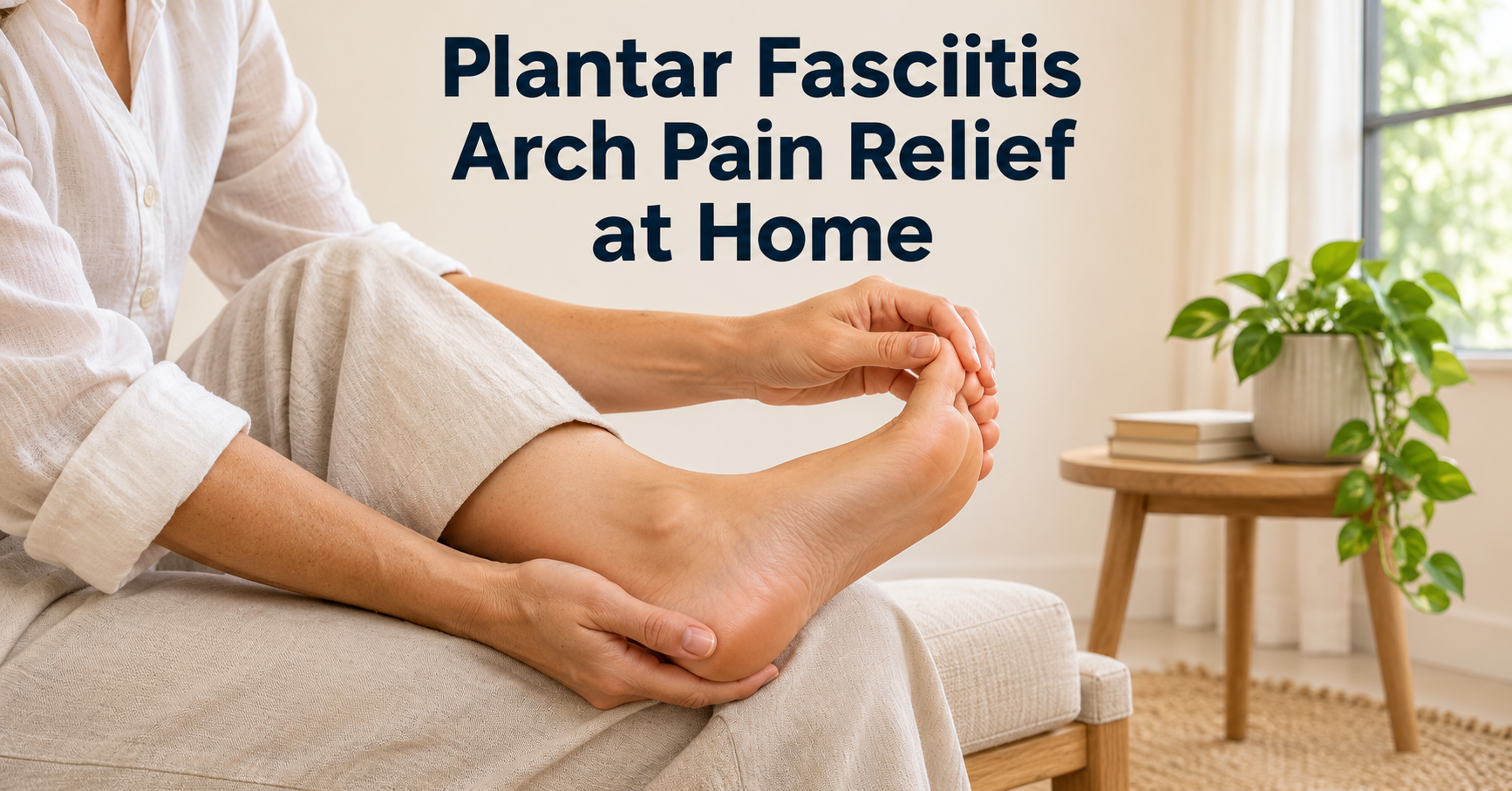
2. Plantar Fasciitis
This is the leading cause of arch and heel pain. The plantar fascia becomes irritated and develops tiny tears or degeneration where it attaches near the heel, and the pain can spread into the arch. It is typically worst with the first steps in the morning or after resting and often eases a little as you move, then returns after long periods of activity.
3. Flat Feet or Fallen Arches
If your arch is low or flattens when you stand, the fascia and tendons work harder to support it. Some people are born with flat feet, while others develop them over time. Not everyone with flat feet has pain, but they are more likely to develop it when stress increases.
4. High, Rigid Arches
High arches do not flatten much when you walk, so they absorb less shock. The impact is concentrated on the heel, the ball of the foot, and the fascia between them, which can cause persistent arch pain.
5. Posterior Tibial Tendon Dysfunction
The posterior tibial tendon runs along the inside of the ankle and holds up the arch. If it becomes inflamed or weakened, the arch can slowly collapse, causing pain along the inner ankle and arch, often with swelling. This condition is more common in adults over 40 and, if untreated, can progress.
6. Tight Calf Muscles and Achilles Tendon
The calf muscles and the plantar fascia are linked. When the calves are tight, the ankle cannot bend properly, so the foot compensates by pulling harder on the fascia. Stretching the calves is often a missing part of treatment.
7. Unsupportive Shoes and Hard Surfaces
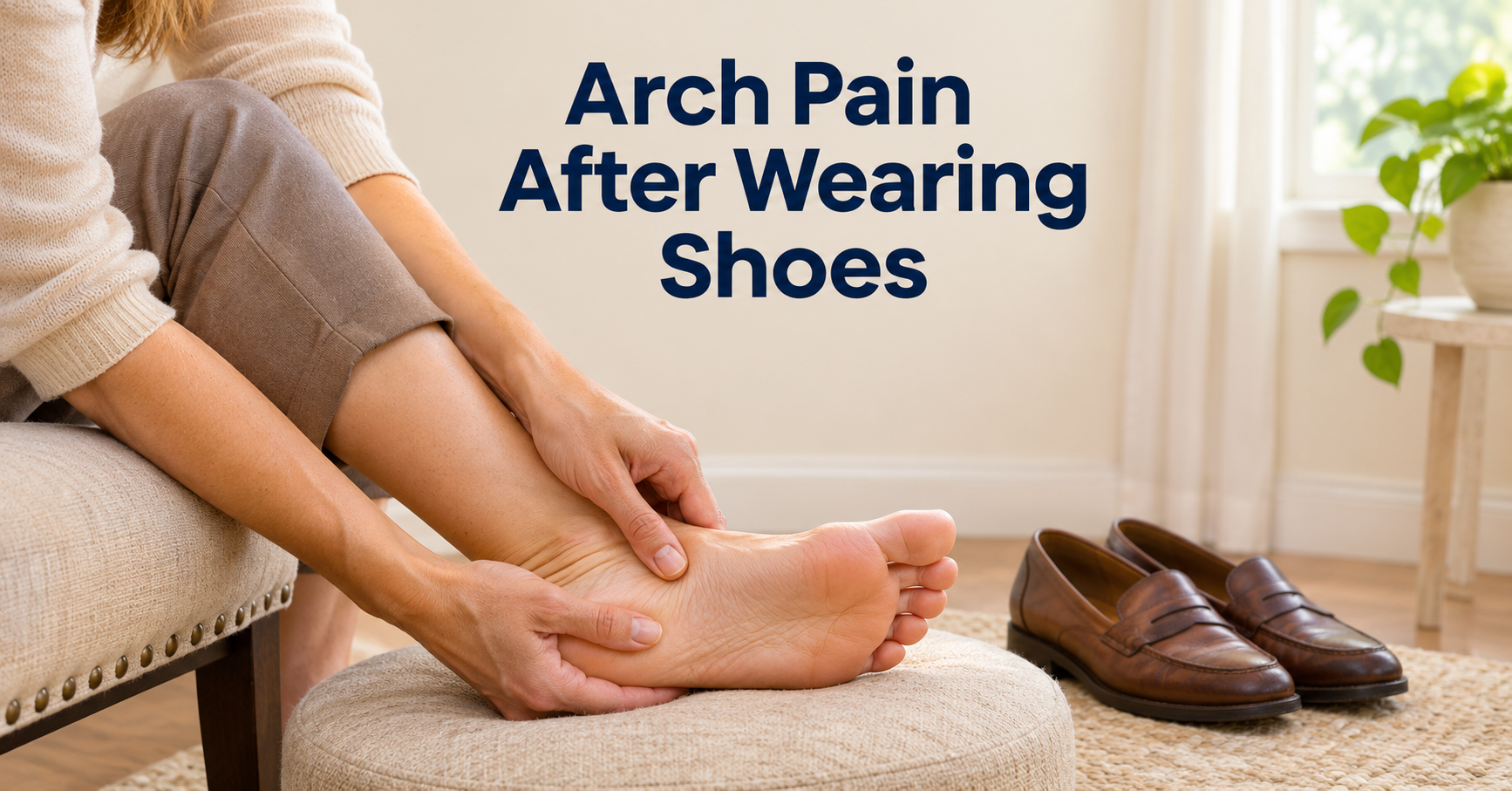
Thin, flat, worn-out, or poorly fitting shoes give the arch little help. Standing for long periods on concrete or tile makes this worse. Many people notice that the pain started or worsened after changing shoes or jobs.
8. Weight Gain, Pregnancy, and Ageing
Extra body weight increases the load on the arch with every step. During pregnancy, added weight and hormonal changes that loosen ligaments can flatten the arch. As we age, the protective fat pad under the heel and foot can thin, and tendons and ligaments lose some flexibility.
9. Weak Foot and Hip Muscles
The small muscles inside the foot help hold the arch up. If they are weak from lack of use, from always wearing very supportive shoes, or from a sedentary lifestyle, the fascia and ligaments take more of the strain. Weak hip muscles can also change how your leg and foot move.
Medical and Less Obvious Causes
If you have been through the common causes and nothing seems to explain your pain, there are other possibilities that a healthcare professional may want to look at:
- Tarsal tunnel syndrome: compression of a nerve on the inside of the ankle, causing burning, tingling, or numbness that can spread into the arch.
- Arthritis in the midfoot: osteoarthritis or inflammatory arthritis can cause stiffness, swelling, and aching in the arch area, often worse after rest.
- Stress reactions or stress fractures: small cracks in the bone can develop without a single injury, especially in people who suddenly increase activity or have lower bone density. The pain is often localized to one spot and worsens with activity.
- Gout: sudden pain, swelling, and redness in a foot joint can sometimes be confused with arch pain.
- Peripheral neuropathy: nerve damage, commonly linked to diabetes, can cause burning, tingling, or aching in the feet.
- Tarsal coalition: a condition present from birth in which foot bones are joined, which can cause stiff flat feet and pain, often in teenagers.
- Referred pain from the lower back: irritation of the nerves in the lumbar spine can cause foot symptoms in some people.
- Inflammatory or systemic conditions: some forms of arthritis and autoimmune conditions can cause foot pain without an obvious injury.
These conditions are less common than overuse problems, but they are the reason it is important to get checked if your pain is severe, persistent, or accompanied by other symptoms.
Check Your Arch Type: The Wet Test
A quick home test can show whether your arch is flat, normal, or high. Wet the bottom of your foot, step onto a dark piece of paper or dry concrete, and look at the footprint.

A nearly full footprint suggests a flat or low arch. A clear curve with a band connecting the heel and forefoot suggests a normal arch. A very thin or missing band suggests a high arch. The test is only a rough guide, and a foot specialist can give a more accurate assessment of your alignment and gait.
Who Is Most at Risk?
You are more likely to develop arch pain without injury if you:
- Spend long hours standing or walking on hard surfaces
- Are overweight or have gained weight recently
- Are pregnant or recently postpartum
- Have flat feet or very high arches
- Have tight calf muscles or limited ankle movement
- Are between 40 and 60 years old, when plantar fasciitis is most common
- Wear unsupportive, worn-out, or poorly fitting shoes
- Have recently increased your activity level, such as starting a walking or running program
- Have diabetes, arthritis, or certain nerve conditions
When to See a Doctor
Get medical advice if you notice:
- Severe pain, or you cannot put weight on your foot
- Swelling, redness, or warmth in the foot or ankle
- Numbness, tingling, or burning that spreads
- Pain at night or while resting
- A visibly collapsing arch or a change in foot shape
- No improvement after two to three weeks of sensible self-care
- Fever with foot pain or signs of infection
- Diabetes, poor circulation, or neuropathy

A doctor, physiotherapist, or podiatrist can examine your foot and gait, order X-rays, ultrasound, or MRI if needed, and recommend treatments such as physical therapy, orthotics, injections, or other options based on the cause.
Self-Care: What You Can Do at Home
For mild to moderate arch pain without warning signs, these steps often help:
- Reduce the load. Cut back on long walks, jumping, and standing for hours while the pain settles. Low-impact activities such as swimming or cycling can maintain fitness.
- Wear supportive footwear. Avoid walking barefoot on hard floors and avoid flimsy shoes and flip-flops.
- Stretch regularly. Calf and plantar fascia stretches help, particularly before getting out of bed.
- Massage and roll the arch. Use a massage ball or a frozen water bottle for two to three minutes.
- Apply cold. A cold pack in a thin towel for 10 to 15 minutes after a long day can ease soreness.
- Strengthen your feet. Do the exercises below consistently.
- Consider over-the-counter pain relief only if it is safe for you, following the label, and ask a pharmacist or doctor if unsure.
- Increase activity gradually once the pain eases.

Stretches and Exercises
Do these once or twice a day. Mild stretching discomfort is normal, but stop if you feel sharp pain.
1. Plantar Fascia Stretch
Sit and cross the sore foot over the opposite knee. Gently pull your toes back toward your shin until you feel a stretch along the arch. Hold 30 seconds, three times.
2. Calf Wall Stretch
Face a wall with the sore leg straight behind you and the heel down. Lean forward until you feel a stretch in the calf. Hold 30 seconds, three times, then repeat with a slightly bent knee.
3. Massage Ball Roll
Roll a golf ball or massage ball under the arch from heel to forefoot for two to three minutes with moderate pressure.
4. Towel Scrunches
Place a small towel on the floor and scrunch it toward you with your toes. Two sets of 15.
5. Short-Foot Exercise
Draw the ball of your foot toward your heel to lift the arch without curling the toes. Hold five seconds, repeat ten times.
6. Calf Raises
Rise slowly on your toes, pause, then lower for three to four seconds. Three sets of 12 once walking is mostly comfortable.
7. Single-Leg Balance
Stand on one foot for 30 to 60 seconds while keeping the arch lifted. Make it harder by standing on a folded towel.
8. Hip Strengthening
Glute bridges, clamshells, and side-lying leg raises, two to three sets of 10 to 15, help control foot and leg alignment.
Shoes, Insoles and Supportive Gear
Choosing the right footwear and a few helpful products can reduce strain on the arch. When shopping for shoes, look for:
- A roomy toe box so the toes can spread
- A firm heel counter that holds the heel securely
- Moderate cushioning and a stable sole
- A shoe that flexes at the ball of the foot, not in the middle of the arch
- An arch contour that feels comfortable and does not poke or press
- A removable insole so you can add your own support
Shop in the afternoon when feet are slightly swollen, and replace everyday shoes before they collapse. Here are categories of products that many people find useful.
Arch-Support Insoles
Best for: flat or low arches and people on their feet all day.
What to look for: a contoured but not overly hard shape, a deep heel cup, and the right arch height for your foot. Remove the factory insole first and introduce the new insole gradually.
Cushioned Insoles or Heel Cups
Best for: high arches, thin heel fat pads, and shock absorption.
What to look for: resilient gel or foam that does not flatten quickly, and a fit that does not make your shoe too tight.
Supportive Walking or Work Shoes
Best for: teachers, nurses, retail and hospitality workers, and walkers.
What to look for: good cushioning, a stable sole, a firm heel, a roomy toe box, and a removable insole.
Orthopedic Sandals or Recovery Slides
Best for: home use, summer wear, and relief after a long day.
What to look for: a contoured footbed, a cushioned heel, and a sole that does not fold in half.
Massage Ball or Foot Roller
Best for: daily self-massage to loosen a tight arch.
What to look for: a firm but not rock-hard surface, comfortable size, and optional freezer-friendly design.
Night Splint or Stretching Strap
Best for: morning first-step pain linked to plantar fasciitis.
What to look for: adjustable straps, breathable padding, and a design you can use comfortably.
Compression Arch Sleeves
Best for: mild soreness and end-of-day swelling.
What to look for: graduated compression, a seamless design, and a snug but not tight fit.
Anti-Fatigue Mat
Best for: people who stand on hard floors at work or at home.
What to look for: a cushioned but stable surface that does not curl at the edges.
No single product will fix the problem alone. Combine the right gear with stretching, strengthening, and sensible activity changes for the best results.
Everyday Habits That Make a Difference
- Take short sitting breaks during long shifts and elevate your feet when you can
- Avoid going barefoot on hard floors, especially first thing in the morning
- Stretch your calves and arch before getting out of bed and after sitting for a long time
- Alternate between two or three pairs of supportive shoes
- Walk on softer surfaces when possible
- Maintain a healthy weight through balanced eating and regular low-impact exercise
- Stay hydrated and eat enough protein, vitamin D, and calcium to support tissue and bone health
- Keep your activity level consistent, and avoid sudden jumps in walking, running, or standing time
Prevention Checklist
- Wear supportive, well-fitting shoes and replace them before they wear out
- Stretch calves and plantar fascia daily
- Strengthen the foot, calf, and hip muscles two to three times a week
- Increase activity gradually
- Use cushioned insoles or mats if you stand for long periods
- Manage body weight and underlying conditions such as diabetes
- Pay attention to early warning signs and act before the pain becomes chronic
- Have persistent or unexplained pain checked by a professional
Frequently Asked Questions
Why does my arch hurt for no reason?
There is almost always a reason, even if it is not obvious. Gradual overload, tight calves, unsupportive shoes, changes in weight or activity, and conditions such as plantar fasciitis or tendon dysfunction can all cause pain without a specific injury.
Is arch pain without injury serious?
Usually it is not dangerous and responds well to self-care. However, severe pain, swelling, numbness, night pain, or pain that does not improve should be checked by a professional to rule out stress fractures, nerve problems, or other conditions.
How long does arch pain last without treatment?
Mild overuse pain can settle in a few weeks, but plantar fasciitis and tendon problems can last months if the cause is not addressed. Early care often shortens recovery.
Can flat feet cause arch pain even without injury?
Yes. Flat or collapsing arches place extra strain on the plantar fascia and posterior tibial tendon, and pain may develop gradually over time, particularly with increased activity or weight gain.
Can shoes cause arch pain even if I was not injured?
Absolutely. Worn-out, flat, narrow, or unsupportive shoes are among the most common causes of gradual arch pain.
Why does my arch hurt in the morning?
Morning pain is typical of plantar fasciitis. The fascia tightens overnight, and the first steps stretch it suddenly. Stretching before getting out of bed and wearing supportive footwear right away can help.
Can stress or poor posture cause arch pain?
Posture and the way you stand and walk can influence how load is distributed through your feet and legs. Stress alone does not usually cause arch pain, but tension, poor movement habits, and long periods of standing or sitting can contribute.
Should I exercise with arch pain?
Gentle, low-impact exercise is often fine, and specific stretches and strengthening are helpful. Avoid high-impact activities that make the pain worse, and return to normal activity gradually.
Final Thoughts
Arch pain without injury can be frustrating because there is no single event to blame. But that is also a reason for optimism: the causes are usually things you can influence, such as your shoes, your daily load, your flexibility, and the strength of your feet. Most people improve significantly when they identify the likely trigger, support the arch, stretch and strengthen consistently, and give their feet time to recover.
Start today with two small steps: a gentle calf and plantar fascia stretch, and a look at the shoes you wear most often. If the pain is severe, keeps getting worse, or comes with warning signs, do not wait. Early professional advice can prevent a minor problem from becoming a long-term one.
Medical disclaimer: This article is for general information only and is not a substitute for professional medical advice, diagnosis, or treatment. Always consult a qualified healthcare professional about foot pain or before starting a new exercise program.
Affiliate disclosure: Some product categories mentioned in this guide may include affiliate links in the future. If you buy through them, this site may earn a small commission at no extra cost to you. Our recommendations are based on what is most useful for readers.