









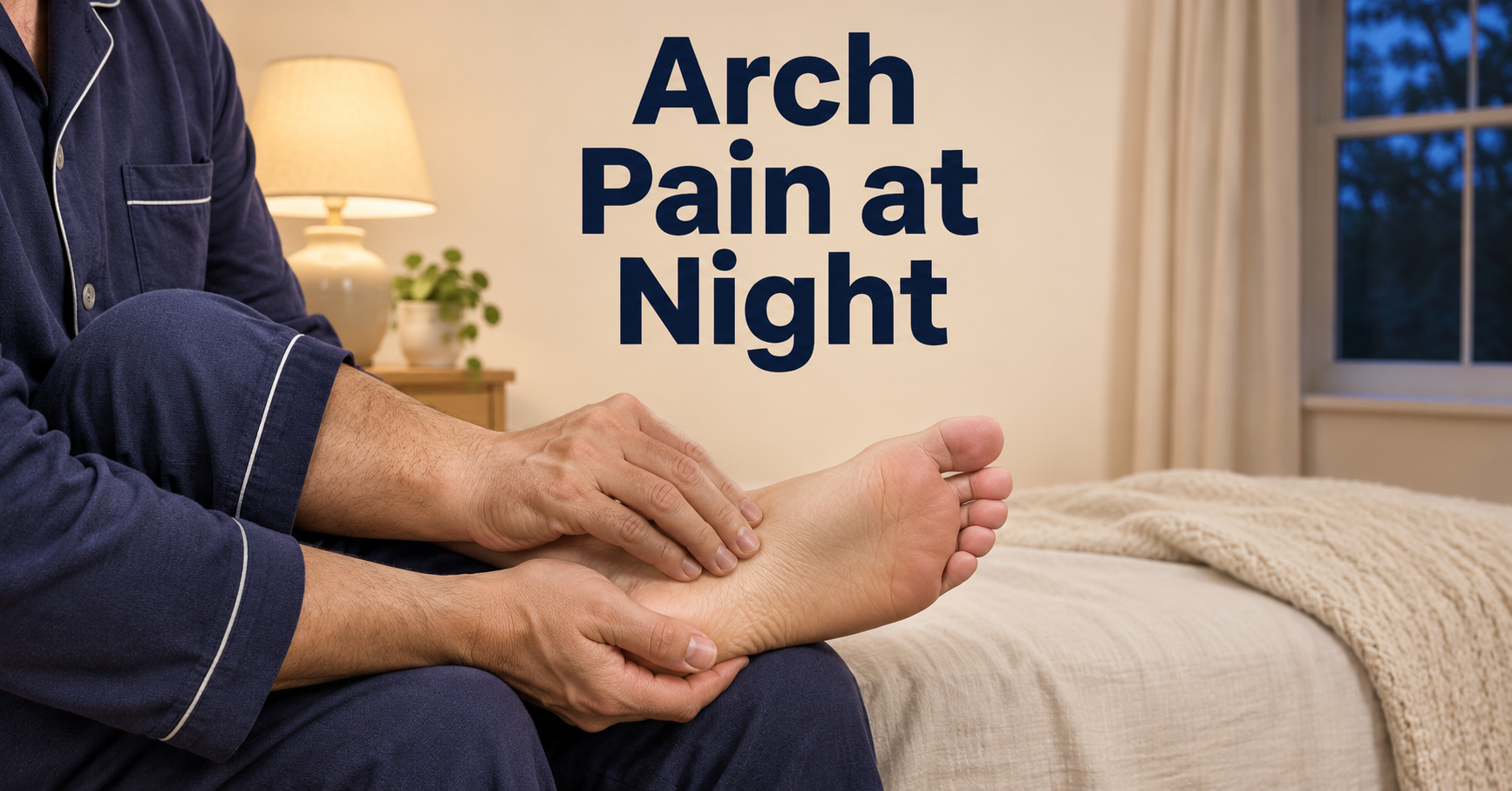

You finally get into bed after a long day, the house is quiet, and then your foot starts to ache. The arch throbs, burns, or cramps just when you want to sleep. For many people, arch pain at night turns bedtime into the most uncomfortable part of the day, and it can mean broken sleep, tired mornings, and a lot of worry about what is going on.
The good news is that night-time arch pain has many identifiable causes, and a large number of them respond well to simple changes. In this guide you will learn why your arch hurts more at night, how to read your pain pattern, how to build an effective bedtime routine, which stretches and supports may help, and which warning signs mean it is time to see a doctor.
Quick Answer
Arch pain at night is commonly caused by irritation of the plantar fascia after a day of load, tight calves, night cramps, nerve irritation such as tarsal tunnel syndrome or neuropathy, tendon problems, or arthritis. Less often it is linked to gout, circulation problems, or stress injuries. Gentle stretching, a calm bedtime routine, supportive daytime footwear, and a sleep setup that keeps the foot relaxed often help. See a doctor if the pain wakes you repeatedly, is constant or worsening, comes with numbness, swelling, redness, a cold or pale foot, or if you have diabetes.
Table of Contents
- What Is Arch Pain at Night?
- Symptoms to Look For
- Why Does Your Arch Hurt at Night? Main Causes
- Medical Conditions Linked to Night Foot Pain
- What Does Your Night Pain Pattern Suggest?
- Who Is Most at Risk?
- When to See a Doctor
- Your Bedtime Routine for Relief
- Stretches and Exercises
- Sleep Position and Bedroom Setup
- Shoes, Supports and Gear That May Help
- Daytime Habits That Improve Your Nights
- Prevention Checklist
- Frequently Asked Questions
What Is Arch Pain at Night?
The arch is the curved part on the inside of your foot between the heel and the ball. It is supported by the plantar fascia, a thick band of tissue under the foot, along with tendons, ligaments, and small muscles. During the day this structure absorbs shock and helps you push off with every step.
Arch pain at night describes aching, burning, throbbing, or cramping in the arch that appears or becomes worse in the evening or while you are lying in bed. For some people it begins as they try to fall asleep, for others it wakes them in the early hours, and for some it flares when they first move after lying still.
It feels worse at night for several reasons. There are fewer distractions, so you notice pain more. Tissues that were stressed all day can become inflamed, stiff, and sensitive. And certain positions in bed, such as pointing your toes, can keep the plantar fascia and calf muscles in a shortened position.

Symptoms to Look For
Night-time arch pain can feel different from person to person. Common descriptions include:
- A deep, dull ache in the arch that settles in as you lie down
- Throbbing or pulsing pain that makes it hard to fall asleep
- Sharp pain when you first move your foot or take a step to the bathroom
- Sudden cramping or spasms in the arch that wake you up
- Burning, tingling, or “pins and needles” sensations
- Stiffness or tightness along the arch or the inner ankle
- Mild swelling or warmth after a long day on your feet
- A feeling of restlessness in the legs and feet
Notice the details: whether the pain is sharp, burning, or cramping, what position you are in, and what relieves it. These clues help narrow down the cause.
Why Does Your Arch Hurt at Night? Main Causes
Here are the most common reasons for arch pain that is bothersome at night.

1. Day-Long Overload and Inflammation
Standing, walking, or exercising for long hours can irritate the arch tissues. The pain may not be obvious while you are busy, but as you rest in the evening, inflammation and stiffness build and the arch begins to ache.
2. Plantar Fasciitis
This is the leading cause of arch and heel pain. It is classically worst with the first steps in the morning or after sitting, but many people also notice pain in the evening and when they get up during the night, because the fascia tightens during rest and is suddenly stretched when weight is placed on it.
3. Tight Calf Muscles and Achilles Tendon
The calves and the plantar fascia are mechanically linked. Tight calves pull on the fascia, and lying with the toes pointed for hours can keep these tissues shortened, so pain may be worse when you move after a period in bed.
4. Nerve Irritation or Entrapment
Tarsal tunnel syndrome, where a nerve on the inside of the ankle is compressed, can cause burning, tingling, or electric sensations in the arch and sole. Symptoms often worsen at night or after long periods of standing.
5. Nocturnal Foot Cramps
Sudden, intense cramps in the arch can wake you from sleep. Possible contributors include muscle fatigue, dehydration, low levels of certain minerals, pregnancy, tight calves, certain medications, and some medical conditions. If cramps are frequent, a doctor can look for a cause.
6. Posterior Tibial Tendon Problems
This tendon supports the arch from the inside of the ankle. Overuse or dysfunction can cause an aching along the inner ankle and arch that may be noticeable at the end of the day and at night, sometimes with swelling and a flattening arch.
7. Arthritis and Joint Problems
Osteoarthritis or inflammatory arthritis in the midfoot can cause stiffness and aching that is worse after rest. Inflammatory conditions in particular can cause pain and stiffness that is noticeable at night or in the early morning.
8. Flat Feet or High Arches
A low or collapsing arch strains the fascia and tendons all day, while a high, rigid arch absorbs less shock. Either type can leave the arch sore by the time you go to bed.
9. Unsupportive Footwear and Hard Surfaces
Thin, flat, or worn-out shoes, and long hours on hard floors, can lead to evening arch soreness. Going barefoot or wearing flimsy slippers at home may add to the strain.
10. Weight Gain, Pregnancy, and Swelling
Extra weight and fluid retention increase the load on the arch and can cause evening soreness. Pregnancy also loosens ligaments and can flatten the arch, and swollen feet at night are common.
11. Sleep Position and Bedding
Sleeping with your toes pointed, with heavy covers pressing the feet down, or with your foot twisted can keep the arch tense or irritate sensitive tissue. Small adjustments to position and bedding sometimes make a noticeable difference.
Medical Conditions Linked to Night Foot Pain
If the usual mechanical causes do not explain your night pain, a healthcare professional may want to rule out other conditions:
- Peripheral neuropathy: nerve damage, often linked to diabetes, can cause burning, tingling, or aching in the feet that is typically worse at night.
- Peripheral artery disease or poor circulation: reduced blood flow can cause rest pain at night, sometimes eased by hanging the foot over the edge of the bed, and may come with a cold, pale, or bluish foot.
- Gout: gout attacks often begin at night with sudden, severe pain, swelling, warmth, and redness in a joint of the foot.
- Restless legs syndrome: an urge to move the legs, with uncomfortable sensations that are worse in the evening and at rest.
- Stress fracture or bone problems: pain from a bone injury can persist at rest and at night.
- Inflammatory arthritis and autoimmune conditions: can cause stiffness and pain that is worse at night or after rest.
- Infection or other serious conditions: rare, but persistent, unexplained night pain, especially with fever, swelling, or feeling unwell, needs prompt evaluation.
These are far less common than overuse problems, but night pain that is constant, severe, or unrelated to activity is exactly the kind of symptom that should be checked.
What Does Your Night Pain Pattern Suggest?
This guide gives a general idea of what different patterns can mean. It is not a diagnosis, but it can help you describe your symptoms to a doctor.

| Pattern | Possible cause | Suggested action |
|---|---|---|
| Sharp pain when you first step out of bed | Plantar fasciitis | Stretch before standing, supportive footwear |
| Sudden cramp that wakes you | Night foot cramp | Gentle stretch, hydration, review footwear and medication |
| Burning, tingling, or numbness | Nerve irritation or neuropathy | See a doctor if persistent |
| Aching along the inner arch and ankle with swelling | Posterior tibial tendon problem | Rest, support, and professional assessment |
| Hot, red, swollen, very painful | Gout or infection | Seek prompt medical care |
| Pain eased by dangling the foot, cold or pale foot | Possible circulation problem | Get medical advice |
| Constant pain even at rest | Needs assessment | See a doctor or podiatrist |
Who Is Most at Risk?
You are more likely to have arch pain at night if you:
- Stand or walk for long hours on hard surfaces
- Have flat feet or very high arches
- Are overweight, pregnant, or recently postpartum
- Are between 40 and 60 years old, when plantar fasciitis is most common
- Have tight calf muscles or limited ankle movement
- Have diabetes, arthritis, gout, nerve problems, or circulation disease
- Take medications that can contribute to muscle cramps, as advised by a doctor
- Wear unsupportive or worn-out shoes, or walk barefoot on hard floors
- Have recently increased your activity level
When to See a Doctor
Get medical advice if night arch pain:
- Wakes you most nights or repeatedly disrupts your sleep
- Is constant, severe, or getting worse
- Does not ease with rest, position changes, or simple self-care
- Comes with numbness, burning, tingling, or weakness
- Comes with swelling, redness, warmth, fever, or feeling unwell
- Is accompanied by a cold, pale, blue, or discolored foot
- Has no clear link to activity and seems to appear out of nowhere
- Occurs if you have diabetes, poor circulation, or neuropathy
- Has not improved after two to three weeks of sensible self-care

A doctor or podiatrist can examine your foot, check your circulation and nerve function, order imaging or blood tests if needed, and recommend treatment based on the cause. If you have sudden severe pain, a hot red swollen foot with fever, or a cold pale foot, seek urgent care.
Your Bedtime Routine for Relief
A short, consistent routine in the hour before bed can calm irritated tissue and help you settle. Try this sequence:
- Take weight off your feet. Sit or recline for a few minutes with your feet elevated if they feel swollen.
- Stretch gently. Do a calf stretch and a plantar fascia stretch (see below), holding each for 30 seconds, three times.
- Roll your arch. Use a massage ball or a bottle for two to three minutes with moderate pressure.
- Choose cold or warmth sensibly. A cold pack wrapped in a thin towel for 10 to 15 minutes can ease a sore, irritated arch. Gentle warmth, such as a warm foot soak, may feel better for stiffness and cramps. Avoid heat on swollen, hot, or numb feet, and be especially careful if you have diabetes or reduced sensation, since burns can go unnoticed.
- Relax the foot position. Loosen tight, heavy covers and let the foot rest in a neutral position.
- Consider over-the-counter pain relief only if it is safe for you, following the label. Ask a pharmacist or doctor if you are unsure or take other medication.

Stretches and Exercises
Do these in the evening and during the day. Mild stretching discomfort is normal, but stop if you feel sharp or increasing pain.
1. Plantar Fascia Stretch
Sit and cross the foot over the opposite knee. Gently pull your toes back toward your shin until you feel a stretch along the arch. Hold 30 seconds, three times.
2. Seated Towel Stretch
Sit with your leg straight, loop a towel around the ball of the foot, and gently pull it toward you. Hold 30 seconds, three times.
3. Calf Wall Stretch
Face a wall with the sore leg straight behind you and the heel down. Lean forward and hold 30 seconds, three times, then repeat with a slightly bent knee.
4. Massage Ball Roll
Roll a golf ball or massage ball from heel to forefoot for two to three minutes.
5. Towel Scrunches
Use your toes to scrunch a small towel toward you. Two sets of 15.
6. Short-Foot Exercise
Draw the ball of the foot toward the heel to lift the arch without curling the toes. Hold five seconds, repeat ten times.
7. Calf Raises
Rise slowly onto your toes and lower over three to four seconds. Three sets of 12 once walking is mostly comfortable.
8. Ankle Circles and Toe Spreads
Rotate the ankle slowly in both directions and spread your toes wide to keep the foot mobile and relaxed before bed.
If you get a sudden cramp in the arch at night, gently pull your toes toward your shin, or stand and press your foot flat on the floor, then walk slowly for a minute. Gentle massage of the muscle can also help it release.
Sleep Position and Bedroom Setup
- Avoid pointed toes. If you sleep on your stomach, let your feet hang over the end of the mattress, or place a small pillow under your ankles so the toes are not pushed down.
- Loosen heavy bedding. Tuck the covers loosely at the foot of the bed, or use a bed cradle or lighter blanket to avoid pressure on the feet.
- Raise your feet if they swell. A pillow under the calves, not under the knees only, can help reduce evening swelling.
- Keep a pair of supportive slippers or sandals by the bed. Put them on before your first steps in the morning or in the night, rather than stepping barefoot onto a hard floor.
- Keep the room comfortable. A cold room can make cramps and stiffness worse, while overheating can disturb sleep.
- Try a side or back position if sleeping on your stomach keeps your feet pointed.
Shoes, Supports and Gear That May Help
The right footwear during the day and a few well-chosen products at night can reduce strain on the arch. When choosing shoes, look for a roomy toe box, a firm heel counter, moderate cushioning, a stable sole that flexes at the ball of the foot, and a comfortable arch contour. Here are categories of products many people consider.
Plantar Fasciitis Night Splint
Best for: pain that is worst with the first steps after lying still.
What to look for: adjustable straps, breathable padding, a comfortable angle, and a design you can sleep in. A doctor or podiatrist can advise whether a splint suits you.
Supportive Slippers or Recovery Slides
Best for: protecting your arch at home, including bathroom trips at night.
What to look for: a contoured footbed, cushioned heel, firm sole, and an easy slip-on design.
Arch-Support Insoles
Best for: flat or low arches and people on their feet all day.
What to look for: a contoured but not rock-hard shape, a deep heel cup, and the right arch height. Introduce gradually.
Supportive Walking or Work Shoes
Best for: reducing daytime strain that shows up at night.
What to look for: cushioning, stability, a roomy toe box, a firm heel, and a removable insole.
Massage Ball or Foot Roller
Best for: evening self-massage to loosen a tight arch.
What to look for: a firm but not rock-hard surface, a comfortable size, and optional freezer-friendly design.
Reusable Cold Pack or Warm Foot Soak Basin
Best for: evening soothing therapy, depending on whether your arch feels irritated or stiff.
What to look for: a flexible gel pack that molds to the foot, or a basin large enough for both feet. Use caution with warmth if you have reduced sensation.
Compression Socks or Arch Sleeves
Best for: mild swelling and a supported feeling at the end of the day.
What to look for: graduated compression, seamless design, and a snug but not tight fit. Check with a doctor if you have circulation problems.
Bed Cradle or Foot Pillow
Best for: keeping heavy covers off the feet and the toes in a relaxed position.
What to look for: a lightweight, sturdy frame or a soft supportive pillow that suits your sleeping position.
Gear supports your routine but does not replace a proper diagnosis when pain is persistent, severe, or accompanied by warning signs.
Daytime Habits That Improve Your Nights
- Wear supportive shoes and avoid going barefoot on hard floors
- Take short breaks to sit during long shifts, and use cushioned mats where you stand
- Stretch your calves and arches in the morning and again in the afternoon
- Increase walking and exercise gradually
- Stay hydrated and eat a balanced diet
- Maintain a healthy body weight
- Limit very long stretches of sitting without moving your feet
- Elevate your feet for a few minutes in the evening if they swell
- Keep blood sugar, gout, and other medical conditions managed with your doctor
Prevention Checklist
- Wear supportive, well-fitting shoes and replace them before they wear out
- Stretch calves and the plantar fascia daily
- Strengthen the foot, calf, and hip muscles two to three times a week
- Use a consistent bedtime routine for your feet
- Keep your toes relaxed in bed and avoid heavy pressure from bedding
- Stay hydrated and manage underlying medical conditions
- Pay attention to early arch soreness and act before it becomes chronic
- Have persistent, severe, or unexplained night pain checked by a professional
Frequently Asked Questions
Why does my arch hurt more at night?
At night you have fewer distractions, tissues that were stressed all day may be inflamed and stiff, and certain sleeping positions can keep the arch and calf in a shortened position. Conditions such as nerve irritation, cramps, and gout can also be more noticeable at night.
Is arch pain at night a sign of something serious?
Usually it is related to overuse, plantar fasciitis, tight calves, or cramps. However, constant pain, pain that wakes you repeatedly, numbness, swelling, redness, a cold or pale foot, or pain with diabetes should be checked by a professional.
Why does my foot cramp in the arch at night?
Common contributors include muscle fatigue, dehydration, tight calves, pregnancy, certain medications, and some medical conditions. Frequent cramps are worth discussing with a doctor.
Should I use ice or heat for arch pain at night?
Cold can help a sore, irritated arch after a long day. Gentle warmth may ease stiffness or cramping. Avoid heat on swollen, hot, or numb feet, and take extra care if you have diabetes.
Can a night splint help with arch pain?
A night splint holds the foot gently stretched during sleep and is often used for plantar fasciitis pain that is worst with the first steps. It does not suit everyone, so ask a doctor or podiatrist.
Can sleeping position cause arch pain?
Sleeping with the toes pointed or with heavy covers pressing the feet can keep the arch tense and aggravate sensitive tissue. Adjusting position and bedding sometimes helps.
Does diabetes cause arch pain at night?
Diabetes can lead to nerve damage and circulation problems that cause burning, tingling, or aching in the feet, often worse at night. Anyone with diabetes and new foot pain should have it assessed promptly.
How long does night arch pain last?
It depends on the cause. A cramp may last minutes, while plantar fasciitis or tendon problems can take weeks to months. If your pain is not improving after two to three weeks, see a professional.
Final Thoughts
Arch pain at night can steal your sleep and your energy, but it is rarely without an explanation. By looking at the pattern of your pain, supporting your feet during the day, building a calming bedtime routine, and adjusting how you sleep, you can often make a big difference. Do not ignore warning signs, though. Persistent, severe, or unexplained night pain deserves a professional opinion.
Tonight, try a simple routine: stretch your calves and arches, roll your foot for a couple of minutes, loosen the covers at the end of the bed, and keep supportive slippers beside it. Small steps can bring real relief and better rest.
Medical disclaimer: This article is for general information only and is not a substitute for professional medical advice, diagnosis, or treatment. Night-time foot pain can have a range of causes, some of them serious. Always consult a qualified healthcare professional, and seek urgent care if you have severe symptoms.
Affiliate disclosure: Some product categories mentioned in this guide may include affiliate links in the future. If you buy through them, this site may earn a small commission at no extra cost to you. Our recommendations are based on what is most useful for readers.