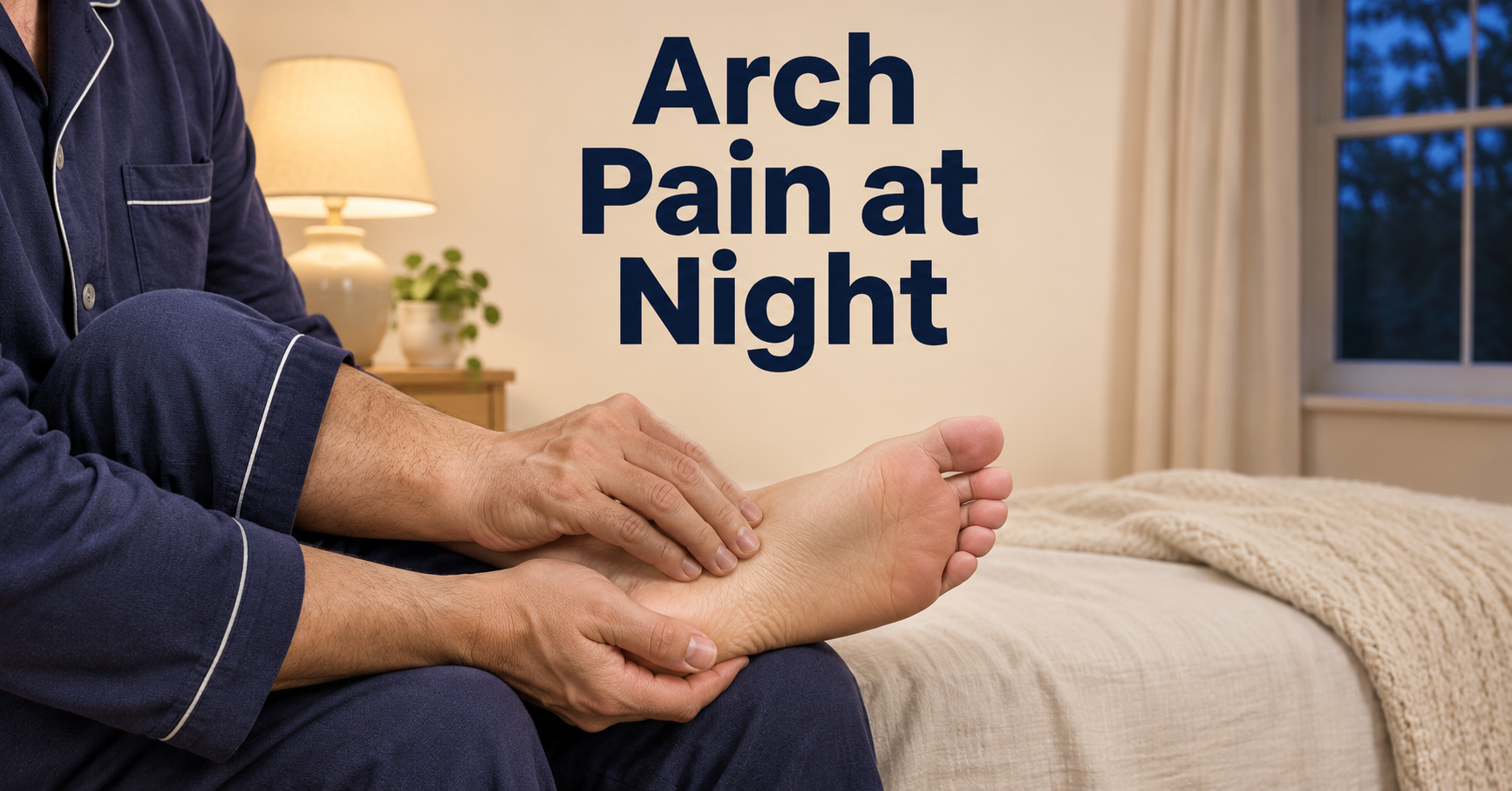











One moment you are walking, standing, or exercising, and the next you feel a sharp, stabbing, or cramping pain in the arch of your foot. It can be startling, especially when it appears out of nowhere and makes every step uncomfortable. If you are dealing with sudden arch pain, you are probably wondering what caused it, whether it is serious, and what you should do right now.
This guide explains the most likely causes, how to read your pain pattern, what to do in the first 48 hours, the warning signs that need urgent medical attention, and how to recover and prevent it from happening again. It is written to help you make sensible decisions, but it cannot replace an examination by a healthcare professional.
Quick Answer
Sudden arch pain is most often caused by a strain or irritation of the plantar fascia, but it can also come from a muscle cramp, tendon problem, stress fracture, midfoot sprain, nerve irritation, or less commonly gout or infection. For mild pain, rest, ice, elevate, and wear supportive shoes. See a doctor promptly if you heard or felt a pop, cannot bear weight, see swelling, bruising, or deformity, have a hot red foot, numbness, or diabetes, or if the pain does not improve within a week or two.
Table of Contents
- What Is Sudden Arch Pain?
- Symptoms and What They Can Tell You
- Common Causes of Sudden Arch Pain
- What Does Your Pain Pattern Suggest?
- When Sudden Arch Pain Is an Emergency
- First 48 Hours: What to Do Right Now
- What NOT to Do
- How Doctors Diagnose Sudden Arch Pain
- Treatment and Recovery
- Stretches and Exercises (Once Cleared)
- Shoes, Insoles and Supportive Gear
- How to Prevent It From Coming Back
- Frequently Asked Questions
What Is Sudden Arch Pain?
The arch is the curved area on the inside of your foot between the heel and the ball. It acts as a natural shock absorber and spring. A thick band of tissue called the plantar fascia runs along the bottom of the foot, supported by tendons, ligaments, small muscles, and the foot bones themselves.
Sudden arch pain means pain that appears quickly, often within minutes to a few days, rather than creeping up over months. It may follow a specific moment, such as a misstep, a jump, a sprint, or a long day on your feet, or it may seem to come out of nowhere. Because several different structures can be responsible, identifying the pattern of pain is the key to finding the cause.

Symptoms and What They Can Tell You
Sudden arch pain can show up as:
- Sharp, stabbing pain under the arch, especially on the first steps after resting
- A sudden pulling, tearing, or popping sensation
- A deep, aching pain that worsens with walking or standing
- Cramping or spasms in the arch
- Burning, tingling, or electric sensations
- Swelling, bruising, warmth, or redness
- Pain when pressing on a specific spot on the foot
- Difficulty putting weight through the foot or pushing off when you walk
Pay attention to where the pain is, what you were doing when it started, what makes it better or worse, and whether you have swelling or numbness. These details help your doctor distinguish between a simple strain and something that needs treatment.
Common Causes of Sudden Arch Pain
Here are the most common reasons for pain that appears suddenly in the arch.

1. Plantar Fascia Strain or Tear
If you feel a sudden sharp pain, a pull, or a pop in the arch during running, jumping, or pushing off, the plantar fascia may be strained or partially torn. A complete rupture is uncommon but can cause bruising, swelling, and a sensation of the arch flattening. Any pop followed by significant pain deserves a medical assessment.
2. Plantar Fasciitis Flare-Up
Plantar fasciitis often builds slowly, but many people notice it suddenly one morning. The classic sign is sharp pain with the first steps after sleeping or sitting, which may ease as you move around and return after long periods on your feet.
3. Stress Reaction or Stress Fracture
Repeated loading can cause small cracks in the bones of the foot, and the pain can seem to start suddenly. It is usually focused on one tender spot and worsens with activity. It is more likely after a recent increase in running, walking, or training, or when bone density is low.
4. Posterior Tibial Tendon Irritation
This tendon supports the arch from the inside of the ankle. Overload can cause sudden pain and swelling on the inner ankle and arch, sometimes with a feeling that the arch is giving way. It needs attention because untreated problems can progress.
5. Midfoot Sprain
A twist, awkward landing, or misstep can strain the ligaments in the middle of the foot. Swelling, bruising on the top or bottom of the foot, and pain when weight is placed on the foot are signs of a midfoot injury, which can be easily missed and sometimes needs imaging.
6. Arch Cramp or Muscle Spasm
The small muscles inside the arch can suddenly cramp, causing intense pain that may last seconds to minutes. Triggers include fatigue, dehydration, low electrolytes, tight calves, new shoes, cold conditions, and sudden activity. Gentle stretching and hydration often help.
7. Nerve Irritation or Entrapment
Compression of a nerve on the inside of the ankle (tarsal tunnel syndrome) or other nerves near the heel can cause burning, tingling, or electric-shock pain in the arch. Symptoms may worsen at night or after prolonged standing.
8. Gout, Infection, or Inflammatory Conditions
A hot, red, swollen, very tender foot can be caused by a gout attack, infection, or inflammatory arthritis. These can begin suddenly, sometimes overnight, and are not like typical overuse pain. They need prompt medical evaluation, particularly if you have a fever or diabetes.
9. Sudden Increases in Activity or New Footwear
Long walks on holiday, a new exercise class, starting a running plan, or switching to flat, hard, or worn-out shoes can overload the arch quickly. The pain may seem sudden, but the cause is often a recent change in load.
10. Plantar Fibroma and Other Foot Conditions
A firm lump in the arch (plantar fibroma), bone spurs, bursitis, or an inflamed joint can cause pain that is noticed suddenly. A lump or a painful spot you can feel with your finger should be assessed.
What Does Your Pain Pattern Suggest?
This guide gives a general idea of what different patterns can mean. It is not a diagnosis, but it can help you describe your symptoms to a doctor.

| Pattern | Possible cause | Suggested action |
|---|---|---|
| Sharp pain with first steps, eases with movement | Plantar fasciitis | Supportive shoes, gentle care, see a doctor if no improvement |
| Pop or tearing with bruising or swelling | Plantar fascia tear or midfoot injury | Protect the foot and get medical assessment |
| One tender spot on the bone, worse with activity | Stress reaction or fracture | Stop impact activity and see a doctor |
| Inner ankle and arch pain with swelling | Posterior tibial tendon problem | Rest, support, and professional assessment |
| Intense, short-lived spasm | Arch cramp | Gentle stretch, hydration, review footwear |
| Burning, tingling, or numbness | Nerve irritation | See a doctor if persistent |
| Hot, red, very swollen foot | Gout or infection | Seek prompt medical care |
When Sudden Arch Pain Is an Emergency
Seek urgent medical care if you have:
- Severe pain, or you cannot put weight on your foot
- A pop or snap followed by swelling or bruising
- A visible deformity or change in foot shape
- A hot, red, swollen foot, especially with fever or feeling unwell
- Numbness, a cold or pale foot, or loss of feeling
- Foot pain together with calf swelling, warmth, or tenderness
- Diabetes, poor circulation, or a weakened immune system with any new foot pain
- Any signs of an open wound or infection

If you experience chest pain, shortness of breath, or severe symptoms alongside foot or leg swelling, call emergency services immediately.
First 48 Hours: What to Do Right Now
If your pain is mild to moderate and you have no urgent warning signs, these steps are a sensible starting point:
- Stop the activity that triggered the pain and take weight off the foot.
- Wear supportive shoes with a cushioned footbed, even indoors. Avoid walking barefoot or in flat sandals.
- Apply cold with a wrapped cold pack for 10 to 15 minutes, several times a day.
- Elevate your foot when sitting or lying down.
- Use light compression such as a soft arch sleeve or wrap. It should feel supportive, not tight.
- Consider over-the-counter pain relief only if it is safe for you, following the label. Ask a pharmacist or doctor if you are unsure or take other medication.
- Monitor your symptoms. If the pain is getting worse, not improving, or new symptoms appear, get medical advice.

What NOT to Do
- Do not push through sharp pain. Continuing to run or jump on a possible tear or stress fracture can make the injury worse.
- Do not stretch aggressively or massage deeply straight away if you suspect a tear, stress fracture, or significant swelling.
- Do not apply heat to a swollen, hot, or newly injured foot.
- Do not walk barefoot on hard floors.
- Do not ignore numbness, severe swelling, or a hot red foot.
- Do not rely on guesswork if the pain is severe or not improving. A proper diagnosis saves time.
How Doctors Diagnose Sudden Arch Pain
A healthcare professional will usually start by asking when and how the pain began, what activities you do, what shoes you wear, and about any medical conditions. They will examine your foot, press on specific areas, check your range of motion and strength, and watch how you stand and walk.
Depending on what they find, they may recommend:
- X-rays to check for fractures, arthritis, or structural problems
- Ultrasound to look at the plantar fascia and soft tissues
- MRI to evaluate stress fractures, tendon problems, tears, or unclear cases
- Blood tests if gout or an inflammatory condition is suspected
- Nerve tests if a nerve problem is likely
Treatment and Recovery
Treatment depends on the cause. Common options include:
- Activity modification: relative rest and switching to low-impact activity such as swimming or cycling when cleared
- Supportive footwear and insoles: to reduce strain on the arch
- Immobilization: a walking boot or crutches for a stress fracture, tear, or severe sprain
- Physical therapy: guided stretching, strengthening, and gait retraining
- Taping or bracing: to support the arch during recovery
- Medication or injections: as recommended by a doctor for specific conditions
- Treatment of underlying conditions: such as gout, diabetes, or nerve compression
- Surgery: rarely, for severe or persistent problems that do not respond to other treatment
Recovery time varies. A minor strain or cramp may settle within days, plantar fasciitis can take weeks to months, and a stress fracture or tear may take six to twelve weeks or longer. Rushing back to full activity is one of the most common reasons for a setback.
Stretches and Exercises (Once Cleared)
Once the sharp pain has settled and a serious injury has been ruled out, gentle stretching and strengthening help prevent the pain from returning. Introduce them gradually and stop if the pain increases.
1. Plantar Fascia Stretch
Sit and cross the foot over the opposite knee. Gently pull the toes back toward the shin. Hold 30 seconds, three times.
2. Calf Wall Stretch
Face a wall with the sore leg straight behind you and the heel down. Lean forward and hold 30 seconds, three times.
3. Towel Scrunches
Use your toes to scrunch a small towel toward you. Two sets of 15.
4. Short-Foot Exercise
Draw the ball of the foot toward the heel to lift the arch without curling the toes. Hold five seconds, repeat ten times.
5. Calf Raises
Rise slowly onto your toes and lower over three to four seconds. Three sets of 12 once walking is comfortable.
6. Single-Leg Balance
Stand on one foot for 30 to 60 seconds, keeping the arch lifted. Progress by standing on a folded towel.
Shoes, Insoles and Supportive Gear
The right footwear and a few useful products can protect your arch while it recovers and reduce the chance of a repeat episode. When choosing shoes, look for:
- A roomy toe box so the toes can spread
- A firm heel counter and a stable, cushioned sole
- A shoe that flexes at the ball of the foot, not at the arch
- A removable insole so you can add support if needed
- An arch contour that feels comfortable and does not press or poke
Here are categories of products that many people consider during recovery.
Supportive Walking Shoes
Best for: everyday wear while your arch recovers.
What to look for: cushioning, a stable sole, a firm heel, a roomy toe box, and a removable insole.
Arch-Support Insoles
Best for: flat or low arches and arches that tire quickly.
What to look for: a contoured but not rock-hard shape, a deep heel cup, and the right arch height. Introduce gradually.
Cushioned Heel Cups or Gel Insoles
Best for: shock absorption and high arches.
What to look for: resilient gel or foam that holds its shape and fits comfortably in the shoe.
Walking Boot (Doctor-Recommended)
Best for: stress fractures, tears, or severe sprains, only when advised by a professional.
What to look for: a proper fit, adjustable straps, and a rocker-style sole. Ask a clinician about fitting and use.
Compression Arch Sleeves or Wraps
Best for: mild swelling and support in the first days.
What to look for: graduated compression, a seamless design, and a snug but not tight fit.
Reusable Cold Pack or Ice Roller
Best for: cold therapy during the first 48 hours.
What to look for: a flexible gel pack or freezer-friendly roller that molds to the foot.
Recovery Slides or Orthopedic Sandals
Best for: home wear instead of barefoot walking.
What to look for: a contoured footbed, cushioned heel, and a sole that does not fold in half.
Massage Ball or Foot Roller
Best for: gentle self-massage once pain has settled and serious injury is ruled out.
What to look for: a firm but not rock-hard surface and a comfortable size.
Products support recovery, but they do not replace a proper diagnosis when the pain is severe or persistent.
How to Prevent It From Coming Back
- Increase walking, running, and standing time gradually
- Wear supportive, well-fitting shoes and replace them before they wear out
- Warm up before exercise and stretch calves and arches regularly
- Strengthen your feet, calves, and hips
- Stay hydrated and eat a balanced diet to reduce cramps and support tissue health
- Vary surfaces and avoid long periods barefoot on hard floors
- Maintain a healthy weight
- Manage conditions such as diabetes or gout with your doctor
- Take early arch soreness seriously and act before it becomes sudden severe pain
Frequently Asked Questions
Why did I get sudden arch pain out of nowhere?
It often seems sudden, but there is usually a trigger such as a recent increase in activity, new shoes, a misstep, tight calves, or an existing condition such as plantar fasciitis. Muscle cramps and nerve irritation can also appear without warning.
Is sudden arch pain serious?
Most of the time it is a strain or irritation that settles with care. However, a pop, severe pain, inability to bear weight, swelling, bruising, a hot red foot, or numbness need prompt medical assessment.
How long does sudden arch pain last?
A cramp may last minutes, a mild strain a few days to two weeks, plantar fasciitis weeks to months, and stress fractures or tears several weeks or longer. If it is not improving within a week or two, see a professional.
Can I walk on sudden arch pain?
If you can walk with only mild discomfort and have no warning signs, short, gentle walking in supportive shoes is usually fine. If walking is very painful or causes limping, rest and get checked.
Should I use ice or heat?
Cold is generally recommended in the first 48 hours for new, sudden pain. Avoid heat on a swollen, hot, or newly injured foot. Heat may be more comfortable later for stiffness, once swelling has settled.
Can dehydration cause sudden arch pain?
Dehydration and low electrolytes can contribute to muscle cramps, including cramps in the arch. Fatigue, tight calves, and new footwear are also common triggers.
Can sudden arch pain be a sign of a stress fracture?
Yes. Pain focused on one tender spot that worsens with activity, particularly after a recent jump in training, can suggest a stress reaction or fracture. Stop impact activity and have it checked.
When should I see a doctor for sudden arch pain?
See a doctor promptly for severe pain, a pop, swelling or bruising, deformity, numbness, a hot red foot, or diabetes. For milder pain, get checked if it has not improved after one to two weeks.
Final Thoughts
Sudden arch pain can be alarming, but most causes are manageable once you know what you are dealing with. Pay attention to the pattern of your pain, protect the foot in the first couple of days, wear supportive footwear, and do not ignore warning signs. If something feels wrong, get it checked. An early and accurate diagnosis can mean a faster, safer recovery.
Once your foot is better, work on strengthening, flexibility, and good footwear habits so your arch is ready for whatever your day throws at it.
Medical disclaimer: This article is for general information only and is not a substitute for professional medical advice, diagnosis, or treatment. Sudden foot pain can have serious causes. Always consult a qualified healthcare professional, and seek urgent care if you have severe symptoms.
Affiliate disclosure: Some product categories mentioned in this guide may include affiliate links in the future. If you buy through them, this site may earn a small commission at no extra cost to you. Our recommendations are based on what is most useful for readers.