







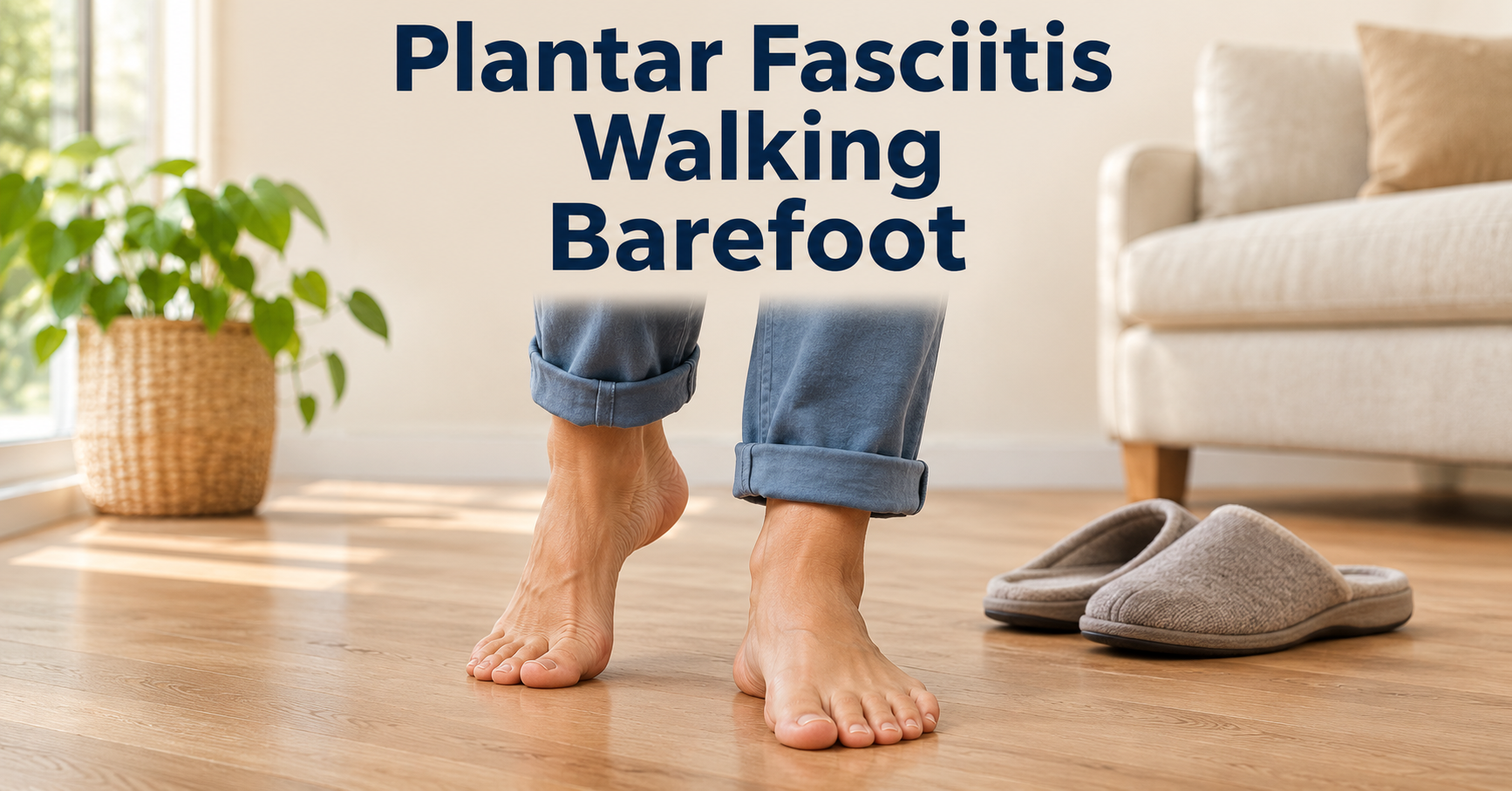
Slipping off your shoes the moment you get home feels like one of life’s small pleasures. But if you have plantar fasciitis, that barefoot walk across the kitchen tiles may be exactly why your heel feels like it is being stabbed the next morning. So is walking barefoot really bad for plantar fasciitis, or is it just another myth?
In this guide, you will learn how barefoot walking affects the plantar fascia, which surfaces are riskier than others, what to wear around the house, and how and when to return to barefoot walking after you recover.
Quick Answer
For most people with active plantar fasciitis, walking barefoot on hard floors is not a good idea. Without cushioning and arch support, the plantar fascia has to absorb every step, which can keep it irritated and make the first steps in the morning worse. Wearing supportive footwear, even indoors, usually helps. Once your heel pain has settled, you can reintroduce barefoot time gradually on softer surfaces.
What Is Plantar Fasciitis?
The plantar fascia is a thick band of tissue that runs from your heel bone to the base of your toes. It acts like a bowstring, supporting the arch and absorbing shock with every step. When it is overloaded, it becomes irritated and painful, most often near the heel. Typical signs include sharp heel pain with the first steps in the morning, pain after sitting and then standing, and soreness after long periods on your feet.
Why Walking Barefoot Can Aggravate Plantar Fasciitis
1. No Cushioning Under the Heel
Shoes with a cushioned heel absorb part of the shock when your foot hits the ground. On a bare hard floor, the full impact travels straight through your heel and into the tissue that is already sore.
2. No Arch Support
Without support, the arch tends to flatten more with each step, which increases the stretch on the plantar fascia. Over a whole day, this adds up to a lot of extra strain on an irritated band of tissue.
3. Hard, Flat Surfaces
Modern homes are full of tile, concrete, laminate, and hardwood. These surfaces do not give at all, so your foot has nothing to share the load. Our ancestors walked barefoot on soft, uneven ground. We mostly walk barefoot on the hardest, flattest ground ever made.
4. Barefoot in the Morning and After Sitting
The first steps of the day and the first steps after long sitting are already the most painful moments, since the fascia has tightened during rest. Hitting a hard floor barefoot at exactly that moment is a recipe for a sharp pain spike.
5. Repeated Small Overloads
Plantar fasciitis is largely a problem of cumulative load. Hundreds of unsupported steps around the house every day can quietly prevent the tissue from healing, even if you wear good shoes outdoors.
Which Surfaces Are Worst for Barefoot Walking?
Not all floors are equal. Softer surfaces give a little, while hard ones give none. Here is a general guide to how different surfaces feel on a sore plantar fascia.
- Tile and concrete: The hardest and most unforgiving. Common in kitchens, bathrooms, and garages.
- Hardwood and laminate: Slightly more forgiving than tile but still firm.
- Carpet and rugs: Softer underfoot and a better choice for short barefoot spells, though thin carpet over concrete offers little cushion.
- Grass: Gentle and uneven, a good surface for brief barefoot time during recovery.
- Sand: Soft, but it is also unstable. Walking on it makes the foot and calf work harder, which can irritate a sore fascia. Keep beach walks short at first.
Is Barefoot Walking Ever Good for Your Feet?
You may have heard that barefoot or minimalist walking strengthens the feet. There is some truth in this. Foot muscles can get stronger when they are used more, and some healthy people do well with minimalist footwear after a gradual transition. But there is an important difference between a healthy foot that is gradually conditioned and a foot with active plantar fasciitis.
An irritated fascia is already overloaded. Adding more unsupported load, or suddenly switching to flat, thin-soled footwear, tends to make it worse. Research on barefoot and minimalist approaches for plantar fasciitis specifically is limited, so the cautious and commonly recommended approach is to support the foot while it heals, then rebuild strength in a controlled way.
What to Wear Around the House
Many people are careful about their outdoor shoes but walk around barefoot or in thin socks at home. For plantar fasciitis, indoor footwear matters as much as anything you wear outside.
Supportive Slippers or Sandals
Look for slippers or sandals with a contoured footbed, a cushioned heel, and a sturdy sole. Many are designed specifically for people with foot pain and are easy to slip on and off.
Indoor-Only House Shoes
If you do not like wearing outdoor shoes inside, keep a clean pair of supportive shoes just for indoors. This gives you full support without bringing in dirt.
Insoles in Your Home Footwear
Supportive insoles or heel cushions can make a big difference, especially when moved into your favorite indoor shoes or sandals. Make sure they fit properly and replace them when they flatten out.
Put Them on Before You Stand Up
The most important habit is to put your supportive footwear on before your feet touch the floor in the morning, and after every long sit. A gentle stretch first, then the footwear, then stand up.
Walking Barefoot at the Beach, Pool, and Hotel
- Beach: Keep barefoot beach walks short, and wear supportive sandals or shoes for longer walks. Firm, wet sand is easier than deep, soft sand, which makes your calves and arch work hard.
- Pool and shower: Wet floors are slippery and hard. Use supportive pool slides or shower sandals with some arch contour, and keep a cushioned mat in the bathroom.
- Hotels and guest homes: Pack a lightweight pair of supportive slippers or sandals so you are not stuck on hard floors when you travel.
- Yoga or home workouts: Many exercises are done barefoot, and short barefoot sessions on a mat are usually fine. If a pose or movement pains your heel, switch to a supportive shoe or modify it.
Barefoot Exercises That Can Actually Help
Walking barefoot on hard floors is one thing. Doing gentle, controlled foot exercises while seated or standing on a mat is another. These are generally safe and may help rebuild strength once your pain allows:
- Towel scrunches: Sit with your foot on a small towel and curl your toes to pull it toward you.
- Short foot exercise: Without curling your toes, gently draw the ball of the foot toward the heel to lift the arch slightly. Hold a few seconds.
- Toe spreading: Spread your toes wide and hold, then relax.
- Slow calf raises: Rising slowly onto the balls of your feet and lowering with control, which builds calf and foot strength.
Keep the effort mild, avoid pushing through sharp pain, and stop if your heel pain flares.
How to Return to Barefoot Walking Safely
Once your plantar fasciitis has settled, you do not have to avoid barefoot walking forever. The key is to return gradually and listen to your heel.
A simple test is to watch how your heel feels the next morning. If the first steps are no worse than usual after a short barefoot session, you can slowly extend it. If they are sharper, you went too far and should step back.
A Word on Barefoot and Minimalist Shoes
Minimalist or “barefoot” shoes have flat, thin, flexible soles with little or no cushioning or arch support. They can suit some healthy feet after a very gradual transition over months. They are generally not a good choice while you have active plantar fasciitis, because they remove the support and cushioning your foot needs while it heals. If you are interested in them, wait until you are pain free, and then introduce them slowly with the help of a professional if possible.
Other Habits That Support Healing
- Stretch daily: Calf and plantar fascia stretches, especially before the first morning steps.
- Wear supportive shoes outdoors: Choose shoes with cushioned heels and good arch support and replace them when worn.
- Use supportive insoles or heel cushions: They can reduce strain for many people.
- Reduce high-impact activity: Swap running and jumping for swimming or cycling for a while.
- Manage body weight: Less weight means less load on the fascia with every step.
- Try ice or gentle warmth and massage: For comfort, using moderate pressure.
- Consider a night splint: It can reduce morning heel pain for some people.
When to See a Doctor
Please get professional advice if:
- Your heel pain is severe or has lasted for several weeks despite home care
- The pain is getting worse rather than better
- You notice swelling, bruising, redness, or warmth in your heel
- You have numbness, tingling, or burning in the foot
- You cannot put weight on your foot, or the pain began after an injury
- You have diabetes or a circulation problem
- You are not sure your pain is plantar fasciitis
A foot specialist can confirm the diagnosis, rule out other causes of heel pain, and discuss options such as physical therapy, custom orthotics, or other treatments.
Frequently Asked Questions
Is it bad to walk barefoot with plantar fasciitis?
On hard floors, usually yes. Without cushioning or arch support, the fascia takes more strain, which can slow healing and worsen the first-step pain. Supportive footwear is usually the better choice while your heel is sore.
Can I walk barefoot in the house?
It is best to wear supportive slippers or sandals at home during recovery. If you do go barefoot, limit it to short periods on soft carpet and see how your heel feels the next morning.
Is walking barefoot on grass or sand okay?
Grass is generally gentle and fine for short periods. Sand is soft but unstable, so keep it brief at first and avoid long walks in deep, soft sand while your heel is sore.
Why does my heel hurt more after going barefoot?
Barefoot walking on hard surfaces gives no cushioning and no arch support, so the plantar fascia is loaded more. The pain often shows up that evening or the next morning.
Can walking barefoot cause plantar fasciitis?
It is one of several possible contributing factors, along with tight calves, unsupportive shoes, high-impact activity, and body weight. Walking barefoot on hard surfaces for long periods can add to the strain.
When can I go back to walking barefoot?
When your pain has settled, usually for several weeks. Start with short periods on soft surfaces and build up slowly, stepping back if the pain returns.
Final Thoughts
Walking barefoot feels natural, but for a foot with plantar fasciitis, bare hard floors are one of the most common hidden triggers. Protect your heel by wearing supportive footwear all day, including at home, putting it on before you stand up, and keeping barefoot time brief and soft until you have recovered. Then reintroduce it gradually, and listen closely to how your heel responds. If your pain does not improve, speak with a doctor or podiatrist for a proper diagnosis and plan.
Disclaimer: This article is for general information only and is not a substitute for professional medical advice, diagnosis, or treatment. If your heel pain is severe, persistent, or accompanied by other symptoms, please consult a qualified healthcare professional.