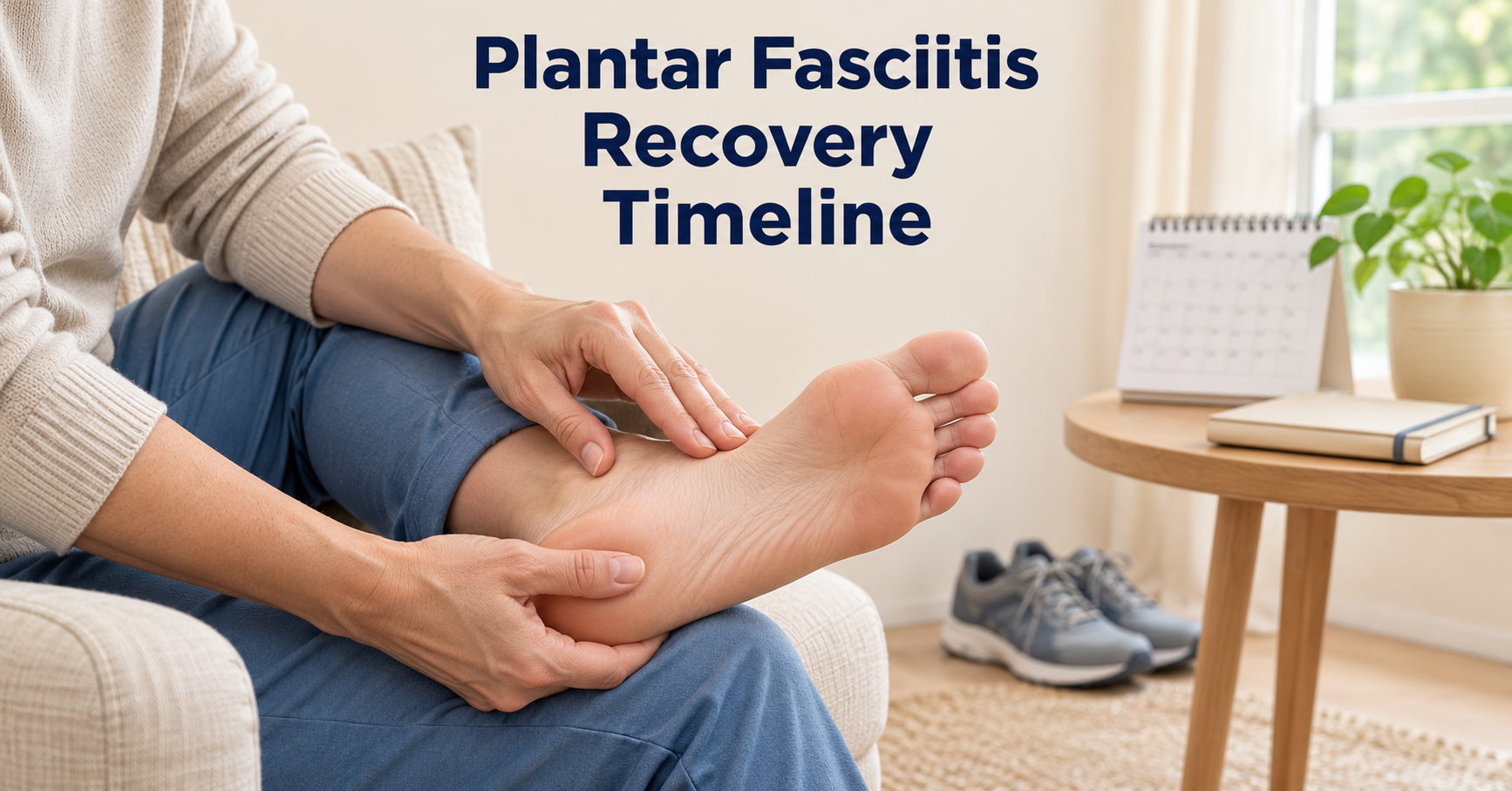








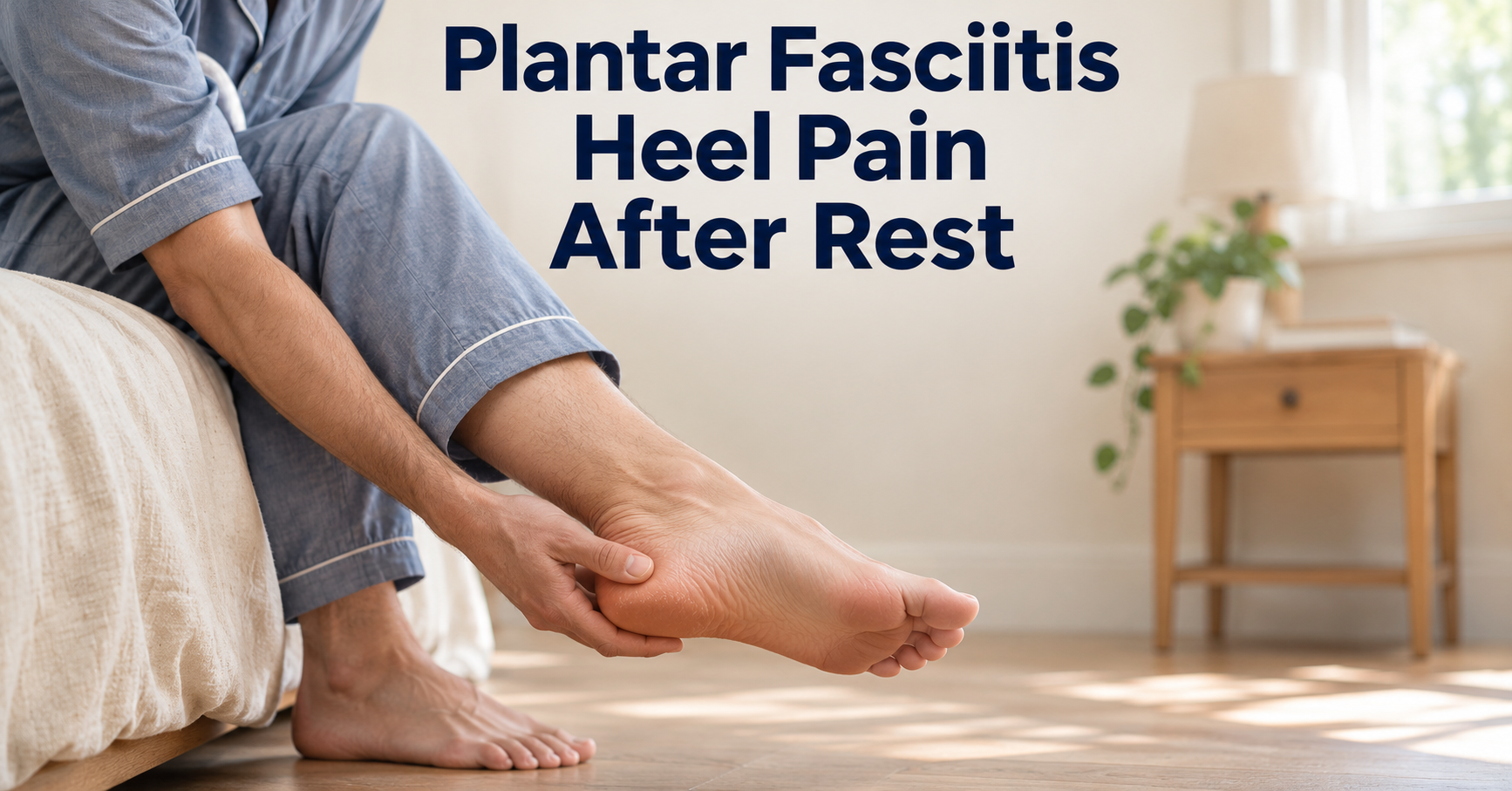
You wake up, swing your legs out of bed, and the moment your heel touches the floor, a sharp, stabbing pain shoots through the bottom of your foot. You limp to the bathroom, and after a few minutes the pain fades into a dull ache. Later in the day, you sit at your desk for an hour, stand up, and it happens all over again.
If this sounds familiar, you are dealing with one of the most recognizable signs of plantar fasciitis: heel pain after rest. In this guide, you will learn why it happens, why it fades once you start moving, what makes it worse, and the practical steps that can help you get through those painful first steps.
Quick Answer
During rest, the plantar fascia and calf muscles tighten up and the foot stays in a relaxed, pointed position. When you suddenly put your full weight on that tight, irritated tissue, it gets stretched sharply and hurts. Gentle stretching before you stand, supportive footwear (even indoors), regular movement breaks, and steady daily care can reduce this pain over time.
What Is Plantar Fasciitis?
The plantar fascia is a thick, strong band of tissue that runs from your heel bone to the base of your toes. It supports your arch and absorbs shock every time you walk, run, or stand. When this band is overloaded over time, it can become irritated and sore, usually where it attaches to the heel. That irritation is what we call plantar fasciitis.
Why Does Heel Pain Hit Hardest After Rest?
The pain after rest is so typical of plantar fasciitis that doctors often treat it as a key clue. Several things work together to cause it.
1. The Fascia and Calves Tighten While You Rest
When you sleep or sit, your foot usually rests in a slightly pointed position. In that position, the plantar fascia and the calf muscles shorten and stiffen. There is no movement to keep them loose, so they are tighter than usual by the time you stand up.
2. Sudden Load on a Cold, Tight Tissue
Your first step puts your whole body weight onto that shortened tissue in an instant. The band is pulled hard at its attachment to the heel bone, which is exactly the spot that is already irritated. The result is a sharp, stabbing pain.
3. Reduced Movement and Stiffness
Lack of movement means less circulation to the foot. The tissue feels stiff and less ready for load. This is why the pain is often worst in the first few steps and gets better as the foot warms up and loosens.
4. Healing Tissue That Is Easily Re-Irritated
A fascia that is already inflamed or has small areas of strain does not like sudden pulls. Each time it is yanked at the start of the day, it can be irritated again, which keeps the cycle going.
When Does the Pain Typically Show Up?
Heel pain after rest follows a recognizable pattern. You may notice it:
- With your first steps out of bed in the morning
- After sitting at a desk, in a car, or on a couch for a long time
- After a nap or any period of lying down
- After standing up from a seat at a restaurant, cinema, or meeting
- Later in the day, after long hours on your feet
Why Does It Get Better After a Few Minutes of Walking?
As you walk, blood flow increases, the plantar fascia and calf muscles gradually lengthen, and the tissue warms up. It tolerates load better, so the sharp pain fades. This improvement is encouraging, but it can be misleading. Feeling better after a few minutes does not mean the tissue has healed. It only means the foot has loosened up. If you ignore the problem, the underlying irritation can continue.
What Makes Heel Pain After Rest Worse?
- Walking barefoot on hard floors: No cushioning or arch support means more strain on the fascia, especially first thing in the morning.
- Unsupportive shoes: Flat, thin-soled shoes, old worn-out shoes, and backless slippers can all increase strain.
- Tight calf muscles: Restricted ankle movement pulls on the heel with every step.
- Sudden increases in activity: More walking, running, or standing than your feet are used to.
- Long hours on your feet: Standing jobs and long shifts keep the fascia loaded.
- Excess body weight: More weight means more load on the arch with each step.
- High arches or flat feet: Both can change how force passes through the foot.
- Sleeping with toes pointed: A tight bedsheet or sleeping position can keep the fascia shortened all night.
The Before-You-Stand Routine
The single most useful habit for heel pain after rest is to loosen the foot before putting weight on it. You can do this in under three minutes, sitting on the edge of the bed.
After the routine, slip on supportive footwear before you stand rather than walking barefoot. Keep a pair of supportive slippers or sandals next to your bed so they are always within reach.
More Ways to Get Relief After Rest
Wear Supportive Footwear All Day, Including Indoors
Shoes or slippers with good arch support and a cushioned heel reduce the load on the fascia. Walking barefoot on tile or hardwood is one of the most common reasons the first steps hurt so much. Supportive insoles or heel cushions can also help many people.
Try a Night Splint
A night splint keeps the foot gently flexed while you sleep, which prevents the fascia and calf from shortening overnight. Many people use one for several weeks to reduce morning heel pain. It can feel awkward at first, so start with a comfortable fit and a gradual build-up.
Take Movement Breaks During the Day
Prolonged sitting triggers the same tightening you get overnight. Every 30 to 60 minutes, stand up gently, do a few ankle circles or heel raises, and take a short walk before putting your full weight on the foot. When sitting at a desk, keep your feet flat or in a neutral position rather than tucked under your chair.
Stretch Your Calves and Arch Regularly
Daily stretching helps the tissue stay longer and more flexible. A wall calf stretch with the back knee straight, a second one with the back knee slightly bent, and the plantar fascia stretch are the most commonly recommended. Keep stretches gentle and avoid bouncing.
Use Ice or Gentle Warmth and Massage
Ice at the end of a long day can calm an irritated heel, while gentle warmth before stretching can help loosen a stiff foot. A light massage along the arch, or rolling a ball under the foot while seated, can ease tightness. Keep the pressure moderate and avoid pressing hard on the sorest heel spot.
Manage Your Activity Level
While you recover, reduce high-impact activity such as running and jumping, and increase walking or exercise gradually. Low-impact options like swimming or cycling can keep you active without overloading the heel.
Support Healthy Body Weight
Because the plantar fascia absorbs load with every step, a lower body weight reduces the strain on it. Even modest changes can make a difference over time.
Sitting and Driving Tips
- Do a few ankle pumps and circles before you stand up from a long sit.
- Take the first steps slowly and shift your weight gradually rather than jumping straight to a brisk walk.
- On long drives, stop every hour to stretch your calves and walk around for a minute or two.
- If you use a standing desk, stand on a cushioned mat and alternate positions.
Could It Be Something Else?
Pain with first steps is typical of plantar fasciitis, but other conditions can cause heel pain too. It is worth considering that the problem may be something different if you notice any of the following:
How Long Does It Take to Improve?
Plantar fasciitis is usually a slow-healing condition. Many people notice that the morning pain starts to ease within a few weeks of consistent stretching, supportive footwear, and activity changes, while full recovery often takes several months. Improvement is often gradual, with good days and bad days. Staying consistent is far more important than doing any single thing perfectly.
When to See a Doctor
Please get professional advice if:
- Your heel pain is severe or has lasted for several weeks despite home care
- The pain is getting worse rather than better
- You notice swelling, bruising, redness, or warmth in the heel
- You have numbness, tingling, or burning in the foot
- You cannot put weight on the foot, or the pain began after an injury
- You have diabetes or a circulation problem
- You are not sure your pain is plantar fasciitis
A foot specialist can confirm the diagnosis, rule out other causes of heel pain, and discuss options such as physical therapy, custom orthotics, or other treatments.
Frequently Asked Questions
Why does my heel hurt most after sitting or sleeping?
Rest allows the plantar fascia and calf muscles to tighten. When you stand, that tight tissue is stretched suddenly under your body weight, which causes sharp pain at the heel.
Why does the pain go away after I start walking?
Movement warms and loosens the tissue and improves blood flow, so it tolerates load better. The tissue is not necessarily healed, though, so the pain often returns after the next period of rest or too much activity.
Is morning heel pain always plantar fasciitis?
It is the most common cause of sharp heel pain with first steps, but not the only one. If your symptoms are unusual, severe, or not improving, get a professional assessment.
Should I walk through the pain?
Gentle walking once the foot has loosened up is generally fine, but do not force fast or long walks while the pain is sharp. Stretch first, wear supportive shoes, and build up gradually.
Do I need to wear shoes in the house?
Many people with plantar fasciitis find that supportive footwear or slippers indoors reduces pain noticeably, especially on hard floors and first thing in the morning.
Will it go away on its own?
Many cases improve over time, but it can take months and may return if the underlying causes, such as tight calves, unsupportive footwear, or overload, are not addressed.
Final Thoughts
Heel pain after rest is the signature sign of plantar fasciitis, and it makes sense once you understand it: tight tissue plus sudden load equals sharp pain. The good news is that you have real control over the first steps of your day. Loosen the foot before you stand, wear supportive footwear even at home, move regularly during the day, stretch consistently, and avoid overloading the heel. If the pain is severe or does not improve, speak with a healthcare professional for a proper diagnosis and treatment plan.
Disclaimer: This article is for general information only and is not a substitute for professional medical advice, diagnosis, or treatment. If your heel pain is severe, persistent, or accompanied by other symptoms, please consult a qualified healthcare professional.