




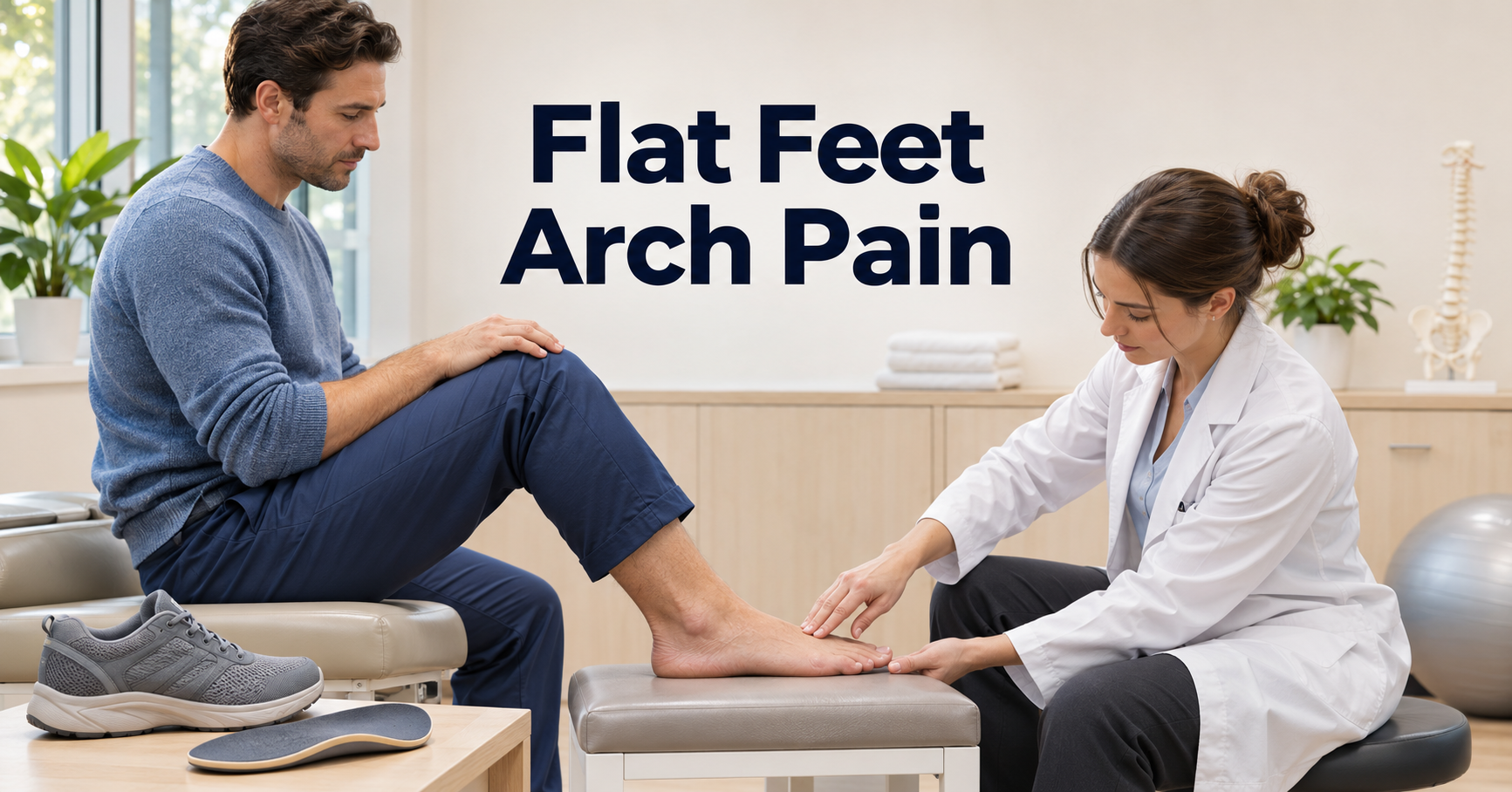

If your feet look flat when you stand, and your arches ache by the end of the day, you are far from alone. Millions of people have flat feet, and many of them live with no problems at all. But for others, flat feet arch pain becomes a daily nuisance: aching arches, sore heels, tired legs, and pain that can creep into the ankles, knees, hips, and even the lower back.
This complete guide explains what flat feet are, why they sometimes cause arch pain, how to check your own feet, and what really helps: the right footwear, arch support, stretching, strengthening, activity changes, and, when needed, professional treatment. You will also learn which warning signs mean it is time to see a doctor.
Quick Answer
Flat feet cause arch pain when the arch lowers or collapses and the plantar fascia, tendons, and muscles of the foot have to work harder to support your weight. Relief usually comes from supportive, stable shoes, arch supports or orthotics, daily calf stretching, strengthening of the foot and hip muscles, managing activity and body weight, and avoiding unsupportive footwear. Many flat feet need no treatment unless they hurt. See a doctor if the pain is severe, keeps getting worse, comes with inner ankle swelling, a collapsing arch, numbness, or a hot red foot.
Table of Contents
- What Are Flat Feet?
- Types of Flat Feet
- Why Flat Feet Cause Arch Pain
- Symptoms to Look For
- Common Causes of Flat Feet and Arch Pain
- Do You Have Flat Feet? Quick Home Checks
- Conditions Linked to Flat Feet Arch Pain
- When to See a Doctor
- The 6-Step Relief Plan
- Stretches and Exercises
- Choosing Shoes for Flat Feet
- Arch Supports, Insoles and Orthotics
- Special Situations: Running, Standing, Pregnancy and Children
- What to Avoid
- Medical Treatments
- Daily Habits and Prevention
- Frequently Asked Questions
What Are Flat Feet?
Flat feet, also called pes planus or fallen arches, describe feet where the arch on the inner side is low or absent when you stand. In a typical foot, there is a visible curve between the heel and the ball of the foot. In a flat foot, most or all of the sole touches the ground.
Flat feet are common. Babies and toddlers have flat feet naturally, and the arch usually develops during childhood. Some people never develop a prominent arch, and others lose arch height later in life. Importantly, flat feet are not automatically a problem. Many people with flat feet run, walk, and play sports without any pain.

Types of Flat Feet
Not all flat feet are the same, and the type matters for treatment.
Flexible Flat Feet
This is the most common type. The arch appears when you sit or stand on your toes but flattens when you put weight on the foot. Flexible flat feet are often painless, but can cause arch, heel, or leg aches with heavy use or long hours on your feet.
Rigid Flat Feet
The arch is absent whether you are sitting, standing, or on tiptoe, and the foot is stiff. Rigid flat feet are less common and are more likely to cause pain. In teenagers, a rigid flat foot may be linked to a structural condition, such as tarsal coalition, where bones in the foot are joined, and should be assessed.
Adult-Acquired Flatfoot
This develops in adulthood, often from posterior tibial tendon dysfunction, where the tendon that holds up the arch weakens or becomes inflamed. The arch slowly collapses, with pain and swelling along the inner ankle and arch. It is more common in people over 40, and can progress if left untreated.
Flat Feet in Children
Most children outgrow flexible flat feet, and treatment is usually only considered if there is pain, stiffness, or a rigid foot. Parents should consult a doctor if a child complains of foot pain, avoids activity, or has a stiff flat foot.
Why Flat Feet Cause Arch Pain
The arch works as a natural shock absorber and spring. A normal arch distributes load evenly across the foot. When the arch is low or collapses, several things can happen:
- The plantar fascia is overstretched. This thick band under the foot acts like a bowstring, and a falling arch increases the tension on it, which can lead to arch and heel pain, including plantar fasciitis.
- The posterior tibial tendon works overtime. This tendon helps hold the arch up, and the extra work can lead to inflammation and pain along the inner ankle and arch.
- The foot rolls inward (overpronation). Excess inward rolling changes how forces travel up the leg, which can affect the shins, knees, hips, and lower back.
- Muscles tire sooner. The small muscles inside the foot and the calf muscles compensate for less passive support and fatigue by the end of the day.
- Joints take more stress. Over time, the altered mechanics can contribute to joint pain and wear in the midfoot and ankle.
This is why many people with flat feet feel their arches ache after long walks, standing all day, or exercising, and why their pain often improves with support and rest.
Symptoms to Look For
Flat feet that cause problems may bring one or more of these symptoms:
- Aching or tired arches, especially after standing or walking
- Pain in the heel or along the inside of the foot
- Pain or swelling along the inner ankle
- Foot or leg fatigue and cramping
- Pain in the shins, knees, hips, or lower back
- A foot that looks flat, with heels that tilt inward when seen from behind
- Shoes that wear down quickly on the inner edge of the sole
- Difficulty standing on tiptoe, or discomfort in long walks or exercise
- Sometimes, stiffness or reduced foot movement
Pain that is on the inner ankle with swelling and a progressively collapsing arch deserves a professional assessment, since it can suggest posterior tibial tendon dysfunction.
Common Causes of Flat Feet and Arch Pain
Flat feet can be present from birth, or they can develop or worsen later. Here are the main reasons they become painful.

1. Inherited or Developmental Low Arches
Many people are simply born with low arches or lax ligaments. These feet may be painless for years, then become sore if activity, weight, or footwear changes.
2. Posterior Tibial Tendon Dysfunction
This is the leading cause of adult-acquired flat feet. The tendon weakens, and the arch gradually collapses, with pain along the inner ankle and arch. Early assessment matters because it can progress.
3. Weight Gain and Ageing
Extra weight increases the load on the arch, and ageing makes ligaments and tendons less resilient. Both can cause the arch to drop and become painful.
4. Pregnancy and Hormonal Changes
Weight gain and ligament-loosening hormones during pregnancy can flatten the arch, sometimes permanently. Many women notice larger shoe sizes and sore arches.
5. Previous Foot or Ankle Injury
Sprains, fractures, and tendon injuries can damage the structures that support the arch, leading to a flatter foot and pain.
6. Arthritis
Osteoarthritis and inflammatory arthritis, such as rheumatoid arthritis, can damage joints and ligaments in the foot and ankle, altering arch shape and causing pain.
7. Diabetes and Nerve Problems
Diabetes and neuropathy can affect foot structure and sensation. In rare cases, severe changes such as Charcot foot can cause collapse of the arch, which is an emergency.
8. Overuse and Unsupportive Footwear
Long hours standing or walking in flat, thin, or worn-out shoes can overload a flat arch, even in feet that were previously comfortable.
Do You Have Flat Feet? Quick Home Checks
These simple tests can give you an idea of your arch type. They do not replace a professional assessment.

- Wet footprint test: wet your foot and step onto dark paper or dry concrete. A full, wide print with little or no inner curve suggests a flat arch.
- Standing view: stand naturally and look at the inner side of your foot. If the arch drops or the inner edge touches the floor, your arch is low.
- Too-many-toes sign: have someone view you from behind. Seeing more toes on the outer side of the foot than normal may indicate a collapsed arch and inward-tilting heel.
- Tiptoe test: rise onto your toes. If an arch appears, the flat foot is flexible. If it stays flat, it may be rigid.
- Shoe wear pattern: check the soles. Heavy wear along the inner edge can be a sign of overpronation.
- Single-leg heel rise: a foot with posterior tibial tendon problems often struggles to rise onto the toes on one leg, or the heel does not tilt inward as it should. If this is difficult or painful, see a professional.
Conditions Linked to Flat Feet Arch Pain
Flat feet are associated with several common problems, which is why professional help may be useful when pain persists:
- Plantar fasciitis: irritation of the plantar fascia, causing heel and arch pain, particularly with first steps.
- Posterior tibial tendon dysfunction: pain and swelling on the inner ankle and a progressively collapsing arch.
- Shin splints: pain along the front or inner side of the shin, particularly in runners.
- Knee, hip, or lower back pain: changes in foot mechanics can influence alignment higher up the leg.
- Bunions and hammertoes: deformities of the toes are more common with flatter, pronated feet.
- Arthritis of the midfoot or ankle: long-term altered mechanics can contribute to joint wear.
When to See a Doctor
Get medical advice if you notice:
- Pain that is severe, keeps getting worse, or lasts beyond two to three weeks of good self-care
- Pain and swelling along the inner ankle
- An arch that is visibly collapsing or a foot shape that changes over time
- A stiff, rigid flat foot, especially in a teenager
- A hot, red, or very swollen foot, particularly with diabetes or neuropathy
- Numbness, tingling, or night pain
- Difficulty walking or standing on tiptoe
- Pain in a child who avoids activity

A podiatrist, orthopedic specialist, or physiotherapist can assess your foot and gait, order imaging if needed, and recommend suitable treatment.
The 6-Step Relief Plan
For most people with painful flexible flat feet, a combination of the following steps brings noticeable relief.

- Wear supportive shoes. Choose stable, cushioned shoes with a firm heel counter and a roomy toe box. Avoid flimsy footwear.
- Add arch support. Arch-support insoles or orthotics can reduce strain on the arch, particularly during long days.
- Stretch your calves daily. Tight calves and Achilles tendons increase strain on flat feet.
- Strengthen the arch and hips. Foot, calf, and hip exercises help your body support the arch actively.
- Manage load and weight. Increase activity gradually, take sitting breaks, and, if relevant, work toward a healthy body weight.
- Use rest and cold when sore, and get professional advice if pain persists.
Stretches and Exercises
Do these daily or several times a week. Mild effort is normal, but stop if you feel sharp pain.
1. Calf Wall Stretch
Face a wall with the sore leg straight behind you and the heel down, keeping the foot pointing forward. Lean forward until you feel a stretch in the calf. Hold 30 seconds, three times, then repeat with a slightly bent knee.
2. Plantar Fascia Stretch
Sit and cross the foot over the opposite knee. Gently pull the toes back toward the shin until you feel a stretch along the arch. Hold 30 seconds, three times.
3. Short-Foot Exercise
While sitting or standing, draw the ball of your foot toward your heel to lift the arch without curling the toes. Hold five seconds and repeat ten times. This is one of the best exercises for arch control.
4. Towel Scrunches
Use your toes to scrunch a small towel toward you. Two sets of 15.
5. Resistance Band Foot Inversion
Sit with a band looped around the forefoot and anchored on the opposite side. Slowly turn the sole inward against the band, then return slowly. This targets the posterior tibial muscle. Do two sets of 10 to 15.
6. Calf Raises
Rise slowly onto your toes, keeping the heels pointing straight or slightly inward, then lower over three to four seconds. Three sets of 10 to 12 once the foot is comfortable.
7. Single-Leg Balance
Stand on one foot for 30 to 60 seconds with the arch lifted. Stand on a folded towel to make it harder.
8. Hip Strengthening
Glute bridges, clamshells, and side-lying leg raises, two to three sets of 10 to 15, help control knee and foot alignment.
Exercises will not permanently rebuild an arch in every adult, but they can improve strength, control, and comfort, which is often what matters most.
Resistance Bands
Best for: posterior tibial, ankle, and hip strengthening at home.
What to look for: a set with several resistance levels, durable material, and secure handles or loops.
Stretching Strap
Best for: consistent calf and foot stretching.
What to look for: a durable, non-slip strap that is comfortable to hold.
Massage Ball or Foot Roller
Best for: loosening a tight arch after long days.
What to look for: a firm but not rock-hard surface and a comfortable size.
Choosing Shoes for Flat Feet
Good footwear is the most practical tool you have. Look for:
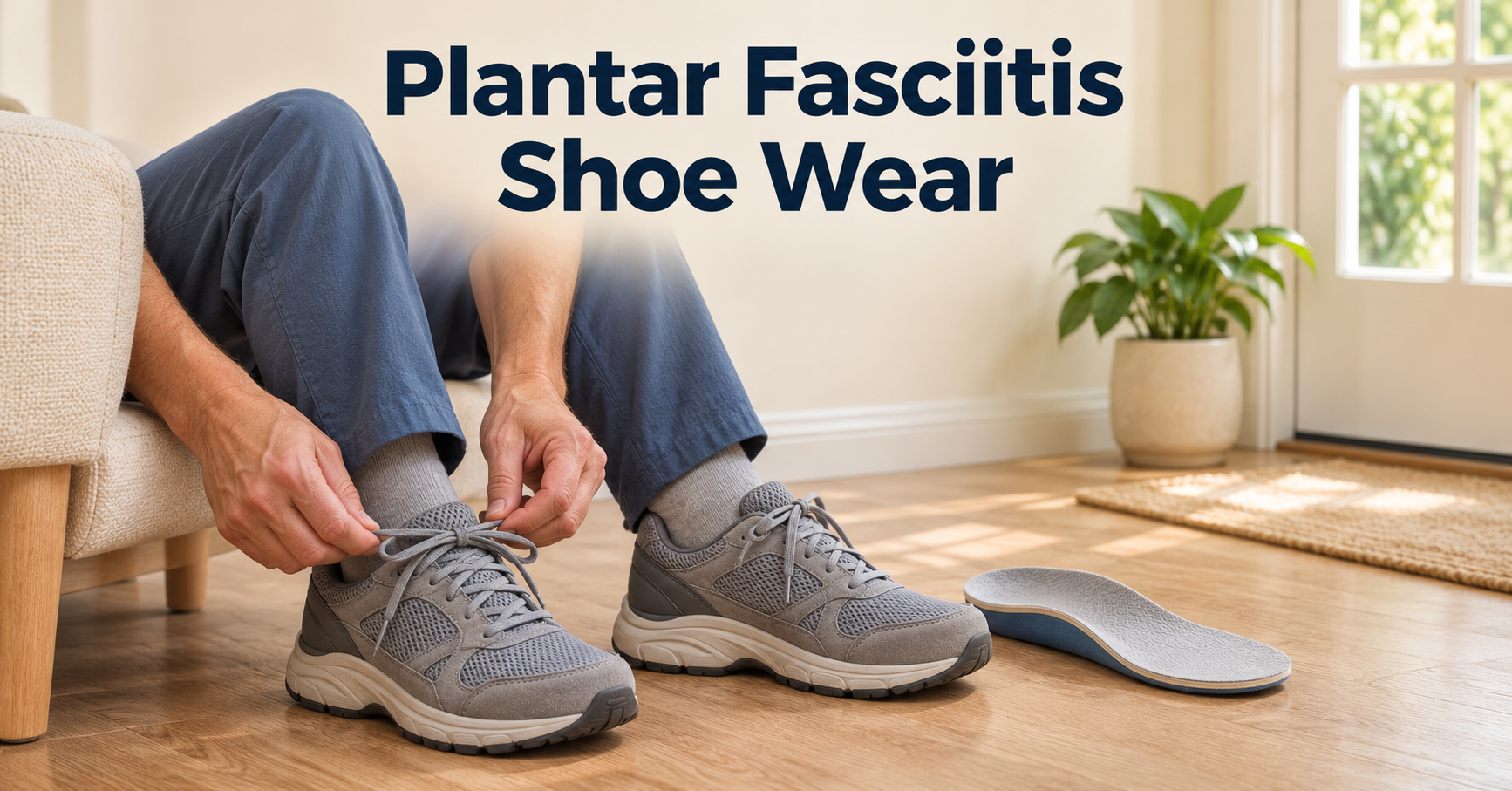
- A stable, supportive midsole that resists twisting, often described as a stability or support shoe
- Firm medial (inner) support that helps limit excessive inward rolling, if you overpronate
- A firm heel counter that holds the heel steady
- A moderately wide base for stability
- Good cushioning, particularly under the heel
- A roomy toe box so your toes can spread
- A sole that bends at the ball of the foot, not in the middle of the arch
- A removable insole so you can add an orthotic or arch-support insole
Shop in the afternoon, try shoes with your usual socks and insoles, and walk on a hard floor for several minutes. Comfort should be immediate. Replace shoes before they wear out: running shoes around 300 to 500 miles (about 500 to 800 km), and everyday shoes often after 6 to 12 months of daily wear, or sooner if the inner edge is worn or the heel counter has collapsed.
Stability or Supportive Walking and Running Shoes
Best for: moderate to severe overpronation, and active people with flat feet.
What to look for: firm medial support, a stable midsole, a firm heel counter, good cushioning, and a roomy toe box.
Supportive Work Shoes
Best for: jobs that keep you standing on hard floors.
What to look for: cushioning, stability, slip resistance if needed, and a removable insole.
Supportive Slippers or Recovery Slides
Best for: protecting your arches at home, especially in the morning.
What to look for: a contoured footbed, a cushioned heel, and a sole that does not fold in half.
Orthopedic Sandals
Best for: warm weather and casual wear.
What to look for: a contoured arch, a cushioned heel, adjustable straps, and a secure heel strap.
Arch Supports, Insoles and Orthotics
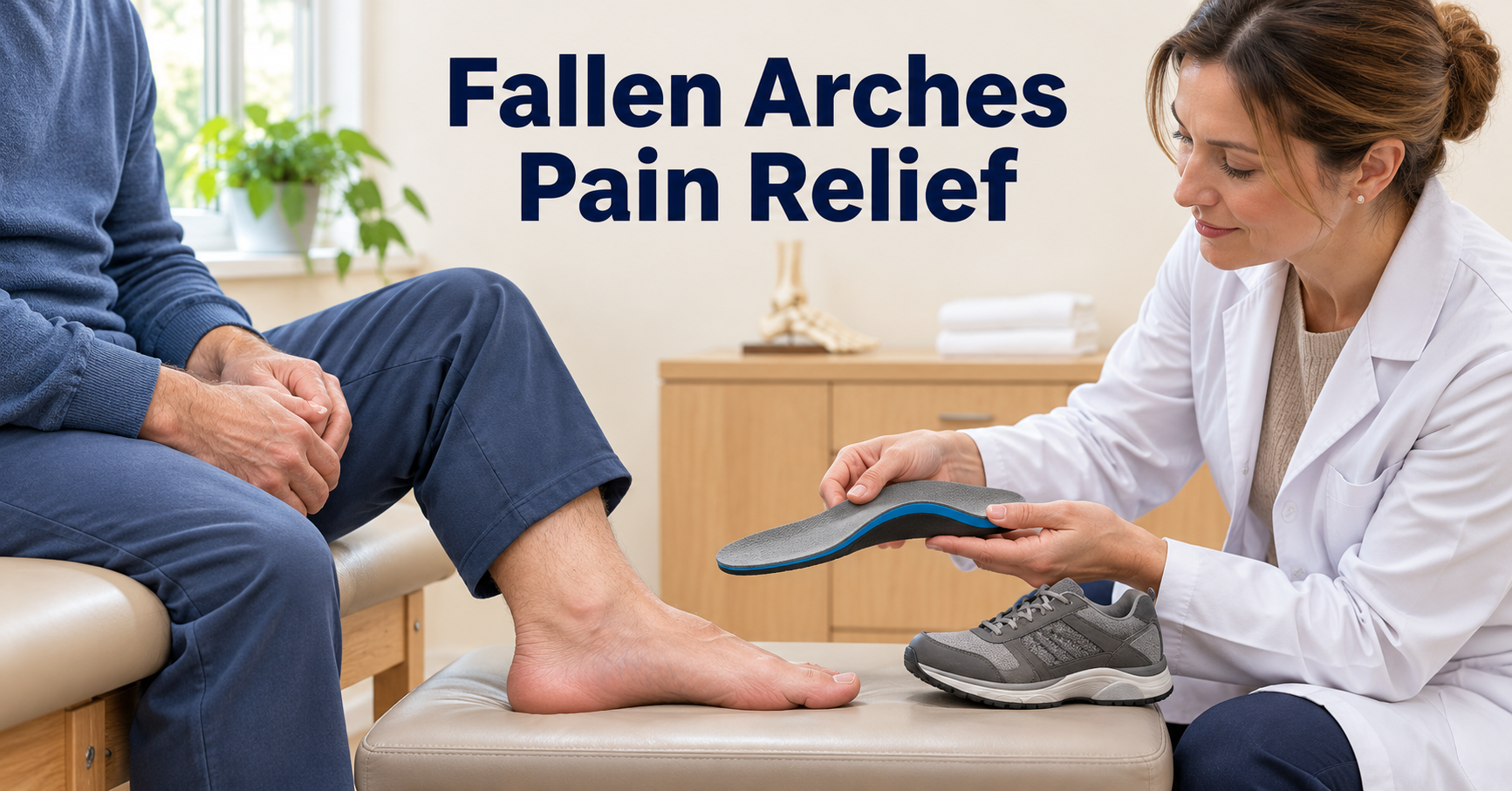
Arch supports can reduce strain on a flat foot and make long days more comfortable. They do not permanently change the shape of an adult foot, but they can reduce pain while you wear them and work well alongside exercises.
| Option | What it is | Best suited to |
|---|---|---|
| Off-the-shelf arch-support insoles | Ready-made supports in a range of firmness and arch heights | Mild to moderate pain, flexible flat feet, trying support first |
| Cushioned or gel insoles | Soft shock-absorbing insoles with mild arch contour | Comfort and impact absorption, mild symptoms |
| Semi-rigid orthotics | Firmer devices that control motion | Overpronation and more significant pain |
| Custom orthotics | Made from a cast or scan of your foot by a professional | Persistent pain, complex foot structure, or when off-the-shelf options have not helped |
| Heel cups | Cushioning and support for the heel | Heel pain that accompanies flat feet |
Arch-Support Insoles
Best for: flexible flat feet, long hours standing or walking.
What to look for: a contoured but not rock-hard shape, a deep heel cup, the right arch height, and a thin enough profile to fit your shoes. Remove the original insole and introduce the new one gradually.
Semi-Rigid Orthotic Insoles
Best for: stronger pronation control and persistent arch pain.
What to look for: a firm but comfortable shell, a stable heel cup, and a supportive but not aggressive arch. A clinician can advise if you are unsure.
Cushioned Heel Cups
Best for: heel pain and shock absorption.
What to look for: resilient gel or foam that keeps its shape and fits well inside your shoe.
Introduce any new support gradually, wearing it for an hour or two at first and increasing over a week or so. If it causes new pain, try a different type or ask a specialist.
Special Situations: Running, Standing, Pregnancy and Children
If You Run or Play Sports
- Choose shoes with suitable stability and cushioning, ideally after a gait assessment
- Build mileage gradually and avoid sudden changes in surface or intensity
- Do foot, calf, and hip strengthening weekly
- Replace shoes on time and rotate pairs
- Cut back and get advice if you develop shin, ankle, or arch pain that persists
If You Stand All Day at Work
- Wear supportive, cushioned shoes with a removable insole
- Use cushioned mats and take short sitting breaks
- Stretch calves and arches during the day
- Alternate between two pairs of shoes
If You Are Pregnant or Postpartum
- Expect arches to feel more sore as weight and ligament laxity increase
- Wear supportive shoes and consider supportive insoles
- Elevate your feet when you can and avoid long periods on hard floors
- Your foot size may change, so recheck your shoe size after pregnancy
If Your Child Has Flat Feet
- Most flexible flat feet are normal and need no treatment
- See a doctor if your child has pain, avoids activity, trips often, or has a stiff, rigid flat foot
- Choose well-fitting, flexible, supportive shoes rather than relying on expensive devices without advice
What to Avoid
- Walking barefoot on hard floors if it makes your arches ache
- Flip-flops, thin flat shoes, and worn-out footwear
- High heels for long periods
- Pushing through sharp or worsening pain
- Ignoring inner ankle pain and swelling
- Rapidly increasing activity or switching suddenly to minimalist shoes
- Relying on insoles alone without stretching and strengthening
Medical Treatments
If self-care does not provide enough relief, a healthcare professional may recommend:
- Physical therapy for guided strengthening, stretching, and gait retraining
- Custom orthotics fitted to your foot and walking pattern
- Bracing or a walking boot for flare-ups of tendon problems such as posterior tibial tendon dysfunction
- Pain relief and anti-inflammatory medication as advised by a doctor
- Imaging such as X-ray, ultrasound, or MRI to look at bones, joints, and tendons
- Injections or other procedures in selected cases, under medical supervision
- Surgery in a minority of cases, usually for structural problems or advanced tendon dysfunction that has not responded to other treatment
Daily Habits and Prevention
- Wear supportive footwear most of the day, including at home
- Stretch calves and arches regularly
- Strengthen your feet, calves, and hips two to three times a week
- Maintain a healthy weight
- Increase activity gradually, and include rest days and low-impact options
- Vary surfaces and avoid long periods on hard floors without support
- Replace shoes and insoles before they wear out
- Check your feet regularly, especially if you have diabetes
- Do not ignore early arch or inner ankle pain
Anti-Fatigue Mat
Best for: people who stand on hard floors at work or at home.
What to look for: a cushioned but stable surface that does not curl at the edges.
Compression Arch Sleeves
Best for: mild swelling and a supported feeling at the end of the day.
What to look for: graduated compression, a seamless design, and a snug but not tight fit.
Frequently Asked Questions
Can flat feet cause arch pain?
Yes. When the arch is low or collapses, the plantar fascia, tendons, and foot muscles work harder, which can cause arch pain, heel pain, and fatigue, especially after long periods of standing or walking.
Do all flat feet need treatment?
No. Many flat feet cause no problems and need no treatment. Treatment is usually recommended only when the foot is painful, the arch is collapsing, or function is affected.
Are flat feet bad?
Not necessarily. Flat feet are a common variation. They become a concern when they cause pain, change over time, or are accompanied by stiffness, swelling, or other symptoms.
What is the best shoe for flat feet arch pain?
A stable, supportive shoe with a firm heel counter, good cushioning, firm inner support if you overpronate, a roomy toe box, and a removable insole is generally a good choice. Fit and comfort matter more than brand.
Do arch supports fix flat feet?
Arch supports usually do not permanently change the shape of an adult foot, but they can reduce strain and pain while worn, and are most effective combined with stretching and strengthening.
Can exercises fix flat feet?
Exercises can strengthen the muscles that support the arch and improve comfort and control, and in some cases the arch may appear slightly higher. They may not create a fully normal arch, especially in adults with long-standing flat feet.
Can flat feet cause knee or back pain?
They can contribute. Overpronation changes how forces travel up the leg, which may affect the shins, knees, hips, and lower back in some people. Pain in these areas has many causes, so get it assessed if it persists.
Can you develop flat feet as an adult?
Yes. Posterior tibial tendon dysfunction, weight gain, pregnancy, injury, arthritis, and ageing can all cause the arch to lower in adulthood. New or progressive flattening with pain should be checked by a professional.
Final Thoughts
Flat feet are common, and for many people they are not a problem. But when they cause arch pain, you do not have to simply put up with it. Supportive shoes, a well-chosen arch support, daily calf stretching, targeted strengthening, and sensible activity can make a real difference. Pay attention to warning signs such as inner ankle pain and swelling, a collapsing arch, or a hot red foot, and do not hesitate to get professional advice.
Start today by checking your shoes and doing a few minutes of calf stretching and short-foot exercises. Small, consistent steps often bring the biggest relief for tired, aching arches.
Medical disclaimer: This article is for general information only and is not a substitute for professional medical advice, diagnosis, or treatment. Always consult a qualified healthcare professional about foot pain or before starting a new exercise program.
Affiliate disclosure: Some product categories mentioned in this guide may include affiliate links in the future. If you buy through them, this site may earn a small commission at no extra cost to you. Our recommendations are based on what is most useful for readers.