








You have been stretching, resting, buying better shoes, and trying every home remedy you can find. Yet your heel still stabs with every morning step, and weeks have turned into months. If you are asking yourself, “Why is my plantar fasciitis not getting better?”, you are far from alone. Plantar fasciitis is one of the most stubborn foot problems, and it is very common for recovery to stall.
The good news is that a stalled recovery almost always has an explanation. In this guide, you will learn what a realistic recovery timeline looks like, the 10 most common reasons plantar fasciitis does not improve, what to change right now, and which next-step options a specialist may discuss with you.
Quick Answer
Plantar fasciitis often takes months to heal, so slow progress is normal. But if you have had no improvement after several weeks of consistent care, the usual culprits are an incomplete routine (calves or strengthening missing), unsupportive footwear, too much activity, stopping treatment too early, or a heel problem that is not actually plantar fasciitis. Review the 10 reasons below, adjust your plan, and see a doctor or foot specialist if there is still no progress.
How Long Does Plantar Fasciitis Really Take to Heal?
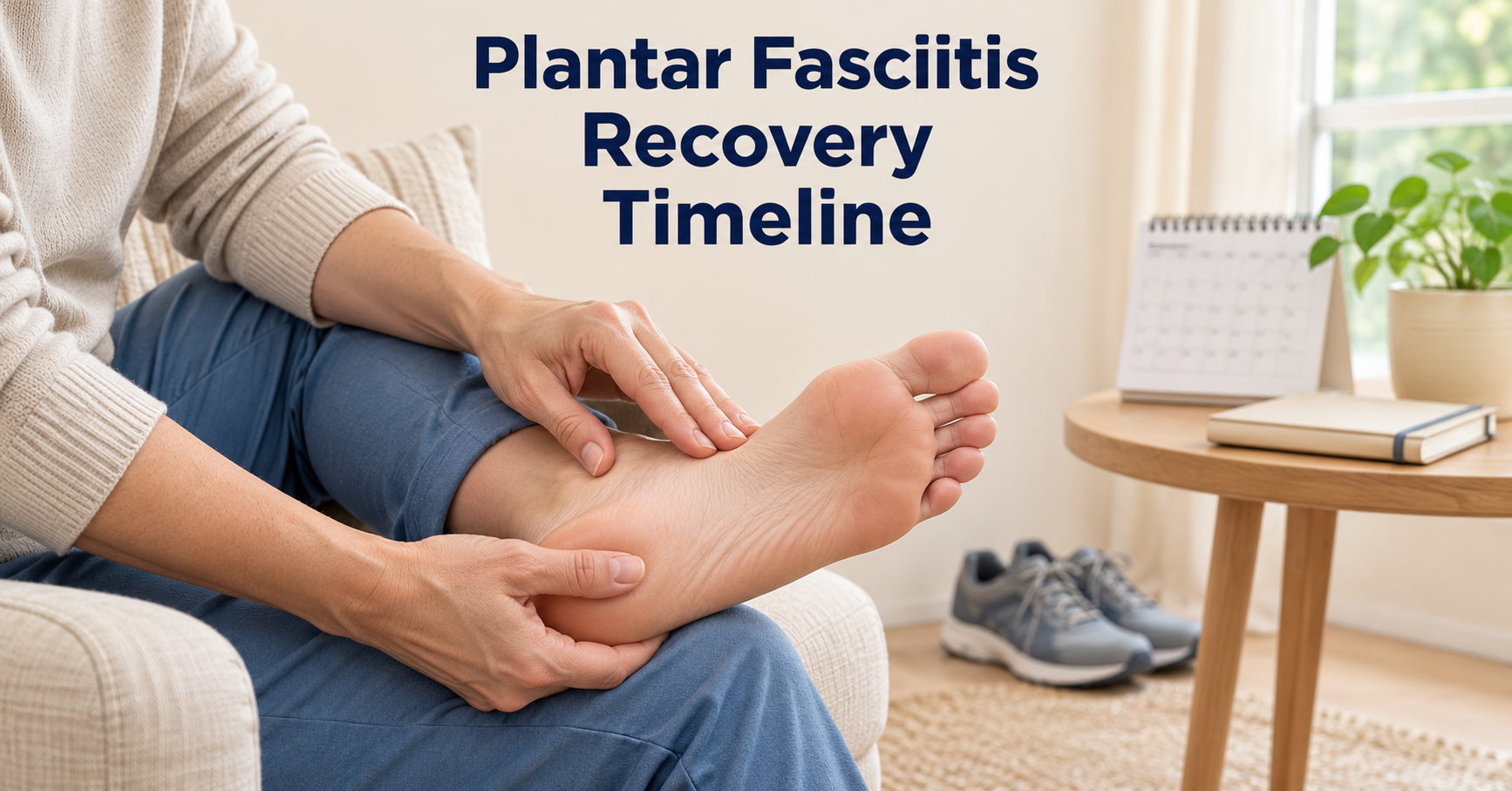
Many people expect heel pain to fade in a couple of weeks. In reality, the plantar fascia is a tough tissue with a limited blood supply, and it heals slowly. Most people improve gradually with conservative care, and many recover within roughly 6 to 12 months, though some take longer. Progress is rarely a straight line, with good days, bad days, and occasional setbacks.
10 Reasons Your Plantar Fasciitis Is Not Getting Better
1. It Might Not Be Plantar Fasciitis
Heel pain has several causes, and plantar fasciitis is only the most common one. Nerve irritation, a heel fat pad problem, Achilles tendon trouble, a stress fracture of the heel bone, arthritis, and other conditions can look similar. If treatment aimed at plantar fasciitis is not working, an incorrect diagnosis is one of the first things to consider. Pain that is constant, burning, tingling, or present at night deserves professional assessment.
2. You Stopped Treatment Too Soon
Many people stretch hard for a week or two, feel a little better, and stop. Then the pain returns. Because the fascia heals slowly, treatment often needs to continue for weeks beyond the point where symptoms feel better. Think of stretching and support as long-term habits, not a short course.
3. Your Calves Are Being Ignored
Tight calf muscles and a stiff Achilles tendon increase the pull on the heel with every step. If you only stretch the bottom of the foot, a major contributor to the problem is left untouched. Include both a straight-knee calf stretch and a bent-knee calf stretch every day.
4. Your Footwear Does Not Support Your Foot
Flat, thin-soled, worn-out, or very flexible shoes allow the arch to collapse and the fascia to be overloaded. Look for shoes with a cushioned heel, good arch support, and a firm midsole that does not twist easily in the middle. Replace athletic shoes regularly, since cushioning and support wear down long before the outside looks damaged.
5. You Are Doing Too Much, Too Soon
Running, jumping, long walks, and long hours on your feet can keep re-irritating the tissue faster than it can heal. This does not mean total rest. It means temporarily reducing the activities that clearly provoke your pain, switching to low-impact options like swimming or cycling, and building back up gradually.
6. You Walk Barefoot at Home
Hard floors and no support, especially during the first steps of the morning and after sitting, can undo a lot of your good work. Wear supportive slippers or sandals indoors until the pain settles.
7. You Are Not Strengthening the Foot and Calf
Stretching alone is often not enough. Research and clinical practice increasingly favor slow, progressive strengthening for stubborn plantar fasciitis. Strong calves and foot muscles help share the load and make the tissue more resilient. A simple version is a slow calf raise with the toes propped up on a rolled towel: lift for about 3 seconds, pause briefly, lower for about 3 seconds, and aim for roughly 8 to 12 repetitions for 3 sets, every other day. Increase the load gradually, and stop if pain goes above a mild level.
8. Your Insoles or Heel Cushions Are Worn Out or Wrong
Insoles flatten over time, and an arch support that is too high, too low, or too hard for your foot may not help. If your insoles are old, flattened, or uncomfortable, they may be doing more harm than good. Choose a supportive, well-fitting option and replace it when it loses its shape.
9. You Are Overdoing the Treatment
More is not always better. Aggressive stretching into sharp pain, pressing very hard on the sore heel with a ball or massage gun, or icing for too long can irritate the tissue. Keep stretching at a gentle 3 to 4 out of 10 and use light to moderate pressure for massage.
10. Ongoing Overload From Your Daily Life
A job that keeps you standing on hard floors, extra body weight, a sudden change in activity, or poor foot mechanics can all keep the tissue under constant strain. Small changes, such as a cushioned mat, supportive footwear at work, regular sitting breaks, and gradual weight management, can add up.
The Four Pillars of a Complete Recovery Plan
If you only do one or two of these, your recovery may stall. Most successful plans combine all four.
A Quick Self-Check
Ask yourself honestly:
- Am I stretching both my calves and my arch, every day?
- Have I been consistent for at least 6 to 8 weeks?
- Do I wear supportive footwear all day, including at home?
- Am I still doing the activity that triggers my pain?
- Am I doing any strengthening work?
- Are my shoes and insoles new enough to still be supportive?
- Is my pain exactly as typical plantar fasciitis, or does it feel different (burning, tingling, constant)?
If you answered “no” to several of the first six questions, there is probably room to improve your plan. If your pain feels different from the typical pattern, get it checked.
What Can a Doctor or Specialist Offer?
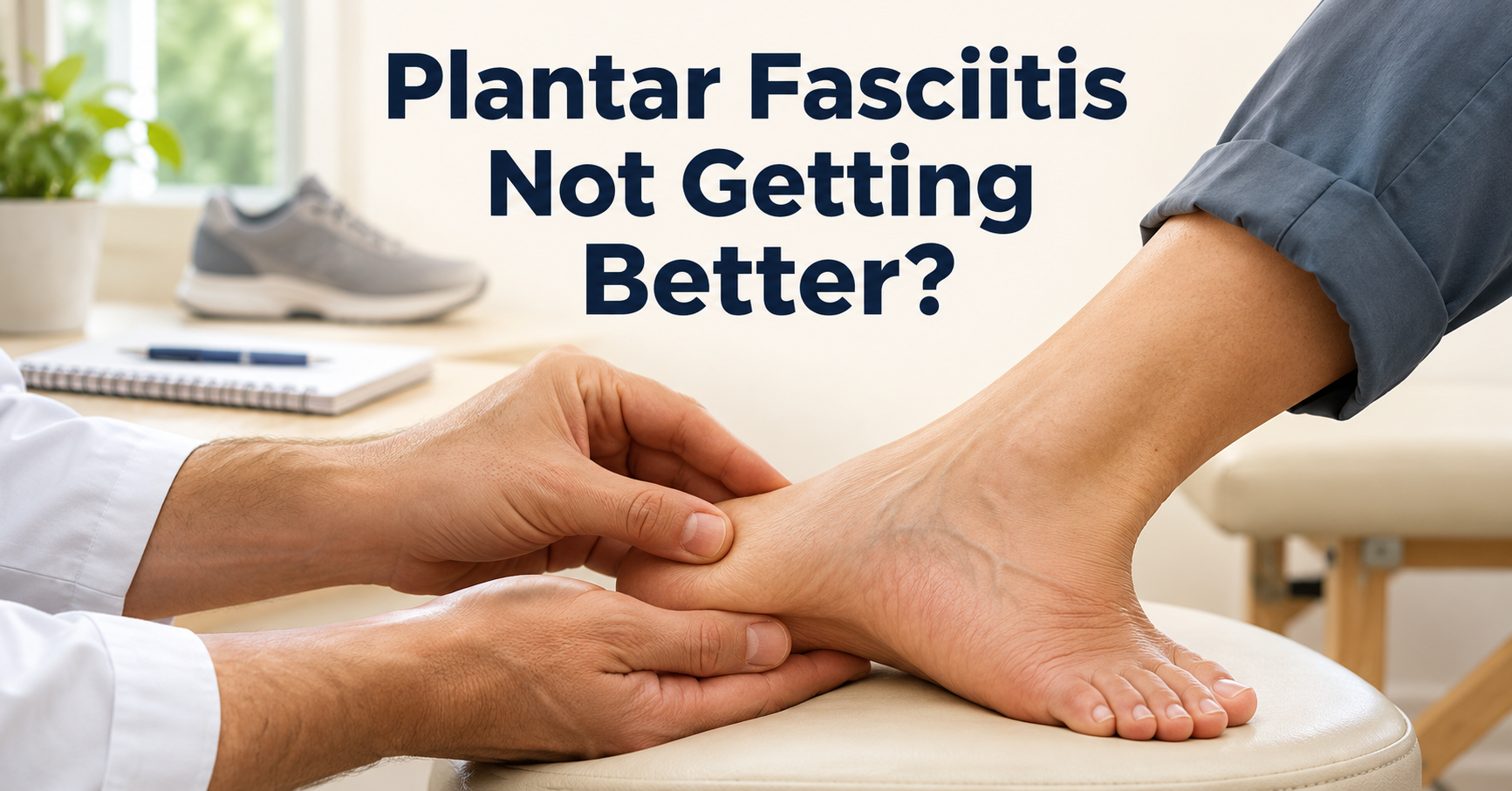
If you have followed a solid plan for several weeks or months and are still struggling, a doctor, podiatrist, or physiotherapist can look at your foot, confirm the diagnosis, and discuss further options. These depend on your situation and are chosen together with you.
- Physical therapy: A physiotherapist can check your calf flexibility, foot mechanics, and strength, and give you a tailored stretching and strengthening program. Hands-on soft tissue work may also be part of it.
- Custom or prefabricated orthotics: Properly fitted insoles can redistribute pressure and reduce strain, especially if you have flat feet or high arches.
- Taping: Supportive arch taping can offer short-term relief and help you stay active.
- Night splint: Keeps the foot gently flexed overnight so the fascia does not tighten, which can reduce the morning pain.
- Pain relief medication: Over-the-counter anti-inflammatory medicines may be suggested for short periods for people who can safely take them. Check with a pharmacist or doctor first, and follow the label.
- Extracorporeal shockwave therapy (ESWT): A non-invasive treatment that delivers pressure waves to the heel. It is sometimes used for stubborn cases that have not responded to other care.
- Injections: Corticosteroid injections can give short-term pain relief but carry risks, such as weakening of the tissue, so they are used cautiously. Other injection-based options exist, and a specialist can explain the evidence and risks for each.
- Surgery: Rarely needed. It is generally considered only after many months of well-followed conservative treatment has failed.
Is It a Heel Spur?
Many people who are told they have a heel spur worry that this is why they are not improving. A heel spur is a small bony growth that can develop where the fascia attaches to the heel bone. Many people have spurs with no pain at all, and many people with plantar fasciitis have no spur. In most cases, the pain comes from the soft tissue, not the spur itself, and the treatment is the same as for plantar fasciitis.
Mistakes That Keep You Stuck
- Waiting too long to change the plan. If nothing has improved after 6 to 8 weeks of consistent, correct care, adjust or get assessed.
- Skipping the morning routine. Taking sharp first steps every morning re-irritates the tissue daily.
- Going back to full activity as soon as it feels better. Return gradually.
- Chasing a quick fix. A single gadget or one stretch rarely solves a problem that has several contributors.
- Ignoring the other foot. Overloading one side can cause trouble on the other.
- Ignoring pain that is changing. New or different symptoms need a professional opinion.
When to See a Doctor
Please get professional advice if:
- You have followed a consistent plan for 6 to 8 weeks or more with no improvement
- Your pain is severe, getting worse, or limiting your daily life
- You notice swelling, bruising, redness, or warmth in the heel
- You have numbness, tingling, or burning in the foot
- The pain started after an injury or fall
- You have pain at night or at rest that does not ease
- You cannot put weight on the foot
- You have diabetes or a circulation problem
Frequently Asked Questions
Why is my plantar fasciitis not getting better after months?
Common reasons include an incomplete routine, unsupportive footwear, too much activity, stopping treatment too early, or a diagnosis that is not quite right. A professional assessment can help find the cause.
Can plantar fasciitis last for years?
It can, particularly if the contributing factors are not addressed. Most people do recover, but chronic cases need a thorough review of the whole plan and sometimes advanced options.
Should I rest completely?
Complete rest is usually not recommended. Reducing painful or high-impact activity is helpful, but gentle movement, stretching, and strengthening help the tissue heal.
Is plantar fasciitis getting worse normal?
Temporary flare-ups can happen, especially after too much activity. But steadily worsening pain, or new symptoms such as numbness or swelling, should be checked by a professional.
Do insoles really help?
For many people they do, especially when they are well-fitted and replaced when worn out. They work best as part of a complete plan rather than on their own.
When is surgery considered?
Only in a small number of cases, after many months of well-followed conservative treatment has not worked, and after a specialist has confirmed the diagnosis.
Final Thoughts
Plantar fasciitis that is not getting better is frustrating, but it is rarely hopeless. Recovery is usually slow, and a stalled plan almost always has fixable causes: missing calf work, no strengthening, poor footwear, too much activity, or stopping too early. Review the ten reasons above, build a complete plan around stretching, strengthening, support, and load management, and give it a fair, consistent trial. If you still see no progress, a doctor, podiatrist, or physiotherapist can confirm the diagnosis and guide you to the next step.
Disclaimer: This article is for general information only and is not a substitute for professional medical advice, diagnosis, or treatment. If your heel pain is severe, persistent, or accompanied by other symptoms, please consult a qualified healthcare professional.