









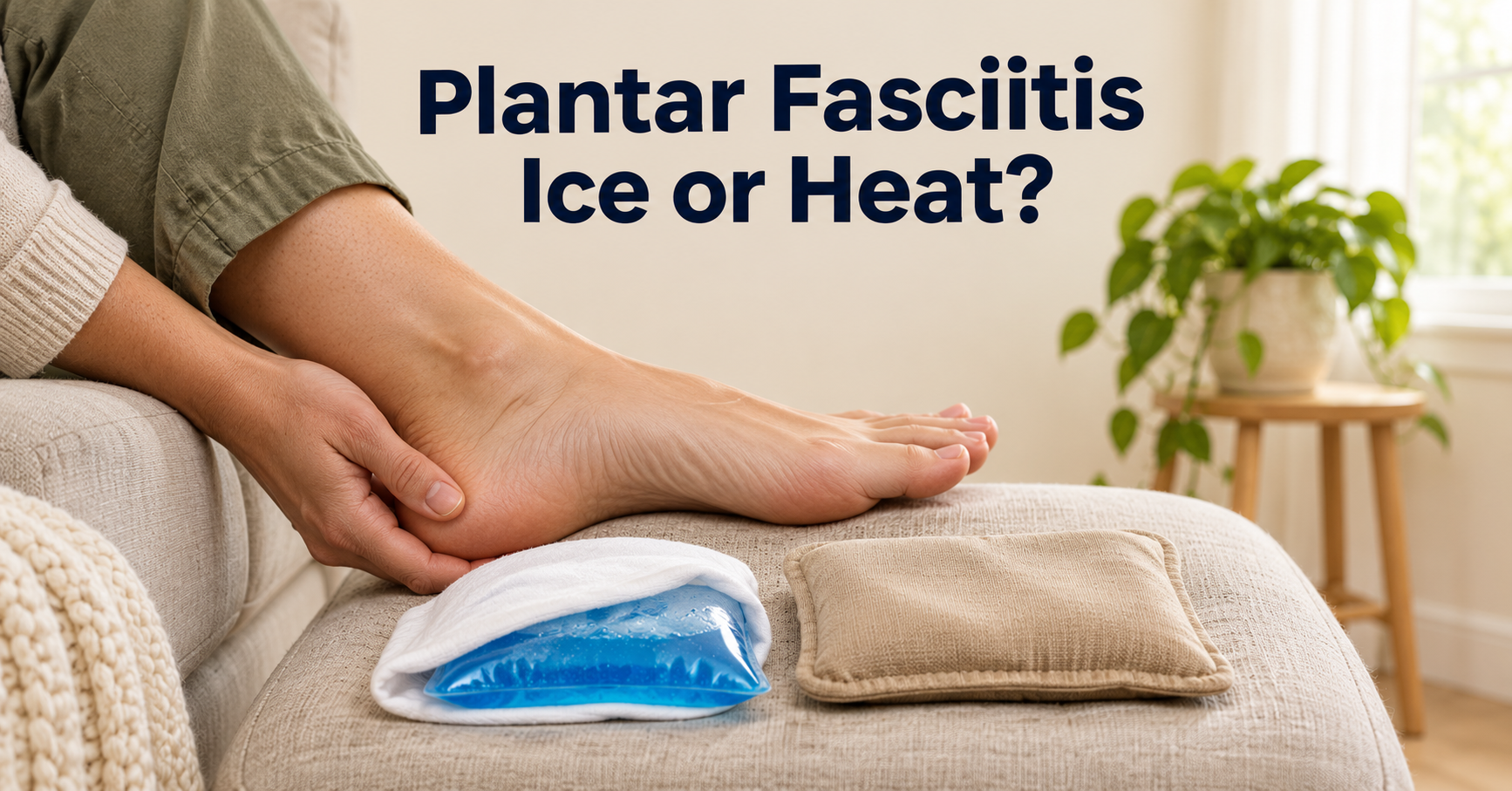
If you have ever stepped out of bed and felt a stabbing pain in your heel, you have probably asked the same question millions of people ask: should I use ice or heat for plantar fasciitis? Search online and you will find confident advice for both sides, which only makes things more confusing.
The truth is that ice and heat are both useful comfort tools. They work in different ways, and each one fits a different moment in your day. In this guide, you will learn exactly how each one works, when to choose it, how long to apply it, and when to avoid it altogether.
Quick Answer
Use ice when your heel is sore, throbbing, or irritated, especially after activity or at the end of the day. Use gentle heat when your foot feels stiff and tight, especially before stretching or light activity. Neither one cures plantar fasciitis. They simply make you more comfortable while stretching, supportive footwear, and rest do the real healing work.
What Is Plantar Fasciitis?
The plantar fascia is a thick band of tissue that runs along the bottom of your foot, from the heel bone to the base of the toes. It supports your arch and absorbs shock every time you walk. When this band is overloaded, it can become irritated and painful, usually near the heel. The classic signs include:
- Sharp heel pain with the first steps in the morning
- Pain after sitting for a long time and then standing up
- Heel soreness after long periods on your feet
- Pain that eases a little once you start moving, then returns later
Because the tissue is both irritated and often tight, the question of ice versus heat is a fair one. You are dealing with soreness and stiffness at the same time.
Ice vs Heat at a Glance
Using Ice for Plantar Fasciitis
How Ice Works
Cold narrows the blood vessels in the area and dulls the nerve signals that carry pain. This can bring short-term relief when your heel feels sore, irritated, or throbbing. Ice does not heal the tissue by itself, but it can make a painful day much more manageable.
When Ice Is the Better Choice
- After a long day on your feet
- After exercise, walking, or other activity that aggravated your heel
- During a flare-up, when the heel feels hot, tender, or throbbing
- When the pain is worse in the evening
Easy Ways to Apply Ice
- Ice pack on the heel and arch: Wrap a gel pack or bag of ice in a thin towel and rest it under the foot while sitting.
- Frozen water bottle roll: Freeze a small water bottle, then gently roll it under your arch. This gives you cold and a light massage together.
- Ice cup massage: Freeze water in a paper cup, peel back the top, and use slow circles on the arch, never staying in one spot.
Ice Safety Tips
- Always place a cloth between the ice and your skin to avoid ice burn.
- Limit sessions to about 15 to 20 minutes, with at least an hour or two before the next one.
- Stop if the skin turns very red, white, or numb, or if pain increases.
Using Heat for Plantar Fasciitis
How Heat Works
Warmth increases blood flow and helps tight muscles and connective tissue relax. Because plantar fasciitis often comes with a tight calf and a stiff arch, gentle heat can make the foot feel looser and make stretching more comfortable.
When Heat Is the Better Choice
- Before stretching your calves and arch
- Before a walk or light activity when your foot feels stiff
- When the pain feels like tightness or aching rather than hot, sharp irritation
- On cold days, when your feet feel particularly stiff
Easy Ways to Apply Heat
- Warm foot soak: Soak your foot in comfortably warm water for 10 to 15 minutes.
- Warm towel or heat pack: Wrap a microwavable heat pack in a towel and place it under the arch while seated.
- Warm shower: Let warm water run over your feet and calves, then stretch right after.
Heat Safety Tips
- The temperature should feel pleasantly warm, never hot.
- Do not fall asleep on a heating pad.
- Do not use heat on a swollen, red, or very inflamed heel, since it may increase discomfort.
- Check your skin regularly, especially if you have reduced sensation in your feet.
How to Decide in the Moment
If you are unsure which to pick, ask yourself how your foot feels right now.
Can You Use Both Ice and Heat?
Yes, many people use both, just not at the same time and not back to back. A common pattern is to use warmth earlier in the day to loosen a stiff foot before stretching, and to use ice later in the day to calm soreness after being on your feet.
Some people also try contrast therapy, switching between warm and cool. Research on how well this works specifically for plantar fasciitis is limited, so it is best treated as an optional comfort technique. If you try it, keep both temperatures mild and stop if it makes the pain worse.
A Sample Daily Plan
Who Should Be Careful With Ice or Heat?
Ice and heat are safe for most healthy adults when used correctly, but you should be more careful, or speak with a healthcare professional first, if you:
- Have diabetes, nerve damage, or reduced feeling in your feet
- Have poor circulation or a circulatory condition such as peripheral artery disease
- Have broken or irritated skin on the foot
- Are pregnant and unsure about using heat for long periods
- Notice numbness, tingling, or color changes in your foot
Ice and Heat Are Only Part of the Answer
Ice and heat reduce discomfort, but they do not fix the reason your plantar fascia became irritated in the first place. For lasting improvement, combine them with habits that actually reduce stress on the tissue:
- Stretch regularly: Gentle calf and plantar fascia stretches are among the most commonly recommended steps.
- Wear supportive footwear: Shoes with good arch support and a cushioned heel help absorb impact. Avoid walking barefoot on hard floors.
- Consider arch support insoles: Supportive insoles or heel cushions can reduce strain for many people.
- Reduce high-impact activity for a while: Swap running or jumping for swimming or cycling during recovery.
- Manage body weight: Extra weight increases the load on the plantar fascia with every step.
- Use a night splint if needed: Some people find that keeping the foot gently flexed overnight lowers morning pain.
Common Mistakes to Avoid
- Applying ice directly to bare skin. This can cause ice burn. Always use a cloth barrier.
- Using very hot water or heating pads. Heat should be soothing, not intense.
- Using heat on an inflamed, swollen heel. It may make the area feel worse.
- Icing for too long. More time does not mean more relief and can irritate the skin.
- Relying on ice or heat alone. They are comfort tools, not a complete treatment.
- Ignoring worsening pain. If symptoms keep growing despite good care, get checked.
When to See a Doctor
Please get professional advice if:
- Your heel pain is severe or has lasted for several weeks despite home care
- You notice significant swelling, bruising, redness, or warmth
- You have numbness, tingling, or burning in the foot
- You cannot put weight on the foot
- You have diabetes or a circulation problem
- You are not sure your pain is actually plantar fasciitis
A foot specialist can confirm the diagnosis, rule out other causes of heel pain, and discuss options such as physical therapy, custom orthotics, or other treatments.
Frequently Asked Questions
Is ice or heat better for plantar fasciitis?
Neither is universally better. Ice is usually the better pick for soreness and irritation, especially after activity. Heat is usually the better pick for stiffness and tightness, especially before stretching.
Should I use ice or heat for morning heel pain?
Morning pain is mostly caused by the fascia tightening overnight, so a gentle stretch before your first steps is usually more helpful than either one. A warm shower afterward can help the foot loosen up.
How long should I ice my heel?
About 15 to 20 minutes per session, with a cloth between the ice and your skin. Leave at least an hour or two before icing again.
Can heat make plantar fasciitis worse?
It can if your foot is swollen or acutely inflamed, or if the heat is too intense. Use mild warmth and stop if the pain increases.
Is a frozen water bottle good for plantar fasciitis?
Many people like it because it combines cold with a gentle massage. Roll it slowly under the arch and avoid pressing hard directly on the most tender part of the heel.
How long does plantar fasciitis last?
Most people improve gradually over several weeks to months with consistent care. It is usually a slow-healing condition, so patience and consistency matter more than any single treatment.
Final Thoughts
So, ice or heat for plantar fasciitis? The best answer is: both can help, at different times. Use ice when your heel is sore and irritated, and use gentle heat when your foot is stiff and tight. Then pair them with stretching, supportive footwear, and sensible activity so you are treating the cause, not just the discomfort. Stay consistent, listen to your foot, and speak with a professional if the pain does not improve.
Disclaimer: This article is for general information only and is not a substitute for professional medical advice, diagnosis, or treatment. If your heel pain is severe, persistent, or accompanied by other symptoms, please consult a qualified healthcare professional.