
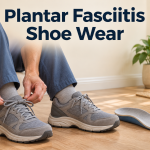



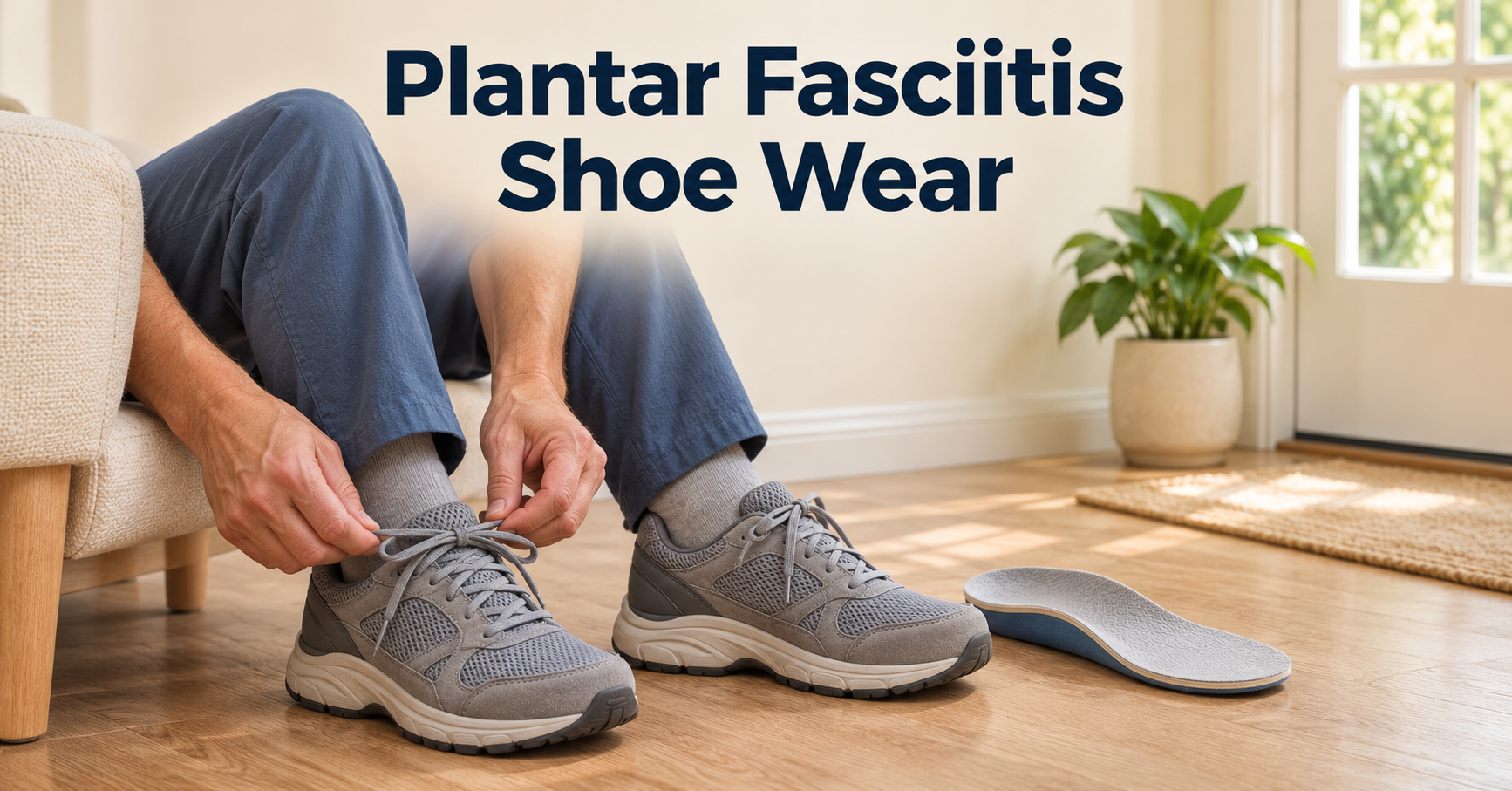

If you have plantar fasciitis, you already know how much your footwear affects your day. A pair of shoes can be the difference between getting through your morning with mild discomfort and limping on the first step of every hour. Many people spend months stretching and resting, only to undo the progress by walking around in the wrong shoes.
This guide to plantar fasciitis shoe wear explains how shoes influence the plantar fascia, which features genuinely help, which styles to avoid, how to test and fit a pair in the store, when to replace shoes, and how insoles and everyday habits fit into the picture. It is written to help you choose with confidence, whatever brand or budget you have.
Quick Answer
The best shoes for plantar fasciitis have a well-cushioned heel, a contoured arch that supports without pressing, a firm heel counter, a midsole that resists twisting, a sole that flexes only at the ball of the foot, a roomy toe box, and a removable insole. Wear them all day, including at home, replace them before they wear out, and avoid flip-flops, flat flats, high heels, and worn-out shoes. Fit matters more than brand or price. See a doctor if your pain is severe or is not improving after two to three weeks.
Table of Contents
- Why Shoes Matter So Much for Plantar Fasciitis
- What Your Shoes Should Do
- The Key Features to Look For
- Shoe Wear by Situation
- Shoes to Avoid or Limit
- How to Test and Fit Shoes
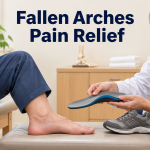
- Insoles, Heel Cups and Orthotics
- Shoes at Home: Do Not Go Barefoot
- How Long Do Shoes Last? When to Replace Them
- Breaking In New Shoes Safely
- Common Shoe Buying Mistakes
- Other Habits That Support Your Shoes
- When to See a Doctor
- Frequently Asked Questions
Why Shoes Matter So Much for Plantar Fasciitis
The plantar fascia is a thick band of tissue running from your heel bone to the base of your toes. It supports the arch and absorbs shock with every step. With plantar fasciitis, the tissue near the heel becomes irritated from repeated overload, causing stabbing heel pain and often arch pain, especially with the first steps after rest.
Shoes act as a layer between your foot and the ground. A good shoe reduces the load on the fascia by cushioning impact, supporting the arch, and keeping the foot steady. A poor shoe does the opposite: it lets the arch collapse, offers little shock absorption, or forces the foot into positions that tense the fascia. Because you wear shoes for many hours every day, the effect adds up quickly.

What Your Shoes Should Do
For plantar fasciitis, think of your shoes as having four jobs:
- Cushion the heel so impact is absorbed before it reaches the fascia attachment.
- Support the arch so the fascia is not stretched excessively with each step.
- Stabilize the foot so the heel and midfoot do not twist or roll too much.
- Allow natural toe movement so the foot can push off comfortably, flexing only where it should.
A shoe that does these four things is likely to feel better and reduce your pain over time.
The Key Features to Look For
Use this section as a checklist when you shop.

1. Cushioned Heel and Midsole
A thick, shock-absorbing midsole under the heel reduces the impact transmitted to the plantar fascia. Look for a resilient foam that rebounds rather than a thin, flat sole. Cushioning that feels soft but stable usually works better than something so squishy that it collapses.
2. Contoured Arch Support
The shoe should have a built-in arch shape that touches your arch comfortably. It should support, not poke or press. If it feels like a hard lump, the shape does not suit your foot. People with flat feet often need a firmer, more structured arch, while people with high arches often prefer more cushion and a softer contour.
3. Firm Heel Counter
The heel counter is the stiff cup around the back of the heel. Squeeze it with your fingers. It should resist collapsing. A firm counter helps hold the heel in place and keeps the foot stable.
4. A Midsole That Resists Twisting
Hold the shoe at the heel and toe and gently twist it like wringing a towel. A good shoe for plantar fasciitis resists excessive twisting. A shoe that twists like a rag offers little midfoot support.
5. Flex Only at the Ball of the Foot
Bend the shoe by pushing the toe upward. It should bend at the ball of the foot, where your foot bends when you walk, and not in the middle of the arch. A shoe that folds in half under the arch can increase strain on the fascia.
6. A Slight Heel-to-Toe Drop
Many people with plantar fasciitis find shoes with a moderate heel-to-toe drop more comfortable, because they reduce tension on the calf and fascia. Very flat or zero-drop shoes can be demanding on tight calves while the fascia is irritated, so introduce them cautiously, if at all, once you have recovered.
7. A Rocker Sole (Optional but Helpful)
Some shoes have a gently curved sole that helps your foot roll forward through each step. For some people this reduces the stretch on the fascia at push-off and makes walking more comfortable.
8. Roomy Toe Box
Your toes should be able to spread and wiggle freely. A narrow or pointed toe box squeezes the foot and can make plantar fasciitis worse.
9. A Removable Insole
A removable insole lets you replace it with a supportive insole or custom orthotic if needed, without making the shoe too tight.
10. A Stable, Wide Base
A sole that is wide enough to provide a stable platform, especially at the heel, helps limit wobble and rolling.
11. Good Fit and Comfort Straight Away
The best shoe on paper is useless if it does not fit your foot. Comfort in the store, on a hard floor, is one of the best indicators.

Shoe Wear by Situation
Different activities call for different footwear. This table gives a general guide to what to prioritize.
| Situation | What to prioritize | Notes |
|---|---|---|
| Everyday walking | Cushioned heel, arch support, stable sole, roomy toe box | Supportive walking shoes or cushioned sneakers are usually a good choice |
| Running | Cushioning, a suitable level of stability for your gait, a secure heel | Replace regularly; a gait assessment in a specialist store can help |
| Standing all day at work | Cushioning, a firm heel counter, slip resistance if needed, a removable insole | Alternate pairs and use a cushioned mat where possible |
| Casual and office wear | Low, wide heel, flexible but supportive sole, contoured footbed | Avoid flat, thin soles and pointed toes |
| Summer and sandals | A contoured footbed, a cushioned heel, adjustable straps, a heel strap | Avoid thin flip-flops |
| At home | Supportive slippers or recovery slides with a contoured footbed | Avoid barefoot walking on hard floors, especially in the morning |
| Hiking and trails | Stable midsole, cushioned heel, a firm heel counter, good traction | Break in gradually before long outings |
| Gym and training | Stable, cushioned trainers appropriate for the activity | Avoid very flat or minimal shoes while symptomatic |
Shoes to Avoid or Limit
Some shoes make plantar fasciitis harder to manage. If you have symptoms, limit or avoid these, at least until you have recovered:

Flip-flops and Thin Sandals
They offer little cushioning or arch support, and your toes grip to keep them on, which strains the foot.
Ballet Flats and Other Flat, Thin-Soled Shoes
With no arch contour and thin cushioning, the fascia takes much of the load.
High Heels
They shorten the calf muscles and shift weight onto the forefoot, increasing tension in the fascia and the arch.
Worn-Out Sneakers
Compressed foam and uneven wear mean little shock absorption and poor stability, even if the shoe looks fine from the outside.
Minimalist and Zero-Drop Shoes (While Symptomatic)
They can be a good tool for strengthening later, but they ask a lot of the foot and calf while the fascia is irritated.
Narrow, Stiff Dress Shoes
They squeeze the foot, often bend in the wrong place, and may have thin insoles.
How to Test and Fit Shoes
A few simple tests can quickly show whether a shoe is a good match for a sore foot.

- Shop in the afternoon or evening. Your feet swell during the day, so this gives a more realistic fit.
- Measure both feet, standing up, and fit the larger one. Your size can change over time.
- Check the toe space. Leave about a thumb’s width between your longest toe and the end of the shoe.
- Check the width. The shoe should not squeeze the sides of your foot or press on the toes.
- Test the heel. It should feel snug without slipping or pinching.
- Do the fold test. The shoe should bend at the ball of the foot, not in the middle.
- Do the twist test. The shoe should resist being wrung out like a towel.
- Press the heel counter. It should stay firm.
- Wear your usual socks and bring any insoles or orthotics you use.
- Walk on a hard floor for several minutes, and ideally on a slight incline or stairs if possible. Comfort should be immediate.
Do not rely on the idea that shoes will “stretch” or “break in” to become comfortable. If a shoe is uncomfortable in the store, it is rarely a good choice for plantar fasciitis.
Insoles, Heel Cups and Orthotics
Even a good shoe may benefit from additional support. Here are the main options.
Off-the-Shelf Arch-Support Insoles
Best for: flat or low arches, long days on your feet, and shoes with thin factory insoles.
What to look for: a contoured but not rock-hard shape, a deep heel cup, and the right arch height for your foot. Remove the factory insole first, and introduce the new insole gradually.
Cushioned Heel Cups or Gel Heel Pads
Best for: heel-focused pain and high arches that need shock absorption.
What to look for: a resilient, shock-absorbing material that holds its shape and fits well inside the shoe without pushing your heel out.
Custom Orthotics
Best for: stubborn pain, unusual foot structure, or when off-the-shelf options have not helped.
What to look for: a professional assessment, a clear explanation of what the device is for, and a trial period. These are made by a podiatrist or similar professional.
Taping or Arch Support Wraps
Best for: short-term support during activity or while you wait for new shoes.
What to look for: skin-friendly adhesive, a snug but comfortable fit, and a method shown by a professional or a trusted guide.
When adding an insole, make sure it does not make the shoe too tight, and increase wear time gradually over several days. If an insole causes new pain, try a different type or ask a specialist.
Shoes at Home: Do Not Go Barefoot
A common mistake is to wear supportive shoes outside and then walk barefoot on hard floors at home. Many people notice their worst pain in the first steps in the morning or after sitting, and walking barefoot at those moments can aggravate the fascia.
- Keep a pair of supportive slippers, slides, or sandals by the bed and put them on before your feet touch the floor.
- Choose a contoured footbed, a cushioned heel, and a sole that does not fold in half.
- Use them for cooking, chores, and evening time at home as well.
- Consider a cushioned mat in places where you stand a lot, such as the kitchen.
Supportive Slippers or Recovery Slides
Best for: home use, mornings, and after workouts.
What to look for: a contoured footbed, a cushioned heel, firm underfoot support, and a design that stays on your foot.
How Long Do Shoes Last? When to Replace Them
Even great shoes eventually lose their support. Worn shoes are a common hidden cause of plantar fasciitis flare-ups. As a general guide:
- Running shoes: roughly 300 to 500 miles (about 500 to 800 km), depending on your weight, running style, and the shoe
- Everyday walking and work shoes: often around 6 to 12 months of daily wear, depending on use
- Slippers and house shoes: when the cushioning flattens or the footbed wears out
Signs that it is time to replace a pair include:
- Creases or compressed areas in the midsole foam
- Uneven wear on the outsole, especially on the heel or one side
- A heel counter that has softened or collapsed
- A shoe that tilts when you place it on a flat surface
- Your heel or arch pain returning in a shoe that used to feel comfortable
Rotating between two pairs gives the cushioning time to recover and varies the way load is placed on your feet.
Breaking In New Shoes Safely
- Wear new shoes at home for 30 to 60 minutes on the first day.
- Increase wear time by an hour or so each day if there is no new heel or arch pain.
- Alternate with your old comfortable pair for the first week.
- Avoid wearing brand-new shoes for long walks, a full shift, or travel.
- If the shoes cause pain that does not fade as they soften, return them if possible. A poor shape rarely improves with time.
Common Shoe Buying Mistakes
- Choosing based on brand, color, or price rather than fit and features
- Assuming “more arch support” is always better, when a hard or poorly placed arch can cause pain
- Buying in the morning, when feet are smaller
- Ignoring width, and squeezing a wide foot into a narrow shoe
- Keeping worn shoes because they still look good
- Switching suddenly to minimalist shoes while the fascia is still sore
- Wearing the same pair every day without rotating
- Relying on shoes alone, and skipping stretching and strengthening
Other Habits That Support Your Shoes
Shoes work best as part of a complete plan:
- Stretch the plantar fascia and calves daily, especially before getting out of bed
- Strengthen the calves, feet, and hips regularly
- Increase walking, running, and standing time gradually
- Use cushioned mats if you stand on hard floors
- Maintain a healthy body weight
- Use cold therapy or ball massage for soreness at the end of the day
- Pay attention to early warning signs and act quickly
Some people also find a night splint helpful for morning pain, and short-term taping for extra support. A doctor or podiatrist can advise on what suits you.
Massage Ball or Foot Roller
Best for: daily self-massage to loosen a tight arch.
What to look for: a firm but not rock-hard surface and a size that fits comfortably under the foot.
Plantar Fasciitis Night Splint
Best for: severe first-step morning pain.
What to look for: adjustable straps, breathable padding, a comfortable angle, and a design you can sleep in.
Anti-Fatigue Mat
Best for: people who stand on hard floors at work or at home.
What to look for: a cushioned but stable surface that does not curl at the edges.
When to See a Doctor
Get medical advice if you notice:
- Sudden severe pain, a pop, bruising, or swelling
- Numbness, tingling, or burning
- Pain at night or at rest that does not ease
- Redness, warmth, or fever
- Diabetes, poor circulation, or neuropathy with any new foot pain
- No improvement after two to three weeks of good footwear and self-care
- Pain that keeps getting worse
A podiatrist or physiotherapist can assess your foot and gait, recommend specific footwear, prescribe custom orthotics if needed, and offer treatments such as physical therapy or shockwave therapy for stubborn cases.
Frequently Asked Questions
What type of shoe is best for plantar fasciitis?
The best shoes have a cushioned heel, contoured arch support, a firm heel counter, a midsole that resists twisting, a sole that bends at the ball of the foot, a roomy toe box, and a removable insole. Supportive walking shoes and cushioned athletic shoes often meet these criteria.
Are flip-flops bad for plantar fasciitis?
Thin, flat flip-flops are generally a poor choice because they lack cushioning and support, and your toes grip to keep them on. If you want sandals, choose a style with a contoured footbed, a cushioned heel, and a heel strap.
Is it okay to walk barefoot with plantar fasciitis?
Walking barefoot on hard floors often makes symptoms worse, especially first thing in the morning. Wear supportive slippers or shoes at home while you are recovering.
Should I buy shoes with a lot of arch support?
Not necessarily. You need support that matches your foot. Too much or poorly placed arch support can cause new pain. Choose a contour that feels comfortable and supportive immediately.
Are zero-drop or minimalist shoes good for plantar fasciitis?
They are generally not recommended while the fascia is irritated, since they place greater demand on the calves and feet. Some people use them later as a strengthening tool, introduced gradually after recovery.
Do I need custom orthotics?
Many people improve with good shoes and an off-the-shelf insole. Custom orthotics may be considered if the pain is persistent, your foot structure is unusual, or other measures have not helped. A professional assessment will tell you.
How often should I replace my shoes with plantar fasciitis?
Running shoes typically last around 300 to 500 miles, and everyday shoes often 6 to 12 months of daily wear. Replace them earlier if the cushioning is compressed, the heel counter has collapsed, or your pain returns.
Can the right shoes cure plantar fasciitis?
Shoes alone rarely cure it, but they are a key part of treatment. Combined with stretching, strengthening, load management, and time, the right footwear gives the fascia the best chance to heal.
Final Thoughts
Choosing the right plantar fasciitis shoe wear is one of the most practical and powerful steps you can take. Look for a cushioned heel, supportive arch, firm heel counter, stable midsole, roomy toe box, and a removable insole. Test the fit carefully, wear supportive shoes all day including at home, replace them before they fail, and combine them with stretching and sensible activity.
Take a look at the shoes you wear most often tonight: check the sole, press the heel counter, and try the fold and twist tests. If they fail, it may be time for a change. Your feet carry you through every day, and the right shoes give your plantar fascia the best chance to recover.
Medical disclaimer: This article is for general information only and is not a substitute for professional medical advice, diagnosis, or treatment. Always consult a qualified healthcare professional about foot pain or before starting a new exercise program.
Affiliate disclosure: Some product categories mentioned in this guide may include affiliate links in the future. If you buy through them, this site may earn a small commission at no extra cost to you. Our recommendations are based on what is most useful for readers.