





If you have flat feet, you have probably been told to “strengthen your arches.” It sounds simple, but where do you start, and do those exercises really work? The truth is that your feet contain many small muscles and tendons that help hold your arch up. Like any other muscles, they can get stronger with the right training. Done well, flat feet arch strengthening can improve control, reduce tiredness, and make walking and standing more comfortable.
This guide explains how the arch works, what exercises to do, how to do them correctly, how to build a weekly plan, and what to avoid. You do not need any special equipment to begin.
How Your Arch Works
The arch is not a single piece of bone. It is a system of bones, ligaments, tendons, and muscles that work together like a bridge. Some structures hold the arch passively, like the plantar fascia under the foot. Others, like the muscles inside the foot and the tendon on the inner ankle, work actively to lift and control it as you move.
When these structures are weak or tired, the arch sinks and the foot rolls inward more. That is where training can help. Strong foot muscles and a well-controlled ankle can share the load so the ligaments and tendons are not working alone.
Can Exercises Really Strengthen a Flat Foot?
Here is an honest answer:
- Yes, you can build strength and control. Studies on exercises such as the short foot exercise suggest they can improve arch control and muscle strength for many people.
- Results vary. Research is still limited, and not everyone sees a visible change in arch height.
- Bones do not change shape. If your flat feet come from your bone structure, exercises will not turn them into high arches.
- Comfort often improves. Even without a big change in arch shape, many people feel less fatigue and fewer aches once their feet are stronger.
Before You Start
- Check with a professional if you have pain. If you have inner ankle pain, swelling, a foot that is clearly flattening, or a stiff, rigid flat foot, get it assessed first. Some of these problems need a different approach.
- Warm up. Walk for 3 to 5 minutes and gently circle your ankles.
- Use bare feet or flat shoes on a stable floor so you can feel what the foot is doing.
- Expect muscle tiredness, not sharp pain. A mild, tired feeling in the arch is normal. Sharp, pinching, or increasing pain is a signal to stop.
- Focus on quality. Slow, controlled movements work better than fast, sloppy repetitions.
The 10 Best Arch Strengthening Exercises
1. Short Foot Exercise (the Foundation)
This is the most important exercise for arch control. It trains the small muscles inside the foot.
- Sit with your foot flat on the floor and your knee over your ankle.
- Without curling your toes, try to draw the ball of the foot toward your heel, making the foot “shorter.”
- You should see the arch rise slightly. Keep the toes long and relaxed.
- Hold for 5 to 10 seconds, then relax.
Dose: 10 repetitions, 1 to 2 times a day. Progress to standing, then to standing on one leg.
2. Toe Yoga
Many people cannot move their toes separately. This exercise improves control of the big toe, which plays an important role in the arch.
- Stand or sit with your foot flat.
- Lift only your big toe while keeping the other four toes pressed down.
- Lower it, then lift the four small toes while pressing the big toe down.
Dose: 10 repetitions each way, per foot. It may be hard at first, and that is normal.
3. Towel Scrunches
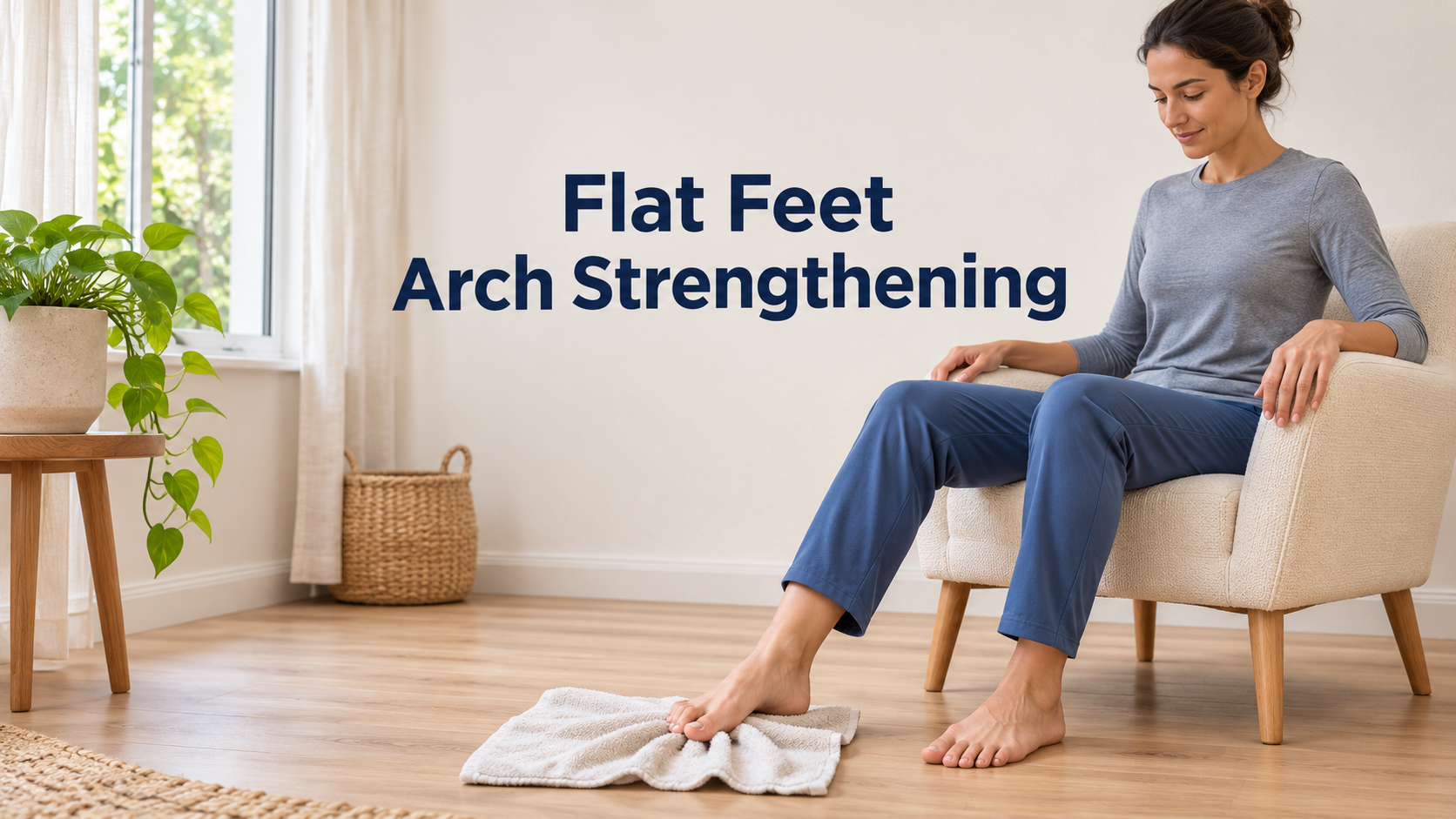
Place a small towel flat on a smooth floor. Use your toes to scrunch and pull the towel toward you, then push it away. Keep your heel on the floor. Dose: 2 sets of 8 to 10 pulls per foot.
4. Marble or Small Object Pickup
Pick up marbles or small objects with your toes and place them in a cup. This works the small muscles in the foot and makes practice more fun. Dose: 10 to 15 items per foot.
5. Heel Raises With a Ball Squeeze
This strengthens the calf and the muscles on the inner ankle that support the arch.
- Stand with a small, soft ball or rolled sock between your heels, with a wall or chair for balance.
- Rise slowly onto the balls of your feet while gently squeezing the ball.
- Pause, then lower slowly over about 3 seconds.
Dose: 2 to 3 sets of 10 to 15. Later progress to one leg at a time.
6. Resistance Band Inversion
Sit with your leg out and loop a light resistance band around the forefoot, with the other end anchored. Slowly turn the sole of the foot inward against the band, then return slowly. This works the tendon on the inner ankle. Dose: 2 sets of 12 to 15 per foot. If you have inner ankle pain, ask a professional first.
7. Single-Leg Balance
Stand on one leg near a counter. Keep the arch gently lifted and the knee in line with the second toe. Hold for 30 to 60 seconds. Progress: close your eyes, stand on a folded towel, or turn your head from side to side. Dose: 3 holds per leg.
8. Calf Stretch
Tight calves can increase inward rolling. Stand facing a wall with one leg back, the heel down and the knee straight. Lean forward until you feel a stretch. Dose: Hold 30 seconds, 2 to 3 times per leg. Repeat with a slightly bent back knee to reach the deeper calf muscle.
9. Glute Bridge
Lie on your back with your knees bent. Press through your heels and lift your hips until your body forms a straight line. Squeeze your glutes at the top. Strong hips help keep the knee and foot aligned. Dose: 2 sets of 10 to 12.
10. Clamshells or Side Steps With a Band
Lie on your side with knees bent and feet together, then lift the top knee without rolling your hips back. Or place a light band above your knees and take small side steps with slightly bent knees. Dose: 2 sets of 10 to 12 per side.
Weekly Plan
| Day | Focus | Exercises |
|---|---|---|
| Monday | Foot control | Short foot, toe yoga, towel scrunches, balance |
| Tuesday | Mobility | Calf stretch, short foot (1 set), easy walk |
| Wednesday | Strength | Heel raises, band inversion, glute bridge, clamshells |
| Thursday | Rest | Short foot (1 set), gentle stretching |
| Friday | Foot control | Short foot, toe yoga, marble pickup, balance |
| Saturday | Strength | Heel raises, band work, side steps |
| Sunday | Rest | Light walk, calf stretch |
A 4-Phase Progression
- Phase 1 (weeks 1 to 2): Learn the short foot movement while seated. Aim for quality, not hold time.
- Phase 2 (weeks 3 to 4): Practice short foot standing, add toe yoga and calf stretches.
- Phase 3 (weeks 5 to 8): Add heel raises, balance work, and band exercises, and begin hip strengthening.
- Phase 4 (week 9 and beyond): Try single-leg versions and keep the program going two to three times per week.
Real changes in strength and control usually take several weeks of regular practice, so stay patient.
Support Your Training With the Right Footwear
Exercises work best when your feet are not being overloaded the rest of the day. Consider:
- Supportive shoes with a firm heel, good midfoot support, and a stable sole.
- Arch supports or orthotics if you have pain or overpronate significantly. They do not replace exercises, and many people use both.
- Limited barefoot time on hard floors until your feet are stronger.
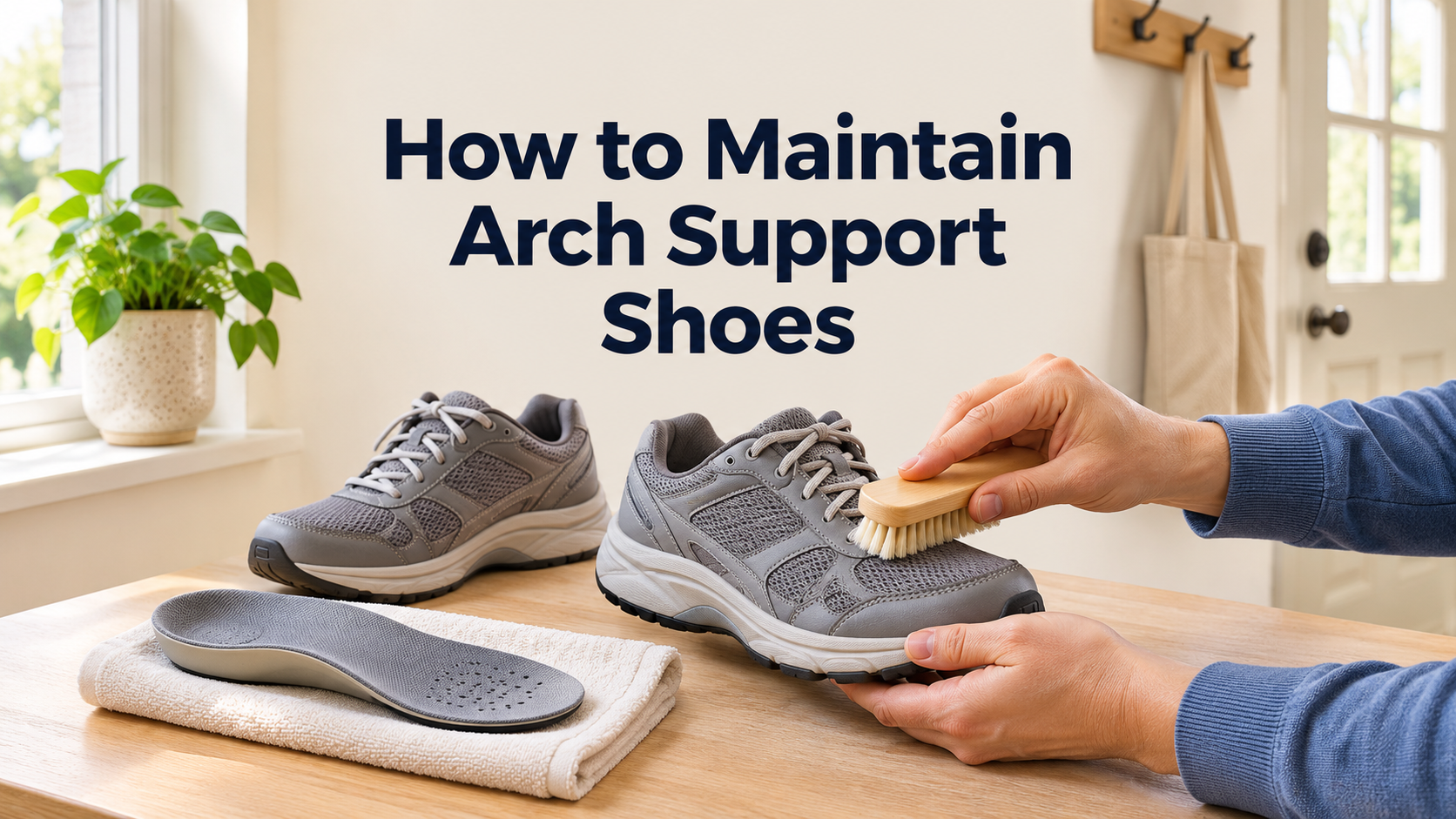
- Replacing worn-out shoes when the midsole collapses or the heel wears unevenly.
Common Mistakes to Avoid
- Curling the toes during short foot instead of lifting the arch.
- Doing too much too soon. Tired muscles are fine, aching tendons are not.
- Rolling the ankle outward to force the arch up. Keep the foot natural and balanced.
- Rushing heel raises with quick, bouncy repetitions.
- Skipping hips and calves. The arch does not work alone.
- Ignoring pain. If an exercise hurts, stop and adjust or ask for advice.
- Expecting overnight results. Consistency over weeks is what counts.
When to See a Professional
- Pain in the arch, heel, or inner ankle that does not improve with rest
- Swelling along the inner ankle
- An arch that is clearly lowering or one foot that is much flatter than the other
- A stiff foot that does not form an arch even when you sit or lift your toes
- Numbness, tingling, or weakness
- No improvement after 8 to 12 weeks of regular practice
A podiatrist or physiotherapist can check your foot structure, design a program for you, and advise on orthotics if needed.
Frequently Asked Questions
Can you fix flat feet with exercises?
Exercises can strengthen the foot and improve arch control and comfort, but they cannot change your bones. Some people see a more visible arch, others mainly notice that their feet feel better.
How long does it take to strengthen your arches?
Many people feel improved control within 4 to 6 weeks, with further gains over 8 to 12 weeks, if they practice regularly.
How often should I do arch exercises?
Short foot and toe control can be practiced daily in small amounts. Heavier strengthening, such as heel raises with a band, is usually done 2 to 3 times per week with rest days in between.
Is walking barefoot good for strengthening flat feet?
Short periods of barefoot walking on safe, soft surfaces may help build foot strength for some people. Increase slowly, and do not do it if your feet are sore or you have reduced feeling.
Do I still need insoles if I strengthen my feet?
It depends on your symptoms. Many people continue to use arch supports while building strength, then reassess later with a professional.
Can children do these exercises?
Most flat feet in young children are normal and do not need exercises. If a child has pain or a stiff foot, see a doctor first.
Final Thoughts
Strengthening your arches is not about forcing your foot into a perfect shape. It is about teaching your feet to work better, giving them the endurance to cope with your day, and supporting them with sensible footwear. Start with the short foot exercise, build slowly through the four phases, take care of your calves and hips, and listen to your body. Stay consistent for a couple of months, and ask a professional for advice if pain or stiffness gets in the way. Your feet carry you every day, and a few minutes of training can make them more capable and comfortable.
Disclaimer: This article is for general information only and is not medical advice. If you have foot pain or health concerns, please consult a qualified healthcare professional before starting a new exercise program.