Shoes for Standing All Day Arch Pain: How to Choose Pairs That Actually Help
If you work on your feet, you probably know the feeling: by mid-afternoon, a dull ache settles into the bottom of your foot, right along the arch. By evening it can feel sore, tight, or even sharp. Many people blame their feet, but very often the real culprit is the shoe. The right shoes for standing all day arch pain can make a noticeable difference, while the wrong pair can quietly make the problem worse every single shift.
In this guide, you will learn why standing for hours strains the arch, which shoe features matter most, which features to avoid, how to check the fit, and what daily habits help your feet recover. Everything here is practical and easy to apply, whether you are a nurse, teacher, cashier, chef, hairdresser, factory worker, or anyone else who spends long hours upright.
Why Standing All Day Causes Arch Pain
Your arch is not a rigid bridge. It flexes slightly with every step and every shift of weight, absorbing shock and then springing back. When you stand still for long periods, though, the muscles and ligaments of the foot hold a constant load without the pumping rest that walking provides. Over hours, they tire, and the tissue underneath the arch can become irritated.
Several common factors make this worse:
- Hard surfaces. Concrete, tile, and hospital flooring give no cushioning back to your feet.
- Flat or very flexible shoes. Thin soles that bend in half offer almost no support under the arch.
- Worn-out shoes. Midsoles lose their bounce and support long before the upper looks old.
- Foot type. Low arches and flat feet tend to roll inward, while high arches can lack shock absorption.
- Extra body weight, pregnancy, or sudden changes in work hours. More load or more time on your feet raises the demand on the arch.
- Tight calves. Stiff calf muscles pull on the heel and increase tension through the foot.
Key Features to Look For in Shoes for Standing All Day
Not every shoe marketed as “comfortable” is built for long hours of standing. Here are the features that matter most when arch pain is the problem.
1. Firm, Built-In Arch Support
The shoe should rise gently to meet your arch. Press your thumb into the arch area of the insole: you should feel a contoured shape that holds its form, not a flat sheet of foam. Support that is too high can cause its own discomfort, so choose a height that feels like even contact rather than a bump.
2. A Midsole That Resists Twisting
Hold the shoe at both ends and try to twist it like a wet towel. A good standing shoe resists twisting and bends only at the ball of the foot, where your toes naturally flex. If it folds in the middle, it will not protect your arch.
3. Cushioning That Does Not Collapse
Soft is not always better. Very squishy foam feels great in the store but can compress within weeks, leaving the arch unsupported. Look for a midsole that is cushioned yet slightly firm, with a spring-back feel when you press it.
4. A Deep, Stable Heel Cup
A firm heel counter keeps the heel centered and stops the foot from rolling inward. Squeeze the back of the shoe: it should not collapse easily.
5. A Roomy Toe Box
Your toes need space to spread, especially as your feet swell during the day. A cramped toe box shifts load back into the arch and can cause cramping.
6. Secure Lacing or Strap Closure
Laces, straps, or hook-and-loop closures let you lock your midfoot in place so the foot does not slide. Slip-ons without any adjustment often make the arch work harder to hold the shoe on.
7. Slip-Resistant, Shock-Absorbing Outsole
A grippy outsole with some thickness helps absorb impact from hard floors and keeps you safe on wet surfaces.
Which Shoe Types Work Best?
| Shoe Type | Best For | Things to Check |
|---|---|---|
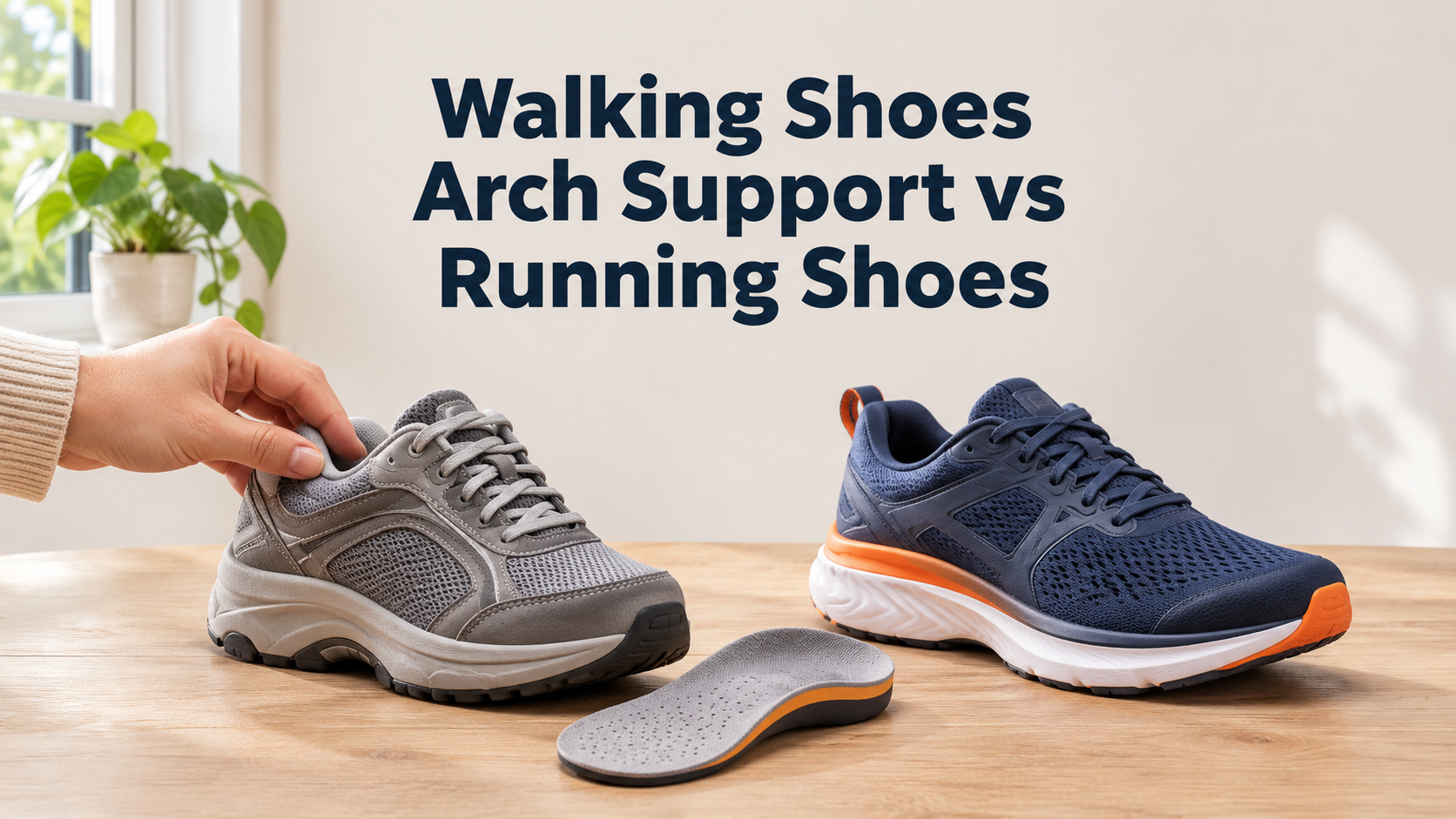
| Supportive walking shoes | Nurses, retail staff, teachers, warehouse work | Firm midsole, cushioned but not mushy |
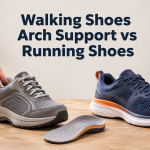
| Cushioned running shoes | Mixed standing and walking days | Choose a stability or neutral model that matches your foot type |
| Occupational clogs | Healthcare, kitchens, wet floors | Look for a contoured footbed and a heel strap |
| Safety or work boots | Construction, factories, outdoor work | Choose lighter models with a supportive, replaceable insole |
| Supportive dress shoes | Offices, hospitality, formal jobs | Low, wide heel and enough room to add an insole |
Shoe Features to Avoid
- Completely flat, thin-soled shoes such as basic flip-flops, ballet flats, and minimalist shoes with no arch contour.
- High heels or heavily raised heels, which shift body weight forward and strain the ball of the foot and arch.
- Narrow or pointed toe boxes that squeeze the toes together.
- Soft, shapeless foam that feels cloud-like at first but offers no structure.
- Old, flattened shoes with creases across the midsole or an uneven wear pattern on the soles.
How to Get the Right Fit
Even the best shoe will not help if it does not fit your foot. Keep these points in mind:
- Measure both feet. Feet change size over time, and one is often slightly larger. Fit the larger one.
- Test the arch. When you stand, the arch of the shoe should feel supportive, not like a lump pressing into one spot.
- Check the width. Your foot should not bulge over the sides of the sole. Many brands offer wide and extra-wide sizes.
- Give it a short break-in. Wear new shoes for a few hours at a time over the first week rather than a full shift immediately.
Do You Need Insoles Too?
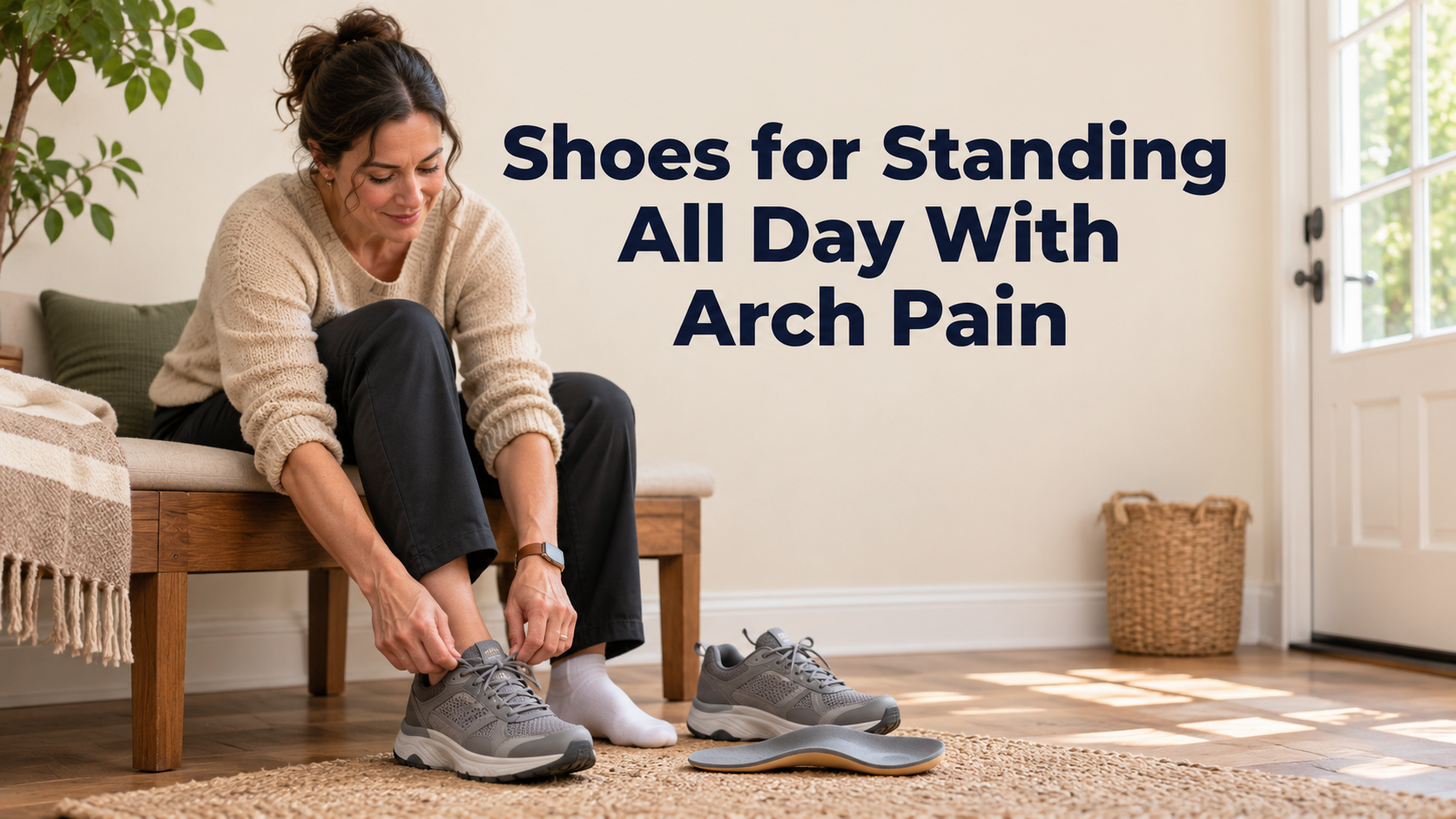
Sometimes the shoe alone is not enough. If the shoe is otherwise good but the arch still aches, a quality supportive insole can improve contact under the arch. Choose a removable-insole shoe so there is room to swap it, and take the original insole out first so the foot does not sit too high. If your pain is strong, lasts for weeks, or keeps coming back, a podiatrist can assess your foot and recommend custom or off-the-shelf support suited to you.
Daily Habits That Reduce Arch Pain
Shoes are the foundation, but small habits protect your arches even more.
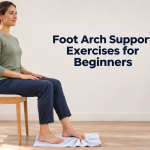
- Stretch your calves and arches. Press your hands against a wall, step one foot back, and keep the heel down for about 30 seconds on each side. Gently pull your toes back toward your shin to stretch the underside of the foot.
- Shift your weight. Avoid locking your knees. Change position often, and if possible, rest one foot on a low footrest for a while, then switch.
- Use an anti-fatigue mat if you stand in one place, such as behind a counter or at a workstation.
- Rotate your shoes. Alternate between two supportive pairs so the cushioning has time to recover between days.
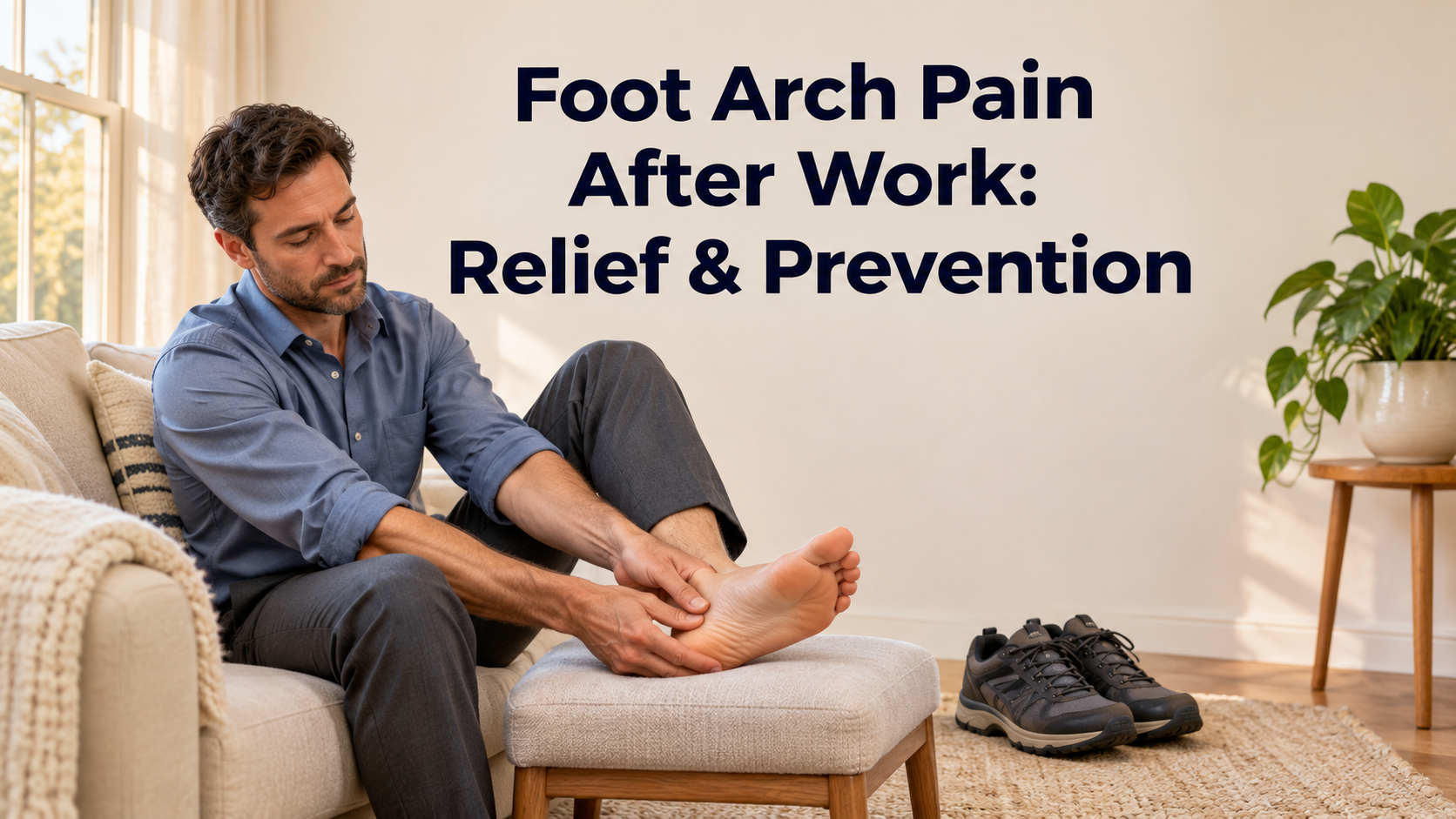
- Roll your arch. After work, roll the bottom of your foot over a tennis ball or a frozen water bottle for a few minutes.
- Choose supportive socks. Moisture-wicking socks with light arch compression can reduce friction and fatigue.
- Elevate your feet. Resting them above heart level in the evening helps reduce swelling.
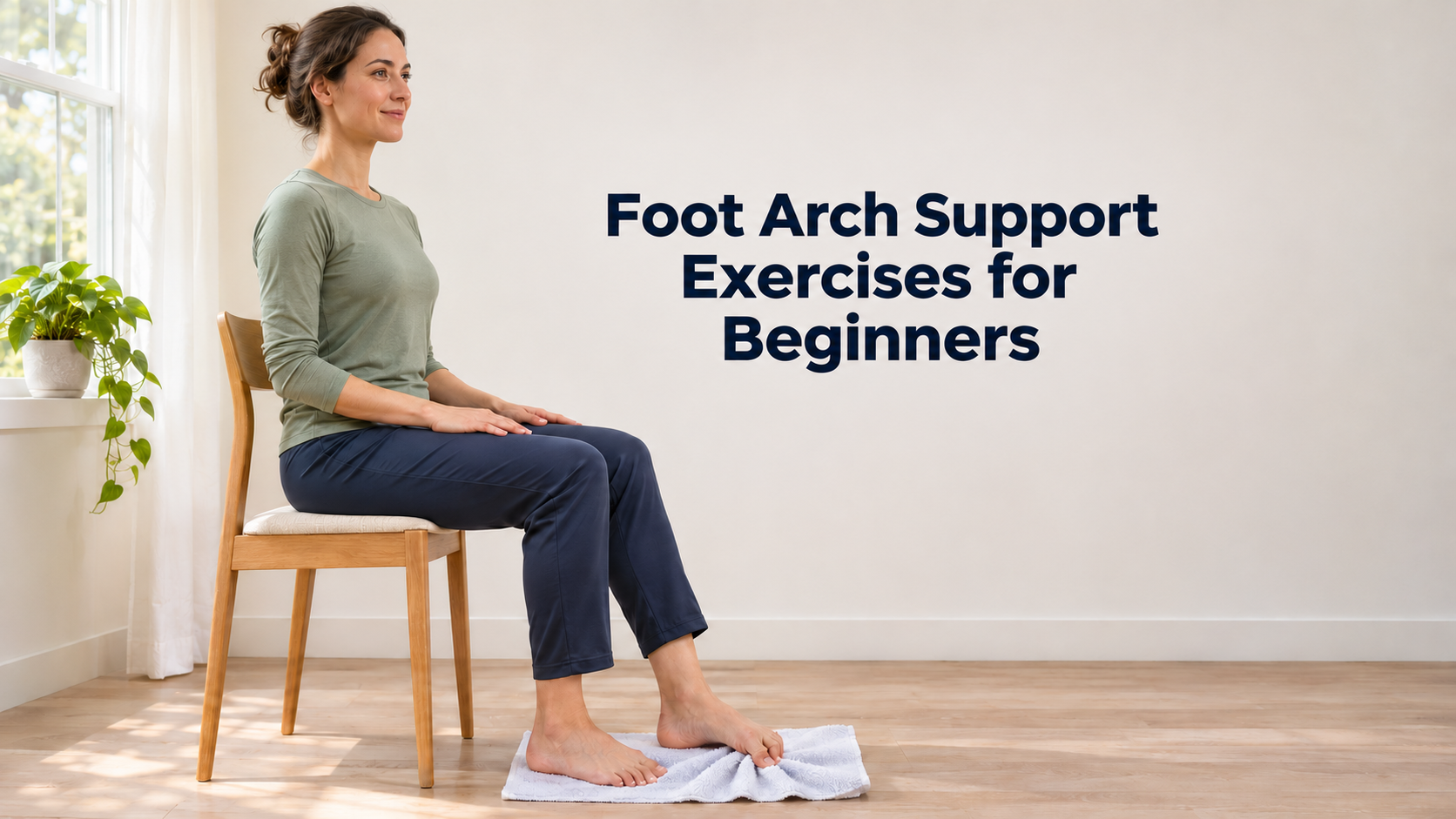
- Strengthen your feet. Simple exercises such as picking up a towel with your toes build the small muscles that help hold the arch.
When to Replace Your Work Shoes
Shoes worn for full shifts usually lose their support sooner than casual shoes. As a general guide, replace them every six to twelve months of daily use, or sooner if you notice any of these signs:
- The midsole shows deep creases or feels flat when pressed.
- The outsole is worn unevenly, especially on one edge.
- The shoe tilts when you place it on a flat surface.
- Your arch or heel starts to ache sooner than it used to.
When to See a Professional
Mild arch fatigue after a long shift is common, but some symptoms deserve proper attention. Consider seeing a podiatrist or doctor if you have:
- Pain that lasts for several weeks despite better shoes and rest
- Sharp pain in the heel or arch when you take your first steps in the morning
- Swelling, redness, or warmth in the foot
- Numbness, tingling, or burning
- Pain that wakes you at night or affects the way you walk
Early assessment often makes treatment simpler. Conditions such as plantar fasciitis, flat feet, or fallen arches are common among people who stand for work, and they respond best when addressed early.
Frequently Asked Questions
What type of shoe is best for standing all day with arch pain?
A supportive walking shoe or occupational shoe with firm arch support, a stable heel cup, a cushioned yet resilient midsole, and a roomy toe box is usually the best starting point.
Are soft, cushioned shoes good for arch pain?
Cushioning helps, but only when paired with structure. Very soft shoes without arch support can let the arch sag over a long shift. Aim for a balance of cushioning and firmness.
Should I buy shoes a size bigger?
Not automatically. You need the right length and width, with about a thumb width of space beyond the longest toe. Going too large lets your foot slide and makes the arch work harder.
Can the right shoes cure arch pain completely?
Good shoes can greatly reduce strain and prevent pain from building up, but they are one part of the solution. Stretching, rest, good habits, and professional advice for ongoing pain all play a role.
Do I need custom orthotics?
Many people feel better with well-fitted supportive shoes and an off-the-shelf insole. If your pain continues or you have a specific foot condition, a podiatrist can advise whether custom orthotics make sense for you.
Final Thoughts
Standing all day will always ask a lot from your feet, but arch pain does not have to be part of the job. Look for shoes with firm arch support, a stable heel, resilient cushioning, and enough toe room. Make sure they fit properly, replace them before they wear out, and combine them with simple stretching and rest habits. If the pain stays or worsens, get it checked early. Your feet carry you through every shift, so choosing the right shoes is one of the best investments you can make in your comfort and long-term health.
Note: This article is for general information only and does not replace advice from a qualified healthcare professional.