
Walking Shoes Arch Support vs Running Shoes: Which One Is Better for Your Feet?
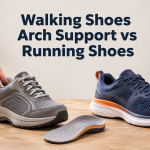
Walking shoes and running shoes can look almost identical on the shelf. Both are cushioned, both come in athletic styles, and both claim to support your feet. But when it comes to arch support, they are designed for very different movements. If you have sore arches, flat feet, or just want to protect your feet during daily activity, understanding the difference between walking shoes arch support vs running shoes can save you money and discomfort.
In this guide, you will learn how each type of shoe is built, how they treat the arch differently, which one suits your foot type and daily routine, and how to pick the right pair with confidence.
How Walking and Running Differ
The key to understanding these shoes is understanding the movement. When you walk, one foot is always on the ground. Your heel touches down gently, your weight rolls smoothly from heel to toe, and the impact is roughly one to one and a half times your body weight. When you run, there is a moment when both feet leave the ground, and each landing can place two to three times your body weight through a single foot.
That difference in force explains almost every design decision in these shoes.
Arch Support in Walking Shoes
Walking shoes are designed to guide a smooth heel-to-toe roll and keep the foot stable through a long day of steps. Their arch support is usually:
- Firm and structured, holding the arch steady rather than only cushioning it.
- Combined with a flexible forefoot, allowing the toes to bend naturally at push-off.
- Paired with a lower, more even heel, which keeps the foot closer to the ground and more balanced.
- Often wider, giving the foot a more stable base.
This makes walking shoes a strong choice for people who spend long periods on their feet, have mild arch discomfort, or want steady daily support without a bulky sole.
Arch Support in Running Shoes
Running shoes focus first on absorbing impact and returning energy. Their arch support is usually:
- Integrated with thick, springy midsole foam that cushions each landing.
- Available in different support types: neutral shoes for normal or high arches, and stability shoes for feet that roll inward.
- Combined with a raised, cushioned heel to protect the heel during heavy strikes.
- Built with a more rocker-shaped sole that helps propel you forward at speed.
Because the cushioning is so thick, running shoes often feel soft and bouncy, but the arch support may be less firm than in a dedicated walking shoe, especially in neutral models.
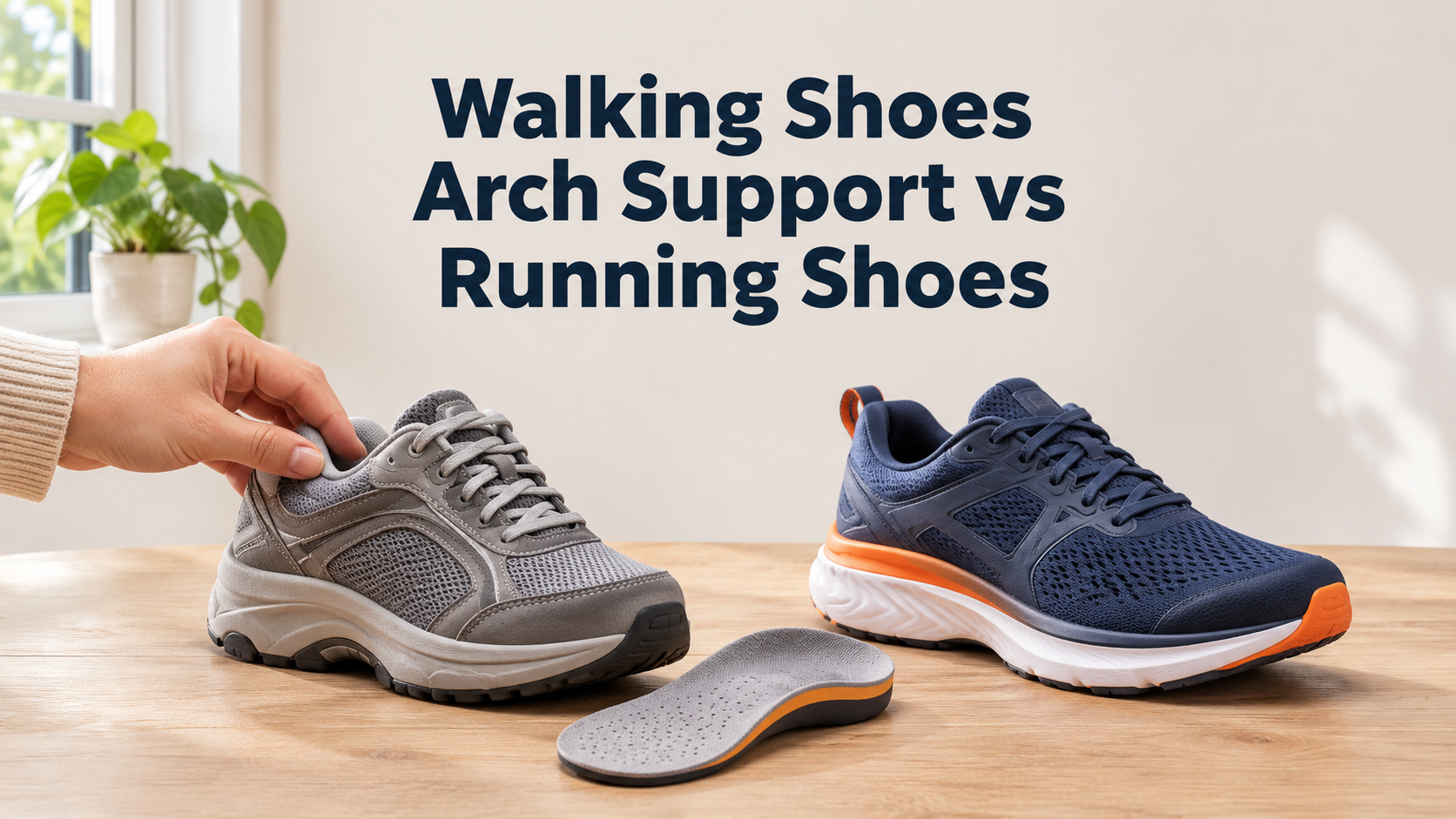
Walking Shoes vs Running Shoes: Side-by-Side Comparison
| Feature | Walking Shoes | Running Shoes |
|---|---|---|
| Main goal | Stability and smooth rolling steps | Impact absorption and forward push |
| Arch support | Firm and structured | Varies: neutral or stability, usually softer |
| Heel height | Lower and flatter | Higher and thicker |
| Cushioning | Moderate | Heavy, especially in the heel |
| Flexibility | Bends at the ball of the foot | Often stiffer, with a rocker shape |
| Weight | Slightly heavier, more durable | Lighter, built for speed |
| Best for | Walking, errands, long days on your feet | Running, jogging, high-impact workouts |
Which Is Better for Arch Pain?
There is no single winner, because the best shoe depends on your foot and your activity.
If You Have Flat Feet or Low Arches
Your foot tends to roll inward and the arch flattens under load. Look for firm, structured arch support. A walking shoe with a stable midsole is often ideal for daily wear, while a stability running shoe works well for running. Avoid very soft, unstructured shoes that let the arch collapse.
If You Have Normal Arches
You have the most freedom. Choose based on what you do most often. Walking shoes suit daily steps and errands, and neutral running shoes suit regular runs. Either option works if the fit and comfort are right.
If You Have High Arches
High arches tend to be rigid and absorb shock poorly. You usually benefit from generous cushioning and a flexible sole. Cushioned neutral running shoes often feel good here, though a cushioned walking shoe with gentle arch contouring can also work well for everyday wear.
If You Have Heel or Arch Pain From Standing
For long days on hard floors, a supportive walking shoe with a firm midsole, a stable heel cup, and moderate cushioning is usually the better daily choice. Many people also do well with a cushioned stability running shoe, since it combines support and shock absorption.
Can You Walk in Running Shoes (and Run in Walking Shoes)?
Walking in running shoes: Yes, this is perfectly fine for most people. Running shoes are comfortable for walking, especially cushioned models. The main drawback is that the thick, raised heel and softer arch can feel less stable for some feet during long walks.
Running in walking shoes: This is not recommended. Walking shoes usually lack the cushioning and energy return needed for running, and they can feel stiff and heavy. Over time, this may increase strain on the arches, shins, and knees.
How to Choose the Right Shoe: A Simple Checklist
- Match the shoe to the activity. Use walking shoes for walking and daily wear, and running shoes for running.
- Do the wet foot test. Wet your foot, step on a piece of paper, and look at the print. A full print suggests a low arch, a thin band suggests a high arch, and a moderate curve suggests a normal arch.
- Shop in the afternoon, when feet are slightly swollen, for a realistic fit.
- Leave a thumb width of space at the front of the shoe, and make sure the heel does not slip.
- Press the arch area. It should feel supportive and even, not like a hard lump.
- Do the twist test. Walking shoes should resist twisting through the middle and bend only at the ball of the foot.
- Walk around the store, or indoors at home on a clean surface, for several minutes before deciding.
Do You Need Extra Arch Support Insoles?
If a shoe fits well but the arch still aches, a supportive insole can help. Remove the original insole first so your foot does not sit too high, and choose a support height that fits your arch gently. If the pain is persistent, a podiatrist can recommend off-the-shelf or custom support that suits your foot.
When to Replace Your Shoes
- Running shoes: generally every 300 to 500 miles (about 500 to 800 km), or roughly every six to twelve months with regular use.
- Walking shoes: usually last a bit longer, but replace them when the midsole feels flat, the outsole wears unevenly, or your arch starts aching sooner than it used to.
Common Mistakes to Avoid
- Choosing by looks alone. Two shoes can look the same and feel completely different underfoot.
- Assuming softer is better. Too much softness without structure can leave the arch unsupported.
- Using worn-out shoes. Old cushioning stops absorbing impact long before the upper looks damaged.
- Ignoring width. A shoe that is long enough but too narrow often causes pressure and tightness.
- Using running shoes for all sports. Court and gym sports need side-to-side stability that running shoes do not provide.
When to See a Professional
Mild arch fatigue is common, but consider seeing a podiatrist if you have pain lasting several weeks, sharp heel or arch pain in the morning, swelling, numbness, or pain that changes the way you walk. A professional can assess your foot shape and gait and recommend the right shoes or support.
Frequently Asked Questions
Do walking shoes have better arch support than running shoes?
Walking shoes often have firmer, more structured arch support, while running shoes focus on cushioning. However, stability running shoes can offer strong arch support too, so it depends on the specific model.
Are running shoes good for walking?
Yes, most running shoes are comfortable for walking, especially for short to moderate distances. For long days on your feet, a dedicated walking shoe may feel more stable.
Can walking shoes be used for running?
It is not recommended. Walking shoes lack the cushioning and energy return needed for repeated high impact, which may lead to discomfort or strain.
Which shoe is best for flat feet?
Flat feet usually do well with firm, structured arch support. A stable walking shoe or a stability running shoe is generally a good choice.
How do I know if the arch support is right for me?
The support should touch your arch evenly and feel comfortable right away. If it feels like a hard bump, causes pressure, or makes the shoe tight, it is probably too high or the wrong shape for your foot.
Final Thoughts
Walking shoes and running shoes both have a place in your wardrobe, but they serve different jobs. Walking shoes offer firm, stable arch support for everyday steps and long days on your feet, while running shoes provide heavy cushioning to absorb the impact of running. Choose according to your activity, your arch type, and how the shoe actually feels on your foot. Get the fit right, replace worn pairs on time, and your arches will thank you with every step.
Note: This article is for general information only and does not replace advice from a qualified healthcare professional.