



Foot Arch Pain From Exercise: Causes, Relief, and How to Keep Training Comfortably
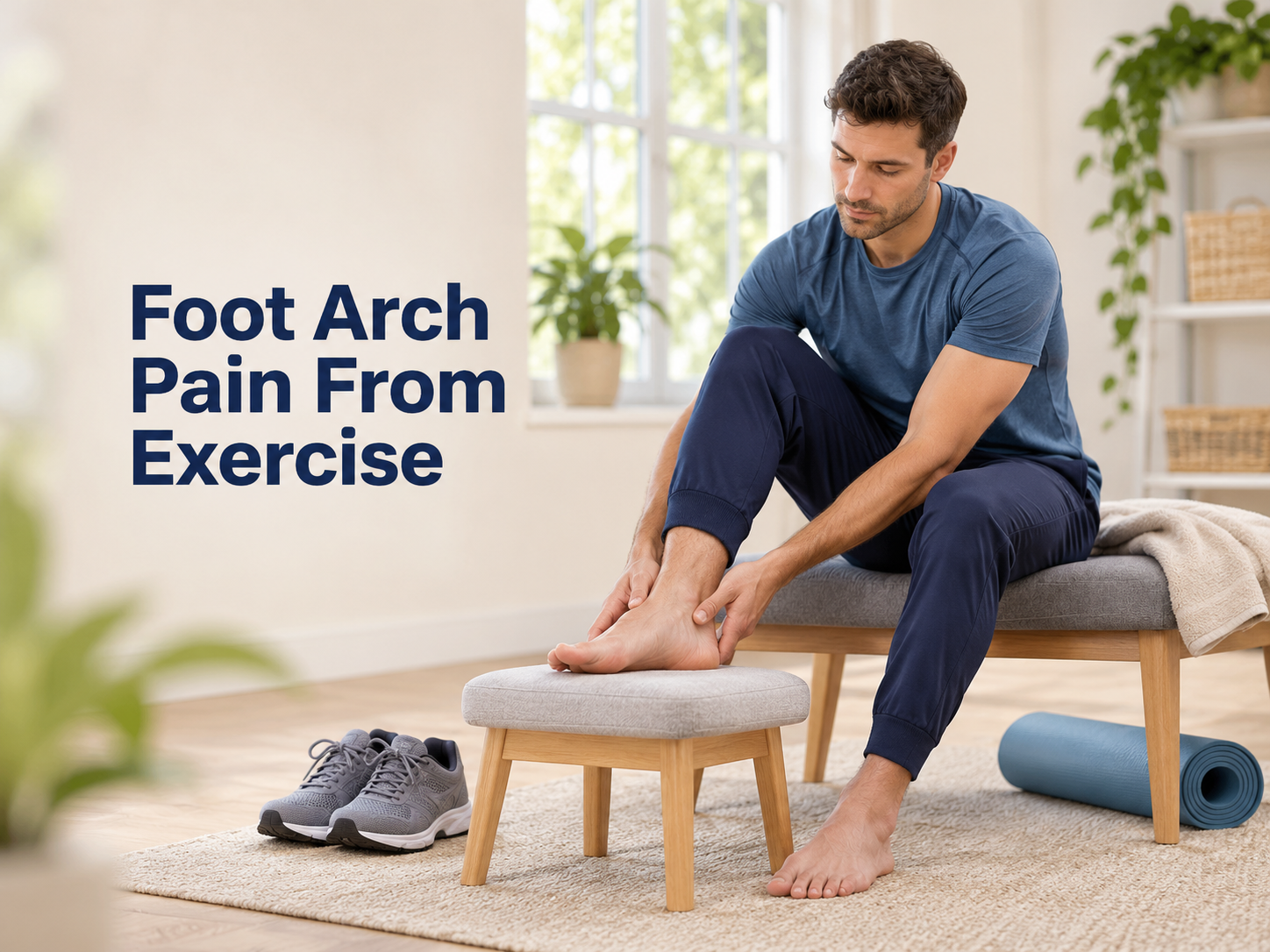
You lace up for a run, a gym session, or a fitness class, and somewhere along the way your arch starts to ache. Maybe it is a dull strain that builds as you move, a sharp twinge with every push-off, or a tight, burning feeling that lingers long after you stop. Foot arch pain from exercise is one of the most common reasons people cut workouts short, and it is often a sign that something in your training, footwear, or foot mechanics needs adjusting.
The encouraging news is that most exercise-related arch pain can be managed and prevented. This guide explains why your arches hurt when you exercise, which activities are most likely to cause it, how to get relief, how to adjust your training, and when to get professional help.
Why Do My Arches Hurt When I Exercise?
Walking places roughly one to one and a half times your body weight through each foot. Running can double or triple that. Jumping, sprinting, and quick changes of direction push it even higher. The arch and the plantar fascia beneath it work hard to absorb these forces, and when the load grows faster than your feet can adapt, the tissue becomes sore and irritated.
Common Causes
- Doing too much, too soon. Sudden increases in distance, speed, frequency, or intensity are the number one trigger.
- Worn-out or unsuitable shoes. Collapsed cushioning, flat soles, or footwear that does not match your activity can overload the arch.
- Tight calf muscles. Stiff calves pull on the heel and increase tension through the plantar fascia.
- Weak foot and ankle muscles. If the small muscles cannot share the work, the ligaments take the strain.
- Foot structure. Flat feet may overstretch the arch, while high arches absorb shock poorly.
- Hard surfaces. Running on concrete or exercising on hard gym floors increases impact.
- Poor technique. Overstriding, landing heavily, or letting the foot roll inward can overload the arch.
- Barefoot or minimal-shoe training without a gradual build-up. Moving suddenly to low-support footwear can strain the arch.
- Extra body weight. More weight means more load on every step and landing.
- Inadequate rest. Training without recovery days prevents tissue from repairing.
Which Exercises Are Most Likely to Cause Arch Pain?
| Activity | Why It Stresses the Arch | Risk Level |
|---|---|---|
| Running | Repeated high-impact landings | High |
| Jumping and plyometrics | Very high forces on landing | High |
| Court and field sports | Sudden stops, pivots, and cutting | High |
| Dance and aerobics | Repeated pointing, jumping, and often thin footwear | Moderate to high |
| Brisk walking and hiking | Long durations on hard or uneven ground | Moderate |
| Weightlifting and standing circuits | Heavy loads through the foot, often in flat shoes | Moderate |
| Cycling and swimming | Low impact, though stiff cycling shoes can press on the arch | Low |
What to Do When Your Arch Starts Hurting During a Workout
- Stop or slow down. Pushing through sharp or increasing pain often turns a minor irritation into a longer problem.
- Check your shoes. Loosen the laces if they are pressing on the top of the foot, and make sure the shoe is not too tight or too worn.
- Switch to a gentler activity. Cycling, swimming, or upper-body work can keep you active while your arch settles.
- Note what triggered it. A new shoe, a longer run, a new surface, or a new exercise can point to the cause.
Relief After Exercise
- Rest. Take the pressure off your feet for the rest of the day where possible.
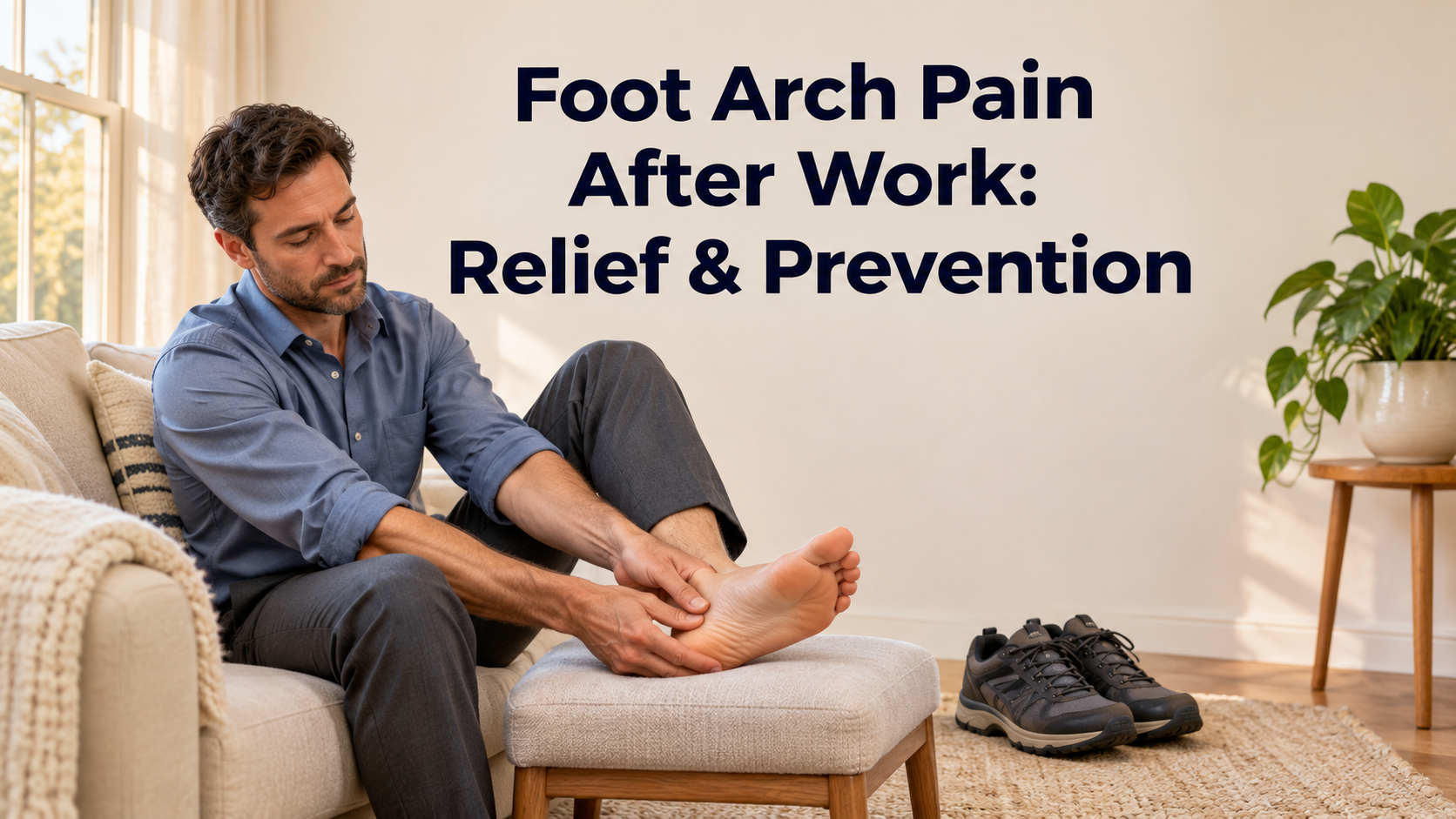
- Roll your arch over a tennis ball or a frozen water bottle for two to three minutes, using gentle to moderate pressure.
- Stretch gently. Do a wall calf stretch for 30 seconds per side, and pull your toes back toward your shin to stretch the underside of the foot.
- Use a cool compress for 10 to 15 minutes if the arch feels hot or inflamed, with a thin cloth between the ice and your skin.
- Elevate your foot above heart level to ease swelling.
- Wear comfortable, supportive footwear afterwards instead of going barefoot on hard floors.
Choose the Right Footwear for Your Exercise
Your shoes are your first line of defense. Wearing the wrong shoe for your activity is one of the easiest mistakes to fix.
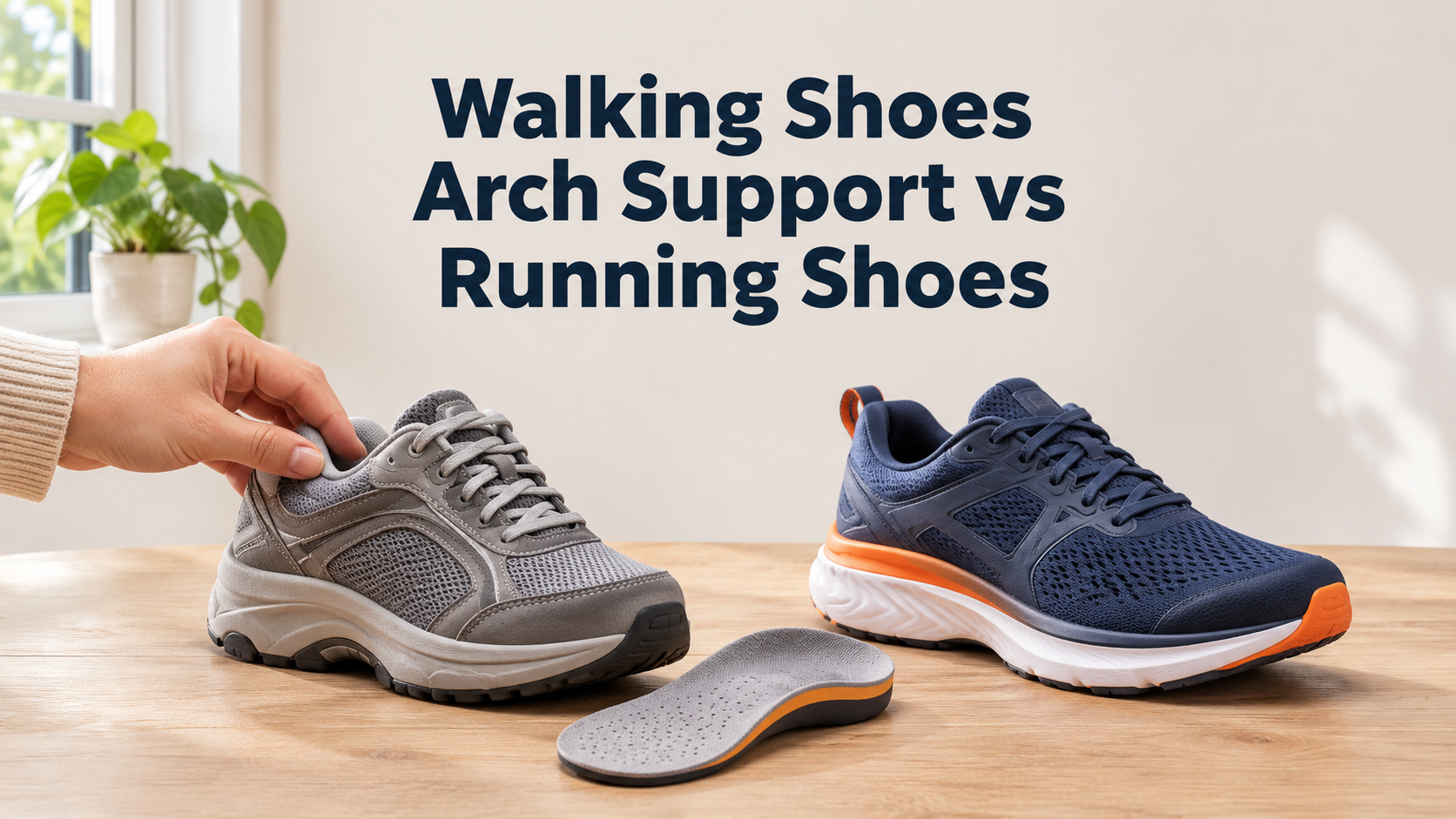
- Match the shoe to the sport. Running shoes for running, court shoes for racquet sports, and cross-training shoes for mixed gym work.
- Look for arch support that suits your foot. Stability shoes suit flat feet, while cushioned neutral shoes often suit high arches.
- Check the fit. Leave about a thumb width in front of your longest toe, and make sure the heel is secure.
- Replace shoes on time. Running shoes generally last about 300 to 500 miles (roughly 500 to 800 km). Other athletic shoes often wear out in six to twelve months of regular use.
- Rotate pairs if you exercise often, so cushioning can recover between sessions.
- Consider a supportive insole if your arches still tire easily. Remove the factory insole first so your foot does not sit too high.
Adjust Your Training to Protect Your Arches
- Increase gradually. A common guideline is to raise weekly distance, time, or intensity by no more than about ten percent.
- Change one thing at a time. Do not add distance, speed, and a new surface all in the same week.
- Warm up properly. Five to ten minutes of easy movement and ankle mobility prepares the foot for work.
- Vary the surface. Mix softer surfaces such as tracks, trails, or grass with harder ones.
- Cross-train. Swap one or two high-impact sessions a week for low-impact options like cycling or swimming.
- Schedule rest days. Recovery is when your tissue repairs and adapts.
- Refine your technique. Shorter, quicker steps often reduce the impact load compared with long, heavy strides.
Strengthen and Stretch Your Feet
Strong, flexible feet cope better with exercise. Add a few minutes of foot care to your routine two or three times a week.
| Exercise | How to Do It | Dose |
|---|---|---|
| Short foot | Draw the ball of the foot toward the heel without curling the toes | 8 to 10 reps, 5 sec holds |
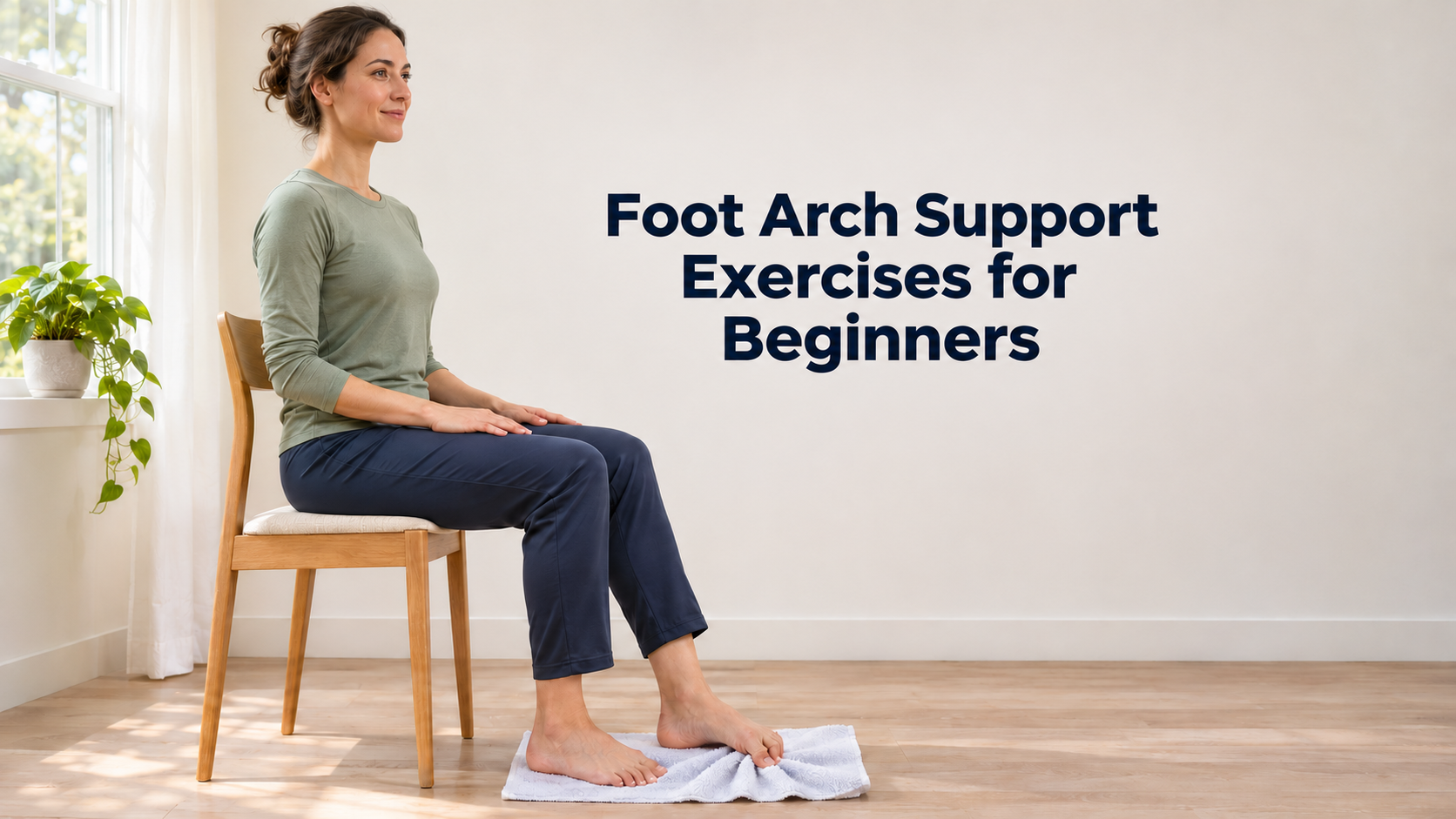
| Towel scrunches | Pull a small towel toward you with your toes | 2 sets of 10 |
| Calf raises | Rise slowly onto your toes and lower with control | 2 sets of 10 |
| Calf wall stretch | Step back with the heel down and lean forward | 30 sec, 2 times per side |
| Single-leg balance | Balance on one foot with the arch gently lifted | 3 holds up to 30 sec |
Is It Plantar Fasciitis?
Exercise is a common trigger for plantar fasciitis, a condition involving irritation of the thick tissue under the foot. It often shows up as a stabbing pain near the heel or arch, especially with the first steps in the morning or after sitting for a while. If your symptoms match this pattern and last for weeks, have it assessed. Early care usually leads to better and faster recovery. Only a healthcare professional can diagnose the cause of your pain.
Signs You Should Stop and Get Checked
- Sharp or sudden pain that forces you to stop mid-exercise
- Pain that persists for more than one to two weeks despite rest and better habits
- Swelling, bruising, redness, or warmth in the foot
- Numbness, tingling, or burning sensations
- Difficulty putting weight on the foot, or a limp that does not improve
- Pain that wakes you at night
- A sudden change in the shape of your arch, especially after an injury
A podiatrist or doctor can check your foot, assess your movement, and recommend footwear, insoles, or a treatment plan suited to you. If you suspect a stress fracture or tendon injury, do not keep training through the pain.
Common Mistakes to Avoid
- Running through pain. Sharp or worsening pain is a signal to stop.
- Training in worn-out shoes. Fading cushioning is a hidden cause of arch strain.
- Going from zero to full intensity. Feet need weeks, not days, to adapt to new demands.
- Skipping rest days. Constant training without recovery keeps the tissue irritated.
- Ignoring tight calves. Calf stiffness is a major contributor to arch strain.
- Using the highest arch support available. The right support fits your foot, not the tallest one.
Frequently Asked Questions
Why does my arch hurt when I run?
Running places high repeated forces on the arch. Pain often comes from increasing mileage too quickly, worn or unsuitable shoes, tight calves, or weak foot muscles.
Should I keep exercising with arch pain?
Mild discomfort that settles quickly may allow modified activity, but sharp or worsening pain is a signal to stop. Switching to low-impact exercise can keep you active while your arch recovers.
How long does exercise-related arch pain last?
Mild strain often settles within days to a couple of weeks with rest and better habits. Pain that lasts longer should be assessed by a professional.
Can arch support insoles help during exercise?
For many people, yes. A well-fitted insole can spread pressure and reduce strain, especially when shoes offer little built-in support. It should feel comfortable and never create a hard bump under the arch.
Is arch pain from exercise a sign of flat feet?
Not necessarily, but flat feet and high arches can both make arch pain more likely. Other causes such as training errors and footwear are very common, so check those first.
Final Thoughts
Arch pain does not mean you have to give up the exercise you enjoy. In most cases, it is your body asking for a change: a better shoe, a slower build-up, more rest, stronger feet, or more flexible calves. Listen to the early warning signs, make small adjustments, and give your arches time to adapt. If the pain persists or worsens, get it checked early. With the right approach, you can return to training comfortably and keep moving for years to come.
Note: This article is for general information only and does not replace advice from a qualified healthcare professional.