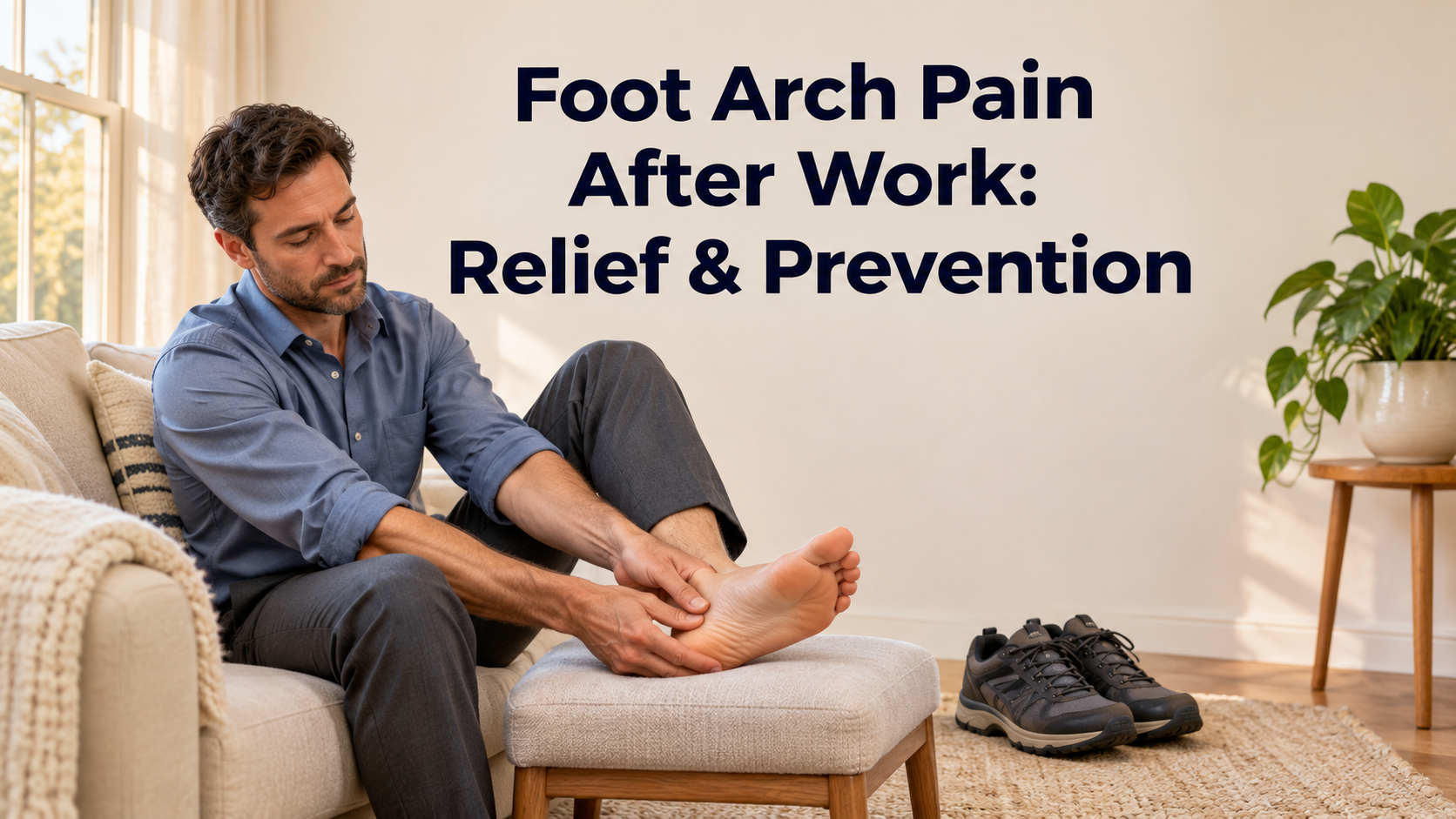








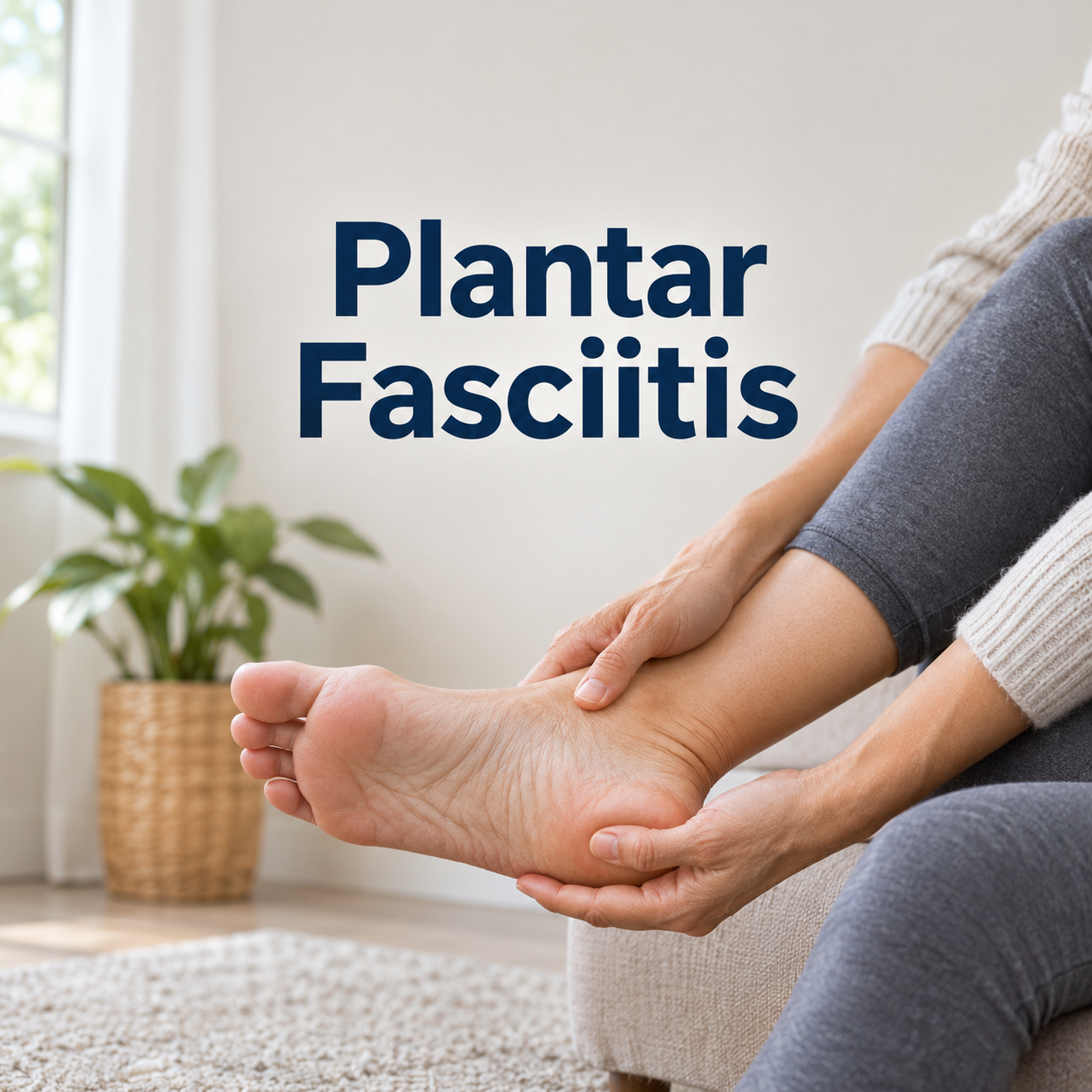
Plantar fasciitis is a painful condition of the thick band of tissue that runs along the bottom of your foot, connecting your heel bone to the base of your toes. It is the most common cause of heel pain in adults, and it classically feels like a sharp, stabbing pain in the heel with your first steps in the morning. The good news: with the right care, the large majority of people recover without surgery.
In this complete guide you will learn what plantar fasciitis really is, why it happens, how to recognise it, how it is diagnosed, which treatments genuinely help, how long recovery usually takes, and how to stop it from coming back.
Key Takeaways
- Plantar fasciitis is irritation and degeneration of the plantar fascia, the band of tissue under your foot.
- The hallmark symptom is heel pain that is worst with the first steps after waking or after sitting for a long time.
- It is caused by repeated overload of the foot, not by a single injury in most cases.
- Calf and foot stretching, supportive footwear, load management and patience are the foundation of treatment.
- Roughly 80 to 90 percent of people improve with non-surgical care within about a year.
- See a healthcare professional if the pain is severe, follows an injury, or is not improving after a few weeks.
What Is Plantar Fasciitis?
The plantar fascia is a strong, fibrous band of connective tissue that stretches from the underside of your heel bone (the calcaneus) to the bases of your toes. Think of it as a natural bowstring supporting the arch of your foot. Each time you walk, run or jump, the fascia stretches to absorb shock and then springs back to help push you forward.
When this band is overloaded again and again, tiny tears and irritation develop where it attaches to the heel bone. That area becomes sore, thickened and sensitive. This is plantar fasciitis. The suffix “-itis” suggests inflammation, but research shows that long-standing cases involve more tissue wear and degeneration than classic inflammation. Because of this, some clinicians prefer the terms plantar fasciopathy or plantar heel pain. They all describe the same everyday problem.
Is plantar fasciitis the same as a heel spur?
No. A heel spur is a small bony growth that can form on the underside of the heel bone. Many people with heel spurs have no pain at all, and many people with plantar fasciitis have no spur on an X-ray. A spur may sit alongside plantar fasciitis, but it is rarely the true source of the pain, which is why treatment focuses on the fascia and the load placed on it.
How common is it?
Plantar fasciitis is extremely common. It is estimated that around one in ten people will experience it at some point in their lives, and about two million people in the United States seek treatment for it each year. It is most frequent between the ages of 40 and 60, but runners, active adults and people who stand for long hours can develop it much earlier.
Plantar Fasciitis Symptoms
The symptoms are quite distinctive, which helps people recognise the condition early. The most typical signs are:
- Stabbing heel pain with the first steps of the day. After a night of rest the fascia tightens, and the first few steps feel sharp or like a bruise under the heel.
- Pain after sitting for a while. Getting up after a long drive, a meeting or a movie often brings the pain back for a few minutes.
- Pain that eases as you warm up, then returns. It may loosen up during light movement but flare again after long periods on your feet or when you finish exercising.
- Tenderness on the underside of the heel, usually toward the inner edge, where the fascia attaches.
- Tightness or aching along the arch, sometimes with mild swelling or stiffness.
- Pain on stairs or when standing on tiptoes, because these positions stretch the fascia.
Plantar fasciitis usually affects one foot, though about a third of people have symptoms in both feet. The pain is often described as sharp, stabbing, burning or like a stone bruise. It typically builds gradually rather than appearing suddenly.
Good to know: Severe pain, a popping sensation followed by sudden pain, numbness, tingling, or heel pain at night while resting are not typical of plantar fasciitis. These deserve a professional check-up.
What Causes Plantar Fasciitis?
In most people there is no single dramatic cause. Plantar fasciitis develops when the load placed on the fascia is greater than what it can tolerate. Over weeks or months, repeated strain causes microscopic damage that the body cannot repair fast enough. Common contributors include:
- A sudden increase in activity, such as starting a running programme, adding hill work or taking a walking holiday after a quiet period.
- Prolonged standing or walking on hard surfaces, common among teachers, nurses, factory workers, retail staff and chefs.
- Tight calf muscles and Achilles tendon. Limited ankle movement increases the tension pulling on the fascia with every step.
- Unsupportive or worn-out footwear with thin soles, flat insoles or no heel cushioning.
- Foot structure, including flat feet, very high arches or an abnormal walking pattern.
- Excess body weight, which increases the force through the heel on every step.
- Weak foot and calf muscles, which reduce the natural shock absorption of the lower leg.
Who Is Most at Risk?
Anyone can develop plantar fasciitis, but certain factors make it noticeably more likely. The infographic below summarises the main risk factors. The more of these that apply to you, the more important it is to look after your feet.
Other Causes of Heel Pain to Rule Out
Not every heel pain is plantar fasciitis. Because several conditions look similar, a proper assessment matters, especially if your symptoms do not follow the typical pattern. Conditions that can mimic it include:
- Heel fat pad syndrome, where the natural cushion under the heel becomes thin or bruised, causing central heel pain, especially on hard ground.
- Calcaneal stress fracture, a small crack in the heel bone, usually after a rapid rise in impact activity. Pain is often worse with activity and does not ease with warming up.
- Achilles tendinopathy, where pain sits at the back of the heel rather than underneath.
- Nerve entrapment (such as tarsal tunnel syndrome), which often brings burning, tingling or numbness.
- Inflammatory or arthritic conditions, which may cause morning stiffness in several joints and pain at rest.
- Sever’s disease, a common cause of heel pain in active children and young teenagers.
How Is Plantar Fasciitis Diagnosed?
Plantar fasciitis is usually diagnosed from your story and a physical examination. A doctor, podiatrist or physiotherapist will ask when the pain happens, what makes it better or worse, and about your footwear, work and activity habits. They will press on the heel and arch to find the tender spot and may gently flex your toes and ankle to see whether the fascia reproduces your pain. They may also check your calf flexibility and your walking pattern.
Scans are generally not needed at the start. An X-ray may be ordered to rule out a fracture or other bone problem, and ultrasound or MRI may be used if symptoms are unusual or have not improved with treatment. Seeing a heel spur on an X-ray does not change the diagnosis or the treatment plan.
Plantar Fasciitis Treatment: What Actually Works
Treatment is built around two goals: reduce the irritation and gradually help the fascia handle load again. For the vast majority of people, simple measures at home do most of the work. Patience and consistency matter more than any single product.
1. Relative rest and load management
You do not need to stop moving completely, but you do need to reduce what aggravates the heel. Cut back on running, jumping and long periods of standing for a few weeks. Swap high-impact exercise for swimming, cycling or other low-impact options. Return to your usual activity gradually rather than all at once.
2. Stretching: the cornerstone of home care
Tight calves and a stiff fascia are central to this condition, so daily stretching is one of the most useful things you can do. The three simple exercises below can be done at home in about ten minutes.
A few extra tips: stretch before you take your first steps in the morning, repeat the stretches several times through the day, and stretch gently rather than aggressively. A mild pulling sensation is normal; sharp pain is a signal to ease off.
3. Supportive footwear and insoles
Footwear is one of the biggest day-to-day factors. Walking barefoot on hard floors, wearing flat sandals or using worn-out trainers keeps the fascia under constant strain. Look for shoes with:
- A firm, well-cushioned midsole that does not fold easily in the middle
- Good arch support that matches your foot shape
- A cushioned, stable heel with a firm heel cup
- A slight heel-to-toe drop rather than completely flat soles
- Enough toe room, with a secure fit that does not slip
Over-the-counter arch-support or heel-cushion insoles can add comfort and are a reasonable first step. If those do not help, custom orthotics prescribed by a podiatrist or physiotherapist may be worthwhile, especially with significant flat feet or very high arches. Replace daily-use athletic shoes roughly every 500 to 800 km (300 to 500 miles) or sooner if the cushioning feels flat.
4. Ice, massage and self-care
Rolling the arch over a cold bottle or ball for 5 to 10 minutes, or applying a wrapped ice pack for 15 to 20 minutes, can ease soreness after a long day. Gentle self-massage along the arch and calf may also reduce tightness. Always keep a cloth between ice and skin.
5. Night splints
While you sleep, your foot naturally points downward, which shortens the fascia and calf. That is why the first steps hurt. A night splint keeps the foot gently flexed overnight so the tissue stays lengthened. They can feel awkward at first, but many people with stubborn morning pain find them helpful. Taping the arch is another short-term option your clinician can show you.
6. Pain relief medication
Over-the-counter anti-inflammatory medicines such as ibuprofen can reduce pain for a short time in people who can safely take them. They do not fix the underlying overload, so they work best alongside stretching and footwear changes. Check with a pharmacist or doctor first, particularly if you have stomach, kidney, heart or blood-pressure issues or take other medicines.
7. Weight management
Because body weight adds to the force on the heel, even modest weight loss can reduce load on the fascia over time for people carrying extra weight. This is a long-term supportive step rather than a quick fix.
Medical Treatments When Home Care Is Not Enough
If you have followed a consistent home programme for several weeks to a few months without enough improvement, it is time to see a professional. They may recommend one or more of the following:
- Physical therapy: A physiotherapist can tailor a stretching and strengthening programme, use manual therapy and correct movement habits. Progressive calf and foot strengthening is especially valuable.
- Custom orthotics: Made from a mould or scan of your feet to support the arch and redistribute pressure.
- Extracorporeal shockwave therapy (ESWT): A non-invasive treatment where sound-wave pulses are directed at the heel. It is typically used for long-lasting cases after other measures have not worked.
- Corticosteroid injection: Can reduce pain in the short term, but repeated injections carry risks, including fat pad thinning and, rarely, rupture of the fascia. They are used cautiously.
- Platelet-rich plasma (PRP) and other injections: Newer options for persistent cases. Evidence is still developing, so discuss the benefits and costs with your clinician.
- Surgery: Reserved for the small minority whose symptoms remain severe after 6 to 12 months of well-structured non-surgical care.
| Treatment | Purpose | Typically used |
|---|---|---|
| Calf and fascia stretching | Reduces tension on the fascia | First-line, daily |
| Supportive shoes and insoles | Cushions and supports the arch | First-line |
| Ice and massage | Short-term soreness relief | As needed |
| Night splint | Keeps fascia lengthened overnight | Persistent morning pain |
| Anti-inflammatory medicine | Short-term pain control | Short courses, if safe |
| Physical therapy | Guided stretching and strengthening | If no progress after weeks |
| Shockwave therapy (ESWT) | Stimulates healing in chronic cases | Long-lasting cases |
| Injections (steroid, PRP) | Targeted pain relief | Selected, stubborn cases |
| Surgery | Releases tension in the fascia | Last resort |
How Long Does Plantar Fasciitis Take to Heal?
This is the question everyone asks, and the honest answer is that it varies. Many people notice meaningful improvement within a few weeks of starting a consistent routine, but full recovery commonly takes several months. Studies suggest that roughly 80 to 90 percent of people recover with non-surgical care within about 12 months. Cases that have been present for a long time, or where the aggravating factors continue, often take longer.
Buying Guide: What to Look For in Foot-Care Products
The market is full of products promising instant heel pain relief. Some are genuinely useful tools, while others are overpriced or oversold. Use this simple checklist to shop wisely, and remember that no product replaces stretching, load management and good footwear.
- Supportive shoes: Prioritise fit, cushioning and arch support over looks. Try shoes on in the afternoon when feet are slightly larger, and bring the socks and insoles you normally use.
- Arch-support insoles: Choose a firm-but-cushioned design that fits properly inside your shoes. Foam that collapses quickly will not last.
- Night splints: Look for adjustable, breathable designs that you can tolerate wearing through the night. Comfort decides whether you will actually use it.
- Massage balls and rollers: A firm ball or a simple frozen bottle does the same job as many expensive gadgets.
- Supportive slippers or house sandals: Useful for avoiding barefoot walking on hard floors at home.
- Cushioned standing mats: Helpful for people who stand for long periods at a kitchen counter, workbench or desk.
- Compression or arch sleeves: May add comfort and a feeling of support for some people during activity.
Shopping tip: Be cautious about any product that promises to cure plantar fasciitis overnight. Genuine improvement is gradual, and a reasonable return policy is worth having when you try new insoles or shoes.
How to Prevent Plantar Fasciitis
You cannot eliminate every risk, but a few habits dramatically lower the chance of developing plantar fasciitis or having it return:
- Wear supportive, well-fitting shoes and replace them before they wear out completely.
- Avoid walking barefoot on hard surfaces for long periods.
- Stretch your calves and feet regularly, especially if you exercise or have a standing job.
- Increase running distance, speed and hill training gradually, by roughly 10 percent a week as a rule of thumb.
- Build strength in the calves, ankles and small muscles of the foot.
- Maintain a healthy body weight.
- Alternate hard-surface exercise with low-impact activities.
- Take short breaks to move and stretch if you stand or sit for long hours.
When Should You See a Doctor?
Self-care is appropriate for mild to moderate cases, but get professional advice if:
- The pain is severe or began suddenly after an injury
- You cannot comfortably put weight on the foot
- There is marked swelling, bruising, redness or warmth
- You feel numbness, tingling or burning
- You have pain at night or at rest
- You have diabetes or poor circulation
- Symptoms have not improved after several weeks of consistent home treatment
Frequently Asked Questions
Can plantar fasciitis go away on its own?
It can, and many cases settle gradually over months. However, without changing the factors that caused it, pain often lingers or returns. Active self-care speeds recovery and lowers the chance of recurrence.
Is walking good or bad for plantar fasciitis?
Gentle walking on supportive footwear is usually fine and helps keep the foot mobile. Long walks, hard surfaces and barefoot walking can aggravate it. Let your symptoms guide you: mild discomfort that settles quickly is acceptable, whereas pain that lingers or builds means you should scale back.
Why does it hurt most in the morning?
Overnight the foot rests in a pointed position, which allows the fascia to tighten and shorten. The first steps suddenly stretch it, causing sharp pain. Stretching before getting out of bed can reduce this.
Can I still exercise with plantar fasciitis?
Yes, in most cases, as long as you choose low-impact options such as swimming, cycling or upper-body workouts while the heel settles. Return to running or jumping gradually once walking is comfortable.
Is plantar fasciitis permanent?
No. For most people it is a temporary condition, although it can be slow to resolve. Even stubborn cases typically improve with the right combination of treatment and load management.
Does a heel spur always need surgery?
No. Heel spurs rarely need surgery. Treatment focuses on easing the plantar fascia, and the spur typically remains harmless.
Final Thoughts
Plantar fasciitis can be frustrating, especially when every morning starts with a painful first step. But it is also one of the most treatable causes of foot pain. Understand what is straining your fascia, stretch consistently, wear supportive footwear, manage your activity levels and give your body time. If progress stalls, a podiatrist or physiotherapist can help you move forward with more targeted options.
Start with the simple steps today: a few gentle stretches, a pair of supportive shoes and a little patience can set you on the road to pain-free walking.
Medical disclaimer: This article is for general information and education only. It is not a substitute for professional medical advice, diagnosis or treatment. Always seek the advice of a qualified healthcare provider with any questions about a medical condition, and do not ignore professional advice because of something you have read here.