








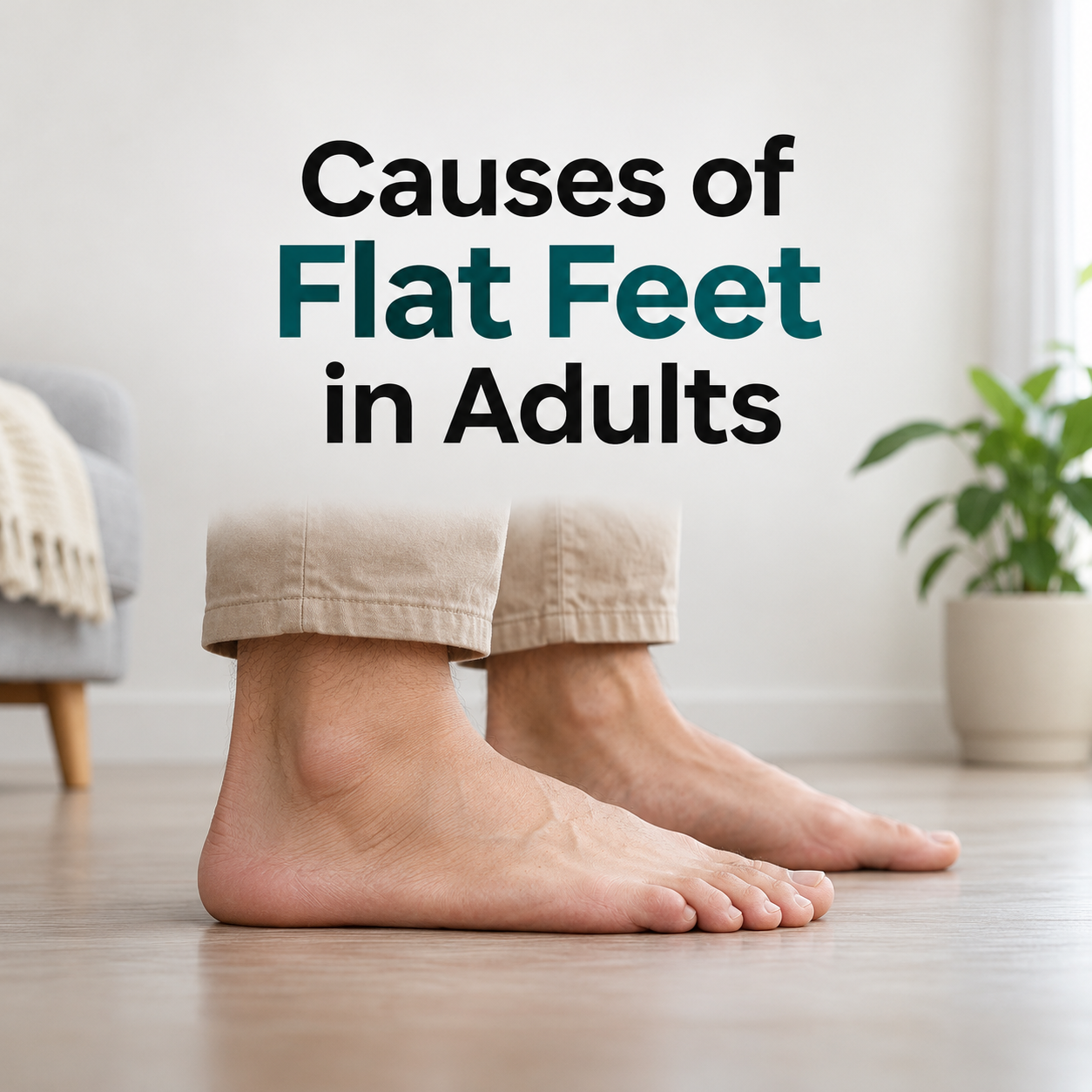
Most people never think about their arches until the day their feet start to ache. If your feet look flatter than they used to, your shoes wear down along the inner edge, or a long day standing leaves your arches throbbing, you are not imagining it. Flat feet in adults are far more common than most people realize, and they do not always begin in childhood. Plenty of adults develop a flat foot later in life, even if they had perfectly normal arches as teenagers.
Understanding the causes of flat feet in adults is the first step toward doing something about them. In this guide you will learn what flat feet are, how a healthy arch works, the nine most important reasons arches fall, the risk factors that raise your chances, the warning signs to watch for, and the practical steps that can protect your feet.
Key Takeaways
- Flat feet (pes planus) means the arch on the inner side of the foot is low or has collapsed, so more of the sole touches the ground.
- Some adults have had flat feet since childhood. Others develop “acquired” flat feet because of tendon damage, injury, arthritis, weight gain, pregnancy, diabetes or aging.
- The posterior tibial tendon is the most common culprit behind a painful, slowly worsening flat foot in adults.
- Early care, including supportive shoes, orthotics, targeted exercises and weight management, often slows progression and eases pain.
- Ongoing pain, swelling or a foot that is visibly changing shape deserves a proper medical evaluation.
What Are Flat Feet (Pes Planus)?
Flat feet, known medically as pes planus or fallen arches, describe a foot whose inner arch is lower than normal or missing altogether. When you stand, most or all of the sole presses against the floor. Many people with flat feet never have a single symptom. For others, the condition brings pain, fatigue and changes in the way they walk.
Doctors usually divide flat feet into a few broad groups:
- Flexible flat feet: The arch appears when you sit, lift your heel or stand on tiptoe, but disappears when you stand with your full weight on the foot. This is the most common type.
- Rigid flat feet: The arch is absent in every position. This type is more likely to be linked to bone or joint problems and tends to cause more discomfort.
- Adult-acquired flatfoot: The arch was normal earlier in life and then gradually collapsed. Specialists now often call this progressive collapsing foot deformity. It is the group most relevant to this article.
A simple at-home clue is the “wet test.” Wet the sole of your foot, step onto a dry piece of paper or a dark floor, and look at the print. A normal arch leaves a clear curve along the inner edge, while a flat foot leaves a print that looks like the full outline of the sole. It is only a rough guide, but it makes the difference easy to see.
How a Healthy Arch Works
The arch is not a single piece of bone. It is a spring-like structure built from small bones, strong ligaments and several tendons that work together. The plantar fascia, a thick band under the sole, and the spring ligament on the inner side of the foot help hold the bones in position. Muscles inside and around the foot add active support every time you push off the ground.
The most important dynamic supporter is the posterior tibial tendon. It starts in the calf, passes behind the bony bump on the inside of the ankle, and attaches to the bones on the inner side of the midfoot. Think of it as a cable that lifts the arch and steadies the heel as you walk. When that cable weakens, stretches or tears, the arch loses its main active support.
Arches rarely fall overnight. In most adults the change is slow, and several small factors add up over the years until the foot can no longer hold its shape.
Causes of Flat Feet in Adults at a Glance
Several different problems can lead to flat feet in adulthood. Some damage the tendons, some loosen the ligaments, and some change the bones and joints themselves. Often more than one cause is involved at the same time.
The Main Causes of Flat Feet in Adults, Explained
1. Posterior Tibial Tendon Dysfunction (PTTD)
This is the leading cause of acquired flat feet in adults. Years of load, inflammation or small tears can leave the posterior tibial tendon stretched, weak or unable to do its job. Once it fails, the arch gradually flattens, the heel drifts outward, and the front of the foot may turn out to the side.
PTTD is more common in women over 40 and in people who are overweight, have high blood pressure or have diabetes. Repeated steroid injections near the tendon and sudden injuries can also play a part. Early signs include pain and swelling along the inner ankle, aching in the arch after activity, and trouble rising onto the toes of one foot. If someone stands behind you, they may notice extra toes visible on the outer side of your foot, a classic sign that the heel has shifted.
2. Aging and Natural Wear
Tendons and ligaments lose some elasticity and strength as we get older. The section of the posterior tibial tendon that curves around the ankle also has a relatively limited blood supply, which makes it slower to heal after repeated strain. After decades of walking, standing and carrying weight, structures that once held the arch firmly can slowly give way. This is one reason many people first notice flat feet in their forties, fifties or later.
3. Excess Body Weight
With every step, the foot absorbs forces greater than your body weight. Extra weight multiplies that load across the arch, the tendons and the ligaments, day after day. Over time this can stretch the supporting tissues and speed up the collapse of the arch. Obesity is also linked with PTTD and with other conditions, such as diabetes and high blood pressure, that further stress the foot. The encouraging side is that even modest weight loss reduces the strain on your feet, knees and hips.
4. Pregnancy and Hormonal Changes
During pregnancy, the body releases hormones such as relaxin that loosen ligaments to prepare for childbirth. Those hormones do not target the pelvis alone. They also soften ligaments in the feet. Combine that with rapid weight gain, fluid retention and a shifting center of gravity, and the arches can flatten noticeably. For some women the arch recovers after delivery, while others find that their feet stay a little longer, wider and flatter than before.
5. Foot and Ankle Injuries
A serious injury can change the structure of the foot in a moment or set it up to collapse later. Midfoot fractures, severe ankle sprains, heel bone fractures, torn ligaments and ruptured tendons can all disturb the balance that keeps the arch in place. Even when an injury seems to heal, the foot may not recover its original shape. Joints damaged by trauma can also develop arthritis years later, which adds another route to a flattened arch.
6. Arthritis
Inflammatory arthritis, especially rheumatoid arthritis, can attack the lining of the joints and the tendons in the foot and ankle. The inflammation may weaken the posterior tibial tendon and the ligaments that support the arch, and the joints themselves can slowly shift out of line. Osteoarthritis in the midfoot and ankle joints can likewise change how the foot carries weight. Pain from arthritis may also lead you to walk differently, which places uneven stress on the arch.
7. Diabetes, Nerve Damage and Charcot Foot
Diabetes raises the risk of PTTD and other tendon problems. It can also damage the nerves in the feet, a condition known as peripheral neuropathy. When feeling is reduced, small injuries and overloaded joints may go unnoticed, so the damage keeps building.
In its most serious form, called Charcot foot, the bones of the midfoot weaken and the joints collapse, sometimes producing a “rocker-bottom” shape. Warning signs include a foot that is warm, swollen and red, often with surprisingly little pain. This is a medical urgency. Anyone with diabetes who notices these changes should see a healthcare professional right away.
8. Genetics, Congenital Conditions and Connective Tissue Disorders
Foot shape runs in families, and some people simply inherit lower arches or looser ligaments. A childhood flexible flat foot may never develop a visible arch and can become painful in adulthood. Several specific conditions also play a role:
- Tarsal coalition: Two or more bones in the back of the foot are joined abnormally, limiting movement and often producing a rigid flat foot.
- Joint hypermobility and connective tissue disorders: Conditions such as Ehlers-Danlos syndrome and Marfan syndrome make ligaments unusually stretchy.
- Neuromuscular conditions: Cerebral palsy, muscular dystrophy and similar disorders alter the balance of muscle pull on the foot.
9. Footwear, Activity and Daily Habits
Shoes and lifestyle rarely create flat feet on their own, but they can push a vulnerable foot over the edge. These factors often act as contributors:
- Wearing thin, flexible or unsupportive shoes for long hours, such as flip-flops or worn-out flats.
- Jobs that involve standing or walking on hard surfaces all day.
- High-impact sports, or a sudden jump in training volume.
- Tight calf muscles or a stiff Achilles tendon, which pull on the heel and increase strain through the midfoot.
The good news is that this group is the easiest to change, and fixing it can lower the pressure on your arches whatever else is going on.
Risk Factors for Developing Flat Feet as an Adult
Some risk factors are out of your control, while others can be managed. The table below summarizes the most common ones.
| Risk factor | Why it matters | Can you change it? |
|---|---|---|
| Age over 40 | Tendons and ligaments lose strength with time | No, but good footwear and fitness help |
| Female sex | PTTD is more common in women, and pregnancy adds ligament changes | No, but early care is possible |
| Overweight or obesity | More load on the arch with every step | Yes |
| Diabetes | Tendon problems and nerve damage raise the risk of collapse | Partly, through blood sugar control |
| High blood pressure | Linked with a higher chance of tendon dysfunction | Partly, through medical care |
| Past foot or ankle injury | Damaged structures may never fully recover | Partly, through proper rehabilitation |
| Inflammatory arthritis | Inflames joints and tendons around the foot | Partly, through treatment |
| Family history | Inherited foot shape and ligament laxity | No |
| Long hours on hard floors | Repeated strain on the arch | Yes, with supportive shoes and breaks |
Common Symptoms of Flat Feet in Adults
Not everyone with flat feet feels pain. When symptoms do appear, they often include:
- Aching or tired feet, especially in the arch and heel, after standing or walking.
- Pain or swelling along the inside of the ankle.
- An arch that is visibly lower, or feet that seem to roll inward when you walk.
- Shoes that wear out faster on the inner edge.
- Pain on the outer side of the ankle in more advanced cases, as the heel shifts outward.
- Difficulty standing on tiptoe or balancing on one foot.
- Knee, hip or lower back discomfort, since foot alignment can change the way force travels up the leg.
When to See a Doctor
Mild flat feet without pain usually do not need treatment. Book an appointment with a doctor, podiatrist or orthopedic foot specialist if you notice any of the following:
- Foot or ankle pain that lasts more than a couple of weeks.
- Swelling, warmth or redness around the inner ankle or midfoot.
- An arch that is changing shape or flattening quickly.
- Trouble rising onto your toes on one foot.
- Numbness, tingling or reduced feeling in your feet.
- Pain after an injury, particularly if you cannot put weight on the foot.
If you have diabetes and your foot becomes hot, swollen or red, seek medical care promptly rather than waiting.
How Flat Feet Are Diagnosed
A clinician will usually start by looking at your feet and ankles while you stand, walk and rise onto your toes. They will check the position of the heel, the flexibility of the arch and the strength of the posterior tibial tendon. Weight-bearing X-rays show how the bones line up under load. If a tendon tear, bone coalition or other soft-tissue problem is suspected, an ultrasound, MRI or CT scan may be recommended. A precise diagnosis matters because the best treatment depends on which structures are involved and how far the changes have progressed.
How to Protect Your Arches: Management and Prevention
You cannot change your genes or your age, but you can lower the stress on your arches and support them better. Most adults with symptomatic flat feet improve with conservative care, and surgery is kept for more advanced cases.
Choose Supportive Footwear
Good shoes are the simplest everyday upgrade. When you shop, look for:
- A firm heel counter that holds the back of your heel steady.
- A midsole that bends at the ball of the foot but resists twisting in the middle.
- Built-in arch contour or enough depth to fit an insert.
- A roomy toe box that lets your toes spread.
- A fresh pair when the cushioning is compressed or the soles are worn unevenly.
Use Arch Supports or Orthotics
Arch supports and orthotic insoles cannot rebuild a collapsed arch, but they can share the load, improve alignment and reduce pain. Off-the-shelf supports are a reasonable starting point for mild symptoms. If you have significant pain, a visible deformity, diabetes or a rigid foot, custom orthotics prescribed by a professional are usually a better choice. Some people with PTTD are fitted with a brace or walking boot during flare-ups.
Stretch and Strengthen
Targeted exercises help the muscles that support the arch and ease tension that pulls on the heel. Common examples include:
- Calf stretches: Loosen tight calf muscles and the Achilles tendon.
- Short-foot exercise: Draw the ball of the foot toward the heel without curling the toes to activate small arch muscles.
- Towel scrunches: Use your toes to pull a towel toward you.
- Heel raises: Rise slowly onto the balls of your feet to strengthen the calf and tendon.
If you already have pain along the inner ankle, check with a physical therapist before starting heel raises, since the wrong load can irritate an inflamed tendon.
Manage Weight and Activity
Losing even a small amount of excess weight reduces the pressure on your feet. Low-impact activities such as swimming, cycling and walking on softer surfaces keep you moving without pounding the arches. Increase training gradually, and rest when the foot starts to complain.
Medical and Surgical Options
Depending on the cause, a clinician may recommend rest, ice, a short period in a supportive boot, physical therapy or anti-inflammatory medicine. When pain and deformity persist despite conservative treatment, surgery may be considered. Procedures can include tendon repair or transfer, reshaping or realigning bones, or fusing painful joints. The right option depends on your age, activity level and the stage of the deformity.
Frequently Asked Questions
Can flat feet develop in adulthood?
Yes. Adult-acquired flat feet are well recognized. Posterior tibial tendon dysfunction, injury, arthritis, pregnancy, weight gain and diabetes can all cause an arch that was once normal to flatten.
Are flat feet a serious problem?
Not always. If flat feet are painless and stable, they may need no treatment at all. A flat foot that is painful, swollen or steadily changing shape should be assessed, because early treatment gives the best chance of slowing the process.
Can flat feet be corrected without surgery?
Non-surgical care rarely restores a fully collapsed arch, but it can control symptoms very effectively. Supportive shoes, orthotics, bracing, exercises and weight management help many adults stay active and comfortable.
Can flat feet cause knee, hip or back pain?
They can contribute in some people. A low arch may change the alignment of the leg and the way force moves up the body, which can add stress to the knees, hips and lower back. Not everyone with flat feet experiences this.
Do exercises cure flat feet?
Exercises strengthen the supporting muscles and can improve comfort and function, but they do not always rebuild the arch itself. They work best alongside good footwear and, when needed, orthotics.
Final Thoughts
The causes of flat feet in adults range from a worn-out posterior tibial tendon and the natural effects of aging to pregnancy, injury, arthritis, diabetes, inherited foot structure and everyday habits. In many people several factors combine slowly until the arch can no longer hold its shape. The earlier you recognize the signs, the more options you have.
Pay attention to aching arches, inner-ankle swelling and shoes that wear unevenly. Choose supportive footwear, keep your calves flexible, manage your weight and get persistent pain checked by a professional. Your feet carry you through every day, and a little attention now can keep them working well for years to come.