







Symptoms of Metatarsalgia in Runners: How to Spot Ball-of-Foot Pain Early and Get Back on the Road
You are a few miles into your run when it starts: a dull ache, a burning patch or a sharp “stone-under-the-foot” feeling right behind your toes. By the next run it is a little worse. By the end of the week you are limping around the house. If that sounds familiar, you may be dealing with metatarsalgia, one of the most common forefoot problems in runners.
The good news is that metatarsalgia is usually not serious, and most runners improve with smart load management, better footwear and a few simple exercises. The catch is that the early warning signs are easy to ignore, and pushing through them is the quickest way to turn a minor irritation into a month on the sidelines.
In this guide you will learn the symptoms of metatarsalgia in runners, how to tell it apart from look-alike problems, what causes it, how to treat it at home, when you should see a professional, and how to return to running safely.
Quick answer: key symptoms at a glance
- Aching, sharp or burning pain under the ball of the foot, often behind the 2nd, 3rd and 4th toes
- Pain that gets worse when you push off, run on hard surfaces or go barefoot
- A feeling that you are running on a pebble or a bunched-up sock
- Numbness or tingling in the toes
- Pain that eases when you rest and returns when you run again
What Is Metatarsalgia?
Metatarsalgia (say it “met-uh-tar-SAL-juh”) is a general term for pain and inflammation in the ball of the foot. The ball of the foot sits just behind your toes, where the long bones of the forefoot, called the metatarsals, end in rounded “heads.” You have five metatarsals in each foot, and the heads of these bones carry a large share of your body weight each time you push off the ground.
Under the heads sits a thin natural cushion of fatty tissue. When too much pressure lands on the forefoot, or the cushion cannot cope with the load, the area becomes irritated and sore. That irritation is metatarsalgia. It is a symptom rather than a single disease, which means several different problems can lie behind it.
Why Runners Are Especially Prone to Ball-of-Foot Pain
Running is repeated impact. With every stride, your forefoot takes a heavy load as your body rolls over the foot and pushes off the ground. Over a single run this happens thousands of times. The forces going through your foot are several times your body weight, and a large share of that load passes through the metatarsal heads during the push-off phase.
Several things make runners more vulnerable than the average person:
- Volume: Even a small imbalance in how pressure is spread across the forefoot adds up over hundreds of thousands of steps.
- Speed and hills: Faster running, sprint work and uphill running put more load on the front of the foot.
- Hard, unforgiving surfaces: Tarmac and concrete return more impact to the foot than grass or trails.
- Changes in shoes or gear: A sudden switch to a firmer, flatter or more minimal shoe, or to track spikes, can overload a forefoot that is not used to it.
Symptoms of Metatarsalgia in Runners
The symptoms of metatarsalgia usually start gradually. Many runners notice a small niggle for a few runs before it becomes hard to ignore. Here is what to watch for.
1. Aching, sharp or burning pain under the ball of the foot
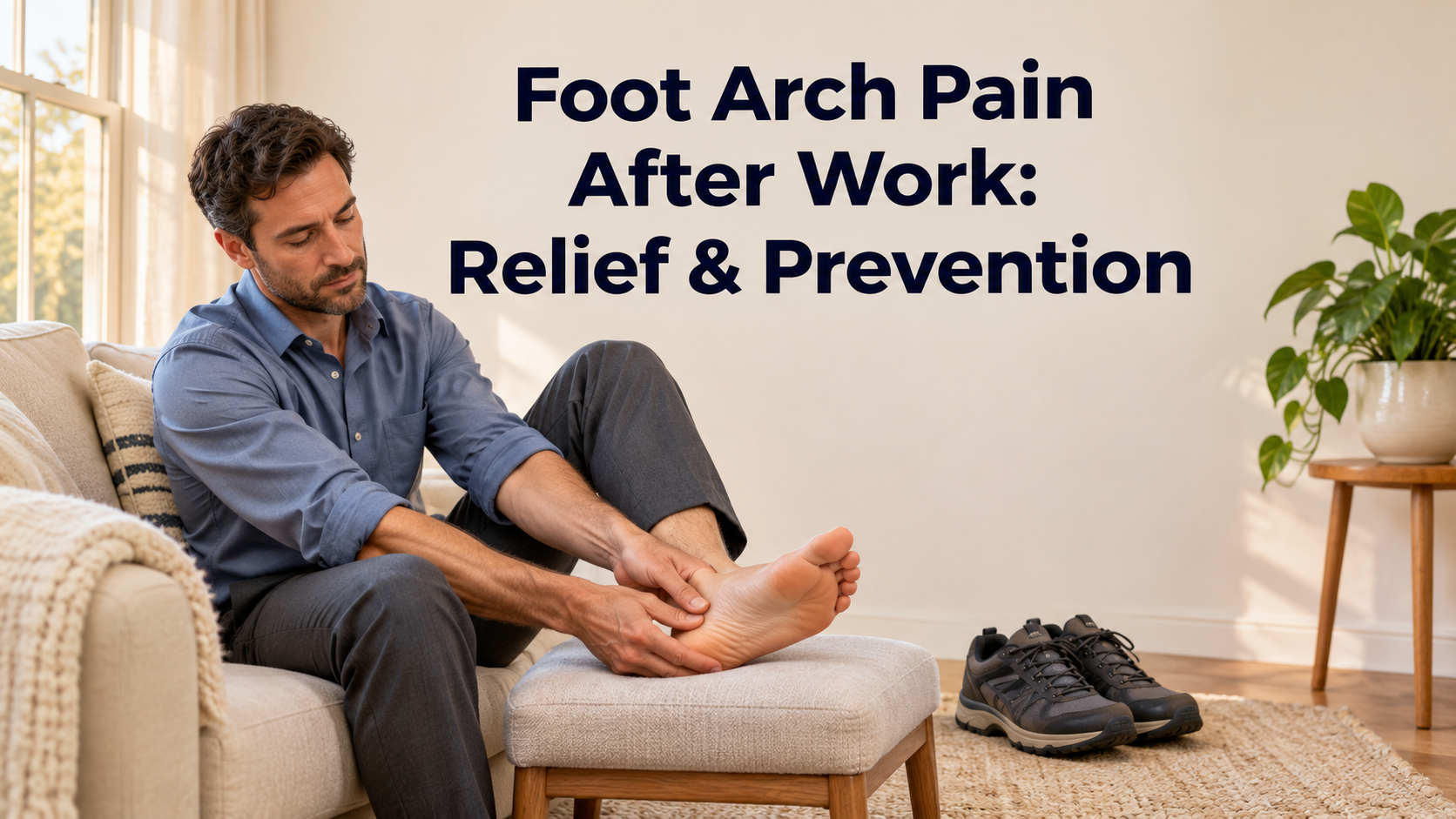
This is the classic sign. The pain is felt under the front of the foot, just behind the toes. It is often centered under the 2nd, 3rd or 4th metatarsal heads, although it can affect any of them. Runners describe it as a deep ache, a sharp pinch or a burning sensation.
2. Pain that gets worse during push-off
Because the forefoot takes the most load at toe-off, the pain typically builds as you push forward, sprint, run uphill or run on hard roads. Standing up on your toes, climbing stairs or walking barefoot on a hard floor can bring it on as well.
3. A “pebble in the shoe” or bruised feeling
Many runners say it feels like they are running on a small stone or a bunched-up sock, even though their shoe is empty. The area may feel bruised and tender when pressed.
4. Numbness or tingling in the toes
Pins and needles, burning or numbness that spreads into the toes can occur when nearby nerves are irritated or squeezed. Nerve-type symptoms deserve extra attention because they can point to a related problem such as Morton’s neuroma (covered below).
5. Pain that eases with rest but returns when you run
Typical metatarsalgia settles when you take weight off the forefoot, then flares again once you resume running. If the pain is present at rest or wakes you at night, treat that as a warning sign and get it checked.
6. Swelling, redness or a callus under the painful area
You may notice mild swelling, a thickened patch of skin (callus) or redness under the ball of the foot, especially if the pressure has been building for a while.
How symptoms typically progress
- Early stage: Mild discomfort after runs, or only on hard surfaces. It disappears within hours.
- Middle stage: Pain appears during runs, usually later in the session or when you speed up. You may start to alter your stride.
- Advanced stage: Pain starts early in the run, lingers afterwards and shows up during walking or standing. You may limp, which can strain the other foot, the knee, the hip or the lower back.
The earlier you act, the easier the fix. Do not wait for the advanced stage.
Is It Metatarsalgia or Something Else?
Several other conditions cause pain in the front of the foot, and they can feel very similar. This is why guessing can be risky. The table below shows how they compare, but only a clinician can make a proper diagnosis.
| Condition | Where it hurts | What it feels like | Useful clue |
|---|---|---|---|
| Metatarsalgia | Under the ball of the foot, often the 2nd to 4th heads | Aching, burning, bruised, pebble-like | Worse with push-off and hard surfaces; eases with rest |
| Morton’s neuroma | Usually between the 3rd and 4th toes | Burning, tingling, numbness, bunched-sock feeling | Nerve symptoms dominate; tight shoes make it worse |
| Metatarsal stress fracture | A specific spot on a metatarsal bone | Pinpoint pain, swelling | Pain may continue at rest or at night; needs medical assessment |
| Capsulitis (plantar plate irritation) | Base of the 2nd toe, under the joint | Swelling, tenderness, toe may drift | Pain in one joint rather than a broad area |
| Sesamoiditis | Under the big-toe joint | Dull ache, pain when bending the big toe | Pain is on the big-toe side of the foot |
What Causes Metatarsalgia in Runners?
Most of the time, several factors work together rather than one single cause. Understanding them helps you fix the problem rather than just treat the pain.
Training factors
- Too much, too soon: Sudden jumps in mileage, intensity, hill work or speed sessions.
- Running on hard surfaces for most of your weekly miles.
- Switching footwear quickly: For example, moving from well-cushioned shoes to minimal shoes or racing spikes without a gradual adaptation period.
Footwear factors
- Worn-out shoes that have lost their cushioning. Many runners replace shoes roughly every 300 to 500 miles (about 500 to 800 km), though this varies by shoe, runner and surface.
- Shoes that are too tight or too narrow, which squeeze the forefoot and can irritate nerves.
- Shoes that are too loose, which let the foot slide forward and jam the toes.
- Thin or firm forefoot cushioning that offers little protection at push-off.
Foot structure and mechanics
- High arches, which can concentrate pressure on the metatarsal heads.
- A longer second toe (often called Morton’s toe), which can shift extra load onto the 2nd metatarsal head.
- Foot deformities such as bunions or hammertoes, which change how weight is distributed.
- Tight calves or a stiff big-toe joint, which can alter how the foot rolls forward.
- Thinning of the natural fat pad under the forefoot over time.
Body factors
- Extra body weight, because most of your weight passes through the forefoot as you move.
- Related conditions such as Morton’s neuroma or a stress fracture, which can cause or mimic metatarsalgia.
When Should You See a Doctor or Foot Specialist?
Get professional advice if you notice any of these:
- Burning pain in the ball of the foot that does not improve after you change shoes and cut back your running
- Pain that does not settle within roughly one to two weeks of sensible rest and adjustments
- Sudden, severe pain, or pain that began after a specific impact or awkward landing
- Pinpoint pain on a bone, noticeable swelling or bruising
- Pain at rest or at night
- Persistent numbness, tingling or pins and needles in the toes
- Difficulty putting weight on the foot, or a limp that will not go away
- Redness, warmth or fever, or if you have diabetes or circulation problems and develop any new foot pain
A doctor, podiatrist or sports physiotherapist will usually ask about your training, shoes and symptoms, examine your foot while you are standing and sitting, and check how you walk and run. An X-ray, or sometimes an MRI or ultrasound, may be used to rule out a stress fracture or another foot problem.
How to Treat Metatarsalgia at Home
For many runners, simple self-care is enough to settle mild metatarsalgia. These steps work best when you start early and combine several of them.
1. Reduce the load, but keep moving
Cut back your running volume, speed work and hill sessions until the foot calms down. In many cases you do not need to stop all exercise. Cycling, swimming and pool running keep your fitness up while taking pressure off the forefoot. Avoid walking barefoot on hard floors in the meantime.
2. Use ice after activity
Apply an ice pack wrapped in a thin cloth to the ball of the foot for about 10 to 15 minutes, especially after a run or a long day on your feet. This can help ease soreness and swelling. Never place ice directly on the skin.
3. Fix your footwear
Choose shoes with a roomy toe box, good forefoot cushioning and a secure heel. Replace worn-out pairs. For everyday life, avoid high heels and narrow, pointed shoes while you recover.
4. Try metatarsal pads or cushioned insoles
A metatarsal pad is a small dome-shaped cushion that sits just behind the ball of the foot, not directly under the sore spot. It helps spread pressure away from the metatarsal heads. Soft cushioned insoles and arch supports can also help. If over-the-counter options do not do enough, a podiatrist can assess you for custom orthotics.
5. Stretch and strengthen
- Calf stretches: Tight calves increase forefoot load. Hold each stretch for 30 seconds, two or three times, on both sides.
- Gentle toe stretches: Use light, pain-free movements to keep the toe joints mobile.
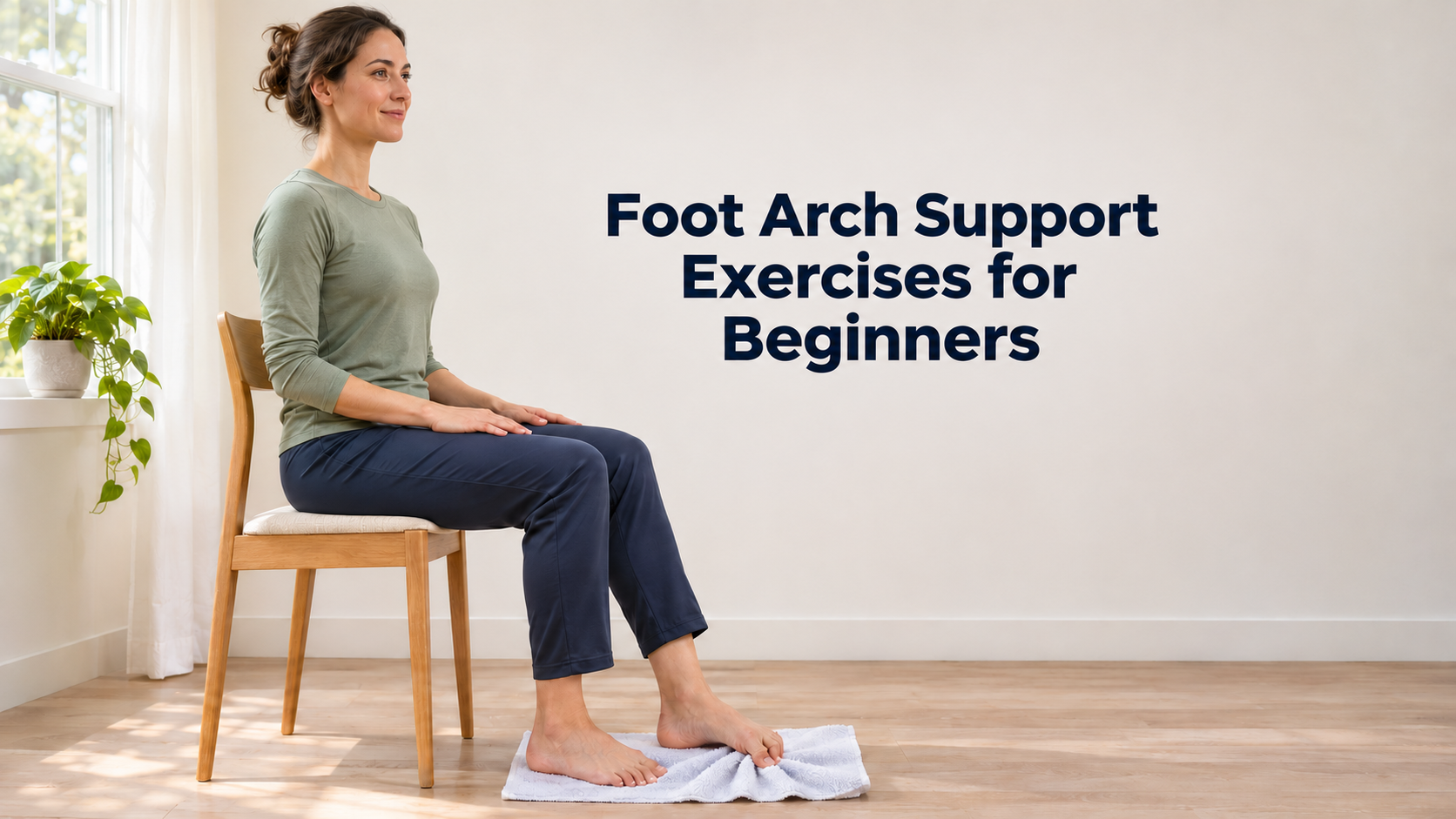
- Towel scrunches and toe curls: Build the small muscles of the foot.
- Short-foot exercise: Draw the ball of the foot toward the heel without curling the toes, hold for a few seconds, then relax.
- Calf raises: Start with two legs, then progress to one leg as pain allows.
Stop any exercise that increases forefoot pain beyond mild discomfort.
6. Consider short-term pain relief
Over-the-counter anti-inflammatory pain relievers can help some people for a few days, but they are not safe for everyone. Check with a pharmacist or doctor first, particularly if you have stomach, kidney or heart problems, or take other medications.
7. Look at the bigger picture
If extra body weight is adding to the load, even modest weight loss can reduce pressure on the forefoot. A gait analysis with a physiotherapist or specialist running store can also show whether your running form or shoe choice is part of the problem.
In rare cases where conservative care does not work, especially when the problem is complicated by a foot deformity such as a hammertoe, a specialist may discuss other options, including surgery to realign the bones. This is uncommon.
Helpful Gear for Runners With Forefoot Pain
The right equipment will not fix every cause, but it can make a real difference to comfort. Here is what to look for.
- Cushioned running shoes with a wide toe box: Look for generous room for the toes and soft forefoot padding. Try shoes on in the evening, when feet are slightly larger, and leave about a thumb’s width of space in front of your longest toe.
- Rocker-soled shoes: A gently curved sole helps the foot roll forward and can reduce bending at the toes.
- Metatarsal pads: Small gel or felt pads that sit just behind the ball of the foot.
- Cushioned insoles: Soft, shock-absorbing insoles can add forefoot protection to everyday and running shoes.
- Gel forefoot cushions or sleeves: Useful for shoes with thin padding or for time spent on your feet at work.
- Cushioned running socks: Extra padding under the forefoot can make a small but noticeable difference.
- Recovery tools: A reusable ice pack for post-run care, a massage ball for the calf and foot, and a resistance band for strengthening exercises.
How to Return to Running After Metatarsalgia
The biggest mistake runners make is returning to full training the moment the pain fades. The underlying cause, whether it is a shoe, a training habit or weak foot muscles, has usually not been fixed yet. A gradual return protects you from a repeat flare-up.
Check these before you run again
- You can walk normally without pain.
- You can do single-leg calf raises without sharp forefoot pain.
- Any discomfort during activity stays at about 2 out of 10 or lower.
- The foot feels no worse the next morning.
Start with short run-walk intervals on a flat, forgiving surface, and run every other day at first. Increase the total time before you increase the pace. If pain climbs above mild discomfort, step back to the previous stage rather than pushing on.
How to Prevent Metatarsalgia
- Build mileage gradually. Many coaches suggest increases of about 10 percent per week as a rough guide.
- Rotate shoes and replace them before the cushioning is flat.
- Get the right fit. Choose a wide enough toe box and a secure heel.
- Change surfaces. Mix tarmac with grass, trail or a track.
- Adapt slowly when moving to minimal shoes or racing spikes.
- Strengthen your feet and calves two or three times a week.
- Keep calves and ankles mobile with regular stretching.
- Listen to early niggles. A mild ache is a signal to adjust, not to ignore.
- Look after your overall health, including a healthy body weight and good recovery habits.
Frequently Asked Questions
Can I keep running with metatarsalgia?
If the pain is mild, does not get worse during the run and does not change the way you run, you may be able to continue with reduced mileage, softer surfaces and better shoes. If the pain is sharp, builds as you run, makes you limp or lingers afterwards, stop and rest. When in doubt, get it checked.
How long does metatarsalgia take to heal?
Mild cases often settle within a few weeks once the load and footwear are sorted out, while stubborn cases can take longer. Recovery time depends on the cause, how long the problem has been present and how well you stick to the plan.
Is metatarsalgia the same as Morton’s neuroma?
No. Metatarsalgia is a general term for pain in the ball of the foot. Morton’s neuroma is a specific thickening of tissue around a nerve, usually between the 3rd and 4th toes, and it tends to cause burning, tingling or numbness. A neuroma can cause symptoms similar to metatarsalgia, and the two can occur together.
Can metatarsalgia go away on its own?
Sometimes, when the trigger such as a new shoe or a training spike is removed. If the cause stays in place, the pain usually comes back, so it is better to address the cause rather than wait.
Do metatarsal pads really work?
They can help by spreading pressure away from the painful metatarsal heads, but placement matters. The pad should sit just behind the ball of the foot, not directly under the sore spot. If a pad makes the pain worse, remove it and seek advice.
Does forefoot striking cause metatarsalgia?
Running with a forefoot strike, or in very minimal shoes, can increase the load on the metatarsal heads, so it may raise the risk for some runners. It is not a guaranteed cause, and many other factors play a role. If you change your style or shoes, do it gradually.
Should I massage or stretch the sore area?
Gentle calf stretching and light foot mobility work are usually helpful. Avoid deep pressure or aggressive massage directly over a very tender spot, especially if a stress fracture is possible.
What type of shoes are best for metatarsalgia?
Look for a roomy toe box, cushioned forefoot, secure heel and, for many runners, a gentle rocker sole. The best shoe is the one that fits your foot comfortably and feels pain-free on your runs.
Final Thoughts
Metatarsalgia is common in runners, but it does not have to end your running. The key is to recognize the symptoms early: aching or burning under the ball of the foot, pain at push-off, a pebble-like feeling and sometimes tingling in the toes. Then respond with smart load management, better footwear, simple strengthening and a gradual return to running.
If your pain is severe, persistent or comes with numbness, swelling or pain at rest, do not self-diagnose. A professional assessment can rule out stress fractures and nerve problems, and it can get you on the right plan faster.
Pay attention to your feet. They carry you through every mile.