
Foot Arch Pain When Standing: Causes, Relief & Prevention Guide
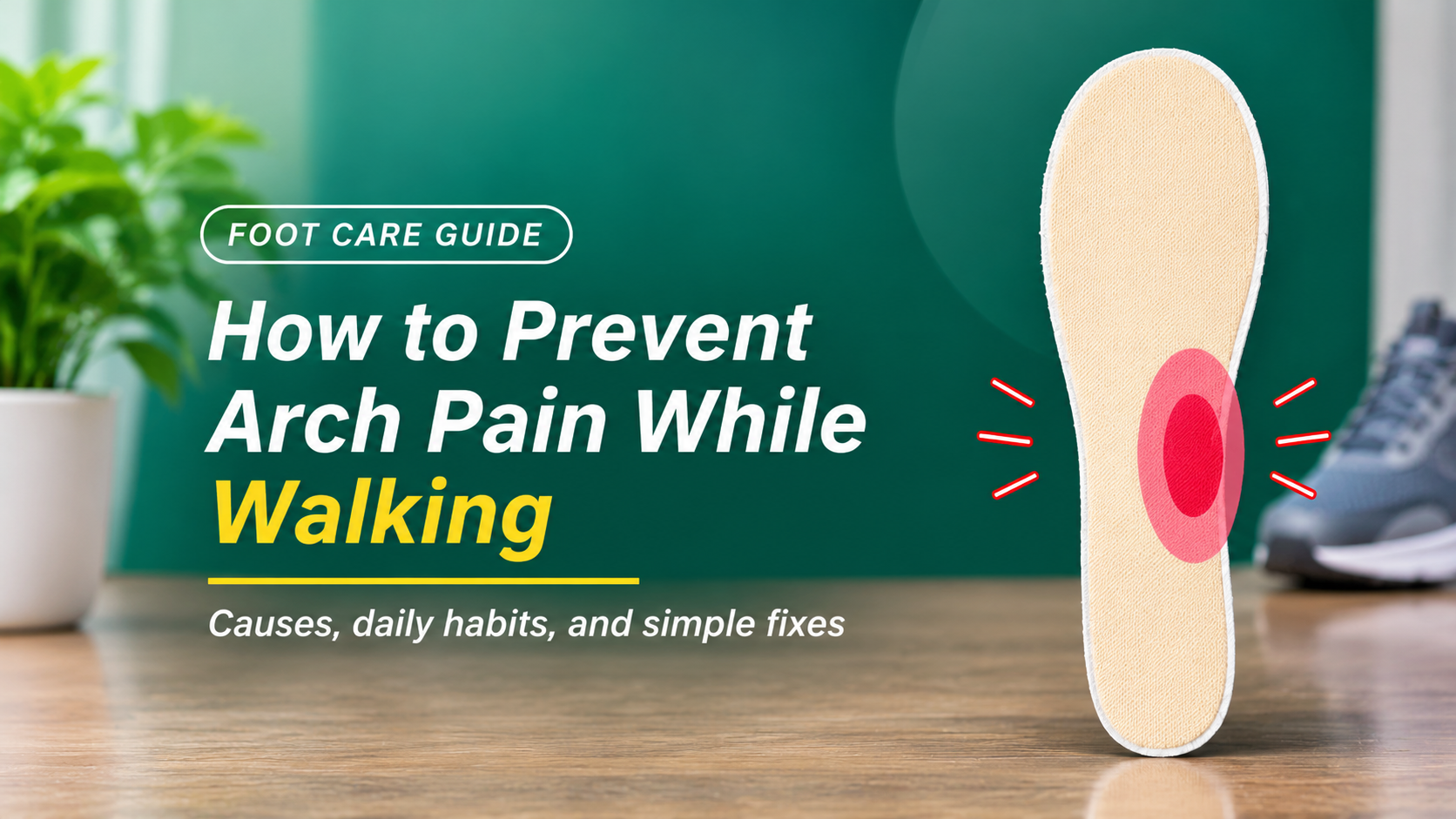
You get out of bed, stand up, and a deep ache shoots through the middle of your foot. Or maybe you feel fine in the morning, but after a few hours at a counter, a classroom or a factory line, the arch of your foot is burning, throbbing and begging you to sit down. If that sounds familiar, you are far from alone. Foot arch pain when standing is one of the most common reasons people complain about tired, sore feet.
The good news is that in most cases arch pain can be managed, and often fully resolved, with the right combination of stretching, supportive footwear, load management and early treatment. This guide explains what is going on inside your foot, the most common causes, practical home remedies, how to choose arch support products, and the warning signs that mean you should see a professional.
Quick Summary
- Main causes: plantar fasciitis, flat feet, high arches, overuse, unsupportive shoes, excess body weight and tendon problems.
- Fastest relief: rest from aggravating activity, calf and arch stretching, rolling the sole, and supportive footwear or insoles.
- Best long-term fix: correct footwear, strengthening, regular movement breaks and, when needed, custom orthotics or physical therapy.
- See a doctor if: pain is severe, follows an injury, comes with swelling, numbness, or does not improve after about two weeks of home care.
What Is the Arch of the Foot and What Does It Do?
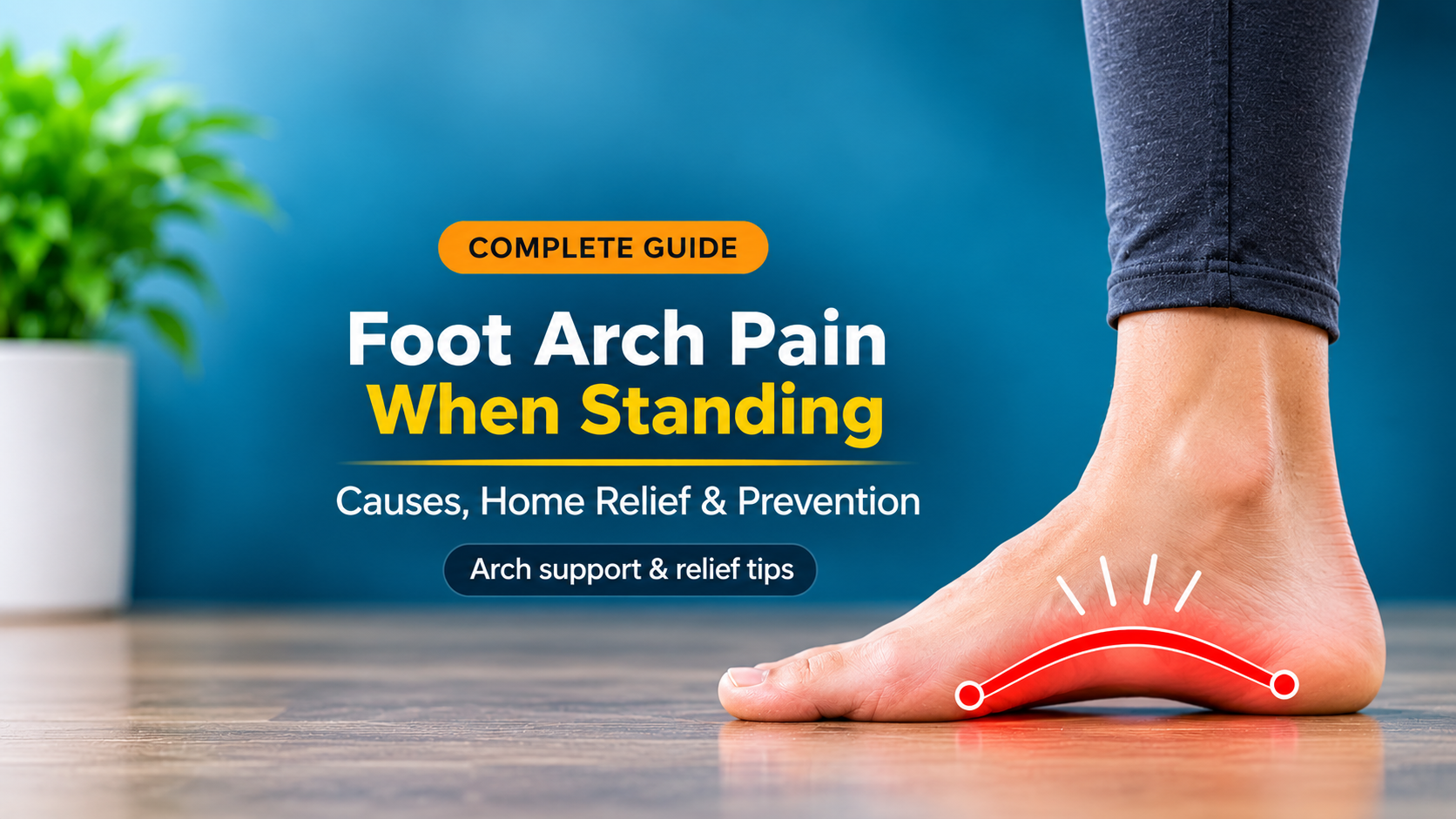
Your foot is an engineering marvel. It contains 26 bones, more than 30 joints and over 100 muscles, tendons and ligaments. Together they form three arches, but the one most people mean when they talk about “foot arch pain” is the medial longitudinal arch, the curved structure along the inner side of your foot between the heel and the ball.
This arch works like a spring and a shock absorber. Every time you walk, run or simply stand, it flattens slightly to absorb force and then recoils to help push you forward. Three things keep it stable:
- Bones: the heel bone, midfoot bones and metatarsals are shaped and stacked to form a natural bridge.
- Ligaments and the plantar fascia: the plantar fascia is a thick band of tissue that runs from the heel bone to the base of the toes, acting like the string on a bow to hold the arch up.
- Muscles and tendons: the small muscles inside the foot and larger tendons such as the posterior tibial tendon actively support the arch while you stand and move.
When you stand still for long periods, these structures have to work continuously without the pumping rest that walking provides. If any one part is weak, tight, inflamed or overloaded, the arch can start to hurt.
Why Does Your Arch Hurt When You Stand?
Standing places a constant load of your full body weight on the arch. Unlike walking, where load shifts from one foot to the other and muscles pump blood through the area, prolonged standing keeps the same tissues under steady tension. Over time this leads to fatigue, micro-irritation and inflammation. Below are the most common underlying causes.
1. Plantar Fasciitis
This is the leading cause of pain in the underside of the foot. Irritation or small tears in the plantar fascia cause a stabbing or aching pain in the heel and arch. A classic sign is sharp pain with the first steps in the morning or after sitting for a while, which eases a little as you move and then returns after long periods on your feet.
2. Flat Feet (Fallen Arches)
If your arch is naturally low or has collapsed over time, the plantar fascia and surrounding muscles are stretched more with every step. Many people with flat feet have no symptoms for years, then develop arch pain after a change in activity, weight gain, or a job that requires standing all day.
3. High Arches (Cavus Foot)
A high arch is rigid and does not flatten enough to absorb shock. Pressure concentrates on the heel and the ball of the foot, and the arch itself can feel tight and sore. Some high arches are linked to nerve or muscle conditions, so persistent pain with a very high arch deserves a professional check.
4. Posterior Tibial Tendon Dysfunction (PTTD)
The posterior tibial tendon runs along the inside of the ankle and attaches beneath the arch. When it becomes inflamed or weakened, the arch can gradually collapse, leading to an adult-acquired flatfoot. Typical signs include pain and swelling along the inner ankle and arch, and a foot that looks flatter than before.
5. Overuse and Prolonged Standing
Standing for many hours on hard floors such as concrete, tile or stone, repeatedly overloads the arch tissues. Nurses, teachers, retail staff, chefs, hairdressers, factory workers, security guards and surgeons are all at higher risk.
6. Unsupportive or Worn-Out Footwear
Thin, flat, overly flexible shoes, high heels, and worn-out shoes with collapsed midsoles fail to share the load. Walking barefoot or in flat sandals on hard surfaces all day can have the same effect.
7. Excess Body Weight and Pregnancy
More body weight means more force through every step. During pregnancy, weight gain and hormonal changes that loosen ligaments can flatten the arch, and many women notice arch pain in the later months.
8. Tight Calf Muscles and Achilles Tendon
Tight calves pull on the heel and increase tension through the plantar fascia and arch. This is one reason calf stretching is a core part of most treatment plans.
9. Age-Related Changes
With age, the tissues that support the arch lose elasticity and the natural fat pad under the heel becomes thinner, reducing cushioning.
10. Less Common but Important Causes
- Stress fractures: small cracks in a foot bone, often after a sudden increase in activity, causing pain that worsens with weight-bearing.
- Tarsal tunnel syndrome: compression of a nerve near the ankle that can cause burning, tingling or numbness in the arch and sole.
- Arthritis: joint inflammation in the midfoot can cause stiffness and aching.
- Diabetes-related nerve changes: can alter sensation and foot shape, so any new foot pain deserves attention.
Common Symptoms of Foot Arch Pain
Symptoms vary depending on the cause, but many people notice some combination of the following:
- A dull ache, burning or throbbing along the inside of the foot that builds the longer you stand
- Sharp pain with the first steps after resting or in the morning
- Pain that eases when you sit and returns when you stand again
- Tenderness when pressing on the arch or heel
- Mild swelling along the inner foot or ankle
- A feeling of fatigue or cramping in the sole by the end of the day
- Pain in the knees, hips or lower back, because a poorly supported foot changes how the whole leg works
How to Check Your Arch Type at Home
You can get a rough idea of your arch type with the simple wet footprint test:
- Wet the bottom of your foot and step onto a dark piece of paper or a dry paper bag.
- Step off and look at the print.
- If you see almost the entire sole, you probably have a low arch. If you see a clear curve on the inner side, your arch is likely normal. If the middle is barely visible, you may have a high arch.
This test is only a guide. It cannot diagnose the cause of your pain, so a healthcare professional should assess persistent symptoms.
Home Remedies and Self-Care for Arch Pain
For mild to moderate arch pain, these steps can bring real relief. Consistency matters more than intensity, so build them into your daily routine.
Reduce the Load
You do not have to stop everything, but cut back on activities that clearly aggravate your pain, such as long runs on hard surfaces or very long stretches without a break. Replace them with low-impact options like swimming or cycling while the foot settles.
Apply Ice or Heat
Ice wrapped in a thin cloth for 10 to 15 minutes after a long day on your feet can calm irritation. Some people find gentle warmth before stretching helps with morning stiffness. Use whichever feels better, and never apply ice directly to the skin.
Stretch and Strengthen
Stretching the calves and plantar fascia, and strengthening the small muscles inside the foot, is one of the best-supported strategies for arch pain. The four exercises below take only a few minutes a day.
- Ball roll: sit in a chair and roll the sole of your foot over a tennis ball, lacrosse ball or firm massage ball for about two minutes per foot, using gentle to moderate pressure.
- Wall calf stretch: place both hands on a wall, step one foot back with the heel flat on the floor and the leg straight, and lean forward until you feel a stretch in the calf. Hold for 30 seconds and repeat three times per leg.
- Towel scrunches: place a small towel on the floor and use your toes to scrunch it toward you. Do 10 to 15 repetitions per foot.
- Short foot exercise: while seated or standing, gently draw the ball of the foot toward the heel without curling your toes, lifting the arch slightly. Hold for 5 seconds and repeat 10 times.
Stretch gently. A mild pulling sensation is normal, but sharp or worsening pain means you should ease off.
Massage the Sole
Using your thumbs or a foot roller to massage the arch for a few minutes, particularly in the evening, can reduce tightness. Roll a chilled water bottle under your foot if you want to combine massage with cooling.
Wear Supportive Footwear at All Times
Many people with arch pain walk barefoot or in thin slippers at home. Switching to supportive shoes or recovery sandals, especially first thing in the morning, can noticeably reduce that sharp first-step pain.
Consider Over-the-Counter Pain Relief
Short-term use of common over-the-counter pain relievers may help some people. Always follow the label directions, and check with a pharmacist or doctor first if you have stomach, kidney, heart or blood pressure conditions, take other medicines, or are pregnant.
Manage Body Weight Gradually
If extra weight is a factor, even modest and gradual weight loss reduces the force that passes through your arches with every step.
How to Choose Arch Support Products That Actually Help
The right support can make a big difference to how your feet feel at the end of the day. With so many options on the market, it helps to understand what each product type does and what features to look for.
| Product Type | Best For | What to Look For |
|---|---|---|
| Arch support insoles | Flat feet, plantar fasciitis, long hours of standing | Firm yet cushioned contoured arch, deep heel cup, a size that fits your shoe, and a semi-rigid shell for stable support |
| Supportive work or walking shoes | Everyday wear and standing jobs | Firm heel counter, midsole that resists twisting, slight rocker sole, removable insole and a roomy toe box |
| Anti-fatigue mats | Standing at a kitchen counter, workbench or standing desk | Foam or gel thickness around 2 cm (about three-quarters of an inch), beveled edges to prevent tripping, and a non-slip base |
| Night splints | Severe morning heel and arch pain | Adjustable fit, breathable material and a design you can comfortably sleep in |
| Massage balls and foot rollers | Tight arches and post-work recovery | Firm but not painful surface, easy to grip and clean |
| Arch support sleeves and compression socks | Mild support and end-of-day swelling | Graduated compression, a defined arch band, breathable fabric and no tight bunching |
| Orthotic sandals and recovery slippers | Walking at home, especially after waking up | Contoured footbed, firm sole and a secure strap or fit |
Tips for Buying Shoes for Arch Pain
- Shop in the afternoon: feet swell during the day, so this gives you a more realistic fit.
- Use the twist test: a good supportive shoe should resist twisting along its length and should bend only at the ball of the foot.
- Check the heel: the heel counter should feel firm when you squeeze it.
- Leave room for your toes: there should be about a thumb’s width between your longest toe and the end of the shoe.
- Replace them on time: when the midsole is visibly compressed, creased or the heel is worn unevenly, support is gone even if the shoe looks fine.
When Over-the-Counter Insoles Are Enough and When They Are Not
For many people with mild to moderate pain, good quality off-the-shelf arch supports are enough. If your pain persists, if you have a significant foot deformity, diabetes or nerve problems, or if you have repeated injuries, a podiatrist can assess your foot and recommend custom orthotics made to your exact shape.
Standing at Work? Smart Habits to Protect Your Arches
If your job keeps you on your feet, prevention is as important as treatment. These practical habits add up over a long working week:
- Change position regularly: shift your weight from one foot to the other, and place one foot on a low footrest from time to time.
- Take micro-breaks: sit for a few minutes or do a quick calf stretch every hour if your job allows.
- Stand on a cushioned surface: an anti-fatigue mat reduces the impact of hard floors.
- Rotate your shoes: alternating between two supportive pairs lets the cushioning recover and varies pressure points.
- Stay hydrated and keep moving: walking even briefly helps pump blood through the legs and reduces swelling.
- Stretch before and after your shift: a short calf and arch routine at the start and end of the day makes a real difference.
Medical Treatments for Persistent Arch Pain
If home care is not enough after a few weeks, a doctor, podiatrist or physical therapist can offer additional options:
- Physical therapy: guided stretching, strengthening, manual therapy, taping and gait retraining tailored to your cause.
- Custom orthotics: insoles made from a mold or scan of your foot to control alignment and spread pressure.
- Immobilization: a walking boot or brace may be used for a limited time for tendon problems or stress injuries.
- Shockwave therapy: a non-invasive treatment sometimes used for stubborn plantar fasciitis.
- Injections: corticosteroid injections may be considered in some cases, usually with caution because of potential tissue weakening with repeated use.
- Surgery: rarely needed, and generally reserved for severe cases that have not responded to months of other treatment or for structural problems such as advanced tendon failure.
When to See a Doctor
Get Medical Advice Promptly If You Have:
- Sudden, severe pain, especially after an injury, or if you cannot put weight on the foot
- Noticeable swelling, bruising, redness or warmth in the foot
- Numbness, tingling or burning that spreads or does not go away
- A foot that is rapidly changing shape or becoming flatter
- Fever together with foot pain
- Diabetes, poor circulation or a weakened immune system together with any new foot pain
- Pain that does not improve after about two weeks of consistent home care, or that keeps returning
How to Prevent Foot Arch Pain
- Choose shoes that fit well and support your arch, and replace them before they wear out completely.
- Avoid going barefoot on hard floors for long periods.
- Increase exercise intensity and duration gradually, rather than making sudden jumps.
- Keep calves and feet flexible with regular stretching.
- Strengthen your feet and lower legs with simple exercises such as toe raises and short foot holds.
- Maintain a healthy body weight.
- Pay attention to early warning signs and act early, since mild arch pain is much easier to treat than chronic pain.
Frequently Asked Questions
Why does my arch hurt when I stand for a long time?
Standing keeps the plantar fascia, muscles and tendons that support the arch under constant tension. Without movement, these tissues fatigue and become irritated. Flat feet, high arches, tight calves, unsupportive shoes and extra body weight make the problem more likely.
Is arch pain the same as plantar fasciitis?
Not always. Plantar fasciitis is a very common cause of pain in the heel and arch, but arch pain can also come from tendon problems, joint irritation, stress fractures, nerve issues or simple muscle fatigue. A professional assessment helps identify the exact cause.
How long does it take for foot arch pain to go away?
Mild cases often improve within a few weeks of consistent stretching, supportive footwear and load management. Chronic or more complex problems can take several months. Starting early usually shortens recovery.
Do arch support insoles really work?
For many people they do. Properly fitted arch supports reduce strain on the plantar fascia and share pressure more evenly across the foot, which can lessen pain during standing and walking. They work best when combined with stretching and appropriate shoes, and the right type depends on your arch and your symptoms.
Can flat feet be fixed?
Many people with flat feet never need treatment. When flat feet cause pain, supportive shoes, orthotics and strengthening exercises usually control symptoms very well. Surgery is only considered for severe, painful cases that do not respond to conservative treatment.
Is it okay to exercise with arch pain?
Gentle, low-impact activity is usually fine and often helpful, as long as it does not significantly increase your pain. Avoid pushing through sharp pain, and consider swimming or cycling until your foot calms down.
Should I wear shoes at home if my arches hurt?
In most cases, yes. Supportive footwear or recovery sandals indoors can reduce strain, particularly on hard floors and during the first steps of the day.
Final Thoughts
Foot arch pain when standing is your body’s way of telling you that the structures supporting your foot are overloaded. The causes range from simple fatigue and poor footwear to plantar fasciitis, flat feet, tendon problems or less common conditions, but the path to relief usually follows the same principles: reduce the strain, stretch and strengthen, support the arch with the right footwear, and keep moving throughout the day.
Start with a few small changes this week, such as a better pair of shoes, a short daily stretching routine and regular movement breaks. If your pain is severe, persistent or comes with warning signs, do not wait. Early professional advice can prevent a minor problem from becoming a long-term one. Your feet carry you through every day, so give them the support they deserve.
Medical disclaimer: This article is for general information and education only. It is not a substitute for professional medical advice, diagnosis or treatment. Always seek the advice of a qualified healthcare provider with any questions about a medical condition.