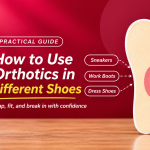

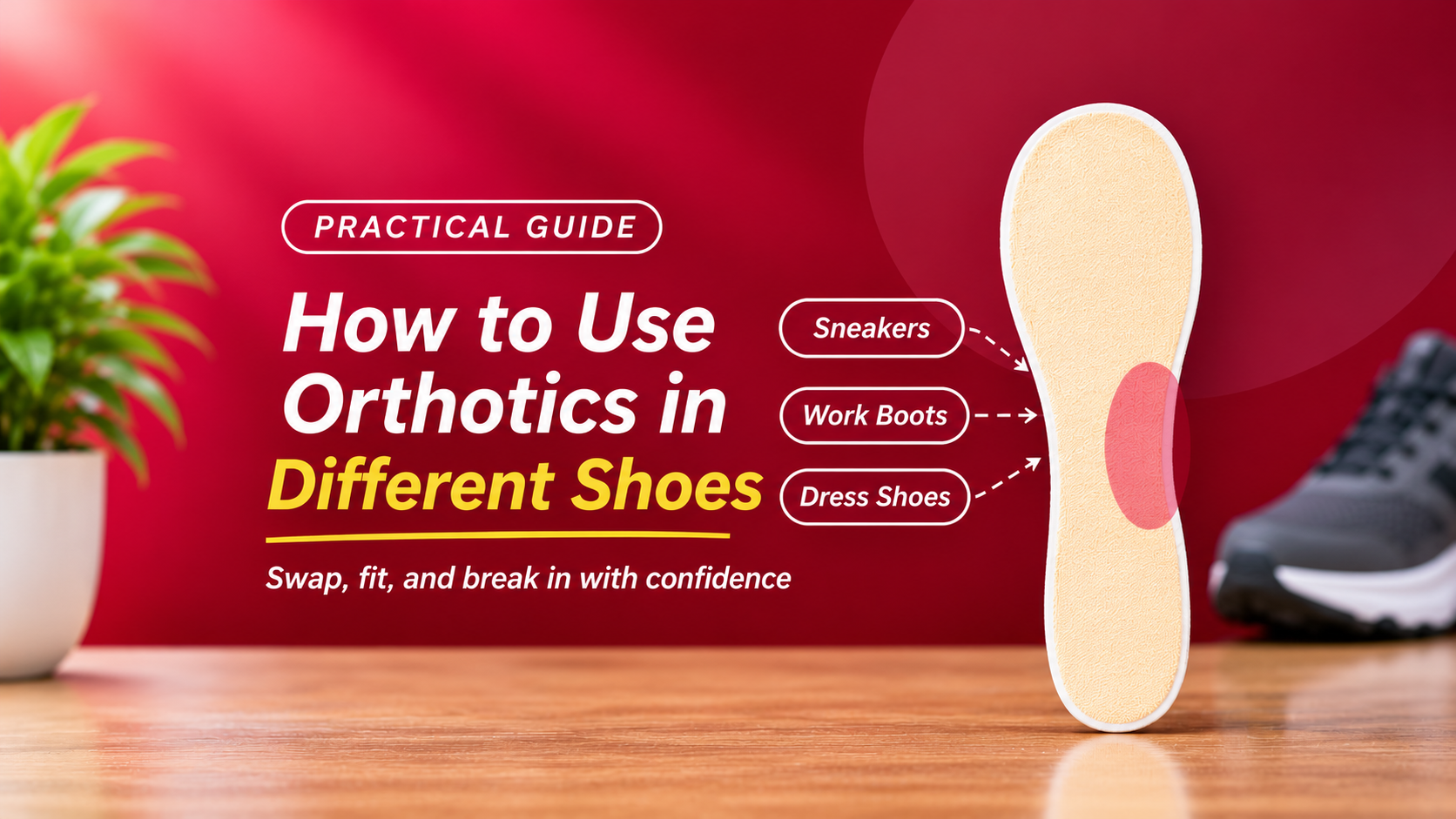
Most people do not own just one pair of shoes. You may wear sneakers on weekends, boots for work, and dress shoes for special occasions. Orthotics are designed to help your feet in all of them, but moving them from shoe to shoe is not always straightforward. This guide shows you how to use orthotics in different shoes, so they stay comfortable, supportive, and effective wherever you go.
Why Orthotics Need a Little Care When Switching Shoes
An orthotic only works when it sits in the correct position inside your shoe. Each shoe has a different shape, depth, width, and heel design. If the orthotic slides, bunches up, or pushes your foot too high, you lose the benefits and may feel new aches or blisters. Taking a few minutes to set it up properly makes all the difference.
Before You Start: What to Check in Each Shoe
- Removable insole: Taking out the factory insole gives your orthotic space and keeps your foot at a normal height.
- Depth: Shoes need enough internal height so the orthotic does not push your foot against the top.
- Heel cup and counter: A firm, deep heel helps hold the orthotic and your foot steady.
- Toe box room: Your toes need space, especially because orthotics add volume.
- Closure: Laces, straps, or Velcro keep the foot from sliding.
If you are not sure which shoes meet these criteria, a good starting point is to look for closed, structured shoes with a removable insole.
Universal Steps for Putting Orthotics in Any Shoe
- Remove the factory insole. Pull it out gently. If it is glued in, check whether the shoe will still fit with the orthotic on top.
- Compare shapes. Place the orthotic on top of the factory insole. If it is longer or wider, you may need to trim it, or the shoe may not be suitable.
- Insert heel first. Slide the heel of the orthotic to the very back of the shoe, then lay the front down flat.
- Lace and flatten. Fasten the shoe, then check that the orthotic is flat with no curling.
- Walk for ten minutes. Notice any slipping, rubbing, or pressure before wearing the shoes for longer.
Mark the inside of each orthotic with a small “L” and “R” if they look alike, and always match the left orthotic to the left shoe to keep the support properly aligned.
How to Use Orthotics in Different Types of Shoes
Sneakers and Running Shoes
These are usually the easiest to pair with orthotics. Remove the factory liner and drop the orthotic in. Make sure the heel sits snugly and the forefoot lies flat. If your sneakers feel tight, consider a half size up or a wide width.
Work Boots and Hiking Boots
Boots often have thick, removable footbeds and plenty of depth, which suits full-length orthotics. Check that the ankle and toe area are not too tight, and wear the socks you normally use. Lace the boots firmly to hold the heel steady.
Dress Shoes
Dress shoes are the trickiest. They are typically narrower and shallower, so a slim, three-quarter-length orthotic often works best. Choose shoes with a removable insole, a deeper toe box, and a firm heel. Pointed or very narrow shoes seldom work.
Casual Lace-Ups and Loafers
Leather lace-ups can work well if there is enough room. Loafers and slip-ons are less secure, so check that the heel does not slip out. A slimmer orthotic is usually better.
Sandals and Slides
Most flat sandals are not suitable, since their footbeds are fixed and offer no depth. Some brands make sandals with removable, contoured footbeds designed for orthotic use. If your orthotics fit those, make sure the straps hold your foot securely.
Sports Shoes, Cleats, and Court Shoes
Sport-specific shoes are often snug. Choose thinner orthotics, check that they lie flat, and ask your practitioner whether a sport-specific design is better for your activity.
Slippers and Indoor Shoes
Many people forget about home footwear, but arches get tired indoors too. Look for supportive house shoes with removable footbeds, or consider a dedicated pair of home shoes for your orthotics.
High Heels
Heels tilt the foot forward, which makes it hard for orthotics to sit properly. If you must wear heels, try a low block heel with a removable insole and a slim orthotic, and limit wearing time.
Full-Length vs. Three-Quarter Orthotics: Which for Which?
- Full-length: Best for sneakers, boots, and casual shoes where there is room.
- Three-quarter (slimline): Better for dress shoes, flats, and tighter styles.
- Heel cups or small arch supports: Useful in shoes where nothing else fits, though they provide less control.
Breaking In Your Orthotics in a New Pair of Shoes
Even if everything fits, your feet need time to adjust, especially if the orthotics are new or the shoes are different from your usual ones. Start slowly and build up wearing time over a week or so.
Tips for Swapping Orthotics Between Shoes Every Day
- Make it a habit: Put the orthotics in your shoes the night before.
- Don’t force them: If they don’t fit easily, trim or choose a different shoe.
- Check the position each time: Heel to the back, flat surface, no folds.
- Consider more than one pair: A second set of orthotics, particularly in a slimmer style, can save time and reduce wear.
- Keep shoes consistent: Choose shoes with similar heel heights to limit changes in how your foot sits.
- Don’t double up: Stacking orthotics over other insoles usually makes shoes too tight.
Trimming Orthotics to Fit Different Shoes
If your orthotic is slightly too long, trim only the toe end, using the shoe’s original insole as a template. Remove material in small amounts and test the fit after each cut. Do not trim the heel or arch areas, and never alter custom orthotics without advice from the person who made them.
Caring for Orthotics You Move Between Shoes
- Wipe them regularly with a damp cloth and mild soap, and let them air dry away from direct heat.
- Take them out of your shoes overnight so both can dry.
- Check them for cracks, flattening, or worn spots every few months.
- Store them flat so they keep their shape.
Signs Your Orthotics Aren’t Working in a Particular Shoe
- Your heel slips or lifts
- The orthotic curls, bunches, or slides
- Your toes feel cramped or numb
- New blisters or pressure spots appear
- Your feet, knees, or back feel worse than usual
If a shoe causes any of these problems, try a different style rather than forcing the fit. This article is for general information only and is not medical advice. Speak with a podiatrist or the practitioner who prescribed your orthotics if you have ongoing pain or concerns.
Common Mistakes to Avoid
- Leaving the factory insole in the shoe
- Using the same orthotics in shoes that are too shallow or narrow
- Skipping the break-in period
- Swapping left and right orthotics
- Wearing worn-out orthotics for too long
Frequently Asked Questions
Can I use the same orthotics in all my shoes?
Often yes, as long as each shoe has a removable insole, enough depth, and a secure fit. Some shoes, like heels and flat sandals, may not work.
Do I need to take out the insole that comes with my shoes?
In most cases, yes. Removing it creates the space your orthotic needs and keeps your foot at a comfortable height.
How do I stop orthotics from sliding?
Make sure the heel sits at the very back, the orthotic is the right size, and the shoe is laced firmly. A better-fitting shoe may also help.
Can I wear orthotics in dress shoes?
Yes, if you use slim or three-quarter-length orthotics and shoes with a removable insole and enough room.
Should I buy shoes a size bigger?
Sometimes a half size up or a wider fit is helpful, since orthotics add volume. Always try new shoes on with your orthotics inside.
How long do orthotics last?
It depends on the material and use. Over-the-counter styles often last six to twelve months, while custom ones may last longer with proper care.
Final Thoughts
Learning how to use orthotics in different shoes is mostly about preparation. Check each shoe for a removable insole, enough depth, and a secure fit. Place the orthotic carefully, break it in gradually, and look after it between wears. With a little attention, your orthotics can keep supporting your feet whether you are in sneakers, boots, or dress shoes.