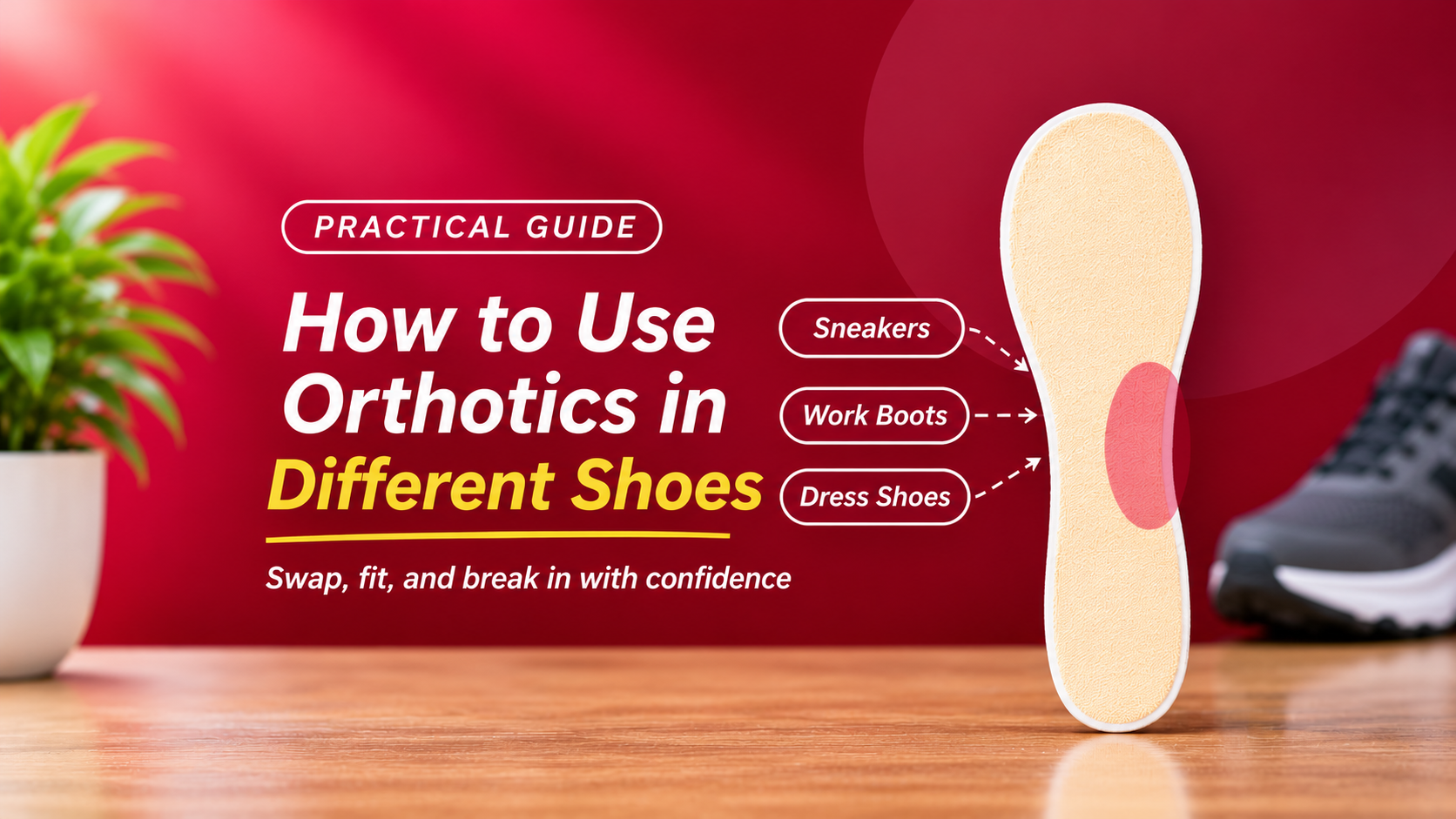

You have finally got a pair of orthotics that ease your foot, heel, or arch pain. Then comes the practical question: can you wear orthotics in any shoes? The honest answer is no, not every shoe works. Some shoes accept orthotics beautifully, while others make them uncomfortable, unstable, or even useless.
This guide explains which shoes are compatible, which to avoid, how to check the fit, and what to do when your favorite shoes simply aren’t orthotic-friendly.
The Short Answer
Orthotics work best in closed, supportive shoes with a removable insole, a deep heel cup, and enough room for the extra volume. They rarely work well in flat sandals, flip-flops, ballet flats, or high heels.
Orthotics add height and volume inside your shoe, and they need a stable base to do their job. If the shoe is too shallow, too narrow, or too flexible, the orthotic cannot hold your foot in the right position.
What Makes a Shoe Orthotic-Friendly?
- Removable insole: Taking out the factory insole creates space for your orthotic without raising your foot too high.
- Deep heel cup: This keeps your heel centered on the orthotic so it does not slide around.
- Firm heel counter: A rigid back of the shoe helps control heel movement.
- Roomy toe box: Orthotics take up space, so you need extra width and depth up front.
- Stable outsole: A flat, firm sole gives the orthotic a solid platform to work on.
- Secure closure: Laces, straps, or Velcro hold the shoe and orthotic in place.
Shoes That Usually Work Well With Orthotics
Running and Walking Shoes
These are typically the easiest to pair with orthotics. They have removable insoles, cushioned midsoles, and structured heels. Many are available in wide widths too.
Athletic and Training Shoes
Cross-trainers and court shoes offer stability and room. Choose models with a firm, flat base for the best results.
Work Boots and Hiking Boots
Their depth and removable footbeds make them a good match, especially for people who stand or walk on hard surfaces all day.
Casual Lace-Up Shoes
Leather or canvas lace-ups can work well if they are not too narrow. Laces let you adjust the fit around the extra volume.
Shoes That Often Don’t Work
- High heels: The steep slope pushes your foot forward and prevents the orthotic from sitting flat.
- Flip-flops and thin sandals: They lack the structure and closure needed to hold an orthotic in place.
- Ballet flats and slip-ons: They are usually shallow, and orthotics can lift your heel right out.
- Narrow pointed shoes: There simply isn’t enough room for the orthotic and your foot.
- Shoes with glued-in footbeds: Without removing the factory insole, your foot sits too high.
Some brands make sandals and dress shoes with removable, contoured footbeds designed for orthotic use. Look for the words “removable insole” or “orthotic-friendly” in the product description.
Full-Length vs. Three-Quarter Orthotics
The type of orthotic you have changes where it can be worn.
- Full-length orthotics run the whole length of the shoe. They replace the factory insole and suit athletic shoes, boots, and most casual footwear.
- Three-quarter (or slimline) orthotics stop behind the toes. They fit better in dress shoes and tighter styles.
- Heel cups and arch supports are the smallest options. They fit into many shoes, but offer less overall control.
How to Test the Fit of Your Orthotics in a Shoe
- Remove the factory insole and place your orthotic inside.
- Check the orthotic lies completely flat with no curling or bunching.
- Put the shoe on and fasten it. Your heel should sit snugly, without slipping.
- Leave roughly a thumb’s width of space ahead of your longest toe.
- Walk around for a few minutes and notice any pinching, rubbing, or pressure.
Tips for Making Orthotics Work in Your Shoes
- Always take out the original insole. Stacking an orthotic on top usually makes the shoe too tight.
- Shop with your orthotics. Bring them to the store and try the shoes on with them.
- Size up if needed. A half size bigger or a wide width often makes a big difference.
- Trim carefully. If your orthotic is too long, trim only the toe end and test the fit after each small cut.
- Wear socks you’ll normally wear. Thick socks change the fit.
- Break in gradually. Wear new orthotics for a few hours at a time over the first week or two.
Can You Wear the Same Orthotics in Multiple Pairs of Shoes?
Yes, and many people do. Just make sure each pair meets the requirements above. Moving orthotics between shoes also wears them differently, so check them regularly for cracks, flattening, and worn spots. Some people keep a second pair of orthotics so they don’t have to swap them daily.
Custom vs. Over-the-Counter Orthotics
Custom orthotics are made from a mold or scan of your feet and prescribed by a professional. They are often thin and rigid, which can fit more styles of shoes. Over-the-counter orthotics are more affordable and widely available, but they may be bulkier. Both can work well, depending on your needs and your foot condition.
When to Talk to a Professional
See a podiatrist or foot specialist if you notice any of the following:
- Pain that gets worse after starting orthotics
- Persistent blisters or pressure sores
- Numbness, tingling, or swelling
- Diabetes or circulation problems combined with foot discomfort
This article is for general information only and isn’t a substitute for medical advice.
Frequently Asked Questions
Can I wear orthotics in sandals?
Only in sandals with a contoured, removable footbed and secure straps. Flat flip-flops are not suitable for most orthotics.
Can I wear orthotics in dress shoes?
Yes, if you use a slimline or three-quarter orthotic, and choose shoes with enough depth and a removable insole.
Do I need to buy bigger shoes?
Often a half size up or a wide width helps, since orthotics add volume. Always test the fit with them in.
Can I wear orthotics without socks?
It is possible, but socks reduce friction and moisture, which makes orthotics more comfortable and hygienic.
How long do orthotics last?
Over-the-counter orthotics generally last six to twelve months, while custom ones can last several years with proper care.
Can I put orthotics on top of the existing insole?
It’s better not to. Removing the insole gives you more room and a better fit, unless the insole is permanently attached.
Final Thoughts
So, can you wear orthotics in any shoes? Not quite, but you can wear them in far more shoes than you might think. Focus on shoes with a removable insole, a deep heel, and enough room, and test the fit with your orthotics in. With the right pair, you will get the support you need without giving up comfort or style.