
How to Wear Arch Support Insoles: A Complete Guide for Comfort and Results
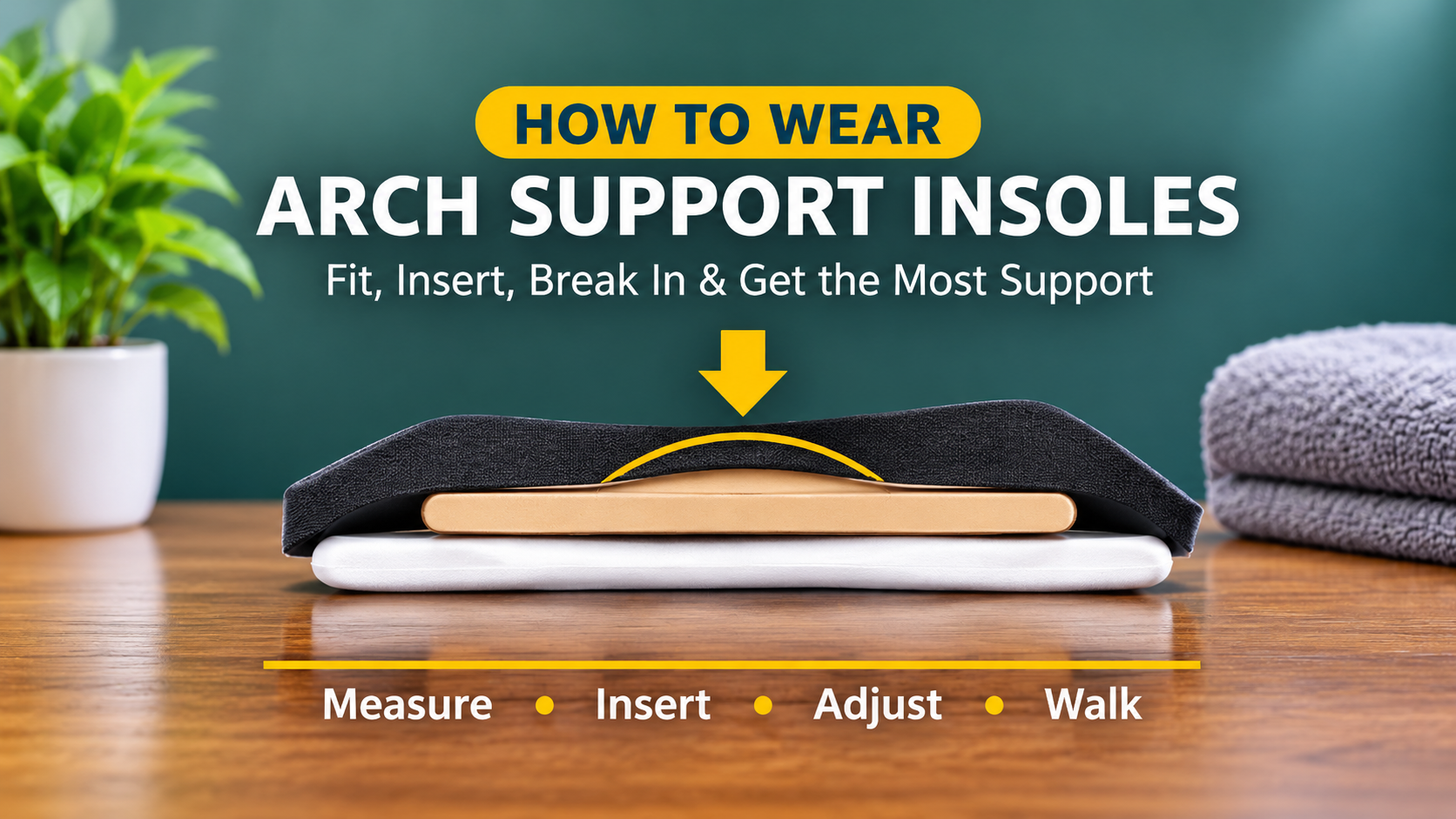
Arch support insoles can make a real difference if you deal with sore arches, tired feet, heel discomfort, or simply spend long hours standing and walking. But buying a pair is only half the job. Wearing them the right way, in the right shoes, with the right fit and a sensible break-in plan, decides whether they feel great or just feel strange.
This guide walks you through everything: choosing the right arch height, preparing your shoes, inserting insoles correctly, breaking them in, wearing them for different activities, and avoiding the mistakes that cause discomfort.
Table of Contents
- What Arch Support Insoles Do
- Know Your Arch Type
- Choose the Right Insole
- Prepare Your Shoes
- How to Put In Arch Support Insoles
- How to Break Them In
- Choosing the Right Shoes and Socks
- How to Wear Them for Different Activities
- Can You Wear Them Every Day?
- Common Mistakes
- How to Know They Fit Properly
- Caring for Your Insoles
- When to See a Professional
- Frequently Asked Questions
- Final Thoughts
What Arch Support Insoles Do
Arch support insoles fill the space under the arch of your foot and help hold it in a comfortable, stable position. By spreading pressure more evenly across your foot, they can help reduce strain on your arches, heels, and the muscles and joints above. People commonly use them for:
- Tired or aching feet after standing or walking
- Flat feet or low arches
- High arches that need extra shock absorption
- Added comfort in work boots, sneakers, and everyday shoes
- Extra support during exercise and walking
They are not a cure-all, and results vary from person to person. For ongoing pain, a healthcare professional can tell you what you need.
Know Your Arch Type

Low Arch or Flat Feet
Most of your foot touches the ground, and your foot may roll inward when you walk. A firmer insole with solid structure usually works best.
Medium or Neutral Arch
A visible curve with balanced weight distribution. Moderate support with good cushioning is usually a good match.
High Arch
A narrow footprint with a lot of space under the arch. Cushioned insoles with softer support can help absorb impact.
The Simple Wet Test

Wet the bottom of your foot, step on a piece of paper or a flat dark surface, and look at the print. A nearly full footprint suggests a low arch. A very thin band connecting heel and ball suggests a high arch. Something in between suggests a medium arch. It is only a guide, so use comfort and professional advice as the final judge.
Choose the Right Insole
- Match the arch height to your foot. Too high feels like a lump; too low gives little help.
- Pick the right size. Many insoles come in sizes or can be trimmed to fit.
- Consider firmness. Firm structure for stability, softer cushioning for comfort and impact.
- Think about the shoe. Thin dress shoes need low-profile insoles; boots and sneakers can handle thicker ones.
- Check the length. Full-length insoles replace the shoe’s insole; three-quarter lengths fit tighter shoes.
- Look for breathable materials to manage sweat and odor.
Prepare Your Shoes
- Remove the factory insole if it comes out. Stacking two insoles often makes shoes too tight.
- Clean the inside of the shoe and let it dry fully.
- Check the footbed for lumps, cracks, or old glue. A smooth base helps the insole sit flat.
- Loosen the laces so your foot slides in without bunching the insole.
How to Put In Arch Support Insoles

Step 1: Remove the Factory Insole
Lift out the existing insole from the heel and slide it out. If it is glued in, leave it and choose a low-profile insole instead.
Step 2: Compare the Size
Lay the old insole on top of the new one to see how it matches. If the new one is longer, trace the outline of the old insole onto it.
Step 3: Trim If Needed
Cut slightly outside the traced line with sharp scissors, then test the fit and trim in small steps. The insole should lie flat with a tiny gap around the edge, never folded or bent.
Step 4: Insert Heel First
Place the heel into the back of the shoe first, then lower the front flat. Press down to make sure it sits evenly, with the arch lined up under your arch.
Step 5: Test the Fit
Put the shoe on, tie it, stand up, and walk around. The insole should feel stable, with no sliding, bunching, or pressure on your toes. If the arch feels misplaced, slide the insole slightly or check the sizing again.
How to Break Them In
Even good arch support insoles need a gradual start. Your feet and muscles are adapting to a new position, so wearing them for a full day right away can cause soreness.
- Days 1 to 2: wear for 1 to 2 hours.
- Days 3 to 4: increase to 3 to 4 hours.
- Days 5 to 6: increase to 5 to 6 hours.
- Days 7 to 9: increase to 7 to 8 hours.
- Day 10 and beyond: wear all day if comfortable.
This is a sample plan. If you feel sore, stay at your current wear time for a few extra days. Mild awareness of the arch is normal. Sharp pain, numbness, or blisters are not.
Choosing the Right Shoes and Socks

Best Shoes
Running shoes, walking shoes, work boots, and sneakers with removable insoles and enough depth work best. Look for a firm heel counter and a stable sole.
Challenging Shoes
Dress shoes, flats, and sandals have little room. Use thin, low-profile insoles, or insoles designed for those shoes.
Socks
Wear moisture-wicking, well-fitting socks. They reduce friction and sweat, which helps prevent blisters and odor. Avoid very thick socks that make the shoe too tight.
Try Shoes On With the Insole In
When buying new shoes, bring your insoles and try them on together. The heel should not slip and toes should not feel squeezed.
How to Wear Them for Different Activities
Everyday Walking
A balanced insole with moderate arch support and cushioning is a good everyday choice. Use them in your most-worn shoes first.
Standing All Day at Work
Choose cushioned arch support to reduce fatigue, and wear them in supportive work shoes. Take breaks to move and stretch when you can.
Running and Sports
Break them in during everyday wear first. Then try short, easy runs before longer or faster sessions. Sports-specific insoles can offer more shock absorption and stability.
Hiking
Wear them with hiking boots or shoes that have enough depth. Try them on short walks before long trails to avoid blisters.
Dress Shoes
Use slim, low-profile insoles designed for dress shoes. If the shoe is too tight, you may need a three-quarter-length insole or a different shoe.
Sandals and Slippers
Choose sandals and slippers with built-in contoured arch support instead of trying to fit a regular insole.
Can You Wear Them Every Day?
Most people can wear arch support insoles every day once they have adjusted, particularly if they feel comfortable. Rotate shoes so each pair dries between wears. If you notice new aches, take a break and check the fit. People with specific medical conditions should follow their healthcare provider’s advice.
Common Mistakes

- Wearing them all day from the start. This is a leading cause of soreness.
- Stacking on top of the factory insole. It makes the shoe tight and the insole unstable.
- Choosing the wrong arch height. Too high or too low causes discomfort.
- Wearing them in worn-out shoes. A collapsed shoe undermines the support.
- Folding or forcing them to fit. It creates bumps and poor support.
- Ignoring pain. Sharp or lasting pain is a signal to stop and get advice.
- Skipping care. Dirty, damp insoles smell and wear out faster.
How to Know They Fit Properly
- The insole lies flat with no bunching or curling
- The arch sits under your arch, not in front of or behind it
- Your heel sits stable and does not slip
- Your toes have enough room
- You feel supported, not pushed or pinched
- Walking feels natural after the break-in period
Caring for Your Insoles
- Take them out at night to air and dry.
- Wipe with a damp cloth and mild soap when needed. Avoid soaking.
- Dry flat at room temperature, away from heat and direct sun.
- Rotate shoes to give each pair time to dry.
- Replace them when the arch flattens, usually after about 6 to 12 months with daily wear.
When to See a Professional
See a podiatrist or healthcare provider if you have:
- Persistent or worsening foot, heel, knee, or back pain
- Numbness or tingling in your feet
- Swelling or skin changes
- Pain that does not improve after a few weeks
- Diabetes or circulation problems, before using new insoles
A professional can check your foot structure and, if needed, recommend custom orthotics.
Frequently Asked Questions
How do you wear arch support insoles for the first time?
Remove the old insole, fit the new one flat in the shoe, and wear them for one to two hours the first day, increasing wear time gradually over one to two weeks.
Do arch support insoles go on top of existing insoles?
Usually no. Remove the factory insole first, unless the insole is specifically designed to go on top of it.
Which way do arch support insoles go?
The heel cup goes at the back and the raised arch section sits under the inner side of your foot. Many insoles are marked left and right.
Can I wear arch support insoles without socks?
It is better to wear socks to reduce friction and sweat. Barefoot wear can increase odor and cause blisters.
Why do my arch support insoles hurt?
Mild discomfort during break-in is common. If the arch is too high, the size is wrong, or they are in shoes that do not fit, you may feel pain. Slow down and check the fit, and see a professional if the pain continues.
How long should I wear arch support insoles each day?
Start with one to two hours, then build up. After break-in, many people wear them all day.
Can I move arch support insoles between shoes?
Yes, if they fit properly in each shoe. Make sure they lie flat and do not slide.
Can I wear arch support insoles in sandals?
Regular insoles usually do not fit well. Look for sandals with built-in arch support.
Final Thoughts
Wearing arch support insoles correctly comes down to a few simple steps: know your arch type, choose a good fit, remove the factory insole, insert the new one flat, break in gradually, and wear them in supportive shoes with good socks. Pay attention to how your feet feel, and do not ignore sharp or lasting pain. With a thoughtful start, arch support insoles can make your feet more comfortable throughout the day.
This article is for general information only and is not medical advice. If you have persistent foot pain or a medical condition, consult a podiatrist or healthcare professional.