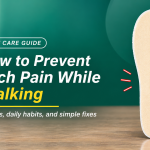

A walk should feel refreshing, not painful. Yet for millions of people, every step brings a dull ache, burning, or sharp pull along the inside of the foot. If this sounds familiar, you are likely dealing with arch pain. The encouraging news is that most cases respond well to small changes. This guide explains how to prevent arch pain while walking, what causes it, and the simple habits that keep your feet comfortable mile after mile.
What Is Arch Pain?
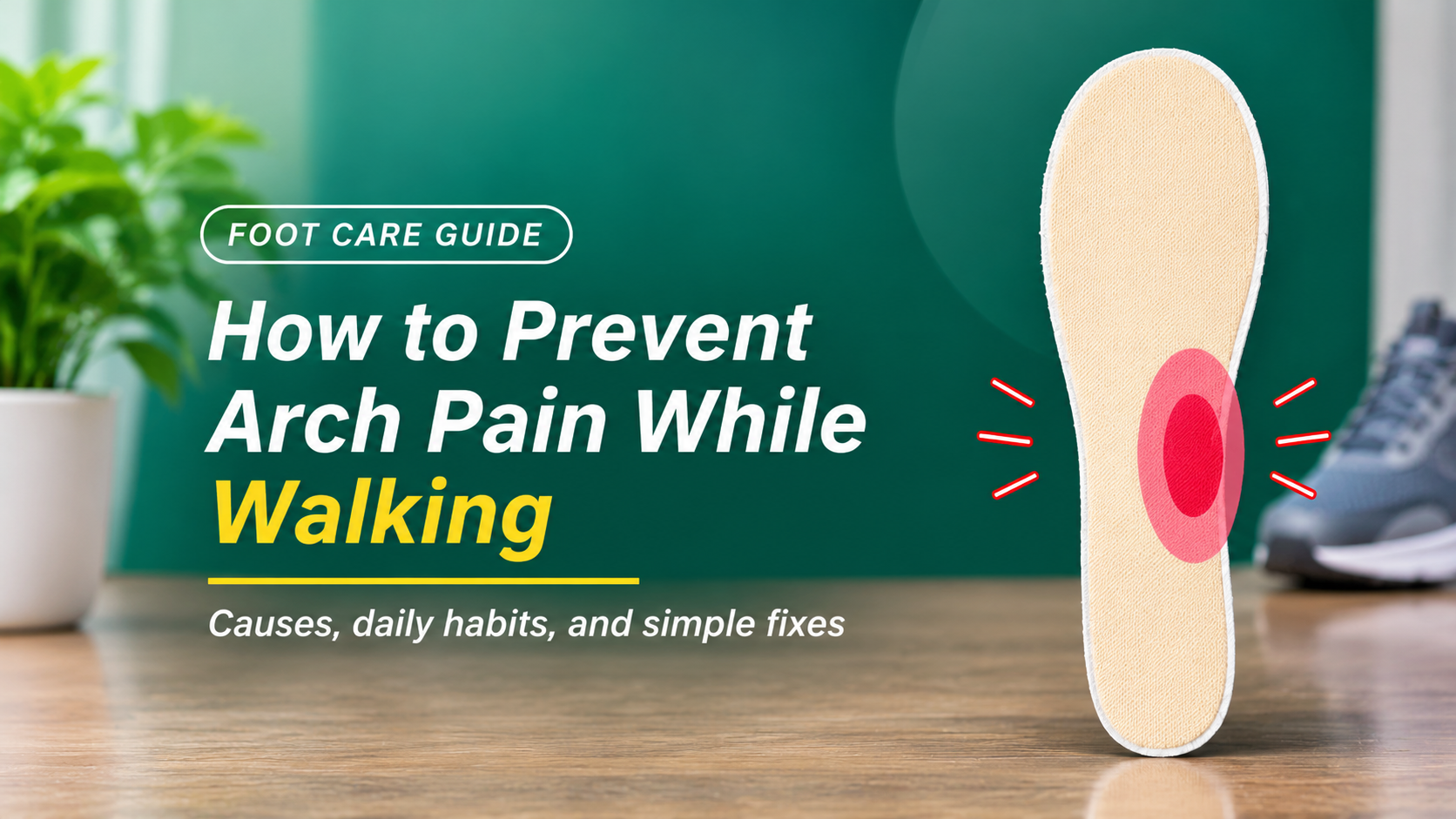
The arch is the curved structure on the underside of your foot. It is supported by bones, muscles, tendons, and a thick band of tissue called the plantar fascia. Together they work like a spring, absorbing shock and helping you push off with each step. When any part of this system is overloaded or strained, the result is arch pain.
Common Causes of Arch Pain While Walking
- Unsupportive footwear: Flimsy, flat, or worn-out shoes let the arch collapse or strain with every step.
- Flat feet or low arches: The arch flattens under load, stretching the plantar fascia and surrounding tissues.
- High arches: A rigid, high arch absorbs shock poorly, which puts extra pressure on the heel and forefoot.
- Overuse or sudden increases: Adding too much distance, speed, or time too soon can overwhelm the foot.
- Tight calf muscles: Tight calves and Achilles tendons pull on the heel and increase tension through the arch.
- Hard surfaces: Walking for long periods on concrete or tile adds repeated impact.
- Extra body weight: More weight means more load through the arch with each step.
- Plantar fasciitis and related conditions: Inflammation or irritation of the foot’s supporting tissues is a frequent cause of arch and heel pain.
How to Prevent Arch Pain While Walking
1. Choose Supportive Shoes
Shoes are your first line of defense. Look for a firm heel counter that holds your heel in place, a midsole with moderate cushioning, and a sole that bends at the ball of the foot rather than in the middle. If you can easily twist the shoe like a wet towel or fold it in half, it likely does not offer enough support.
2. Use Arch-Support Insoles
The right insole shares the load across your whole foot instead of letting one area take the strain. Pick an insole that matches your arch height (low, medium, or high) and fits your shoe size properly. Some people also prefer firmer support for walking, and softer cushioning for standing. Replace insoles when they flatten or crack.
3. Stretch Your Calves and Plantar Fascia
Tight muscles pull on the foot. Try these stretches daily, especially before and after walks.
- Wall calf stretch: Face a wall, step one foot back with the heel down, and lean forward until you feel a stretch in the calf. Hold for 30 seconds, then repeat three times on each side.
- Plantar fascia stretch: Sit down, cross one ankle over the opposite knee, and gently pull your toes back toward your shin. Hold for 20 to 30 seconds.
- Towel stretch: Sit with your leg straight, loop a towel around the ball of your foot, and gently pull it toward you.
4. Strengthen the Muscles of Your Feet
Strong foot muscles help support the arch naturally. Add these exercises a few times a week:
- Towel scrunches: Place a towel on the floor and scrunch it toward you with your toes.
- Short-foot exercise: Without curling your toes, try to draw the ball of your foot toward your heel to lift the arch slightly.
- Marble pick-ups: Pick up small objects with your toes and drop them into a cup.
- Calf raises: Rise onto the balls of your feet slowly and lower with control.
5. Increase Your Walking Gradually
If you are starting a new walking routine, build up slowly. A common guideline is to increase your weekly walking time or distance by no more than about ten percent. Give your feet time to adapt, and include rest days.
6. Replace Worn-Out Shoes
Cushioning breaks down with use, often before the shoe looks worn. Many walking and running shoes need replacing after roughly 500 to 800 kilometers (300 to 500 miles). If the midsole looks creased, the sole is uneven, or your feet ache more than usual, it may be time for a new pair.
Smart Walking Habits That Protect Your Arches
- Warm up first: Walk slowly for the first few minutes before picking up the pace.
- Mind your surface: Choose softer surfaces like tracks or trails when possible.
- Keep a natural stride: Overstriding increases impact. Take shorter, quicker steps instead.
- Avoid going barefoot on hard floors: Wear supportive slippers or sandals at home.
- Vary your shoes: Alternating pairs gives the cushioning time to recover.
- Listen to early warning signs: A mild ache is your cue to adjust before it becomes a bigger problem.
If you are on your feet at work, take short sitting breaks, shift your weight regularly, and use cushioned mats where possible.
What to Do If Your Arch Already Hurts
- Rest and reduce load: Cut back on walking distance for a few days.
- Ice the area: Roll your foot over a cold water bottle for about 10 to 15 minutes.
- Massage: Roll your arch over a small ball for a few minutes.
- Wear supportive footwear all day: Avoid flat, thin soles, even indoors.
- Return gradually: Resume walking slowly once the pain eases.
When to See a Doctor or Podiatrist
See a healthcare professional if you have any of these:
- Pain that lasts more than a couple of weeks despite self-care
- Sharp pain, swelling, bruising, or visible deformity
- Numbness, tingling, or burning sensations
- Pain that wakes you at night or occurs at rest
- Diabetes, nerve problems, or circulation concerns
This article is for general information only and is not a substitute for professional medical advice.
Common Mistakes to Avoid
- Walking through sharp pain instead of resting
- Wearing flip-flops or flat shoes for long walks
- Skipping stretching and warm-ups
- Doing too much too soon
- Using worn-out shoes or flattened insoles
- Choosing arch support that is too high or too firm for your foot
Frequently Asked Questions
Why does my arch hurt when I walk?
Common reasons include unsupportive shoes, overuse, tight calves, flat or high arches, and plantar fasciitis. The exact cause varies from person to person.
Do arch support insoles really help?
For many people they do, by distributing pressure and reducing strain on the arch. They work best when matched to your foot and shoes.
Is walking barefoot good for arch pain?
It can strengthen the feet for some, but on hard floors it may worsen pain. Introduce it gradually, and avoid it if it hurts.
How long does arch pain take to go away?
Mild cases often improve in a few weeks with rest and better footwear. Persistent pain needs a professional assessment.
Can flat feet cause arch pain?
Yes. Flat feet put extra strain on the arch tissues, although many people with flat feet have no pain at all.
Should I stop walking if my arch hurts?
Reduce your activity and avoid pushing through sharp pain. Low-impact exercise, such as swimming or cycling, can keep you active meanwhile.
Final Thoughts
Learning how to prevent arch pain while walking comes down to a few reliable habits: wear supportive shoes, use the right insoles, stretch and strengthen your feet, increase activity gradually, and replace worn gear. Pay attention to early discomfort and respond before it grows. With consistent care, you can keep walking comfortably for years to come.