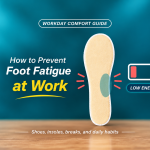

By mid-afternoon, your feet feel heavy, sore, and swollen. Whether you spend your shift standing behind a counter, walking hospital corridors, teaching a class, or sitting at a desk, tired feet can drain your energy and ruin your mood. Many people accept this as part of the job, but it does not have to be that way. This guide explains how to prevent foot fatigue at work with practical steps for your shoes, insoles, posture, and daily routine.
Why Do Your Feet Get Tired at Work?
Your feet carry your full body weight and absorb impact with every step. Over a long shift, small stresses add up. Common causes include:
- Long periods of standing: Staying in one position reduces blood flow and tires the muscles supporting your feet.
- Hard floors: Concrete, tile, and similar surfaces offer little shock absorption.
- Unsuitable shoes: Shoes that are too tight, too loose, too flat, or worn out fail to cushion and support the foot.
- Lack of movement: Even desk workers can suffer from stiffness and swelling if they sit for hours without moving.
- Poor posture: Locking your knees or leaning to one side puts uneven load on your feet and legs.
- Fluid build-up: Gravity pushes fluid down to the feet, which can cause swelling by the end of the day.
Who Is Most at Risk?
Anyone can experience tired feet, but certain jobs make it more likely: nurses and healthcare workers, retail and restaurant staff, teachers, factory and warehouse workers, hairdressers, security staff, and delivery drivers. Desk workers are affected too, especially when they sit with poor foot positioning and rarely get up.
Step 1: Choose the Right Work Shoes
Shoes are the foundation of foot comfort. When choosing footwear for work, look for:
- Good cushioning: A midsole that absorbs shock on hard floors.
- Arch support: Built-in support or room for an insole that provides it.
- A secure fit: A firm heel counter and no slipping.
- A roomy toe box: Enough space for your toes to spread, because feet swell during the day.
- Slip-resistant soles: Especially important in kitchens, hospitals, and wet areas.
- Appropriate weight: Heavy shoes tire the legs, while overly thin shoes provide too little protection.
Try on shoes in the afternoon or evening when your feet are at their largest, and wear the socks you plan to use at work.
Step 2: Add Supportive Insoles
Many work shoes come with basic factory insoles that flatten quickly. A good aftermarket insole can add cushioning, arch support, and shock absorption. Match the insole to your needs: cushioned insoles suit long hours of standing, while firmer, structured ones suit people who need more arch or heel support. Make sure they fit your shoe properly, and replace them when the cushioning breaks down.
Step 3: Wear the Right Socks
Socks matter more than most people realize. Choose moisture-wicking materials to keep feet dry and reduce friction, and look for cushioning in the heel and ball of the foot. Avoid socks that are too tight at the top, as they can restrict circulation. Some people benefit from compression socks, but check with a healthcare professional first if you have circulation concerns.
Step 4: Set Up Your Workspace
If You Stand at Work
- Use an anti-fatigue mat if you stand in one place for long periods.
- Keep your knees slightly soft instead of locked.
- Shift your weight from foot to foot, and use a low footrest if possible to alternate positions.
- Keep frequently used items within easy reach to avoid unnecessary twisting.
If You Sit at Work
- Keep both feet flat on the floor or on a footrest.
- Avoid crossing your legs for long periods.
- Adjust your chair so your knees are roughly level with your hips.
- Stand up and walk around regularly.
Step 5: Move and Take Micro-Breaks
Movement is one of the best remedies for tired feet. Standing still for long periods is tiring, and so is sitting still. Aim to change position every 30 to 60 minutes. A one- or two-minute break to walk, stretch, or change posture helps restore circulation. If your job doesn’t allow free movement, try small adjustments like rising onto your toes or rolling your ankles while you work.
Step 6: Stretch Your Feet and Calves
- Ankle circles: Lift one foot slightly and rotate the ankle slowly in both directions, ten times each.
- Calf raises: Rise onto the balls of your feet and lower slowly, ten to fifteen times.
- Toe stretch: Gently pull your toes back toward your shin and hold for 20 to 30 seconds.
- Calf stretch: Press your hands against a wall with one leg stepped back, heel down, and hold for 30 seconds.
- Foot roll: Roll the arch of your foot over a small ball or bottle for one to two minutes.
Step 7: Build a Daily Foot-Friendly Routine
Step 8: Recover After Work
- Elevate your feet: Raise them above heart level for 10 to 15 minutes to reduce swelling.
- Soak or cool them: A cool or lukewarm foot bath can feel refreshing.
- Massage: Gently massage the arch, heel, and calves.
- Go barefoot carefully: Choose supportive slippers on hard floors at home.
- Hydrate and rest: Staying hydrated and getting enough sleep help your body recover.
Other Helpful Habits
- Rotate between two pairs of work shoes so cushioning can recover.
- Replace shoes as soon as the soles or midsoles wear down.
- Keep toenails trimmed to prevent pressure and pain.
- Maintain a healthy weight, as extra weight increases the load on your feet.
- Stay active outside work to strengthen your feet and legs.
Common Mistakes to Avoid
- Wearing worn-out or poorly fitting shoes
- Choosing style over support for long shifts
- Standing in one position for hours
- Ignoring early signs of soreness
- Skipping breaks and stretches
- Wearing thick or tight socks that restrict circulation
When to See a Healthcare Professional
Seek advice if you notice persistent swelling, constant pain, numbness or tingling, color changes in the skin, or foot problems that do not improve with better shoes and rest. People with diabetes or circulation conditions should be particularly careful and check with a doctor about footwear choices. This article is for general information only and is not medical advice.
Frequently Asked Questions
Why do my feet hurt after standing all day?
Standing keeps the same muscles working and can reduce circulation, while hard floors and poor footwear add stress. Together they cause soreness and swelling.
What are the best shoes for standing all day?
Look for cushioning, arch support, a secure heel, and a roomy toe box. Comfort and fit matter more than any single feature.
Do insoles help with foot fatigue?
For many people they do, by improving cushioning and support. Choose a style that fits your shoes and your foot type.
Can sitting all day cause tired feet?
Yes. Long periods of sitting can lead to stiffness and swelling, so regular movement and good foot positioning are important.
Are compression socks good for work?
They help some people reduce swelling and tiredness, but they are not right for everyone. Ask a healthcare professional if you have any medical conditions.
How often should I replace work shoes?
It depends on use, but when the cushioning feels flat, the sole is worn, or your feet start to ache more, it’s time for a new pair.
Final Thoughts
Preventing foot fatigue at work comes down to supporting your feet at every stage of the day. Wear shoes that fit and cushion well, add the right insoles, choose good socks, keep moving, and give your feet time to recover. These small changes add up, helping you finish your shift with more energy and comfort.