
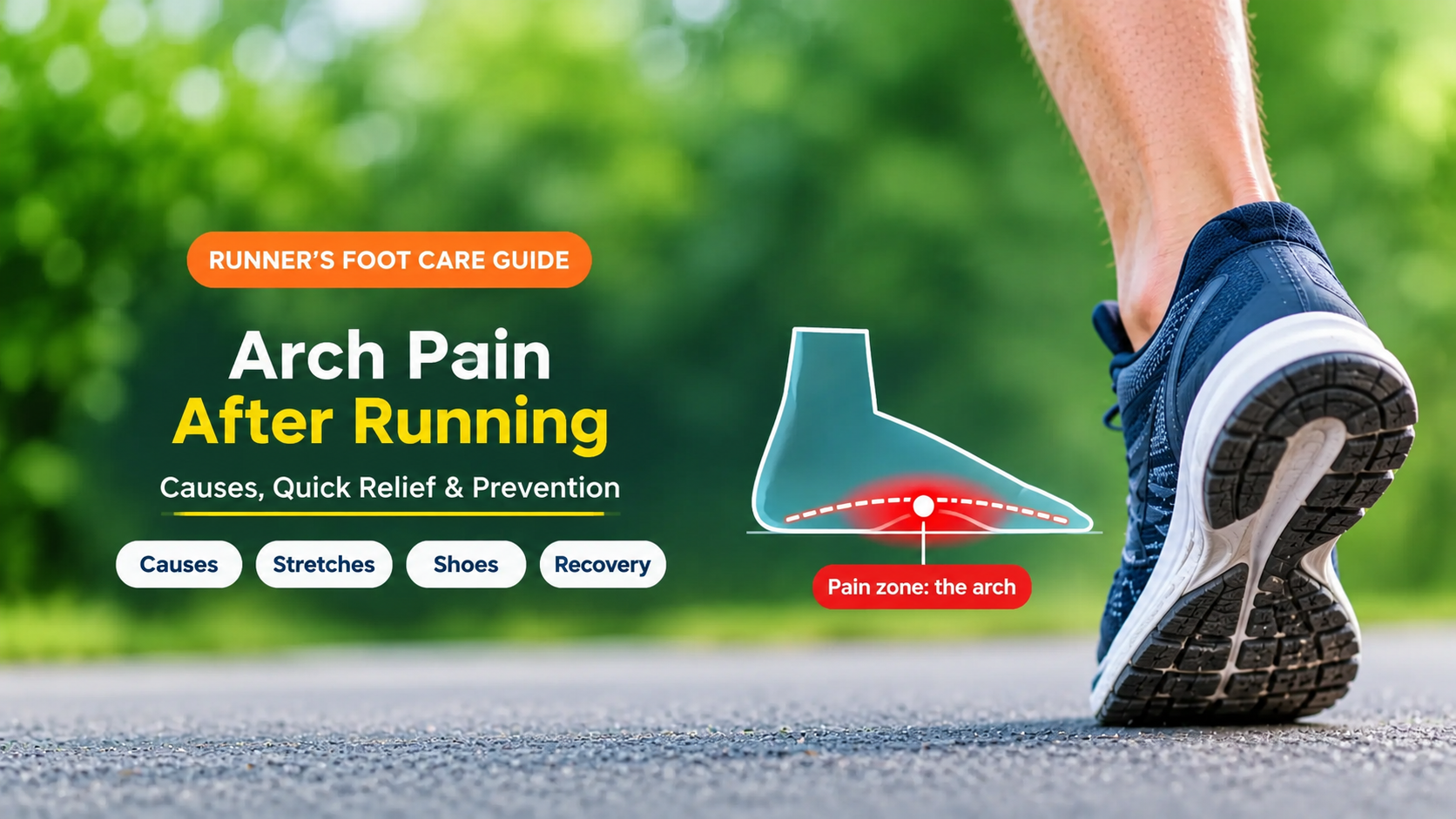

You finish a good run, cool down, and then it hits you: a dull ache, a tight pull or even a sharp pain along the bottom of your foot. If you are dealing with arch pain after running, you are far from alone. The arch takes a huge amount of load with every stride, so it is one of the first places to complain when something in your training, shoes or movement is off.
The good news is that most cases of arch pain respond well to simple changes. The bad news is that ignoring it can turn a minor irritation into a stubborn injury that keeps you off the road for weeks. This guide explains why your arch hurts after a run, how to tell normal soreness from a real problem, what you can do at home, and how to prevent it from coming back.
Quick Answer
Arch pain after running is most often caused by overuse, plantar fasciitis, tendon strain, flat or very high arches, or worn-out shoes. Reduce your training load, ice and stretch the area, wear supportive footwear, and rebuild strength gradually. See a healthcare professional if the pain is sharp, swollen, constant, or lasts longer than two weeks.
What Is Arch Pain After Running?
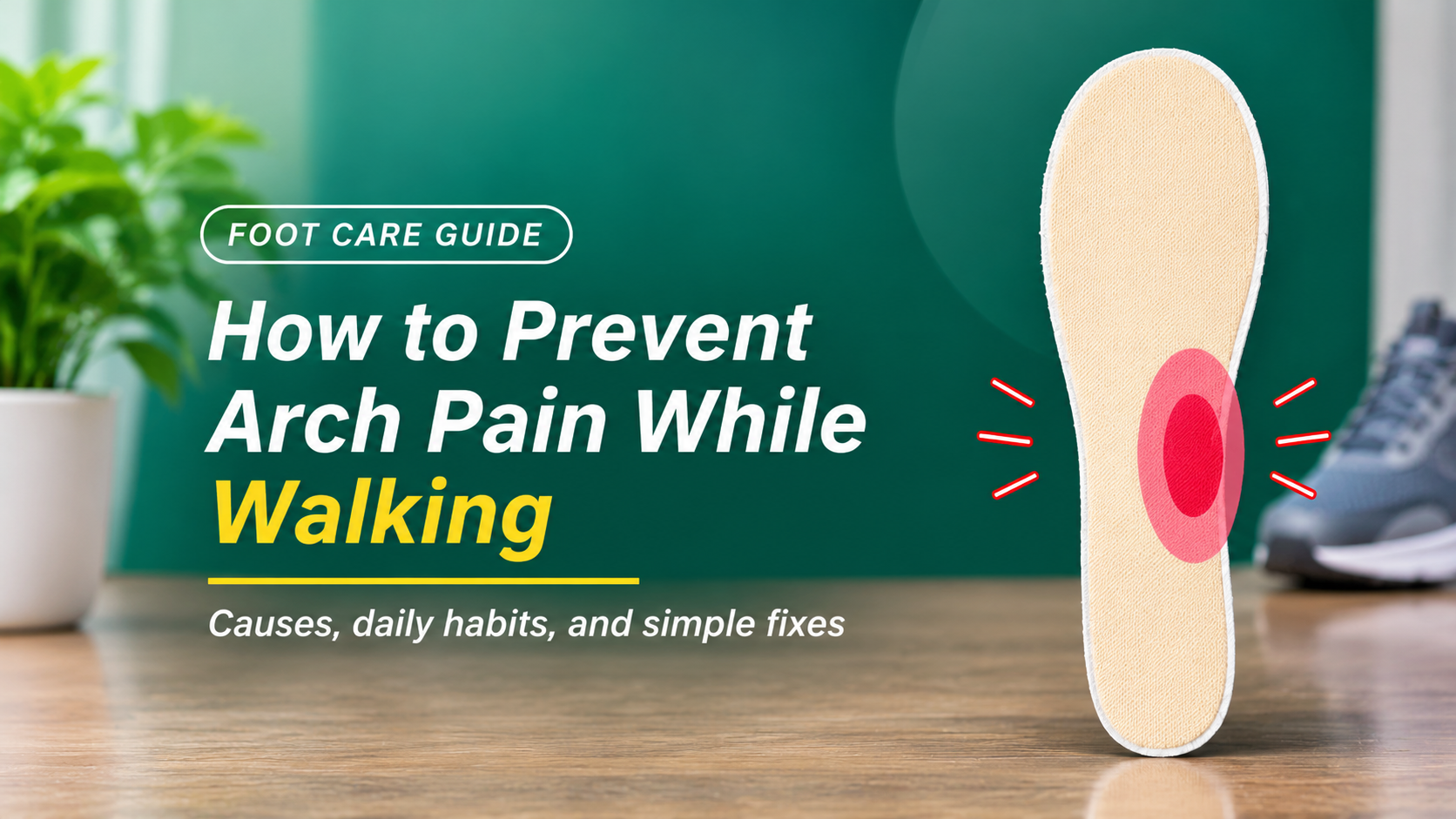
Arch pain is discomfort felt along the bottom or inner side of your foot, between the ball of the foot and the heel. It may show up during a run, but many runners notice it most after they stop, once the foot cools down and tissues stiffen. It can also be worst first thing in the morning or after long periods of sitting.
The arch is not just a passive curve. It is a spring-like structure made up of bones, ligaments, muscles and a thick band of tissue called the plantar fascia. When you run, your foot lands with a force that can reach several times your body weight. The arch flattens slightly to absorb that shock, then recoils to help push you forward. If any part of that system is overloaded, weak or poorly supported, pain is the result.
The Anatomy Behind the Pain
Three structures are involved in most cases of arch pain:
- Plantar fascia: a thick band of tissue that runs from the heel bone to the base of the toes. It acts like a bowstring that supports the arch.
- Posterior tibial tendon: a tendon that runs behind the inner ankle bone and along the inside of the foot, helping hold the arch up.
- Small foot muscles and ligaments: these stabilize the arch and share the load with every step.

Common Symptoms of Arch Pain
Symptoms vary depending on the cause, but runners usually describe one or more of the following:
- A dull, aching or burning feeling along the bottom of the foot
- Sharp or stabbing pain near the heel or in the middle of the arch
- Pain that is worst with the first steps after waking up or after sitting for a while
- Tightness or a feeling of “pulling” under the foot
- Tenderness when you press on the arch
- Mild swelling along the inner side of the foot or ankle
- Pain that builds during a run and lingers for hours afterward
6 Common Causes of Arch Pain After Running
Finding the real cause is the key to fixing the problem for good. Treating the symptom without fixing the cause is why so many runners end up with pain that keeps returning.

1. Overuse and Training Errors
Doing too much, too soon is the number one reason runners develop foot pain. A sudden jump in weekly mileage, adding speed work or hill repeats too quickly, or returning to running after a long break at your old volume can all overload the arch. Tissues adapt slowly, usually more slowly than your fitness does. A common guideline is to increase weekly distance gradually, often by no more than about 10 percent, although it is only a rough rule and some runners need even slower progress.
2. Plantar Fasciitis
Plantar fasciitis is irritation and degeneration of the plantar fascia, usually near where it attaches to the heel. It is one of the most frequent causes of foot pain in runners. The classic sign is sharp pain with the first steps in the morning that eases as you move, then returns after long runs or long periods on your feet. Some runners feel the pain further forward in the arch itself rather than at the heel.
3. Posterior Tibial Tendon Strain
This tendon works hard to support the arch and control how much your foot rolls inward. When it is overloaded, you may feel pain and tenderness along the inner ankle that travels into the arch, sometimes with mild swelling. Left untreated, tendon problems can progress and the arch may gradually flatten, so it is not an area to ignore.
4. Flat Feet and Overpronation
Some people have naturally low arches. During running, the foot may roll inward more than average, which is called overpronation. This can stretch the structures under the arch and increase strain on the plantar fascia and the tendon on the inner foot. Not every runner with flat feet has pain, but if you do, the extra stress is a likely contributor.
5. High Arches and Stiff Feet
The opposite problem can hurt too. A rigid, high arch does not flex much to absorb impact, so more shock travels through the foot, the heel and up the leg. Runners with high arches often feel pain in the arch, the heel or the outer edge of the foot, and they tend to benefit from extra cushioning.
6. Worn-Out or Unsuitable Shoes
Running shoes lose cushioning and structural support over time. Many manufacturers suggest replacing them somewhere between 300 and 500 miles (about 480 to 800 kilometers), depending on your weight, running style and the shoe itself. Shoes that are too flat, too narrow, too soft or simply wrong for your foot type can leave your arch doing work the shoe should be sharing.
Other Contributing Factors
- Tight calves or Achilles tendon: limited ankle movement pulls on the plantar fascia.
- Weak foot and hip muscles: a tired arch has less help from the muscles around it.
- Running on hard or uneven surfaces: concrete and cambered roads increase impact and uneven loading.
- Increased body weight: more weight means more force through the foot with each step.
- Spending a lot of time barefoot or in flat sandals: unsupportive footwear during the day can keep the arch irritated.
- Stress injuries to bone: rarely, persistent arch pain can signal a stress reaction or fracture, which needs medical assessment.
Normal Soreness or a Warning Sign?
Not every ache is an injury. A mild, short-lived soreness after a harder workout is usually part of normal adaptation. The difference is in how the pain behaves. Use the comparison below as a general guide.

How to Relieve Arch Pain After Running at Home
For mild to moderate pain without any red flags, a sensible home plan can make a big difference. Follow these five steps in order and give each one a fair trial.

Step 1: Reduce the Load
You do not always need to stop completely. Lower your mileage, slow your pace, and avoid hills and speed sessions until the pain settles. Swap some runs for low-impact cardio such as cycling, swimming or pool running to protect your fitness. A useful rule is to keep pain at or below 2 out of 10 during activity, and to make sure it is not worse the next morning. If it is, you did too much.
Step 2: Ice and Self-Massage
Apply a cold pack wrapped in a thin cloth for 10 to 15 minutes after running. Many runners also like rolling the arch over a frozen water bottle for about five minutes, which combines cold with gentle massage. Keep the pressure comfortable. It should feel relieving, not sharp.
Step 3: Stretch the Calf and the Arch
Tight calves and a tight plantar fascia often go together. Gentle daily stretching is one of the most useful habits for arch and heel pain. The routine below takes about ten minutes.
- Wall calf stretch: stand facing a wall, one foot back with the heel down and the knee straight. Lean forward until you feel a stretch in the calf. Hold 30 seconds, repeat 3 times per leg.
- Bent-knee calf stretch: same position, but bend the back knee slightly to target the deeper calf muscle and the Achilles area. Hold 30 seconds, 3 times per leg.
- Plantar fascia stretch: sit down and cross the painful foot over the opposite knee. Gently pull the toes back toward your shin until you feel a stretch along the arch. Hold 30 seconds, 3 times.
- Big toe stretch: hold the heel still and gently pull only the big toe upward. Hold 20 seconds, 3 times.
Do these stretches two to three times a day, including once before you take your first steps in the morning if your pain is worst then.
Step 4: Add Support
While the arch is irritated, wear supportive shoes around the house and avoid walking barefoot on hard floors. Cushioned insoles or a well-fitted arch support can reduce the strain on the plantar fascia and the tendon. Choose a support that feels comfortable straight away. A good insole should feel like gentle support, not like a lump under your foot.
Step 5: Strengthen the Foot and Lower Leg
Once pain begins to settle, strengthening is what keeps it from coming back. Add these exercises three to four times a week:
- Short foot exercise: sitting or standing, try to draw the ball of your foot toward your heel without curling your toes, so the arch lifts. Hold 5 seconds, 10 repetitions.
- Towel scrunches: place a small towel on the floor and pull it toward you with your toes. 2 sets of 15.
- Slow calf raises: rise up on both feet, pause at the top, and lower for about 3 seconds. 3 sets of 12. Progress to a single leg when it feels easy.
- Single-leg balance: stand on one foot for 30 to 60 seconds, keeping the arch lifted. Try it with your eyes closed for a challenge.
- Glute and hip work: bridges, side-lying leg raises and clamshells improve control of the whole leg, which reduces rolling in at the foot.
Pain Relief Tip
Over-the-counter pain relievers may reduce discomfort for some people in the short term, but they do not fix the underlying cause. Check with a pharmacist or doctor first, especially if you have other health conditions or take other medications.
Choosing the Right Running Shoes and Insoles
Footwear is one of the few causes of arch pain that you can fix immediately. There is no single best shoe for everyone, so focus on matching the shoe to your foot and your pain.
What to Look For in a Running Shoe
- A comfortable fit: leave about a thumb’s width of space in front of the longest toe and make sure the heel feels secure.
- Right support level: runners with flat feet or overpronation often feel better in stability shoes, while those with high, rigid arches often prefer a well-cushioned neutral shoe.
- A midsole that is not worn out: if the foam looks creased and compressed or the shoe feels flat, it is time for a new pair.
- A moderate heel-to-toe drop and stable heel: very flexible or very minimal shoes can overload the arch if you switch to them suddenly.
- Test them at the end of the day: feet swell during the day, so this gives a more accurate fit.
Helpful Gear for Arch Pain
Alongside good shoes, these items are commonly used by runners to manage arch and heel discomfort. Choose what matches your symptoms and comfort level.
- Cushioned or stability running shoes: reduce impact and provide structure so the arch is not doing all the work.
- Arch support insoles: add support and cushioning inside your shoe. Look for firm, contoured support that fits your shoe without crowding the toes.
- Massage ball or foot roller: helps release tension in the arch and calf after runs.
- Compression arch sleeves or kinesiology tape: offer light support and a comforting feeling during activity for some runners.
- Night splint: holds the foot gently flexed while you sleep so the plantar fascia is not shortened overnight, which may ease painful first steps in the morning.
How to Return to Running Safely
Rushing back is the easiest way to restart the pain cycle. Use the pain-guided plan below once you can walk comfortably for 30 minutes without arch pain. Move to the next week only if you stay at 2 out of 10 pain or lower and feel no worse the following morning. If symptoms flare up, go back one step.
| Week | What to Do | Frequency |
|---|---|---|
| Week 1 | Brisk walking for 20 to 30 minutes, plus stretching and strengthening | Daily |
| Week 2 | Walk/run intervals: 1 minute easy jog, 2 minutes walk, repeat for 20 to 25 minutes | Every other day |
| Week 3 | Walk/run intervals: 2 minutes easy jog, 1 minute walk, repeat for 25 to 30 minutes | 3 times per week |
| Week 4 | Continuous easy run for 15 to 20 minutes on a flat, softer surface | 3 times per week |
| Week 5 and beyond | Gradually add time or distance. Reintroduce hills and speed work last. | As tolerated |
This is a general example. If your pain has been severe or long-lasting, a physiotherapist can tailor a plan to your situation.
How to Prevent Arch Pain From Coming Back
Prevention is mostly about consistency and small habits. Build these into your routine:
- Progress gradually. Increase training load slowly and include easier weeks to let your body adapt.
- Rotate your shoes. Using two different pairs spreads the load slightly differently across your foot and extends shoe life.
- Replace shoes on time. Track your mileage and retire shoes before they are completely worn out.
- Keep calves flexible. A few minutes of calf stretching after every run protects the whole foot.
- Strengthen your feet. Short foot exercises, calf raises and balance work take just a few minutes and pay off for years.
- Warm up properly. Start with a brisk walk and some dynamic movement so the foot is ready for load.
- Vary your running surface. Mix pavement with trails, tracks or treadmills when possible.
- Do not go barefoot all day on hard floors. Supportive house shoes or sandals help when the arch is sensitive.
- Listen to early warning signs. Mild arch tightness that you act on now is far easier to fix than an injury you push through.
When to See a Doctor or Physiotherapist
Home care works well for many runners, but some situations need a professional assessment. Get checked if you notice any of the following:
- Sharp pain that forces you to stop running or limp
- Pain that does not improve after about two weeks of sensible rest and home care
- Visible swelling, bruising, warmth or redness in the foot
- Pain at night or at rest
- Numbness, tingling or burning in the foot
- Pain after a sudden injury or a fall
- A noticeably flatter arch or a foot that rolls inward more than before
A healthcare professional can examine your foot, check your running movement, and if needed arrange imaging to rule out a stress fracture or tendon problem. Treatment may include a personalized exercise program, taping, custom orthotics or other targeted care.
Frequently Asked Questions
Why does my arch hurt after running but not during?
While you run, your body is warm and your muscles and tissues are working. Afterward, the foot cools down and stiffens, and any irritation in the plantar fascia or tendon becomes more noticeable. Pain that appears only after exercise is often an early sign of overload and a good reason to adjust your training.
Can I keep running with arch pain?
If the pain is mild, stays at 2 out of 10 or lower, does not change how you run, and is not worse the next day, reduced running may be fine. If it alters your stride, increases during the run or lingers into the next day, take a break from running and use low-impact cross-training until it settles.
How long does arch pain from running take to heal?
Mild cases often improve in a couple of weeks with proper load management. Plantar fasciitis and tendon problems can take several weeks to a few months, especially if the cause is not corrected. Consistency with stretching, strengthening and gradual return matters more than complete rest.
Are flat feet the reason my arch hurts?
They can contribute, but flat feet alone do not always cause pain. Many people with low arches run without any trouble. Pain typically appears when a flat foot is combined with high training load, weak muscles or unsuitable shoes.
Do arch supports really help?
For many runners, yes. Supportive insoles can reduce strain on the arch and plantar fascia, especially in the early stages of recovery. They work best alongside stretching, strengthening and sensible training changes, not as a stand-alone fix.
Should I stretch before or after running?
Gentle dynamic movement such as walking, leg swings and light calf raises is best before a run. Longer static stretches of the calf and arch are most useful after a run or later in the day when the muscles are warm.
Is walking barefoot bad for arch pain?
On hard floors, going barefoot for long periods can aggravate an irritated arch. Supportive footwear at home is usually more comfortable while you recover. Some barefoot time on softer surfaces can be useful later as part of foot strengthening, introduced gradually.
Final Thoughts
Arch pain after running is a signal, not a life sentence. In most cases it comes from a manageable mix of training load, footwear, flexibility and foot strength. Start by calming the pain with reduced load, ice and stretching, then fix the cause with better shoes, targeted strengthening and a gradual return plan. Be patient, pay attention to how your foot responds, and do not hesitate to get professional advice when something does not feel right.
Take care of your feet and they will carry you through many more miles.
Medical disclaimer: This article is for general educational purposes only and is not a substitute for professional medical advice, diagnosis or treatment. If you have persistent, severe or worsening foot pain, consult a qualified healthcare professional.