Arch Pain in Work Boots: Causes, Fixes & How to Choose Boots That Support Your Feet
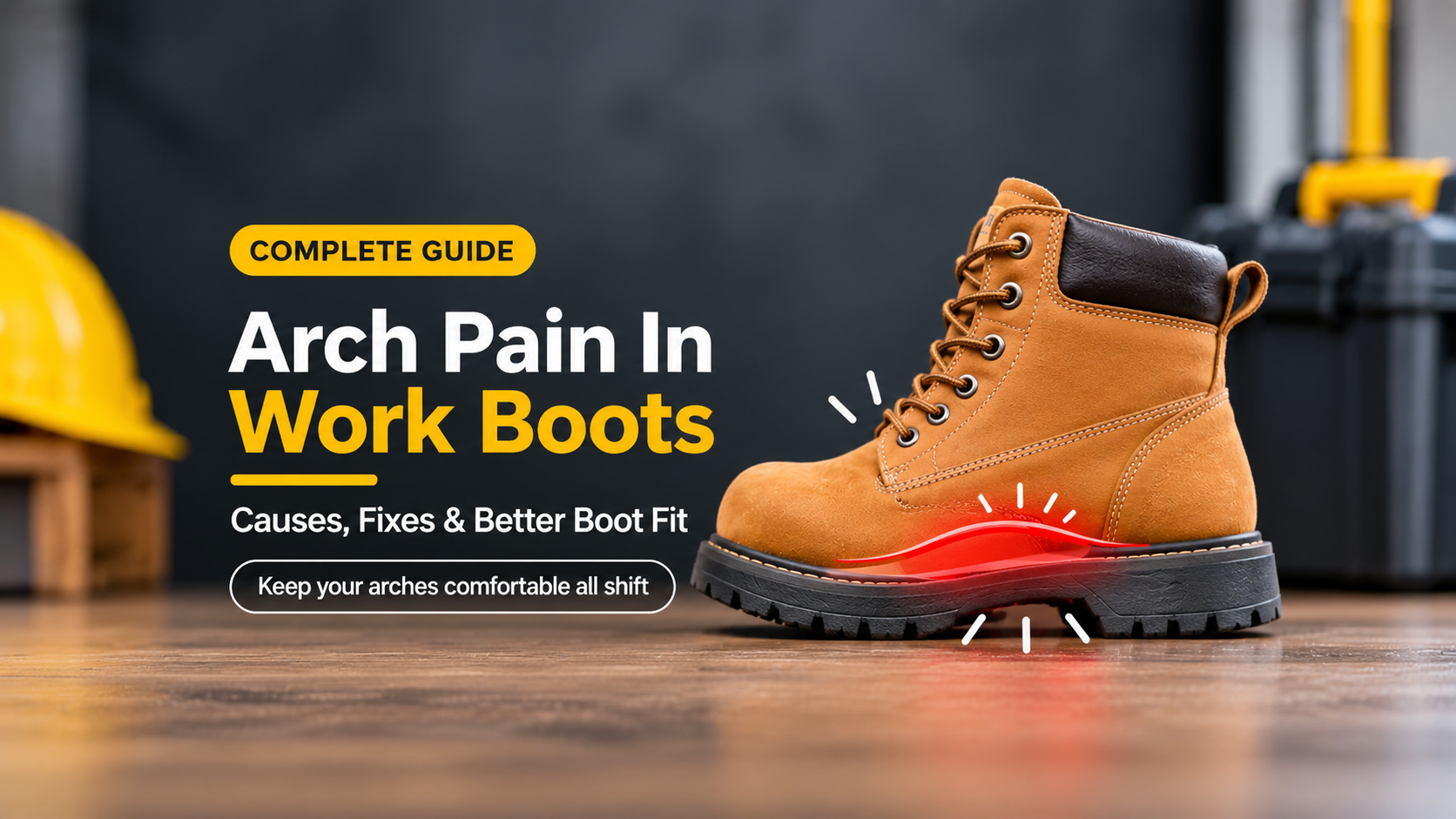
You lace up at the start of the shift and everything feels fine. By mid-morning there is a dull ache under the inside of your foot. By the end of the day it is a deep, burning arch pain that makes every step on concrete feel like a chore, and you cannot wait to pull your boots off. If that sounds familiar, you are in good company. Arch pain in work boots is one of the most common complaints among tradespeople, warehouse staff, factory workers, nurses, mechanics, farmers and anyone else who spends long days on their feet in heavy-duty footwear.
Work boots are built for protection first: steel or composite toes, thick soles and rugged leather. Comfort and arch support often come second, and the standard insole that ships inside most boots is little more than a thin piece of foam. The good news is that arch pain in work boots is usually fixable. This guide explains why it happens, how to work out the cause, what you can do right now, and how to choose boots and insoles that support your feet through a full shift.
Quick Summary
- Main causes: flat factory insoles, a weak or missing shank, poor fit, worn-out midsoles, hard surfaces and very long shifts, often combined with flat feet, high arches or plantar fasciitis.
- Fastest relief: swap the stock insole for a supportive one, fix lacing and fit, stretch your calves and arches, and take short breaks off your feet.
- Best long-term fix: boots with a stiff shank and stable midsole, the right size and width, regular replacement, and a daily foot-care routine.
- Safety note: if your job requires safety-rated footwear, check that any insole change is allowed before you make it.
- See a professional if: pain is severe, constant, one-sided, or does not improve after a few weeks of better support.
Why Your Arches Take a Beating in Work Boots
The arch of your foot works like a spring. The bones, ligaments, the plantar fascia (a thick band of tissue along the sole) and the muscles of the foot share the job of absorbing shock and supporting your body weight. On a normal day this system copes easily. Add 10 or 12 hours of standing on concrete, climbing ladders, carrying loads and wearing stiff, heavy boots, and the tissues can become overloaded and irritated.
A good boot supports that system. A poor one forces your foot to do all the work, or even works against it by letting the arch collapse or by squeezing the foot. That is why the same person can feel perfectly fine in one pair of boots and miserable in another.
Common Causes of Arch Pain in Work Boots
1. A Flat, Thin Factory Insole
Most work boots arrive with a basic removable footbed that is flat or only lightly contoured. It may feel soft in the shop, but it offers little real support for the arch and flattens quickly. For many people, this single component is the main reason arch pain starts.
2. A Weak or Missing Shank
The shank is a stiffening piece built into the midsole between the heel and the ball of the foot. A good shank keeps the boot from folding in the middle and takes load off the arch. Some boots have a steel shank, others use nylon or composite materials, and some budget or soft boots have little or none. When the boot bends at the arch instead of at the ball of the foot, the plantar fascia and arch ligaments are stretched with every step.
3. Wrong Size, Length or Width
A boot that is too big lets your foot slide forward and flatten out. A boot that is too narrow squeezes the foot and forces the arch muscles to overwork. Safety toe caps make this worse, because there is less room to adjust. Many people also wear the wrong width, which is a very common and easily missed problem.
4. Worn-Out Midsoles and Insoles
The foam in a midsole breaks down with use. A boot can still look good on the outside, with sound leather and a decent tread, while the cushioning and structure inside are long gone. Work boots take a hard life, so their support often fails before their appearance does.
5. Hard, Flat Surfaces
Concrete, steel decks, tile and compacted ground do not absorb any impact. Your boots and your feet have to do it for you. Standing in one position for long periods is also tiring for the arch muscles, which work continuously without the pumping action of walking.
6. Long Shifts, Heavy Loads and Demanding Tasks
Carrying weight, climbing, kneeling and standing for 10 to 12 hours increase the force through your arches. Extra body weight, tools and equipment add to it.
7. Stiff New Boots and a Poor Break-In
New work boots, particularly heavy leather ones, can be rigid. Wearing them for a full shift on day one can irritate the arch before the leather and footbed have adapted to your foot.
8. Lacing That Is Too Tight or Too Loose
Laces pulled tightly across the instep can compress the top of the foot and make the arch ache. Laces that are too loose let the heel lift and the foot slide, which also reduces support.
9. Foot Structure and Existing Conditions
Your own feet matter too. Flat feet (low arches) tend to strain under load as the arch collapses. High arches are rigid and absorb shock poorly, concentrating pressure on the heel and ball of the foot. Plantar fasciitis, posterior tibial tendon problems, arthritis and previous foot injuries can all make arch pain more likely in any footwear, and work boots can bring it out.
What Makes a Work Boot Supportive? The Parts That Matter
Knowing the parts of a boot helps you understand where the support should come from, and where a weak link might be causing your pain.
- Footbed (insole): sits directly under your foot. A removable, contoured footbed lets you upgrade it with a more supportive insole.
- Shank: the stiffener under the arch that keeps the boot from folding in the middle.
- Midsole: the cushioning layer between footbed and outsole, often made from EVA foam or polyurethane. Denser, more resilient foam tends to last longer under heavy use.
- Heel counter: a firm cup around the heel that keeps it centered and stable.
- Outsole: the tread that touches the ground. It should be flat, stable and not overly worn.
- Toe box: the space in front. It should allow your toes to spread without being cramped, even with a safety toe.
- Collar and tongue: padding that holds the foot in place and helps prevent slipping.
Symptoms: What Arch Pain from Work Boots Feels Like
- A dull ache, burning or tightness along the inside of the foot that grows during the shift
- Sharp pain in the arch or heel with the first steps in the morning or after sitting at break
- A feeling of cramping or fatigue in the sole by the end of the day
- Tenderness when you press on the arch after taking your boots off
- Mild swelling along the inner foot or ankle
- Pain that eases when you take your boots off and sit, and returns when you put them on again
- Ankle, knee, hip or lower back discomfort, because poor foot support affects the whole leg
Is It the Boots or Your Feet? A Quick Self-Check
Working out whether the problem is mostly the boots or something in your foot guides the fix.
- Compare footwear. Do your arches hurt less in a supportive pair of athletic or walking shoes on the same surface? If so, the boots are likely a major factor.
- Look at the insole. Remove the footbed. Is it flat, compressed or cracked? Stand on it and see how the arch looks.
- Check the boot’s flex. Hold the boot by the heel and toe and twist it, then bend it. A supportive work boot should resist twisting and bend mostly at the ball of the foot, not at the middle.
- Inspect the wear. Look at the outsole and heel for uneven wear, and press the midsole for soft or collapsed areas.
- Do a wet footprint test. Wet your foot and step on a piece of dark paper. A nearly complete footprint suggests low arches, while a thin or missing middle suggests high arches. This only gives a rough idea, but it helps you choose insoles.
- Notice when the pain happens. Pain only in boots points to footwear. Pain barefoot, at rest, at night or with swelling suggests an underlying problem to have checked.
Quick Relief: What to Do Right Now
While you sort out longer-term fixes, these steps can calm an irritated arch:
- Swap the stock insole for a more supportive one (see below). This is often the quickest improvement.
- Loosen the laces over the instep if you feel pressure on top of the foot, and make sure the heel is locked in place.
- Take short breaks. Sit down, take the weight off your feet and, if allowed, loosen your boots for a few minutes.
- Stretch your calves and arches. Hold a wall calf stretch for 30 seconds, three times per leg, and stretch the sole by gently pulling your toes back toward your shin.
- Roll your arches. After work, roll the sole of each foot over a tennis ball or firm massage ball for about two minutes.
- Use ice. If the arch is sore and irritated, apply ice wrapped in a thin cloth for 10 to 15 minutes. Never put ice directly on skin.
- Elevate your feet when you can, especially if they swell during the day.
- Consider short-term pain relief. Over-the-counter pain relievers may help some people. Follow the label, and check with a pharmacist or doctor if you have other conditions, take other medication, or are pregnant.
Your Fix Ladder: From Free to Professional
Start with the simple, low-cost steps and move up only if you need to. Many people find that steps 1 to 3 are enough.
Choosing Insoles for Work Boots
Replacing the factory footbed is the most effective single change for many people with arch pain. But the wrong insole can cause new problems, so match it carefully to your foot and your boot.
| Insole Type | Best For | What to Look For |
|---|---|---|
| Full-length arch support insoles | Flat or low arches, plantar fasciitis symptoms, long shifts | Firm, contoured arch, deep heel cup and cushioning on top; a size that matches the boot’s footbed |
| Heavy-duty cushioned insoles | Hard floors, standing all day, shock-heavy work | Resilient foam or gel in the heel and ball, durable top cover and a stable base |
| Semi-rigid orthotic-style insoles | Overpronation, tired or aching arches, extra stability | Supportive shell that does not collapse, with light cushioning to avoid a hard feel |
| Insoles for high arches | Rigid feet with heel and ball-of-foot pain | Full-length cushioning with moderate arch contour, not an aggressively high arch |
| Low-profile or slim insoles | Tight boots and safety-toe boots with limited volume | Thinner design that still supports the arch, so your heel does not rise out of the boot |
| Custom orthotics | Persistent pain, structural foot problems, repeated injuries or diabetes-related foot concerns | Professional assessment and a device made from a mold or scan of your foot |
How to Fit Insoles Properly in Work Boots
- Remove the factory footbed first. Putting a new insole on top of the old one raises your foot and reduces toe room.
- Use the old footbed as a template and trim the new insole gradually, only along the guide lines, if trimming is needed.
- Check the heel. Your heel should sit down into the heel cup without slipping up and out of the boot.
- Check the toe room. You should be able to wiggle your toes without them hitting the end of the boot.
- Break in gradually. Wear new insoles for an hour or two on the first day, and add more time over one to two weeks.
Check Your Workplace Rules First
Many jobs require boots that meet specific safety standards. Changing or adding insoles can, in some cases, affect how the footwear performs or whether it still meets your employer’s requirements. Check with your employer, safety officer or the boot manufacturer before you change the insole, and ask which options are acceptable for your workplace.
How to Choose Work Boots With Good Arch Support
If your current boots are worn out or simply not right for your feet, new boots can make the biggest difference. Here is what to look for.
- A stiff shank: the boot should resist bending in the middle and flex at the ball of the foot.
- Torsional stability: twist the boot. A supportive boot resists twisting along its length.
- A removable, contoured footbed: it allows you to upgrade or replace the insole.
- A firm heel counter: squeeze the back of the boot. It should feel solid.
- A resilient midsole: look for dense EVA or polyurethane that is designed to resist compression.
- A roomy, shaped toe box: especially important with steel, alloy or composite safety toes.
- Appropriate weight: heavier boots tire the legs and feet. Composite and alloy toe caps are generally lighter than steel.
- Proper width options: a brand that offers several widths makes it easier to get a real fit.
Which Work Boot Style Suits Your Arches?
| Boot Style | Best For | Arch Support Considerations |
|---|---|---|
| Wedge sole boots | Concrete floors, warehouses, flat surfaces, long standing | Continuous sole spreads pressure and can feel more comfortable on flat, hard ground; less ideal for ladders and uneven terrain |
| Traditional heeled boots | Construction, ladders, uneven ground, climbing | The defined heel improves grip on rungs; check the shank and midsole, as cheaper models may flex too much |
| Hiker-style work boots | Mixed indoor and outdoor work with lots of walking | Usually lighter with more cushioning; confirm the shank and heel support meet your needs |
| Pull-on (Romeo) boots | Quick on-and-off, farm and ranch work | Slip-on design can let the foot move; check the fit through the instep and the heel hold |
| Lightweight athletic-style safety shoes | Light industrial and indoor work | Often well cushioned, but can lack stiffness for heavy loads; check the midsole and support |
How to Fit Work Boots Correctly
Even the best boot will hurt if it does not fit. Measure both feet, since most people have one slightly larger than the other, and fit to the larger one. Many people do not realise their foot size and width change with age, weight and time, so it is worth measuring again each time you buy.
Lacing, Socks and Break-In Tips
Lacing Tips
- Use a heel lock. Thread the laces through the top eyelets to form loops, then cross them through the opposite loops before tying. This holds your heel back and reduces sliding.
- Relieve instep pressure. If pressure builds across the top of the foot, loosen the laces or skip one pair of eyelets in the pressure zone.
- Snug, not strangling. Laces should hold the foot firmly without cutting off circulation or causing numbness.
Socks
- Choose cushioned, moisture-wicking socks made from merino wool or a synthetic blend, and avoid plain cotton, which holds sweat.
- Keep a spare pair in your bag so you can change into dry socks during a long shift if you are able to.
- Check that your socks fit well and do not bunch under the arch.
Breaking In New Boots
- Wear new boots at home or for short periods first, then increase wear time over one to two weeks.
- Do not start a new pair on your longest, hardest shift.
- If a boot hurts the arch badly after a reasonable break-in, it is probably the wrong boot for you, and no amount of wear will fix that.
A Daily Routine to Protect Your Arches
A few minutes of care before, during and after work can reduce soreness and help you recover faster.
How Long Do Work Boots and Insoles Last?
Support fades gradually, so you may not notice how much your boots have lost until you try a fresh pair. As a rough guide:
- Insoles: replace aftermarket insoles roughly every 3 to 12 months depending on the material and how hard you use them. Heavy daily use sits at the shorter end.
- Work boots: many people need new boots every 6 to 12 months of heavy daily use, while lighter use can stretch this further.
Signs it is time to replace include compressed or cracked midsoles, a flattened insole, a shank that has softened, uneven heel wear, leather that has broken down, and any return of arch pain that was not there before. Rotating between two pairs of boots gives each pair time to dry out and recover, which extends the life of both.
When to See a Podiatrist or Doctor
Get Professional Advice If You Have:
- Sudden or severe arch pain, especially after a fall, twist or heavy impact
- Difficulty putting weight on the foot
- Swelling, redness, warmth or bruising
- Numbness, tingling or burning that does not go away
- A foot that is changing shape or becoming noticeably flatter
- Pain in one foot only that is not improving
- Diabetes, poor circulation or a condition that affects nerves or healing, together with any new foot pain
- Pain that has not improved after a few weeks of better support and care
A podiatrist can assess your foot structure, identify conditions such as plantar fasciitis or tendon problems, and recommend treatments such as physical therapy, taping, custom orthotics or other options. Many conditions respond better when they are treated early.
How to Prevent Arch Pain in Work Boots
- Buy boots with a stiff shank, firm heel counter and a contoured, removable footbed.
- Get properly measured for both length and width every time you buy.
- Upgrade the factory insole before pain starts, not after.
- Replace worn insoles and boots on time.
- Rotate between two pairs when you can.
- Stretch your calves and feet daily, and build foot strength with simple exercises such as towel scrunches and short foot holds.
- Take regular breaks and shift your weight during long periods of standing.
- Maintain a healthy body weight, which reduces the load on your arches.
Frequently Asked Questions
Why do my arches hurt in work boots but not in other shoes?
Work boots are often heavier and stiffer, with thinner factory insoles and sometimes a weak shank. Features such as safety toes, hard soles and a different shape can change how your foot moves and how much support your arch gets. A more supportive insole or a better-fitting boot often solves it.
Should I buy arch support insoles for my work boots?
For many people, yes. Replacing the flat factory footbed with a well-fitting arch support insole is often the most effective low-cost fix. Choose one that suits your arch type and fits the boot, and check any workplace rules before changing it.
Do steel toe boots cause arch pain?
The toe cap itself does not directly cause arch pain, but safety-toe boots can have less room, extra weight and stiffer construction. If the boot is too narrow or the foot is squeezed, the arch can suffer. A roomy toe box and the right size help.
How do I know if my work boots have lost their support?
Look for a compressed or cracked midsole, a flattened footbed, uneven heel wear, and a boot that bends easily in the middle. If your arch pain started or worsened with the same pair, they may be finished.
Are wedge sole boots better for arch pain?
Many people on hard flat floors find wedge soles comfortable because they spread pressure across the foot. However, they may not suit ladders or uneven ground, and support still depends on the shank, midsole and fit. Choose the style that suits your job and foot.
How long does it take for arch pain to improve after changing boots or insoles?
Some people notice relief within days, while others need a few weeks as the foot adapts and irritated tissues settle. If there is no improvement after about two weeks, or if the pain worsens, see a professional.
Can I use running shoe insoles in work boots?
Sometimes, but they are designed for a different type of shoe and impact. Choose insoles made for work boots or heavy-duty use when possible, and make sure they fit your boot and are allowed by your workplace.
Should I stop working if my arches hurt?
Mild soreness can often be managed with better support, stretching and breaks. Severe pain, trouble putting weight on the foot, swelling or numbness is a reason to get medical advice promptly rather than pushing through.
Final Thoughts
Arch pain in work boots is rarely something you just have to live with. In most cases it comes down to a handful of fixable issues: a flat factory insole, a weak shank, the wrong fit, worn-out materials, or a lack of recovery after long shifts on hard surfaces. By checking your boots and insoles, upgrading support, getting the right size and width, and building a simple care routine, you can protect your arches and keep working comfortably.
Start with the easy wins this week: take out the old footbed and inspect it, check how your boots flex, loosen your laces where they pinch and add a short stretching routine. If pain persists, treat it as a signal rather than a nuisance, and get a professional opinion. Your feet carry you through every shift, so give them the support they deserve.
Medical disclaimer: This article is for general information and education only. It is not a substitute for professional medical advice, diagnosis or treatment. Always seek the advice of a qualified healthcare provider with any questions about a medical condition. Follow your employer’s and the manufacturer’s safety guidance when choosing or modifying protective footwear.