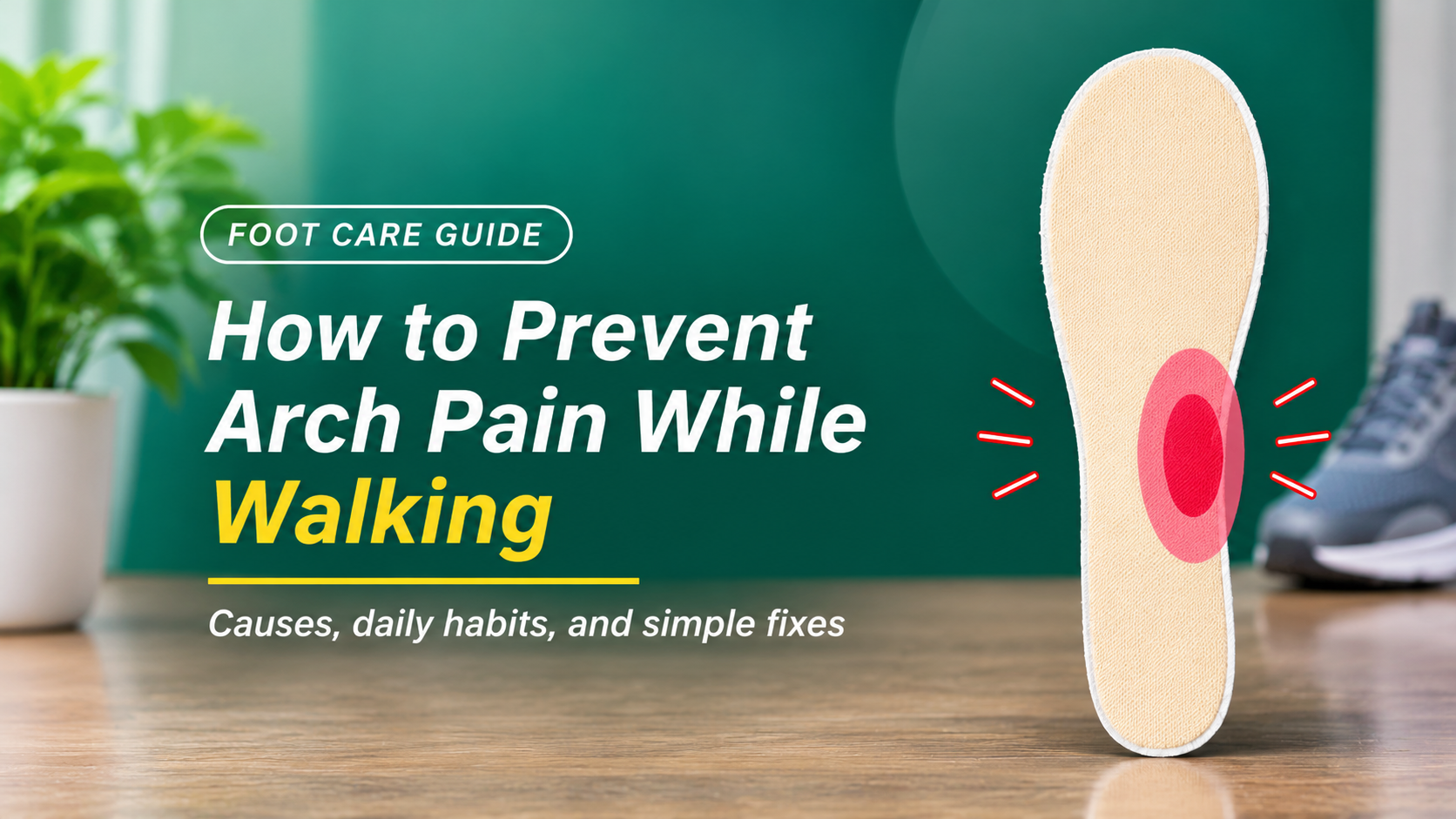

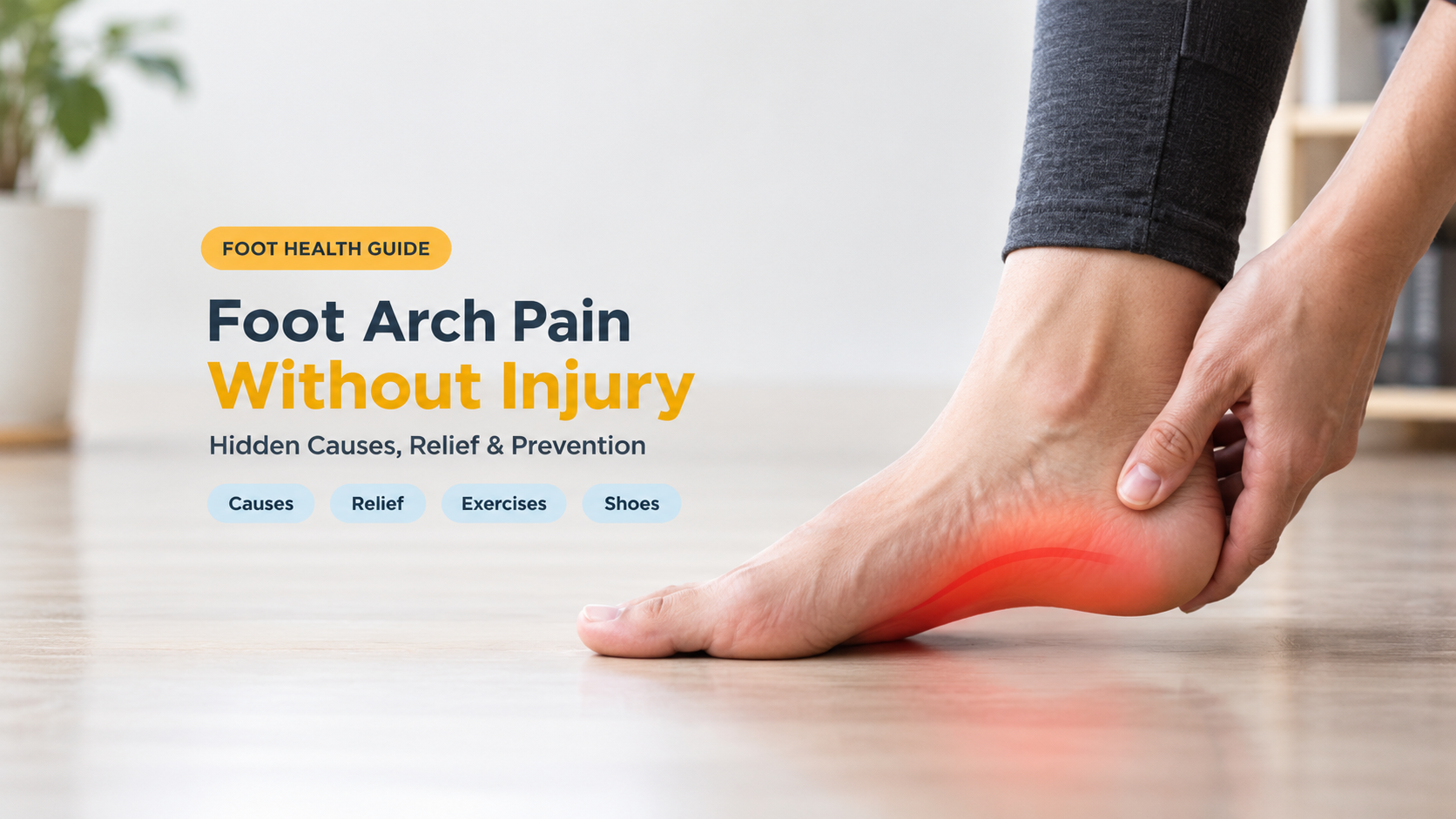

Your foot hurts along the arch, but you cannot think of a single moment when you injured it. No fall, no twisted ankle, no sports accident. So why does it ache? If you are dealing with foot arch pain without injury, this is one of the most common questions people ask, and the answer is usually reassuring: most arch pain develops slowly from everyday strain rather than from one dramatic event.
Think of it like a rope that frays gradually. Standing on hard floors, wearing unsupportive shoes, tight calf muscles, a change in weight or activity, or the natural shape of your foot can all add small amounts of stress every day. Eventually the arch tissues complain. This guide explains the hidden causes, how to read your pain pattern, what you can do at home, and when a medical check is the smart next step.
Quick Answer
Foot arch pain without injury is usually caused by gradual overload: long hours on your feet, unsupportive footwear, flat or high arches, tight calves, weak foot muscles, weight changes, plantar fasciitis, or sometimes joint and nerve conditions. Supportive shoes, daily stretching, foot strengthening and load management help most people. See a doctor if the pain is severe, constant, accompanied by swelling or numbness, or lasts more than two weeks.
Can Arch Pain Happen Without an Injury?
Yes, and it happens all the time. Medical professionals often separate injuries into two groups. Acute injuries come from a single event, such as a sprain. Overuse or load-related problems build up gradually when the tissue is asked to do more than it can currently handle. Most non-injury arch pain falls into the second group.
The arch of your foot is a spring-like structure of bones, ligaments, tendons, small muscles and a thick band called the plantar fascia. With every step, it flattens slightly to absorb shock and then recoils to push you forward. That is a lot of work. If the structure is tired, unsupported or stressed in the same way thousands of times a day, pain can start without any single “injury” moment.
Where Does Arch Pain Come From?
Several structures can be responsible, and knowing which one is likely involved helps you choose the right solution:
- Plantar fascia: a strong band running from the heel bone to the toes that supports the arch.
- Posterior tibial tendon: a tendon that runs behind the inner ankle bone and along the inside of the foot, helping hold the arch up.
- Ligaments and small foot muscles: they stabilize the arch and share the load with every step.
- Foot joints and nerves: less commonly, arthritis or nerve irritation can feel like arch pain.
8 Hidden Causes of Foot Arch Pain Without Injury

1. Long Hours on Your Feet
Nurses, teachers, retail workers, factory workers, chefs and anyone who stands or walks on hard floors for long periods put steady stress on the arch. Concrete and tile do not absorb shock, so your foot does all the work. The pain often builds through the day and feels better after sitting down with your feet up.
2. Unsupportive or Worn-Out Footwear
Flat sandals, flip-flops, thin-soled shoes, high heels and old, flattened shoes all fail to support the arch. Shoes that are too narrow or too loose can also change how your foot moves. Footwear is one of the easiest causes to fix, which makes it a smart place to start.
3. Flat Feet or High Arches
Your natural arch shape affects how force travels through the foot. A flat or low arch may roll inward and stretch the tissues underneath. A very high arch can be stiff and absorb less shock, so impact is concentrated in small areas. Neither shape is automatically a problem, but both can make you more vulnerable when other factors pile on.
4. Tight Calf Muscles and Achilles Tendon
Limited ankle movement pulls on the heel and puts extra tension through the plantar fascia, which attaches at the heel and fans out under the arch. Many people with arch or heel pain have noticeably tight calves, and simple stretching often brings a surprising amount of relief.
5. Weak Foot and Lower-Leg Muscles
Your arch is not supported only by ligaments. The small muscles inside the foot and the muscles of the lower leg actively help hold it up. After years in cushioned shoes, many people have weak foot muscles. When those muscles tire, ligaments and the plantar fascia have to carry more load, and they get irritated.
6. Weight Gain, Pregnancy or Hormonal Changes
Extra body weight increases the force passing through your feet with every step. During pregnancy, weight gain combined with hormones that loosen ligaments can cause the arch to drop slightly and ache. Many people find the discomfort eases after the pregnancy, but supportive footwear and gentle exercises can help in the meantime.
7. Plantar Fasciitis
Plantar fasciitis is one of the most common causes of arch and heel pain, and it frequently develops without a clear injury. It is typically felt as pain with the first steps after getting out of bed or after a long period of sitting, which eases as you move and may return after long periods on your feet. Some people feel it more in the middle of the arch than at the heel.
8. Joint, Nerve or Other Medical Conditions
Less often, arch pain is linked to arthritis in the foot joints, nerve irritation such as tarsal tunnel syndrome, or conditions that affect the nerves and circulation, including diabetes. These causes may bring burning, tingling, numbness or stiffness rather than a simple ache. If this sounds familiar, a medical assessment is the right next step instead of home care alone.
Other Things That Can Contribute
- A sudden increase in walking, steps or exercise, even if it feels easy
- Walking barefoot on hard floors, especially after wearing cushioned shoes for years
- Age-related changes in the tissues, since the natural fat padding under the foot thins over time
- Naturally flexible joints (hypermobility) that make the foot less stable
- Poor hip and core control, which changes how the foot lands
What Does Your Pain Pattern Mean?
Where and when the pain shows up can offer useful clues. The chart below is a general guide only and is not a diagnosis.

How to Relieve Foot Arch Pain at Home
For mild to moderate arch pain without red-flag signs, a consistent home routine works well for many people. The goal is to calm the irritated tissue and then make your foot more resilient so the pain does not return.
1. Reduce the Load That Is Aggravating It
You do not have to stop living your life, but look for the biggest stressors. Can you take short sitting breaks during the day? Can you swap high-impact exercise for swimming or cycling for a couple of weeks? Can you avoid walking barefoot on tile? Small changes to load often make a big difference.
2. Wear Supportive Footwear All Day
Wear shoes with a firm heel, a moderately stiff sole and good arch support, even around the house. Many people find that wearing supportive slippers or sandals indoors reduces morning pain noticeably, because the arch is no longer left unprotected on hard floors.
3. Stretch the Calves and the Arch
Gentle stretching is one of the most useful habits. Try this routine once or twice a day:
- Wall calf stretch: face a wall with one foot back, heel down and knee straight. Lean forward until you feel the stretch. Hold 30 seconds, 3 times per leg.
- Bent-knee calf stretch: same position with the back knee slightly bent to reach the deeper calf muscle. Hold 30 seconds, 3 times per leg.
- Plantar fascia stretch: sit and cross the painful foot over the opposite knee. Gently pull the toes back toward your shin until you feel the stretch under the arch. Hold 30 seconds, 3 times.
If your pain is worst in the morning, do the plantar fascia stretch before you take your first steps out of bed.
4. Use Cold and Self-Massage
Roll your arch over a frozen water bottle for about five minutes, or use a massage ball. The combination of cold and pressure feels good and may help settle irritation. Keep the pressure comfortable, never sharp or painful.
5. Strengthen the Arch
Once the sharpest pain has calmed, strengthening is what protects you long term. Do these three to four times per week:
- Short foot exercise: try to draw the ball of your foot toward the heel without curling the toes, so the arch lifts. Hold 5 seconds, 10 repetitions.
- Towel scrunches: pull a small towel toward you with your toes. 2 sets of 15.
- Slow calf raises: rise onto your toes, pause, then lower over about 3 seconds. 3 sets of 12.
- Single-leg balance: stand on one foot for 30 to 60 seconds while keeping the arch gently lifted.
- Heel-to-toe walking and toe yoga: lifting only the big toe and then the other toes teaches the foot muscles to work independently.
Pain Relief Tip
Over-the-counter pain relievers may ease discomfort for some people in the short term, but they do not address the cause. Ask a pharmacist or doctor first, especially if you have other health conditions or take other medicines.
A Simple Daily Arch Care Routine
Consistency beats intensity. This easy routine fits into a normal day and takes under 20 minutes in total.

Choosing the Right Shoes and Support
The right footwear can reduce arch strain immediately. Keep these points in mind when shopping:
- Arch support that matches your foot: flat feet generally do better with a firmer, more supportive shoe, while high arches often need extra cushioning.
- A firm heel counter: pinch the back of the shoe. It should not collapse easily.
- A sole that bends at the toes, not in the middle: a shoe that folds in half under the arch offers little support.
- Enough toe room: your toes should not feel squeezed.
- Replace worn shoes: compressed foam, uneven wear and a flat feel are signs they are done.
- Try shoes later in the day: feet swell slightly, so the fit is more accurate.
Helpful Gear for Arch Pain
These items are commonly used to manage arch discomfort. Choose what fits your symptoms and comfort.
- Supportive walking or work shoes: good cushioning and structure for long days on your feet.
- Arch support insoles: add support and shock absorption inside the shoe you already own. Look for firm, contoured support that feels comfortable straight away.
- Massage ball or foot roller: helps release tension in the arch and calf at the end of the day.
- Supportive house slippers or recovery sandals: protect the arch on hard floors indoors.
- Night splint: keeps the foot gently flexed during sleep, which may ease painful first steps in the morning.
- Compression arch sleeves: provide light support and warmth for some people during the day.
How to Prevent Arch Pain From Coming Back
- Do not go barefoot all day on hard floors. Supportive indoor footwear takes pressure off the arch.
- Build up activity gradually. Increase walking, steps or exercise a little at a time.
- Keep your calves flexible. A few minutes of calf stretching daily protects the whole foot.
- Strengthen your feet and hips. Strong muscles share the load that would otherwise fall on the fascia.
- Manage your weight if needed. Even modest weight loss can reduce force through the feet.
- Replace shoes regularly. Footwear loses support well before it looks worn out.
- Take standing breaks. If your job keeps you on your feet, sit for a minute or two when you can and use a cushioned mat.
- Act early. Mild arch tightness is much easier to settle than pain that has lingered for months.
When to See a Doctor
Home care helps many people, but some signs mean you should get a professional opinion rather than waiting.

A doctor, podiatrist or physiotherapist can examine your foot, check how you stand and walk, and arrange tests such as imaging or nerve studies if needed. Treatment may include a tailored exercise plan, taping, custom orthotics or other targeted options. If you have diabetes or poor circulation, do not delay: new foot pain in these situations should always be checked promptly.
Frequently Asked Questions
Why does my arch hurt for no reason?
There is almost always a reason, even if it is not obvious. Gradual strain from standing, footwear, tight calves, weak foot muscles or the shape of your foot can build up silently until the tissue becomes irritated. The pain feels like it came from nowhere because the cause was slow, not sudden.
Can flat feet cause arch pain without injury?
They can contribute, especially when combined with long hours of standing, unsupportive shoes or weak muscles. Many people with flat feet never have pain, so shape alone is not the whole story.
Why is my arch pain worse in the morning?
During sleep, the plantar fascia and calf muscles shorten and stiffen. The first steps in the morning then pull suddenly on tissues that are not ready. This is typical of plantar fasciitis, and stretching before you get out of bed often helps.
Is arch pain without injury serious?
Usually not, and most cases improve with supportive footwear, stretching and strengthening. But persistent pain, swelling, numbness, burning or pain at rest should be checked by a healthcare professional.
How long does it take for arch pain to go away?
Mild cases may improve within a few weeks once you correct the cause. Conditions such as plantar fasciitis can take several weeks to a few months. Staying consistent matters more than doing a lot occasionally.
Are arch supports worth using?
For many people they bring real relief, especially in the early stages. They work best alongside stretching, strengthening and better footwear, not as the only solution.
Should I walk through arch pain?
Gentle walking in supportive shoes is often fine if the pain is mild and does not worsen. If walking increases your pain, causes limping or leaves you worse the next day, reduce the load and consider a medical check.
Final Thoughts
Foot arch pain without injury can be frustrating because there is no clear event to blame. But that is also good news: the causes are usually everyday, fixable factors. Support your arch with better footwear, stretch your calves, strengthen your foot muscles, manage how long you spend on your feet, and give your body time to adapt. If the pain is stubborn or comes with warning signs, get professional advice early. Your feet carry you every day, and a little consistent care goes a long way.
Medical disclaimer: This article is for general educational purposes only and is not a substitute for professional medical advice, diagnosis or treatment. If you have persistent, severe or worsening foot pain, consult a qualified healthcare professional.