
Foot Pain From Standing on Concrete: Causes, Relief & Prevention Guide
You walk onto the factory floor, the warehouse aisle, the restaurant kitchen or the construction slab feeling fine. A few hours later the soles of your feet are throbbing, your heels feel bruised, and your legs are heavy. By the time you get home, all you want to do is lie down and put your feet up. If that sounds familiar, you are dealing with one of the most common occupational complaints in the world: foot pain from standing on concrete.
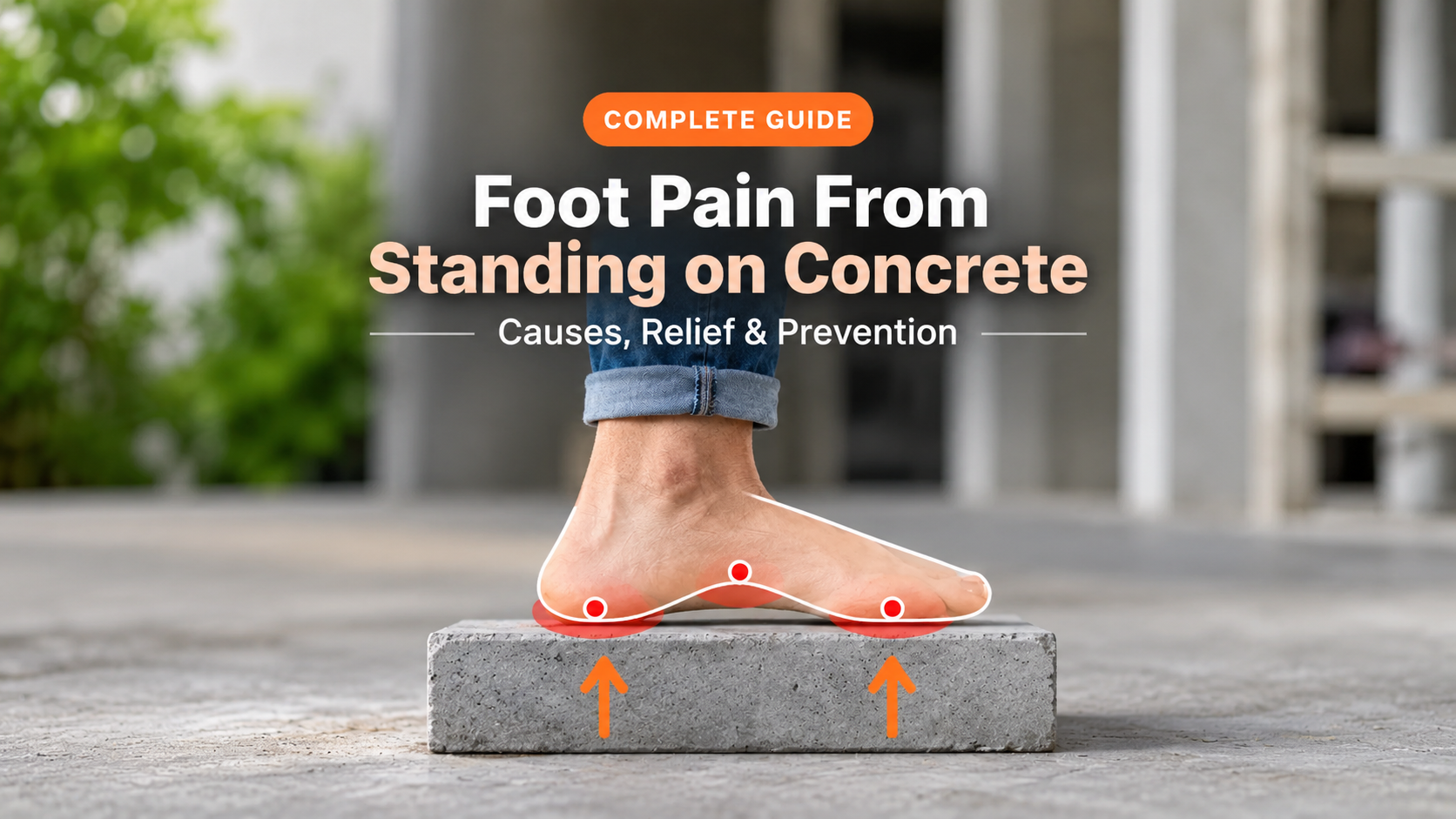
Concrete is strong, cheap and durable, which is exactly why it is used almost everywhere. But it is a poor surface for human feet. It does not flex, absorb shock or give at all, so every step and every minute of standing sends force straight back up through your heels, arches, ankles, knees and spine. This guide explains why concrete is so hard on your feet, the types of pain it causes, practical ways to get relief, how to choose shoes, insoles and mats, and when you should see a professional.
Quick Summary
- Why it hurts: concrete has no give, so your feet and legs absorb all the impact, and long periods of standing keep the same tissues under constant load.
- Common problems: heel pain, arch pain, ball-of-foot pain, swollen and tired feet, blisters, and aching legs, knees and lower back.
- Best defenses: supportive cushioned shoes, good insoles, an anti-fatigue mat, regular movement and a short daily recovery routine.
- See a doctor if: pain is severe, constant, one-sided, comes with swelling, numbness or redness, or does not improve after a couple of weeks of better support.
Why Concrete Is So Hard on Your Feet
Your feet are designed for walking on natural, uneven ground such as soil, grass and sand, which give a little with each step. Concrete does the opposite. Several things happen when you spend hours on it:
- No shock absorption. Each step sends a jolt of force up through the heel bone and the rest of the skeleton. Without help from the surface, your shoes, the fat pad under your heel and your muscles have to absorb it all.
- Constant static load. Standing still is not rest for your feet. The muscles, ligaments and the plantar fascia that support the arch work continuously, without the pumping effect that walking provides, so they tire and become irritated.
- Reduced circulation. Standing in one position lets blood pool in the lower legs and feet, which contributes to swelling, heaviness and aching.
- A flat, uniform surface. Concrete never varies, so the same areas of the foot take the same pressure all day instead of the load shifting around.
- Cold and hardness together. Concrete floors can be cold, and cold, stiff tissues tend to feel more sore.
How Standing on Concrete Affects Your Whole Body
The damage rarely stays in the feet. Because the skeleton is a connected chain, problems at the bottom travel upward.
- Feet: heel, arch and forefoot pain, tired aching soles, swelling and blisters.
- Calves and legs: heaviness, cramping and swelling. Prolonged standing can also worsen existing vein problems in some people.
- Knees: repeated unabsorbed impact increases stress on the joints.
- Hips and lower back: standing for long periods in a fixed posture tightens the muscles and can cause persistent aching.
- General fatigue: sore feet make you shift your weight and change how you stand and walk, which tires the whole body faster.
Common Types of Foot Pain From Standing on Concrete
Heel Pain and Plantar Fasciitis
Plantar fasciitis is irritation of the thick band of tissue that runs from the heel to the base of the toes. It is one of the most common causes of heel pain and often causes a sharp or aching pain under the heel, especially with the first steps in the morning or after sitting. Concrete, long standing hours and unsupportive shoes are common triggers.
Heel Fat Pad Bruising
The natural fat pad under your heel acts as a cushion. Repeated hard impact can leave it feeling bruised and tender, particularly when your shoes have little cushioning.
Arch Pain
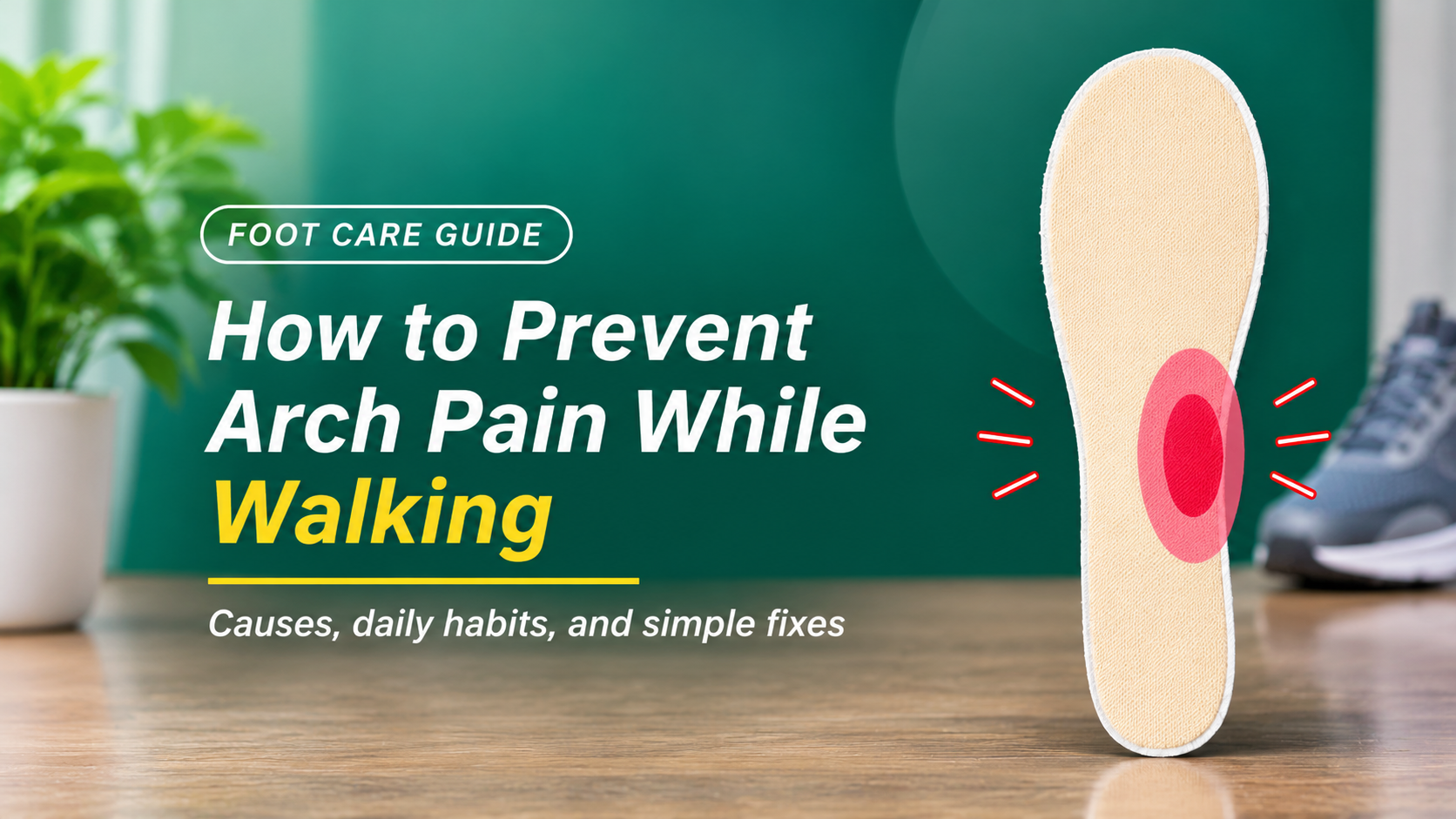
The arch muscles and ligaments tire from supporting you all day. This causes aching along the inner side of the foot, which tends to build up as the shift goes on. Flat feet and high arches often make this worse.
Ball-of-Foot Pain (Metatarsalgia)
Burning, aching or bruise-like pain under the base of the toes can develop when the forefoot takes high pressure and the shoe has little cushioning. It may feel like standing on a pebble.
Morton’s Neuroma
Some people develop irritation of a nerve between the toes, which can cause burning, tingling or numbness in the forefoot. Tight, narrow shoes and high pressure are common contributors.
Achilles Tendon Soreness
Tight calves and a loaded heel can irritate the Achilles tendon at the back of the heel and ankle.
Swollen, Tired Feet
Standing causes fluid to collect in the feet and ankles, leaving them puffy, heavy and sore by the end of the day. Mild swelling that settles overnight is common, but persistent or one-sided swelling deserves attention.
Blisters, Corns and Calluses
Friction and pressure inside your shoes, worsened by sweat and poor fit, create painful skin problems.
Stress Injuries
Less commonly, repeated heavy loading, especially after a sudden increase in standing or walking, can contribute to stress reactions or fractures in foot bones. These typically cause focal pain that worsens with weight-bearing and needs professional assessment.
Who Is Most at Risk?
Anyone who stands for long periods on hard floors can be affected, but the risk is higher in some jobs and for some people.
- Jobs: factory and warehouse workers, construction workers, retail and supermarket staff, chefs and kitchen staff, nurses and surgeons, hairdressers, teachers, security guards, bartenders and assembly line workers.
- Foot structure: flat feet or very high arches.
- Body weight: extra weight increases the force through the feet.
- Age: the natural cushioning in the feet thins with age.
- Footwear: thin, flat, worn-out or poorly fitting shoes.
- Health conditions: diabetes, arthritis, circulation problems, previous foot injuries and pregnancy can all affect how feet tolerate standing.
- No breaks: long periods without sitting or changing position.
Normal Tired Feet or a Real Problem?
Feeling some tiredness in your feet after a long day on your feet is common. It becomes a problem when:
- The pain starts earlier in the shift or lasts into the next day
- You feel sharp, stabbing or burning pain rather than general tiredness
- Pain is worse with the first steps after sitting or in the morning
- Swelling or heaviness does not go down overnight
- Pain is affecting how you walk, work or sleep
Treating it early is much easier than waiting until the pain has become established.
Quick Relief After a Long Day on Concrete
- Take your shoes off and rest. Let your feet breathe and take the load off them.
- Elevate your feet. Lie back and raise your feet above heart level for 10 to 20 minutes to help reduce swelling.
- Apply ice to sore spots. Wrap ice or a cold pack in a thin cloth and apply to a sore heel or arch for 10 to 15 minutes. Never place ice directly on bare skin.
- Roll your arches. Roll the sole of each foot over a tennis ball or firm massage ball for about two minutes.
- Stretch your calves and plantar fascia. Do a wall calf stretch for 30 seconds, three times per leg, and gently pull your toes back toward your shin to stretch the sole.
- Massage your feet. A few minutes of gentle massage can ease tightness.
- Try a warm foot soak for tired feet. This can feel soothing, but avoid it, or ask your doctor first, if you have diabetes, numbness or poor circulation, since you may not feel if the water is too hot.
- Consider short-term pain relief. Over-the-counter pain relievers may help some people. Follow the label and check with a pharmacist or doctor if you have other conditions, take other medicines, or are pregnant.
The 5 Layers of Defense Against Foot Pain on Concrete
No single fix solves everything. The most effective approach stacks several protections between your feet and the floor, and then adds movement and recovery on top.
Layer 1: Choose the Right Footwear
Your shoes are your first line of defense. The best shoes for standing on concrete combine cushioning, support and a good fit.
| Feature | Why It Matters | What to Look For |
|---|---|---|
| Cushioned midsole | Absorbs impact that concrete would otherwise return to your feet | Thick, resilient foam in the heel and forefoot that springs back rather than feeling dead |
| Arch support | Reduces strain on the plantar fascia and arch muscles | A contoured footbed that fits your arch type, or a removable footbed you can upgrade |
| Firm heel counter | Keeps the heel stable and centered | A solid cup at the back of the shoe that does not collapse when squeezed |
| Rocker or slightly curved sole | Helps the foot roll through each step with less effort | A sole that curves up slightly at the toe |
| Roomy toe box | Prevents squeezing, cramping and nerve irritation | Space to wiggle your toes and a width that matches your foot |
| Slip-resistant outsole | Keeps you steady and prevents tense gripping with your toes | A tread suited to your workplace floor |
| Reasonable weight | Lighter shoes tire the legs less over a long day | Supportive but not heavy, particularly in safety footwear |
Shoe Buying Tips
- Shop in the afternoon when your feet are at their largest.
- Wear your normal work socks when trying shoes on.
- Test on a hard floor and stand and walk for several minutes.
- Do the twist and bend test. The shoe should bend at the ball of the foot and resist twisting in the middle.
- Replace them on time. If the midsole is compressed, creased or the heel is worn unevenly, support is gone even if the shoe looks fine. Work shoes used all day often need replacing every 6 to 12 months.
- Rotate between two pairs if you can, so each pair has time to dry and recover.
Layer 2: Upgrade Your Insoles
Most standard shoe insoles are thin and flat. A good insole adds cushioning and arch support, and can transform a shoe that is almost right.
| Insole Type | Best For | What to Look For |
|---|---|---|
| Cushioned comfort insoles | General fatigue and mild soreness on hard floors | Resilient foam or gel in the heel and forefoot with a smooth top cover |
| Arch support insoles | Flat or low arches, arch strain, plantar fasciitis symptoms | Firm contoured arch, deep heel cup and cushioning on top |
| Heavy-duty work insoles | Eight hours or more standing or walking on concrete | Durable materials, shock absorption and a stable base |
| Insoles for high arches | Rigid feet with heel and ball-of-foot pain | Full-length cushioning with moderate arch contour |
| Custom orthotics | Persistent pain, foot deformity or repeated injuries | Professional assessment and a device made from a mold or scan of your foot |
Remove the factory insole before fitting a new one, make sure your heel sits securely and you still have toe room, and break the new insoles in gradually over one to two weeks. Replace them roughly every 3 to 12 months, depending on material and use. If your job requires safety-rated footwear, check that changing the insole is allowed.
Layer 3: Soften the Floor With an Anti-Fatigue Mat
If you stand in one place for much of the day, such as at a counter, workbench, kitchen station or standing desk, an anti-fatigue mat can make a real difference. A mat adds a layer of give between you and the concrete and encourages the small movements that keep muscles active and blood flowing.
| Mat Feature | What to Look For |
|---|---|
| Thickness | Roughly 1 to 2 cm (about half to three-quarters of an inch) suits most people. Very thick or very soft mats can feel unstable. |
| Material | Dense foam, gel, rubber or polyurethane. It should compress slightly and spring back rather than staying flat. |
| Size | Large enough that you can move and shift your feet without stepping off. |
| Edges | Beveled edges reduce tripping hazards. |
| Surface and base | Non-slip bottom, and a top that is easy to clean and suited to your environment, such as oil, water or grease. |
| Durability | Resists crumbling and curling; check it periodically and replace it when it flattens or cracks. |
If you cannot use a mat, ask about other options such as cushioned flooring, rubber underlay or rotating tasks so you are not stuck on a single hard spot all day.
Layer 4: Keep Moving and Take Smart Breaks
The best posture is the next posture. Staying completely still, even on a good surface, keeps the same tissues loaded. Small changes spread the stress and keep blood moving.
- Shift your weight from one foot to the other, and avoid locking your knees.
- Use a low footrest and alternate which foot is raised.
- Walk a few steps every so often if your job allows.
- Take seated breaks and elevate your feet when possible.
- Use a sit-stand stool or perch seat for tasks that allow it.
- Change socks if they become damp.
Layer 5: Recover and Strengthen
Stretching and Strengthening
- Wall calf stretch: hold for 30 seconds, three times per leg.
- Plantar fascia stretch: pull your toes toward your shin and hold for 20 to 30 seconds.
- Towel scrunches: use your toes to scrunch a small towel toward you, 10 to 15 repetitions per foot.
- Short foot exercise: draw the ball of the foot toward the heel to lift the arch slightly without curling the toes. Hold for 5 seconds, 10 times.
- Calf raises: slow, controlled raises on the floor or a step to strengthen the lower legs.
Compression Socks
Graduated compression socks can help some people with swelling and leg heaviness during long periods of standing. They should feel snug but not painful. If you have circulation problems, diabetes or nerve problems, check with a doctor before using compression.
Healthy Habits
- Stay hydrated and eat regular, balanced meals.
- Stay active outside work, with low-impact exercise such as walking, swimming or cycling.
- Manage body weight gradually if it is a factor, since this reduces the load on your feet.
- Sleep well, which supports tissue recovery.
Workplace and Home Ergonomics
If standing on concrete is part of your job, there are simple conversations to have with your employer or supervisor:
- Ask for anti-fatigue mats at fixed workstations.
- Request task rotation so you are not standing in one spot all shift.
- Ask for stools or seats for tasks that can be done seated.
- Check that scheduled breaks are actually taken and that there is somewhere to sit and elevate your feet.
- Ask whether cushioned or rubberized flooring could be installed in the worst areas.
- Confirm any rules on safety footwear before changing shoes or insoles.
At home, the same ideas apply. A cushioned mat in front of the kitchen counter, supportive house shoes instead of bare feet on hard floors, and regular breaks from standing chores all help your feet recover.
When to See a Doctor or Podiatrist
Get Professional Advice If You Have:
- Sudden, severe foot pain, or pain after a fall, twist or impact
- Difficulty putting weight on the foot
- Swelling that is persistent or affects only one foot or leg
- Redness, warmth, bruising or fever together with foot pain
- Numbness, tingling or burning that does not go away
- Pain that wakes you at night or is present at rest
- Diabetes, poor circulation or a condition that affects nerves or healing, along with any new foot pain or skin damage
- Pain that has not improved after about two weeks of better footwear, support and rest
A podiatrist can assess your feet and walking pattern, diagnose conditions such as plantar fasciitis or nerve problems, and recommend treatments including physical therapy, taping, custom orthotics and other options. Early treatment usually leads to faster recovery.
Prevention Checklist for People Who Stand on Concrete
- Wear supportive, cushioned shoes that fit properly and replace them on time.
- Add good insoles suited to your arch type.
- Stand on an anti-fatigue mat or cushioned surface wherever you can.
- Shift position often and take regular seated breaks.
- Choose moisture-wicking socks and change them if damp.
- Stretch your calves and feet before and after work.
- Roll your arches and elevate your feet after a long shift.
- Keep a healthy weight and stay active outside of work.
- Act early when pain starts, instead of waiting until it becomes severe.
Frequently Asked Questions
Why does standing on concrete hurt my feet so much?
Concrete does not absorb any shock, so your feet, ankles, knees and back absorb all the impact. Standing for long periods also keeps the same muscles and ligaments under constant load without a break, which leads to fatigue, irritation and pain.
What is the best way to stop foot pain from standing all day?
Combine several measures: supportive cushioned shoes, a good insole, an anti-fatigue mat if you stand in one place, regular movement and breaks, and a short stretching and recovery routine. No single change works as well as the combination.
Do anti-fatigue mats really help?
Many people find they reduce discomfort and fatigue when standing for long periods in one spot. They work best when paired with good footwear and regular position changes, and they should be the right thickness, firmness and size for your workstation.
Are insoles worth it for standing on concrete?
For many people they are. Insoles add cushioning and arch support that many shoes lack, and can reduce strain on the heel, arch and ball of the foot. Choose a type that suits your arch and your shoes, and replace them when they wear out.
Can standing on concrete cause plantar fasciitis?
Long periods of standing on hard surfaces are a recognized risk factor for plantar fasciitis, particularly when combined with unsupportive shoes, tight calves, flat feet or extra body weight. It is not the only cause, so persistent heel pain should be assessed.
Why are my feet swollen after standing on concrete?
Standing allows fluid to collect in the lower legs and feet. Mild swelling that goes down overnight is common. Swelling that persists, affects only one side, or comes with pain, redness or warmth should be checked by a doctor.
How long does it take for foot pain to go away?
It depends on the cause and how long you have had it. Mild fatigue and soreness may improve within days of better support and rest, while conditions such as plantar fasciitis can take weeks or months. Starting early usually shortens recovery.
Is it better to stand barefoot or in shoes on concrete?
For long periods on hard floors, supportive cushioned footwear is generally better, because bare feet and thin socks give no protection from impact. Even at home, consider supportive house shoes on hard floors.
Final Thoughts
Foot pain from standing on concrete is common, but it is not something you simply have to put up with. Concrete gives your feet nothing back, so the job of protecting them falls to your footwear, insoles, the surface you stand on, how often you move and how well you recover. By stacking those protections and acting early at the first sign of pain, most people can keep their feet comfortable through long shifts.
Start with simple changes this week: check your shoes and insoles, add a mat if you can, build short movement breaks into your day and spend a few minutes on stretching and recovery after work. If pain is severe, persistent or comes with warning signs, get a professional opinion rather than pushing through. Your feet carry you through every working day, so give them the support they need.
Medical disclaimer: This article is for general information and education only. It is not a substitute for professional medical advice, diagnosis or treatment. Always seek the advice of a qualified healthcare provider with any questions about a medical condition. Follow your employer’s and the manufacturer’s safety guidance when choosing or modifying protective footwear.