
How to Break In Orthotic Insoles: A Gradual Plan for Comfortable Wear
You finally have your new orthotic insoles, but after the first hour your arches ache, your feet feel strange, and you wonder if something is wrong. Don’t worry. Almost everyone who starts wearing orthotics goes through an adjustment period. Your feet, ankles, and legs have spent years moving a certain way, and orthotics change how your foot sits and how force travels through it.
The key is to break them in gradually. This guide gives you a simple schedule, explains what feels normal and what does not, shares tips that make the process easier, and shows how to fix common problems along the way.
Table of Contents
- Why a Break-In Period Is Needed
- How Long Does Breaking In Take?
- Before You Start
- A Step-by-Step Break-In Schedule
- What Feels Normal and What Does Not
- Tips to Make Break-In Easier
- Choosing the Right Shoes and Socks
- Exercises and Stretches That Help
- Common Problems and Fixes
- Breaking In Different Types of Orthotics
- Breaking In Children’s Orthotics
- Mistakes to Avoid
- When to See Your Provider
- Frequently Asked Questions
- Final Thoughts
Why a Break-In Period Is Needed

Your Feet Are Used to the Old Support
The muscles, tendons, and joints in your feet have adapted to your old movement pattern, even if that pattern caused pain. Orthotics change it, and your body needs time to adjust.
Arch Position Changes
Orthotics support your arch and guide how your foot lands and pushes off. This can feel odd, even when it is helpful.
Muscles Work Differently
Muscles that were underused may now work harder, which can cause mild tiredness at first, similar to starting a new exercise.
New Materials Feel Firm
New orthotics often feel stiffer than your old insoles. They tend to feel more comfortable as the materials settle with wear.
It Protects Against Blisters and Soreness
Wearing them for short periods first gives your skin and feet time to adapt, which helps prevent blisters, hot spots, and soreness.
How Long Does Breaking In Take?
Most people adjust within one to two weeks. Some need up to three or four weeks, especially with firmer custom orthotics, significant foot problems, or a big change in arch position. Your provider may give a specific schedule, and that advice always comes first.
Before You Start
- Read the instructions that came with your orthotics, or your provider’s break-in plan.
- Remove the shoe’s factory insole if the shoe is designed for replacement insoles. Two insoles stacked together can cause poor fit.
- Check the fit. The orthotic should lie flat, with no curling or bunching.
- Choose comfortable shoes with enough room and a firm heel.
- Plan to start on a relaxed day, not a day of long walking or heavy standing.
A Step-by-Step Break-In Schedule

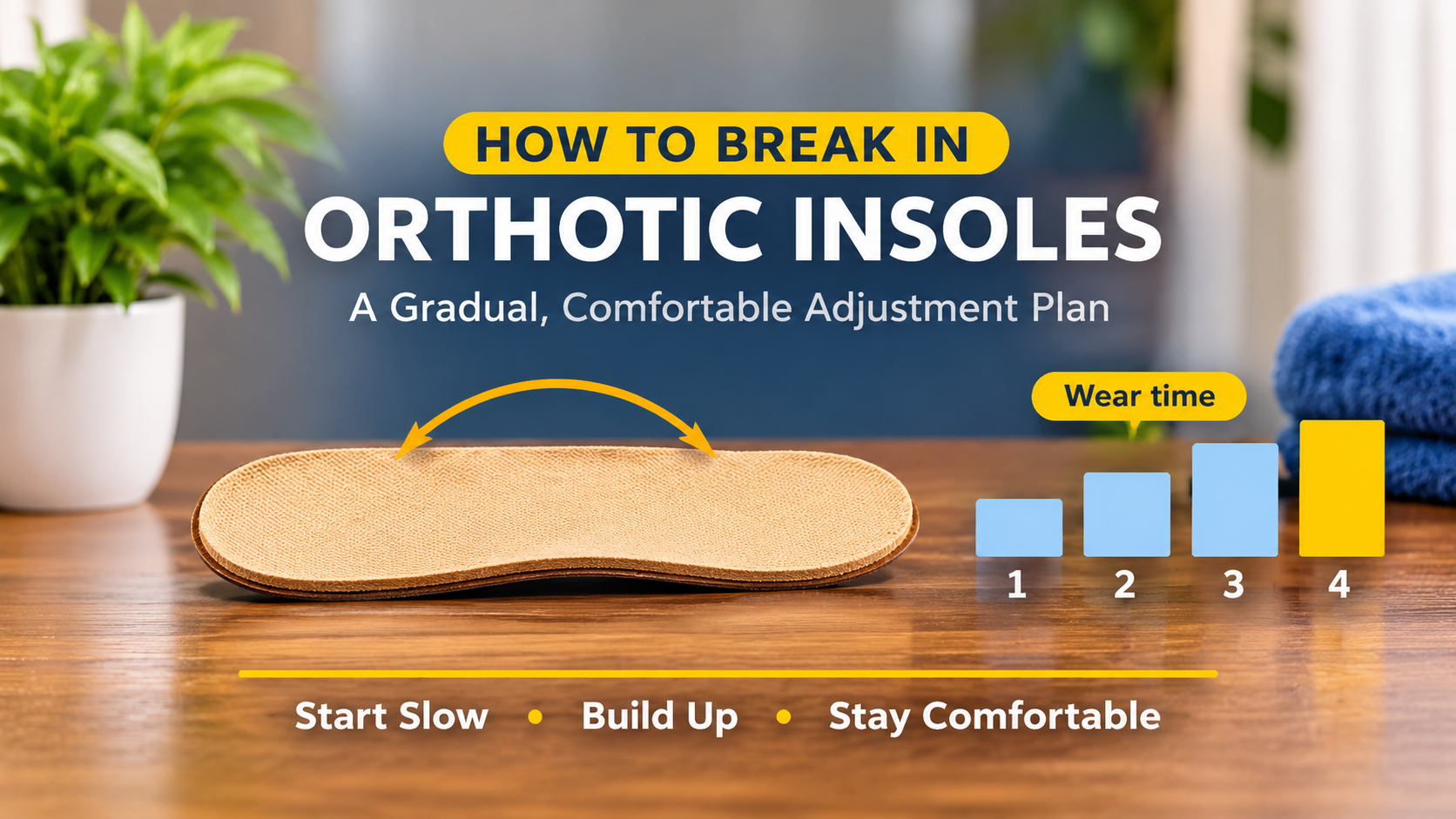
Days 1 to 2: 1 to 2 Hours
Wear your orthotics for one to two hours at a time, such as around the house or on a short errand. Then switch back to your old insoles or remove them.
Days 3 to 4: 3 to 4 Hours
If your feet feel fine, increase wear to three or four hours. Notice any sore spots or pressure points.
Days 5 to 6: 5 to 6 Hours
Wear them for most of a workday or a longer outing if comfortable. If you feel sore, stay at your current duration for an extra day or two.
Days 7 to 9: 7 to 8 Hours
Increase to nearly a full day. Add more activity gradually, such as longer walks.
Day 10 and Beyond: Full Day
Wear them all day if you feel comfortable. After that, you can consider using them for exercise or sports, introducing activity gradually.
Remember, this is a sample schedule. If you feel discomfort, slow down rather than pushing through. It is better to take a few extra days than to cause soreness or blisters.
What Feels Normal and What Does Not

Usually Normal
- Mild awareness of the arch support
- Slight tiredness in the feet, arches, or calves
- The insole feeling firm at first
- Muscle tightness that eases with rest and stretching
- Discomfort that fades as you adapt
Get Advice If You Notice
- Sharp, stabbing, or severe pain
- Numbness or tingling
- Blisters or skin damage
- Pain that keeps getting worse
- No improvement after several weeks
Tips to Make Break-In Easier

Wear Supportive Socks
Cushioned, moisture-wicking socks reduce friction and sweat, which lowers the chance of blisters.
Use the Right Shoes
Pick shoes that are roomy enough, stable, and have a firm heel. Orthotics work best in shoes made for support.
Remove Factory Insoles
Take out the existing insole if the shoe allows it, so the orthotic can sit flat.
Stretch Your Calves and Feet
Light daily stretching can ease tightness as your body adapts.
Rest When Sore
If your feet feel sore, take the orthotics out for a rest and resume at a lower wear time the next day.
Alternate with Old Insoles Early On
Switching back to your old insoles for part of the day can make the early days easier.
Keep Them Dry and Clean
Remove them at night so they can dry. Dampness can irritate your skin and wear down the materials.
Choosing the Right Shoes and Socks
- Look for removable insoles in your shoes so there is room for the orthotic.
- Check the depth. Shallow shoes can push the orthotic up and cause heel slipping.
- Pick a firm heel counter and a stable sole.
- Avoid very tight shoes. They squeeze your foot against the orthotic.
- Use seamless, cushioned socks to reduce hot spots.
- Try shoes on with your orthotics in them when shopping.
Exercises and Stretches That Help
Gentle exercises can help your feet adapt. Stop if anything hurts.
- Calf stretch: stand facing a wall, step one foot back, and press the heel down for 20 to 30 seconds per side.
- Arch roll: roll the arch gently over a small ball or bottle for a minute or two.
- Toe stretches: sit and gently pull your toes upward and hold for a few seconds.
- Towel scrunches: use your toes to scrunch a small towel on the floor.
- Ankle circles: rotate your ankles slowly to keep joints loose.
Common Problems and Fixes

Arch Feels Too High
Slow down your wear schedule. If the discomfort is strong or stays, ask your provider to check the fit or adjust the orthotics.
Heel Slipping
Check that the shoe size and depth are suitable. A thin non-slip grip liner can help keep the orthotic in place.
Blisters
Take a break to let the skin heal, wear cushioned socks, and return to a shorter schedule.
Squeaking
Dry the shoe and orthotic fully and add a light dusting of baby powder or cornstarch under the insole.
Toes Feel Cramped
The shoe may be too snug. Try a roomier shoe or ask your provider whether the orthotic can be trimmed.
Foot or Leg Soreness
Mild soreness is common. Rest, stretch, and increase wear time more slowly.
Breaking In Different Types of Orthotics
Custom Orthotics
These are firmer and more specific, so they may need two to four weeks to feel natural. Follow your provider’s schedule and attend follow-up visits if offered.
Over-the-Counter Arch Support Insoles
These usually adjust within a week or two. Start slowly even though they are store-bought.
Soft or Cushioned Orthotics
These tend to feel comfortable sooner but still benefit from a gradual start.
Rigid Orthotics
These offer firm control and often need a longer adjustment. Start with shorter wear times than you think you need.
Sports Orthotics
Break them in during everyday wear first, then use them for light exercise before using them for full training or races.
Breaking In Children’s Orthotics
Children often adjust quickly, but they may not tell you when something hurts. Use a gradual schedule, check their feet for red spots or blisters, and ask how the insoles feel. Follow the provider’s instructions, and check the fit as your child grows.
Mistakes to Avoid
- Wearing them all day from day one. This is the most common cause of soreness.
- Pushing through sharp pain. Pain is a signal to stop and get advice.
- Stacking insoles. This causes poor fit and discomfort.
- Using them in the wrong shoes. Tight or shallow shoes make break-in harder.
- Skipping the instructions. Your provider may have specific guidance.
- Giving up too early. Many people feel better after a week or two of gradual use.
- Using heat to soften them. This can warp the orthotic.
When to See Your Provider
Contact your podiatrist or healthcare provider if:
- Pain is sharp, severe, or getting worse
- You have numbness, tingling, or swelling
- Blisters or skin damage do not heal
- Discomfort lasts beyond a few weeks
- The orthotic feels like it does not fit or has an uncomfortable edge
Providers can adjust or re-fit orthotics, and a small change often makes a big difference.
Frequently Asked Questions
How long does it take to break in orthotics?
Most people adjust in one to two weeks. Custom or rigid orthotics may take up to three or four weeks.
Is it normal for orthotics to hurt at first?
Mild awareness or tiredness is normal. Sharp or worsening pain is not and should be checked.
How many hours a day should I wear new orthotics?
A common approach is one to two hours on the first days, adding one to two hours each day or two, if comfortable. Follow your provider’s advice if it differs.
Can I exercise in new orthotics right away?
It is better to wear them for everyday activities first, then add light exercise, and later full workouts once they feel comfortable.
Should I wear orthotics barefoot or with socks?
With cushioned, moisture-wicking socks. They reduce friction and help prevent blisters.
Why do my feet feel tired with orthotics?
Your muscles are adapting to a new foot position. This usually eases within a couple of weeks.
Do orthotics get softer over time?
Some materials soften slightly with use and body heat, which can make them feel more comfortable, though rigid shells stay firm by design.
What if I still feel pain after two weeks?
Contact your provider. The orthotics may need an adjustment or a different type may suit you better.
Final Thoughts
Breaking in orthotic insoles is all about patience. Start with short wear times, increase gradually, wear supportive shoes and socks, stretch lightly, and listen to your body. Mild awareness is normal, but sharp pain, numbness, or blisters are signs to slow down and seek advice. With a steady approach, most people find their orthotics feel natural within a couple of weeks and give the comfort and support they were made for.
This article is for general information only and is not medical advice. Always follow the instructions of your podiatrist or healthcare provider. If you have persistent pain or a medical condition, consult a professional.