
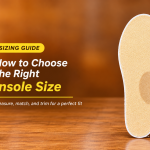

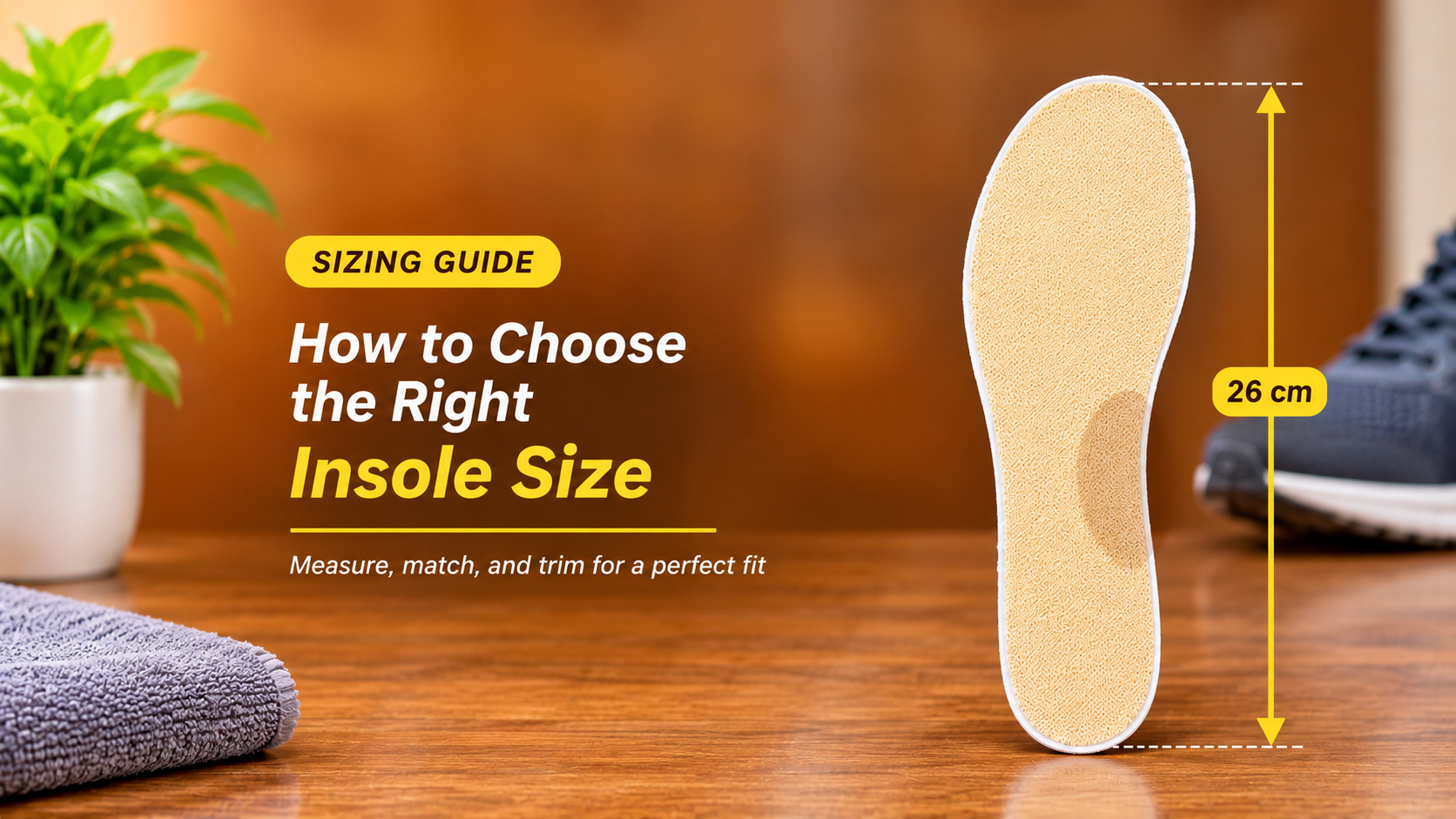
Buying insoles online or in a store can feel like guesswork. The packaging says “Men’s 9–10” or “Size M,” yet once the insole is inside your shoe, it bunches at the heel, slides forward, or leaves your toes hanging off the edge. Knowing how to choose the right insole size saves you money, prevents returns, and makes sure the cushioning and support sit exactly where your foot needs them.
This guide walks you through measuring your feet, reading size charts, choosing the right insole type, and checking the fit before you commit.
Why Insole Size Matters
An insole works only when it matches your foot and your shoe. If the size is off, you lose the benefits and may even create new problems.
- Too small: The arch support lands in the wrong place, and your heel or toes slip off the cushioning.
- Too large: The edges curl up, bunch, and press against the sides of the shoe, which can cause blisters and hot spots.
- Wrong volume: A thick insole in a snug shoe makes it feel tight, while a thin insole in a roomy shoe does little.
Step 1: Measure Your Feet Accurately
The most reliable starting point is your actual foot length, not the number printed inside an old pair of shoes. Sizes differ between brands, and your feet can change with age, weight, and activity.
- Tape a sheet of paper to a hard floor against a wall.
- Stand on it with your heel touching the wall, wearing the socks you normally wear with your shoes.
- Mark the tip of your longest toe. This is not always the big toe.
- Measure from the wall to the mark in centimeters or inches.
- Repeat with the other foot and use the larger measurement.
Measure in the late afternoon or evening, when your feet are slightly swollen from the day. Stand with your weight evenly distributed, and avoid measuring while sitting.
Step 2: Match Your Measurement to a Size Chart
Once you have your foot length, compare it to the insole manufacturer’s size chart. Most brands list sizes by shoe size, and some also list the exact insole length. Use the table below as a general reference.
Step 3: Choose the Right Type of Insole
Insoles come in a few different sizing formats, and each works a little differently.
Trim-to-Fit Insoles
These are sold in size ranges (for example, Women’s 6–9) and are meant to be trimmed with scissors. They are the most flexible option, and a good choice if you are between sizes or plan to use them in different shoes.
Size-Specific Insoles
These come in exact sizes, such as Men’s 9, and typically need no trimming. They are common for sports, orthotic, and arch-support insoles where precise positioning matters.
Three-Quarter-Length Insoles
These stop behind the ball of the foot and work well in tight shoes like dress shoes and flats. Sizing is usually by shoe size range.
Heel Cups and Arch Inserts
These are small, targeted inserts. They are often sold in small, medium, and large sizes based on shoe size or foot width, so check which measurement the maker uses.
Step 4: Consider Your Shoe and Foot Shape
Length is only one part of the picture. Think about these factors too.
- Shoe type: Running shoes, work boots, and casual sneakers have different shapes and volume. An insole made for a running shoe may not suit a pointed dress shoe.
- Foot width: If you have wide or narrow feet, look for insoles that come in matching widths, or choose trim-to-fit styles.
- Arch height: Low, medium, and high arch support exist for a reason. An arch that is too high or too low for your foot feels uncomfortable and can cause aches.
- Insole thickness: A thick insole takes up space. Remove the shoe’s factory insole first and check there is enough depth.
- Intended use: Daily walking, long hours standing, sports, and hiking all call for different levels of cushioning and support.
Step 5: Check the Fit Before You Commit
Before you start wearing your new insoles, run through this checklist:
- Take out the shoe’s original insole and place it on top of the new one to compare the size and shape.
- Insert the new insole and check that it lies flat, with no curling at the sides or bunching at the heel.
- Make sure the heel of the insole sits right against the back of the shoe.
- Put the shoe on and fasten it. Check that you still have about a thumb’s width of space ahead of your longest toe.
- Walk around for a few minutes and notice any pressure, rubbing, or slipping.
What If You’re Between Sizes?
If your foot measurement falls between two sizes, the general rule is to go up and trim. It’s easy to cut a little off a trim-to-fit insole, but impossible to add material back. If you are buying a size-specific insole that cannot be trimmed, choose the size that matches your shoe size rather than your foot size, since the insole needs to fit the shoe.
How to Trim an Insole Properly
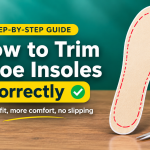
If your insole needs trimming, use the shoe’s original insole as a template, trace its outline, and cut about 2 mm outside the line. Trim from the toe end, never the heel, and remove material in small amounts, testing the fit after each cut. Sharp scissors give a cleaner edge, particularly on foam and gel.
Common Mistakes When Choosing Insole Size
- Going by shoe size alone. Brands run differently, so measure your feet as well.
- Ignoring the manufacturer’s size chart. Every brand sizes its own products.
- Buying the same size for every shoe. A snug dress shoe and a roomy sneaker need different insoles.
- Stacking insoles. Putting a new insole over the old one often makes the shoe too tight.
- Measuring one foot only. Most people have one foot slightly larger than the other.
- Trimming too much at once. Cut a little, test, and repeat.
Signs Your Insole Is the Wrong Size
- The insole slides forward or backward when you walk.
- The edges curl or fold inside the shoe.
- Your toes hang over the front of the insole.
- The arch support doesn’t line up with your arch.
- You develop new blisters, pressure spots, or aches.
If you have ongoing foot pain, diabetes, numbness, or circulation concerns, speak with a podiatrist before choosing insoles. This article is general information, not medical advice.
Frequently Asked Questions
Are insole sizes the same as shoe sizes?
Usually they are based on shoe size, but many insoles cover a range, such as “Men’s 8–9.” Always read the maker’s chart.
Should insoles be the exact length of my foot?
They should match the inside of your shoe, which is slightly longer than your foot, so your toes have room.
Should I size up or down for insoles?
For trim-to-fit insoles, size up and trim. For non-trimmable ones, match your shoe size.
Can I use the same insoles in different shoes?
Yes, as long as each shoe has the room and shape to accommodate them. Check the fit in each pair.
Do men and women need different insoles?
Often, yes. Men’s and women’s insoles differ in width and shape, but you can choose either one if the fit matches your foot and shoe.
How do I choose insoles for children?
Kids’ feet grow quickly, so check the fit regularly and use size-appropriate insoles. A paediatric specialist can advise on any concerns.
Final Thoughts
Choosing the right insole size comes down to a few simple steps: measure your feet, compare the result with the manufacturer’s chart, pick the right type, and test the fit inside your shoe. When in doubt, choose a trim-to-fit insole in the larger size and take off a little at a time. With a few minutes of preparation, you’ll end up with insoles that sit flat, feel comfortable, and give you the support you bought them for.